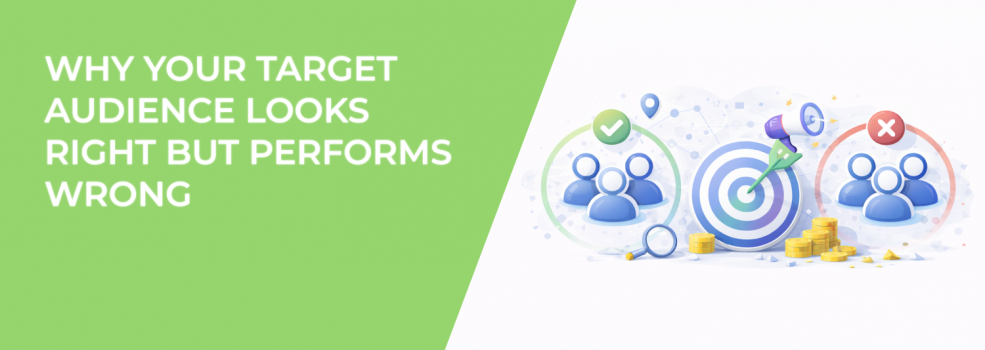
You picked the right interests. The demographics are spot-on. The audience matches your buyer persona perfectly. But your Facebook or Instagram ad results? Disappointing. Expensive clicks, low conversions, weak return.
If this sounds familiar, you’re not alone.
Let’s dig into why your audience looks right on paper but fails to deliver — and what to do instead.
When your targeting makes sense but still doesn’t work
Audience mismatch isn’t always obvious. In fact, most underperforming campaigns look like they should work. You’re using the same interest categories your competitors are. You’ve built detailed lookalikes. You’ve excluded past buyers.
But it’s not converting.
Signs your audience isn’t really aligned
Here’s what to watch for:
-
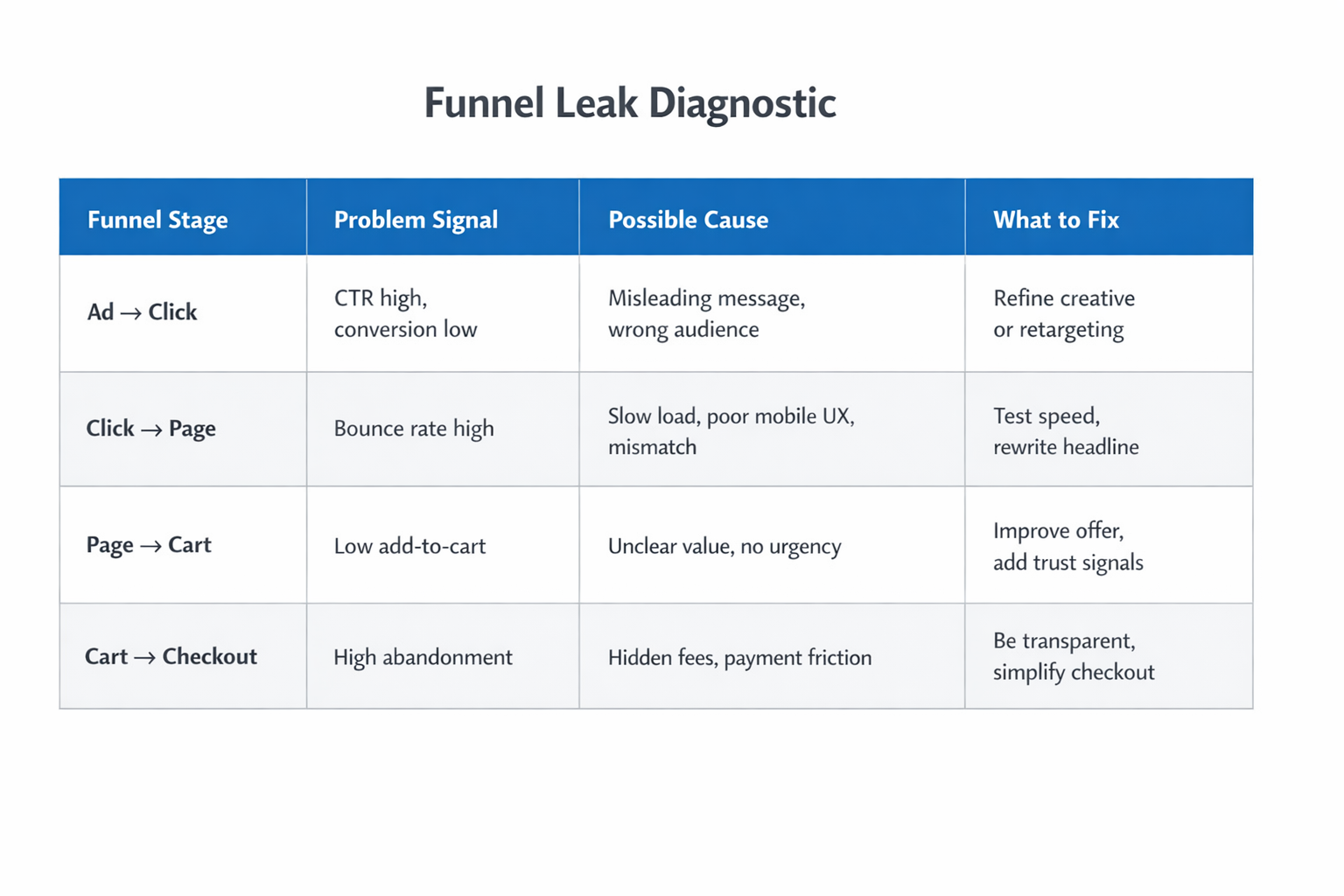
Decent CTR but poor conversions. People click, but few complete the purchase or sign up.
-
High bounce rate on landing pages. They lose interest fast — probably because the ad promise didn’t match their intent.
-
Frequency grows, but results stall. You're spending more to reach the same people who weren’t interested the first time.
These are classic signs of audience misalignment.
If you’re seeing this pattern, read Why Your Ads Get Clicks But No Sales: Fixing the Audience Misalignment for a deeper diagnostic breakdown.
These audiences may look right based on their profile — but they’re not acting like real buyers.
And that’s a big difference.
Why “relevant” audiences don’t always perform
It’s easy to confuse relevance with intent.
You might target:
-
Fitness lovers;
-
Small business owners;
-
Eco-conscious consumers.
That makes sense if your product is protein powder, marketing software, or reusable bags.
But being interested in a topic isn’t the same as wanting to buy something related to it. That’s where many advertisers get burned.
In fact, high-performing campaigns often prioritize intent over reach.
If you want to understand why narrower, high-intent segments convert better than broad ones, see Why High-Intent Audiences Convert Better Than Broad Ones.
Common mistakes that lead to underperforming “right” audiences
Let’s break this down with a few examples:
-
Mistake: Choosing broad interests.
"Fitness and wellness" sounds right — but includes everyone from yoga beginners to pro athletes.
→ Better: Target followers of specific fitness influencers, CrossFit gyms, or supplement brands. -
Mistake: Relying only on demographics.
Just because someone is 35, female, and lives in a city doesn’t mean she’s shopping for skincare.
→ Better: Use behavioral cues like past purchases, video views, or Instagram engagement. -
Mistake: Using outdated lookalikes.
A 1% lookalike from six months ago won’t reflect current buyer intent.
→ Better: Refresh your source audiences regularly using high-intent actions (e.g., recent purchases or checkout initiates).
Even though these audiences might match your ideal customer on paper, they miss the mark when it comes to behavior.
Target actions, not just attributes
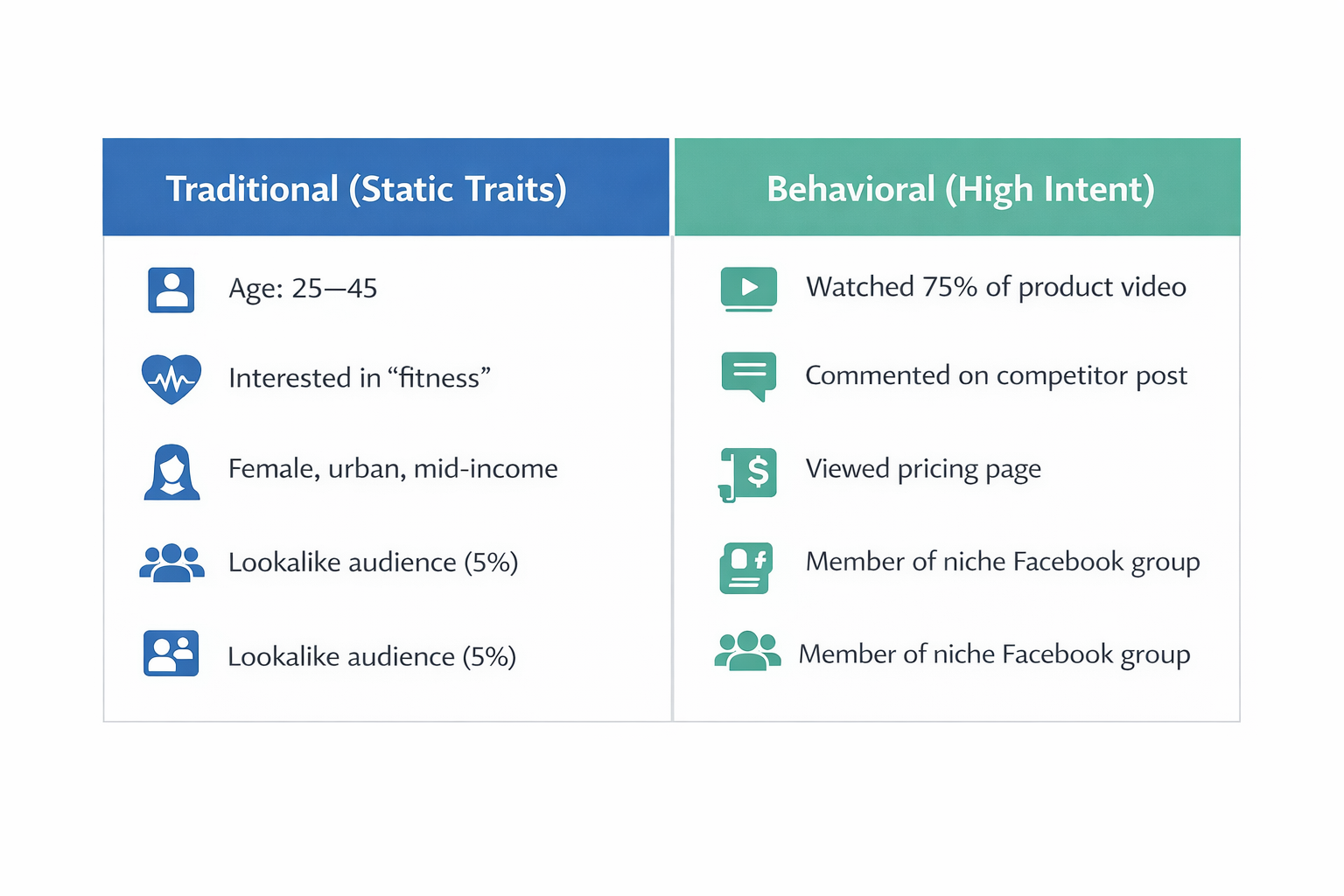
To fix this, shift your targeting strategy from who they are to what they do.
Platforms like Meta give you more than just interests and demographics. You can build audiences from engagement, intent, and recency — signals that actually predict buying behavior.
For a deeper explanation of why behavioral signals outperform static targeting, read Behavior-Based Facebook Targeting: The Secret Weapon of Top E-commerce Brands.
Stronger targeting signals to use
Instead of relying on passive traits, try audiences based on active signals:
-
People who watched at least 75% of your product demo video.
These users didn’t just scroll by — they stayed and watched. That’s a strong intent signal. -
Instagram followers of competitors or niche creators.
If someone follows a specific skincare influencer, they’re probably more interested than someone who simply likes “beauty.” -
Facebook group members in your niche.
These users are part of active communities — not just passive fans. If you're selling dog training courses, group members are better than people interested in “dogs.” -
Visitors to your product or pricing pages.
Use custom audiences to retarget people who visited high-intent pages, not just blog readers.
Adding behavior-based signals makes your targeting smarter, faster, and far more profitable.
A smarter way to build custom audiences
If you want your ads to perform, your audiences must be action-driven.
Here’s how to build better ones:
Step 1: Find the real intent signals
Look beyond the usual Meta interest suggestions. Use:
-
LeadEnforce to build audiences from real Instagram and Facebook behavior (like followers and group members);
-
Video viewers who stayed through the key message or benefit reveal;
-
Event-based audiences like people who added to cart but didn’t buy;
-
Engagers of organic content who’ve commented, saved, or shared recently.
If you want a structured walkthrough, read How to Build High-Performing Custom Audiences in LeadEnforce.
These are people already paying attention.
Step 2: Create sharper exclusions
Don’t waste spend on users who’ve:
-
Already purchased;
-
Clicked and bounced within 5 seconds;
-
Seen the ad 4+ times without taking action.
Exclude them to focus your budget on fresh, responsive prospects.
Step 3: Match your creative to the audience’s context
Targeting won’t save you if your ad doesn’t speak to where the user is in their journey.
For example:
-
If you're targeting group members in "Keto Meal Planning," don’t show a general product ad. Instead, use messaging like "Easy low-carb dinners for busy parents."
-
For repeat visitors who haven’t purchased, highlight urgency — limited stock, deadline offers, or social proof.
When targeting and creative work together, conversions climb fast.
Final tips to avoid audience mismatch
Here’s a quick checklist to keep your targeting sharp:
- Use engagement and recency over vague interests;
- Build from real communities and influencers, not generic categories;
- Keep your lookalikes fresh and based on high-intent actions;
- Exclude stale users and bouncers to stretch your ad spend;
- Customize your message to match user behavior and mindset.
Summary: The audience isn’t always the problem — but it usually is
If your ad results are underwhelming, don’t just blame the creative or offer. Look at who you're targeting and why.
Most audiences fail not because they’re irrelevant — but because they aren’t timely, motivated, or ready to act.
The solution? Build behavior-based audiences using tools like Meta Custom Audiences and LeadEnforce, and always test against real engagement signals.
That’s how you move from “looks right” to works right.