Running Facebook and Instagram ads is a key strategy for small businesses trying to grow. However, many small business owners and marketers fall into the same traps that waste budget, limit growth, and impact performance. By understanding and avoiding these common mistakes, you can improve the effectiveness of your campaigns and get better results.
Here are some key mistakes small businesses make with Facebook ads and how to avoid them:
1. Not Defining Clear Goals
One of the biggest mistakes small businesses make is not setting clear goals before running Facebook ads. Whether your goal is to increase website traffic, generate leads, or boost sales, having a defined goal makes a huge difference in the success of your campaign.
Why It’s Important:
Without clear goals, it becomes impossible to measure your results effectively. For example, if you don’t know what you want to achieve, you won’t know if your campaign was successful or where to improve. It can also lead to wasted spend on ads that don’t align with your overall objectives.
How to Avoid It:
-
Set Specific Goals: Your goals should be clear and measurable. For example, "Increase website visits by 30%" or "Generate 100 leads in the next month."
-
Align Goals with Business Needs: Make sure your goals fit into the bigger picture of your business. If you want more sales, create campaigns that directly target purchase-ready users.
-
Use Facebook’s Campaign Objectives: Facebook offers several campaign objectives to help guide your ad targeting and design, such as brand awareness, lead generation, or conversions.
By setting clear goals, you'll know exactly what success looks like for your campaign. Whether you're aiming to drive traffic, generate leads, or increase sales, knowing your goal will guide your strategy and help you measure success. It also makes it easier to optimize your campaigns for better results as you move forward.
2. Ignoring Audience Targeting
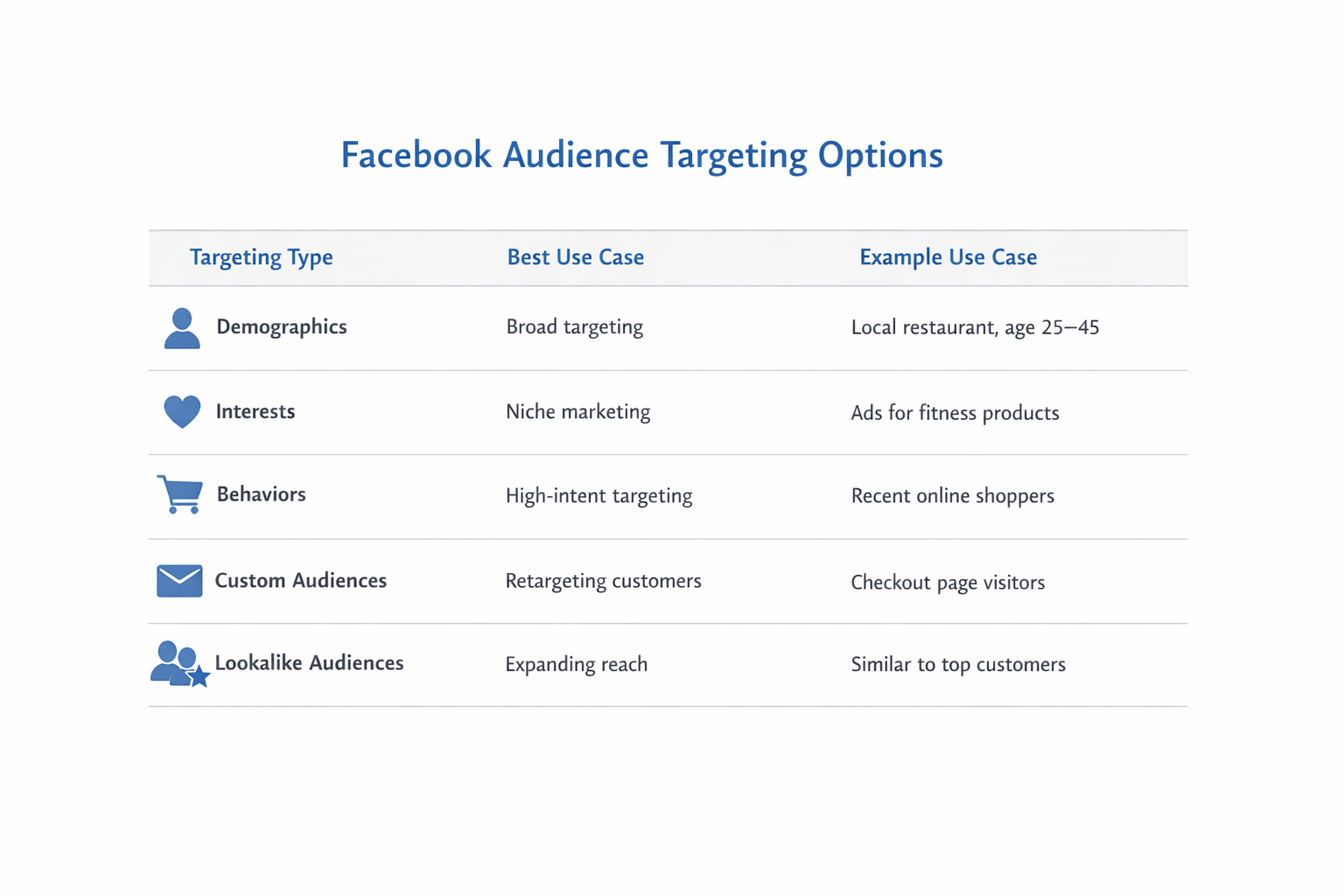
Facebook’s audience targeting features are one of its most powerful tools, yet many businesses fail to use them effectively. Running ads to a broad audience can result in wasting money on people who have no interest in your business.
Why It’s Important:
Targeting a broad audience leads to irrelevant clicks and poor results. The more specific you are with your audience, the more likely you are to attract users who are genuinely interested in your product or service.
How to Avoid It:
-
Use Detailed Targeting: Facebook allows you to target by location, age, interests, behaviors, and more. For example, if you run a local bakery, target people within a specific radius around your location and include interests like "baking" or "coffee lovers."
-
Create Custom Audiences: Upload your email list, website visitors, or Instagram followers and retarget them with ads tailored to their interests. You can learn more about this in the Facebook Custom Audiences Guide.
-
Leverage Lookalike Audiences: Facebook can help you find new customers who are similar to your best-performing audience. If you know what kind of people convert well, look for others like them. You can learn more about this in the Ultimate Guide to Facebook Lookalike Audiences.
By honing in on your audience, you ensure that your ads are seen by the people most likely to engage with your business. This not only saves you money but also improves the relevance of your ads, which can lead to better performance and higher conversion rates.
3. Not Testing Ad Variations
Once your campaign is live, it’s essential to test different versions of your ads to see what works best. Small businesses often launch ads and then forget about them, missing opportunities to optimize performance.
Why It’s Important:
Facebook’s ad platform allows you to test various elements of your ads, like headlines, images, and calls to action. Without testing, you’ll never know which combination works best.
How to Avoid It:
-
A/B Test Your Ads: Run two versions of the same ad with a small change, such as different images or copy, to see which one performs better. For more on ad testing, refer to Facebook Ads Testing Strategy.
-
Test Ad Formats: Try using different types of ads, like carousel ads (multiple images or videos), video ads, or single-image ads. For example, a carousel ad showing different products may generate more engagement than a single image.
-
Use Dynamic Creative: Facebook’s Dynamic Creative tool automatically tests different ad variations and optimizes for the best-performing combination.
Testing your ads ensures that you’re using the most effective content, format, and messaging to connect with your audience. With A/B testing, you can fine-tune your ads to maximize engagement and improve conversions. Regular testing should be part of every campaign to continuously improve performance.
4. Not Monitoring and Adjusting Campaigns
Setting up your ad campaign is just the beginning. The real work comes after the campaign launches. Many businesses fail to monitor their campaigns and make necessary adjustments, leading to poor performance and wasted money.
Why It’s Important:
The digital landscape is always changing, and it’s important to track your ad performance in real time. Monitoring your campaign allows you to identify what’s working and what isn’t, and make changes quickly to improve results.
How to Avoid It:
-
Track Key Metrics: Use Facebook Ads Manager to monitor metrics like clicks, impressions, conversions, and cost-per-click. For example, if you notice your cost per click is high, it may be time to adjust your targeting. You can learn more about optimizing these metrics in the Facebook Ad Optimization Framework.
-
Make Adjustments: If an ad is performing poorly, stop it and reallocate your budget to better-performing ads. On the flip side, if something is working, increase your budget to scale up.
-
Set Up Automated Rules: Facebook allows you to set up rules that will automatically adjust your campaigns based on performance, such as pausing ads that exceed a certain cost-per-click threshold.
Monitoring and adjusting your campaigns ensures that you’re always working with the best-performing ads and allocating your budget wisely. By tracking key metrics and making adjustments in real time, you can quickly capitalize on what’s working and fix what’s not.
5. Overlooking Mobile Optimization
Facebook and Instagram are mobile-first platforms, meaning most users engage with ads through their mobile devices. If your ads aren’t optimized for mobile, they may appear distorted or difficult to read, leading to poor performance.
Why It’s Important:
If your ad looks good on desktop but is hard to navigate or view on mobile, you’ll lose a significant portion of your audience. Given the sheer number of mobile users, mobile optimization is crucial for success.
How to Avoid It:
-
Design with Mobile in Mind: Ensure that your images and text are easily readable on smaller screens. For example, avoid using too much text or very small fonts.
-
Test Your Ads on Mobile: Before running your ads, check how they appear on mobile devices to make sure they look good and load quickly.
-
Use Mobile-First Features: Facebook offers mobile-first ad formats, such as Stories ads, which are designed to be viewed on smartphones.
Optimizing your ads for mobile ensures that you reach users where they spend most of their time. With the majority of Facebook and Instagram users on mobile, it’s essential to deliver a seamless experience for them. This will improve user engagement and reduce bounce rates.
6. Focusing Only on Immediate Sales
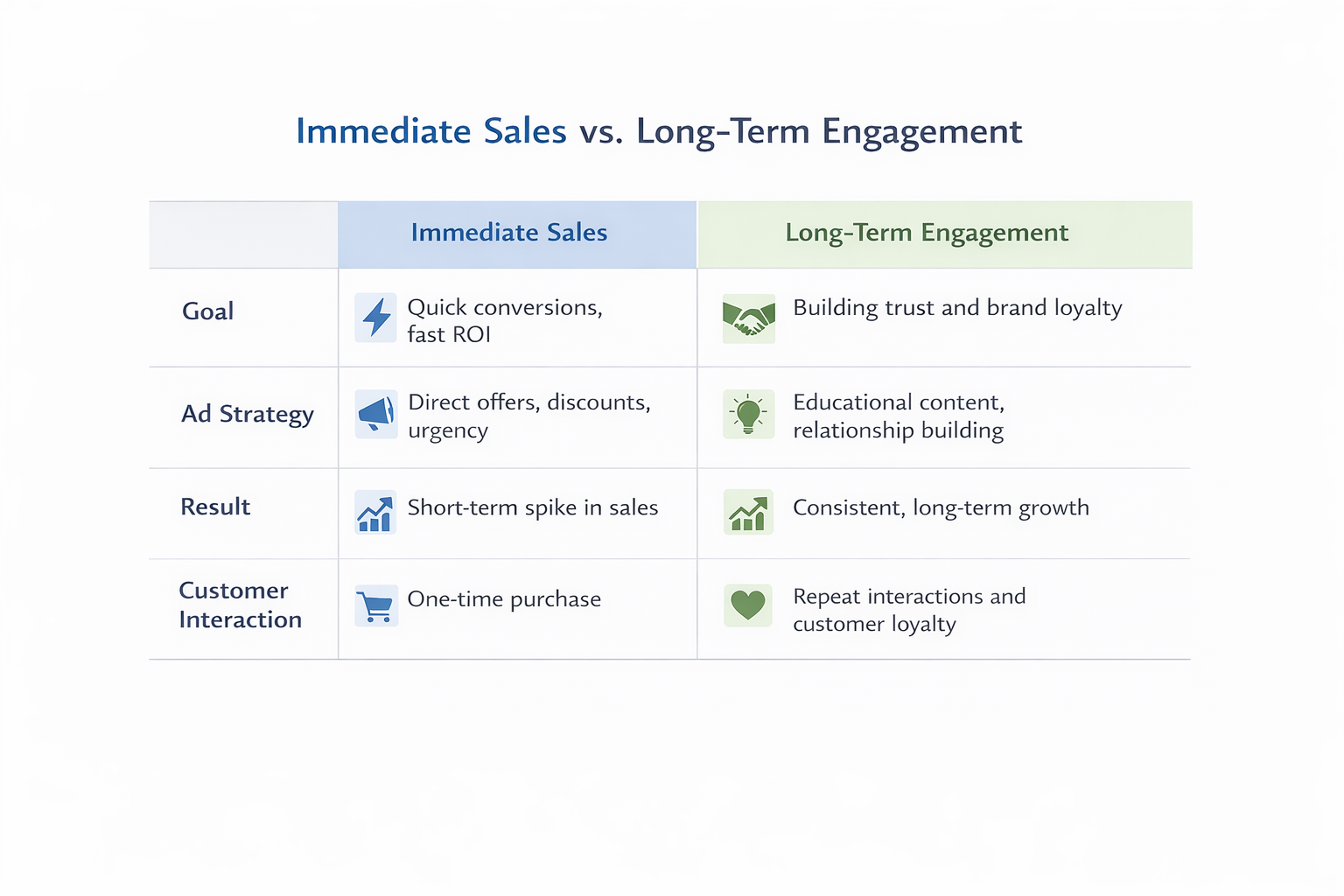
While immediate sales are essential, focusing solely on them might limit the long-term potential of your campaigns. Facebook ads can also help build brand awareness and loyalty, which ultimately leads to more sales down the line.
Why It’s Important:
While a sale is important, Facebook ads can be used to nurture customers through the buying cycle. For example, a customer may not be ready to purchase the first time they see your ad, but they may engage later after seeing multiple ads over time.
How to Avoid It:
-
Target Different Stages of the Funnel: Use Facebook ads to create content that targets users at various stages of the customer journey, from awareness to decision-making. For instance, use engaging videos or articles to attract users and then retarget them with product ads.
-
Consider Long-Term Engagement: Run campaigns that focus on building trust with your audience, like offering discounts or showcasing customer testimonials.
-
Use Retargeting to Convert: Users who interact with your ads but don’t convert are prime candidates for retargeting with special offers or product reminders.
Focusing on long-term engagement alongside immediate sales builds a stronger relationship with your audience. It ensures that your brand stays top of mind and helps encourage repeat business.
7. Misunderstanding Facebook’s Algorithms
Facebook’s algorithm determines who sees your ads. Small businesses often don’t fully understand how the platform's algorithm works, which can hurt their ad performance.
Why It’s Important:
The more engaging your ad, the more Facebook will show it to a broader audience. Ads that are ignored or skipped often get fewer impressions, reducing their reach. Understanding how Facebook’s algorithm works can help you create ads that stand out and get seen.
How to Avoid It:
-
Create Engaging Content: High-quality content that resonates with your audience will improve your ad performance. This could be eye-catching visuals or highly relevant offers.
-
Improve Relevance Score: Facebook assigns a relevance score to your ads based on how users interact with them. Ads with a higher relevance score tend to be shown more often and at a lower cost.
-
Track and Optimize Your Ads: Monitor engagement metrics like click-through rate (CTR) and conversion rate to see how well your ads are resonating with your audience.
Understanding and working with Facebook’s algorithm ensures that your ads reach the right audience at the right time. This will help you improve your ad performance and maximize your budget.
Conclusion
Avoiding these common Facebook ad mistakes can significantly improve the effectiveness of your campaigns. By setting clear goals, targeting the right audience, testing different ad formats, and continually monitoring your results, you’ll be able to maximize the return on your advertising spend.
Remember, Facebook ads are an ongoing effort — regular monitoring, testing, and optimization are key to staying ahead.