If you're running ads on Facebook or Instagram, you've probably asked one question first.
How long does it take before ads actually work?
This matters because ads cost money. When results don’t come fast, it’s easy to assume something is broken.
In reality, Facebook ads need time. The system has to learn, and users need time to react. This article explains what that timeline looks like and how to judge progress correctly.
How Facebook’s Learning Phase Works
What Happens in the First Few Days
Every new Facebook or Instagram campaign starts in the Learning Phase. This is when Meta’s system tests your ad delivery.
During this stage, results often look unstable. Costs may jump. Clicks may come in bursts. That does not mean your ad is failing.
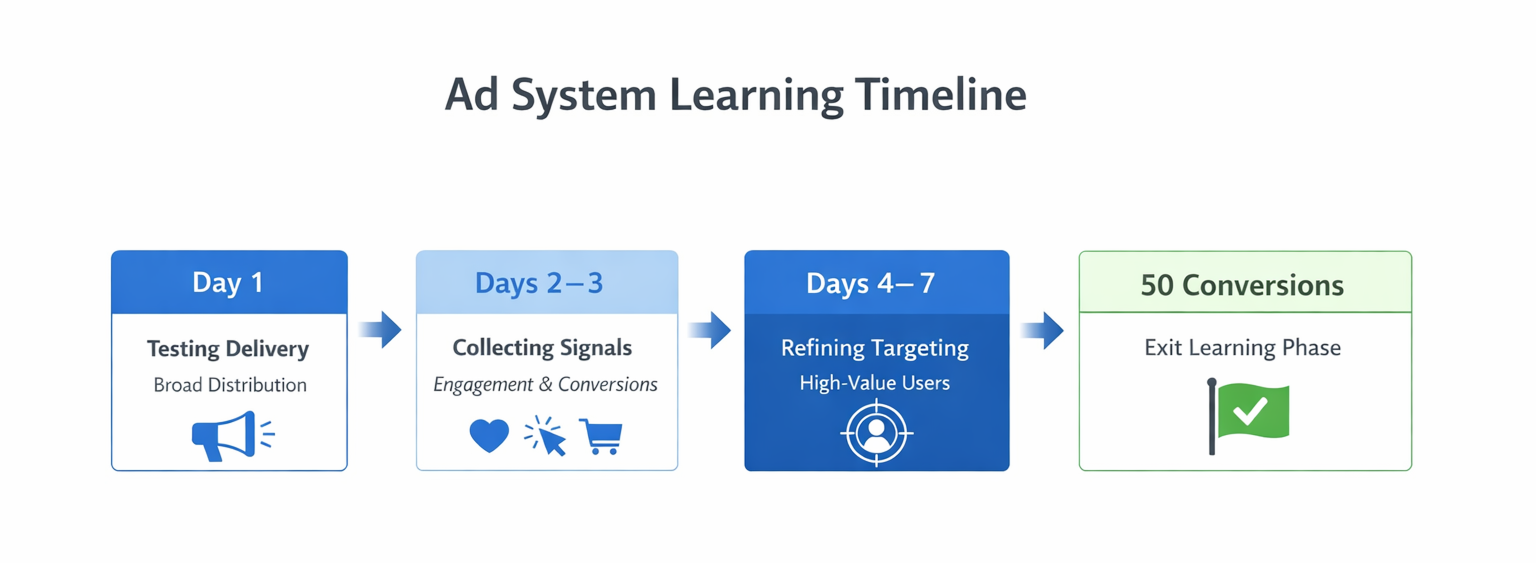
Facebook is doing several things at once:
-
Testing your ad with different people inside your audience;
-
Comparing placements like Feed, Stories, and Reels;
-
Learning when users are more likely to click or convert.
This phase usually lasts 3 to 7 days, but it can last longer if the campaign does not get enough activity.
If you want to shorten this stage safely, this guide explains how to finish the Facebook learning phase quickly.
When Learning Ends
Facebook considers learning complete when an ad set gets around 50 optimization events in 7 days.
The event depends on your campaign goal:
-
Lead campaigns need form submissions;
-
Conversion campaigns need purchases or add-to-carts;
-
Traffic campaigns need link clicks.
For example, if you sell a high-ticket service and only get a few leads per week, learning will take longer. In that case, choosing a higher-volume event can help the system stabilize faster.
What to Expect Over the First Month
A Simple Timeline
Most campaigns follow a similar pattern. Results rarely peak in the first few days.
Here’s what usually happens:
-
Week 1: Learning is active. Results look inconsistent. Focus on collecting data, not judging performance.
-
Week 2: Patterns begin to form. Some ads or audiences start doing better than others.
-
Weeks 3–4: You now have enough data to optimize. This is when scaling or restructuring makes sense.
For example, a new e-commerce brand might get clicks in Week 1, add-to-carts in Week 2, and steady purchases by Week 3. That delay is normal.
What Slows Facebook Ads Down
Common Mistakes That Delay Results
Many campaigns take longer than necessary because of setup issues, not because Facebook is slow.
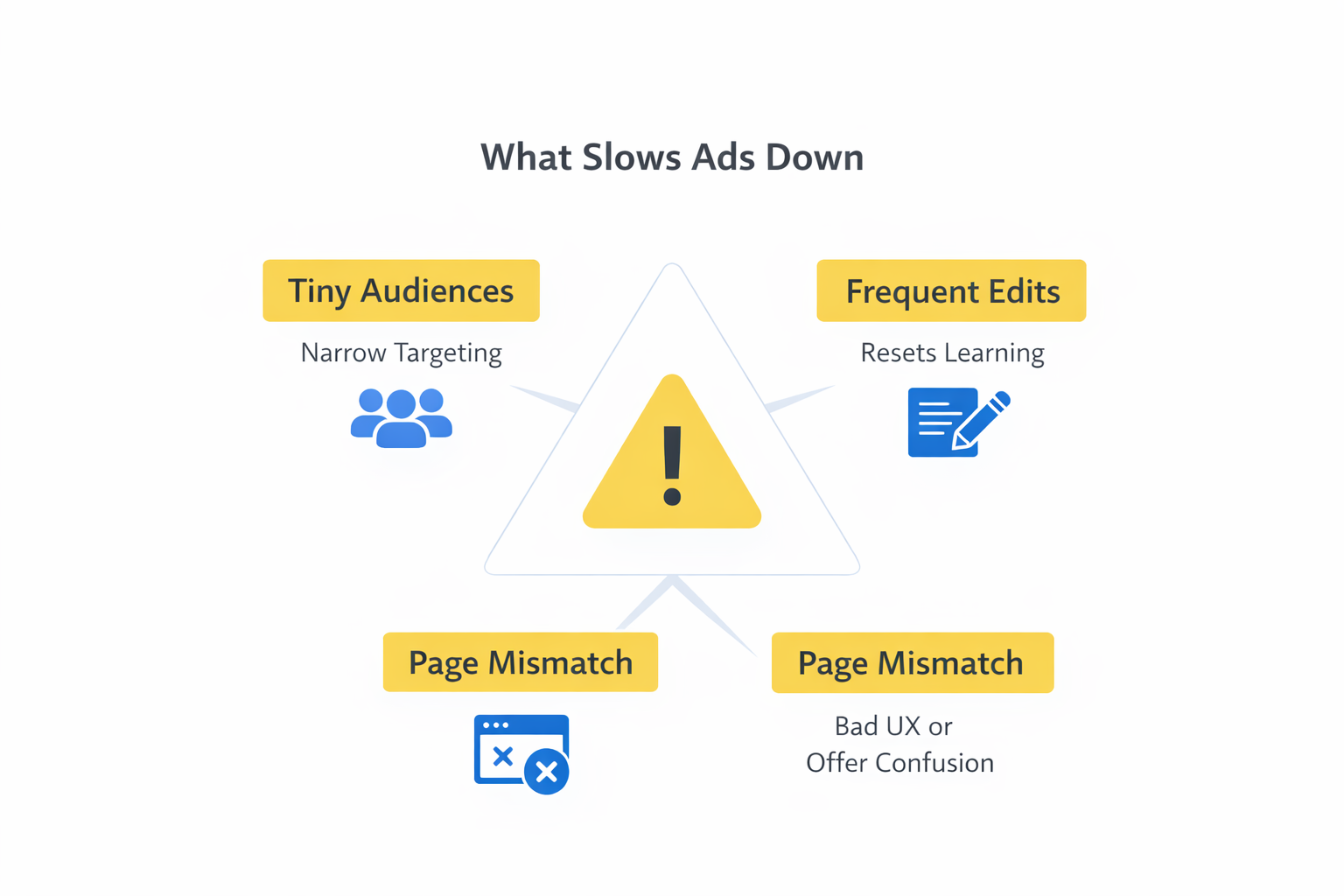
The most common problems are:
-
Audiences that are too small. Narrow targeting limits Facebook’s ability to test and learn;
-
Too many edits. Changing budgets, creatives, or targeting too often resets learning;
-
Message mismatch. If the ad promise does not match the landing page, users drop off.
If you’re unsure whether changing an ad will hurt performance, this article explains when edits are safe and when they cause problems.
How to Tell If Your Ads Are Working
Early Signals to Watch
Not every campaign makes sales right away. Early metrics help you understand direction.
Look for these signs:
-
Click-through rate above 1%, which shows the message is relevant;
-
Stable or decreasing cost per click over time;
-
Add-to-carts, form starts, or other micro-actions increasing.
If people are clicking but not converting, the issue may not be the ad itself. Often, the landing page, offer clarity, or trust signals are the real problem. This guide walks through how to fix Facebook ads that aren't converting.
When to Pause or Change Strategy
Knowing When Waiting Is No Longer Smart
Patience matters, but waiting forever wastes budget.
You should rethink a campaign if:
-
You’ve spent 1.5 to 2 times your target CPA with no results;
-
CTR stays below 0.5% after two weeks;
-
Engagement exists, but conversions never follow.
Many advertisers see ads slow down or stop performing after the second week. This article explains why that happens — and how to recover.
Summary: A Realistic Facebook Ads Timeline
| Timeframe | What’s Happening |
|---|---|
| Days 1–3 | Learning starts. Results are unstable. |
| Days 4–7 | Early patterns appear. Avoid big changes. |
| Week 2 | Performance begins to stabilize. |
| Weeks 3–4 | Optimization and scaling become possible. |
Final Thoughts
Facebook ads are not instant. They are a system that improves with data.
If your setup is solid, you should see meaningful signals by Week 2 and clearer results by Weeks 3–4. If nothing improves by then, the issue is usually the offer, message, or funnel — not the platform.
Give your ads time to learn. Watch the right signals. And make changes based on data, not impatience.