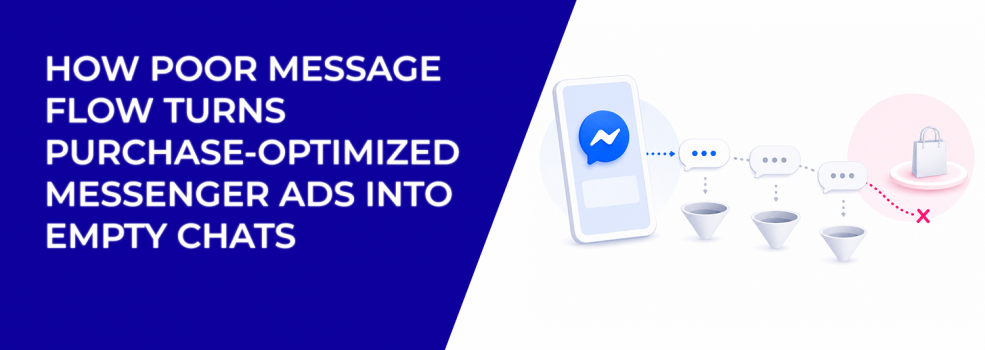
A purchase-optimized Messenger ad can bring the right person into the inbox and still lose the sale. The problem often starts after the click.
The user taps the ad, enters Messenger, and receives a vague greeting. The flow asks, “How can we help?” or sends a generic menu. The user replies once, then disappears.
That is not a targeting problem. It is a conversation design problem.
The core problem: the Messenger flow does not move users toward purchase intent
Messenger ads create a direct path from ad to conversation. That path only works when the next step is clear.
If the conversation starts too broadly, users have to do too much work. They must explain what they want, ask for pricing, check availability, and figure out whether the offer fits them. Many will drop before the sales team gets useful information.
This is especially damaging in purchase-optimized campaigns. Meta may send users who show buying potential, but the flow fails to capture that intent.
A good messaging flow should do three jobs quickly:
- Confirm the offer the user clicked on. The first message should match the ad promise.
- Qualify the user without making the flow feel heavy. Ask one or two questions that reveal intent.
- Move toward a buying action. Offer booking, checkout, quote request, or product selection.
This is similar to how advertisers build high-intent leads from messaging ads. The channel may change, but the intent path still needs structure.
Why vague chat flows create empty conversations
A vague Messenger flow attracts passive replies. It also makes serious buyers wait.
For example, an ad may promote “same-week installation for local homeowners.” If the Messenger flow opens with “Hi, how can we help today?” the campaign loses momentum. A better first step would ask for ZIP code, property type, or preferred installation date.
That small change matters. It turns the chat from a support-style conversation into a buying path.
Poor message flows usually cause these issues:
- Users repeat information already shown in the ad. This adds friction and makes the brand feel disorganized.
- Sales teams receive unqualified chats. They must ask basic questions manually instead of handling serious buyers.
- Response time becomes more expensive. Every low-intent conversation takes time away from high-intent users.
- Meta receives noisy downstream behavior. Many chats start, but few produce valuable outcomes.
The campaign may still generate activity, but the business sees empty chats instead of sales-ready conversations.
The solution: design the chat flow around the next commercial step
A purchase-optimized Messenger flow should not copy customer support. It should guide the user to a decision.
Start with the ad promise. If the ad promotes a product bundle, the first message should reference that bundle. If the ad promotes a consultation, the first message should ask a qualification question tied to booking.
For example: “Thanks for your interest in the starter package. Are you looking to buy for yourself or for a team?”
That question is simple, but it changes the quality of the conversation. It gives the sales team context and helps separate casual users from real prospects.
For lead generation, the same principle applies. You can qualify leads without losing conversions by asking questions that feel natural to the buying process, not like a form copied into Messenger.
What a better Messenger flow should include
Keep the flow short. Messenger is not the place for a long qualification form.
A practical purchase-focused flow can include:
- A confirmation message. Repeat the offer or product the user clicked so the conversation feels connected.
- One intent question. Ask about budget, timeline, use case, product type, or location.
- One routing step. Send buyers to checkout, booking, a quote, or a live sales reply.
- A fallback for unsure users. Give browsers a lower-pressure path, such as a product guide or FAQ.
This structure keeps high-intent users moving. It also prevents the inbox from becoming a pile of disconnected questions.
If the campaign already has decent traffic but weak outcomes, review the chat path before changing the audience. The fastest improvement may come from reducing friction after the first reply.
Final takeaway
Purchase-optimized Messenger ads do not end at the click. The conversation must continue the buying path started by the ad.
If the flow is vague, the campaign pays for empty chats. If the flow confirms the offer, qualifies intent, and moves users toward action, Messenger becomes a stronger sales channel. That is how advertisers improve lead-to-sale conversion rate without simply chasing more replies.