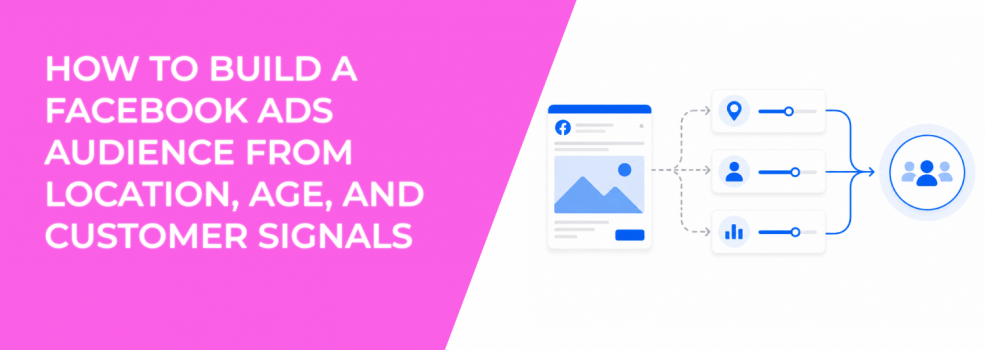
Many Facebook advertisers use demographic targeting too broadly.
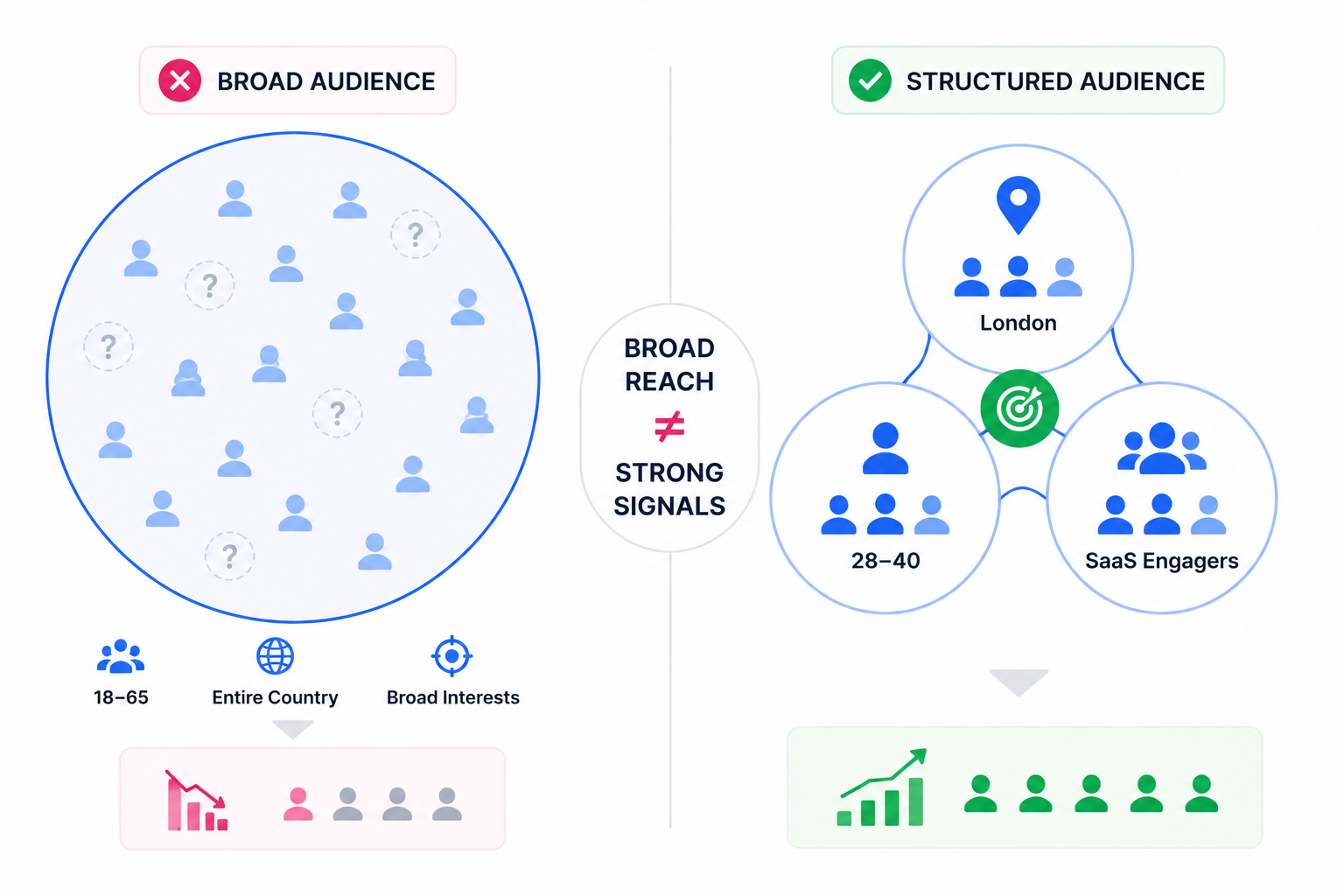
They target an entire country, select ages 18–65, add several interests, and allow Meta to optimize delivery automatically. The campaign may initially produce low CPC and healthy engagement, but performance becomes unstable once spend increases.
The problem is not demographic targeting itself.
The issue comes from weak audience structure.
Most businesses already have profitable customer clusters hidden inside their conversion data. The campaign underperforms because those clusters are never isolated properly.
Why broad demographic targeting weakens campaign efficiency
Meta distributes spend based on predicted conversion probability.
If your strongest buyers consistently come from:
- specific metro regions,
- certain age brackets,
- concentrated professional ecosystems,
broad demographic targeting dilutes those signals.
For example, a B2B software company may discover that most qualified demos originate from:
- London,
- Austin,
- Berlin,
- New York.
The campaign still generates traffic outside those regions, but close rates decline sharply because buyer behavior differs significantly.
The same pattern appears with age segmentation.
A 24-year-old user interacting with productivity content behaves differently from a 46-year-old operations manager evaluating enterprise software. Meta reacts to those behavioral differences during delivery even when advertisers group them inside the same audience.
This is one reason demographic targeting alone no longer works reliably for many performance campaigns.
How to identify profitable audience segments
Most advertisers review only platform metrics.
The more useful insights usually appear when Ads Manager data is compared against CRM outcomes.
Look for:
- regions producing stronger sales-call attendance,
- age brackets with higher close rates,
- locations generating shorter sales cycles,
- demographic segments producing repeat purchases instead of one-time conversions.
These patterns reveal where Meta already finds high-intent users.
For example, an ecommerce brand may discover that:
- users aged 28–40 convert at higher AOV,
- urban regions produce stronger retention,
- certain audience clusters purchase without discounts.
That changes how the audience should be structured.
This is the foundation behind frameworks focused on how to define your Facebook target audience.
Combining demographics with behavioral signals
Strong Facebook audiences usually combine demographic filters with engagement signals.
For example, instead of targeting: “United States + marketing interest + ages 18–65,”
a stronger structure might focus on:
- users in startup-heavy cities,
- ages connected to historical purchase patterns,
- Instagram engagers interacting with operational SaaS content,
- Facebook group members discussing workflow systems.
This creates higher signal density. Meta performs better when multiple audience traits reinforce each other instead of operating independently.
LeadEnforce supports this process by helping advertisers build audiences using:
- Facebook groups,
- Instagram followers,
- social engagement patterns,
- audience overlap signals.
That allows campaigns to move beyond generic demographic filtering.
Practical ways to improve Facebook audience structure
Audience quality usually improves faster through segmentation refinement than through creative changes alone.
Advertisers can strengthen targeting by:
- Separating high-performing metro regions into dedicated campaigns. This allows budget allocation based on actual regional profitability.
- Building age-specific creative variations when buying behavior differs across demographic groups.
- Using CRM-qualified customer lists to create narrower lookalike seeds instead of broad lead-based audiences.
These adjustments give Meta more stable optimization signals during scaling.
That is also why many advertisers focus heavily on improving Facebook Ads targeting before increasing spend aggressively.
Final takeaway
Facebook audience building works best when demographics support observable customer behavior.
Broad location and age targeting often hide major performance differences inside the audience. Once budgets increase, those weak segments become expensive quickly.
Campaigns become more stable when advertisers structure targeting around:
- profitable regions,
- concentrated age clusters,
- and customer signals already connected to conversion intent.