Ad campaigns often start strong — then fade. You launch, get some early results, raise the budget, and suddenly performance drops. The cost per result spikes. Clicks don’t turn into conversions. You wonder: is it the creative? The audience? The platform?
If you’ve run Facebook or Instagram ads, this probably sounds familiar.
The truth is, most campaigns aren’t designed to last. They’re built for short-term wins, not long-term growth. But with the right setup, your campaigns can stay relevant, adaptive, and profitable for weeks — even months.
This guide shows you exactly how to build ad campaigns that age well using strategy, structure, and creative systems.
Why Most Campaigns Don’t Last
Quick Wins, Fast Fade-Outs
The average campaign peaks fast. You might see strong CTRs and conversions in the first few days. But after that, performance often declines.
Here’s why this happens:
-
Overexposure. People see the same ad 4–5 times. Engagement drops, and CPMs rise.
-
Limited-time hooks. Short promos, countdowns, and “last chance” offers wear out quickly.
-
No creative variety. One headline, one image, one message — and no plan to evolve it.
Imagine a clothing brand running a 20% off holiday promotion using a single static ad. The campaign performs well for a few days. By the end of the first week, CPMs increase and ROAS starts to fall. With no backup creatives or alternate angles, performance stalls.
This pattern is common — and it’s also why many advertisers see results collapse after the first couple of weeks. If this feels familiar, it helps to understand why Facebook ads often stop performing after two weeks — and how to fix it.
Campaigns like this win the moment, then disappear. But you can do better.
What Makes a Campaign Age Well?
Longer-lasting campaigns are built with endurance in mind. They don’t rely on hacks or hype. Instead, they’re structured to evolve — with messages that stay relevant, and creative systems that support long-term testing.
1. Start With a Strong, Lasting Message
Your message is the foundation. If it’s only built for a seasonal sale or trend, it won’t hold up. Campaigns that age well are based on core benefits and long-term value.
Tips for timeless messaging:
-
Talk about real problems your customer faces — ones that won’t disappear next week.
-
Use benefits that matter year-round (e.g., save time, reduce stress, build confidence).
-
Focus on credibility and proof, not just urgency. Reviews, awards, guarantees, and testimonials all help.
Instead of leading with “50% off until Sunday,” imagine positioning an ad around “A planner designed to save you time every day.” That message can stay relevant long after a promotion ends and be refreshed with different visuals or hooks.
2. Plan Your Creative Rollout Ahead of Time
Don’t wait until performance drops to refresh creatives. That puts you in reactive mode. Instead, build a content system before launch so you can evolve your campaign without restarting from scratch.
How to plan creative that lasts:
-
Launch with 3–5 unique angles: testimonials, product benefits, founder story, objection handling, etc.
-
Create variations across formats: carousel, video, static image, Stories/Reels.
-
Map a creative update schedule: update visuals or headlines every 10–14 days to avoid fatigue.
Picture a wellness brand preparing three angles before launch: stress relief, better sleep, and daily energy. Each angle is produced as a static image, a short video, and a carousel. Every two weeks, one element is refreshed. The campaign continues performing steadily without major resets.
This approach aligns closely with campaign frameworks designed to stay profitable long-term.
Use Broad Targeting With Room to Refine
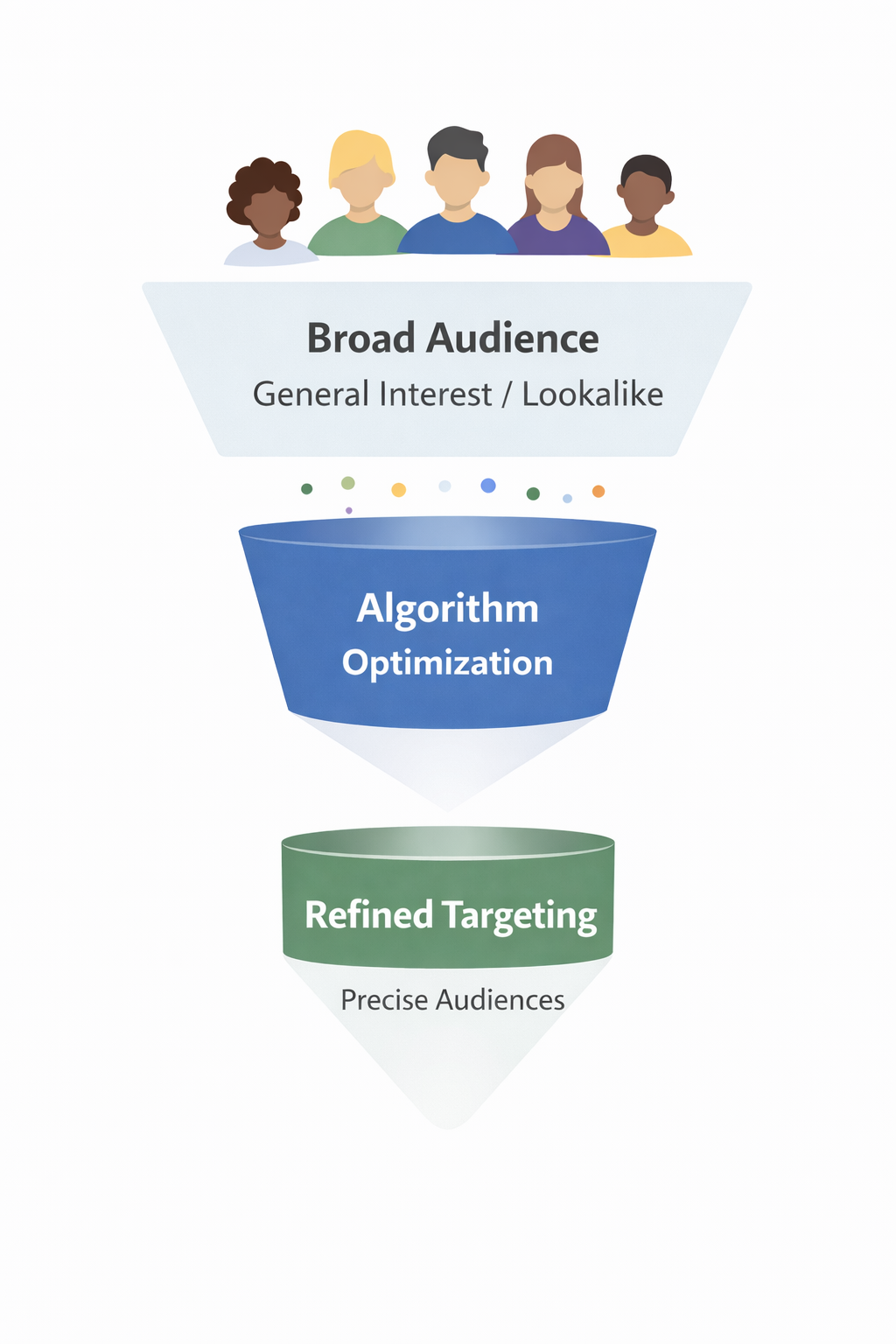
Targeting plays a huge role in how long a campaign can run. Too narrow, and you hit a wall. Too broad without structure, and results scatter. The best approach is to start wide, learn fast, then narrow down.
1. Start Broad to Let the Algorithm Learn
Meta’s machine learning performs better when it has room to work. Starting with broad targeting gives the algorithm a chance to find the highest-converting users — even if they’re not in your initial assumptions.
Why broad targeting works:
-
Lower CPMs due to wider reach.
-
Faster optimization during the learning phase.
-
Less audience burnout, especially at scale.
Suppose a digital course launches with a broad audience of adults aged 25–45 in the U.S. After several days, delivery naturally shifts toward a smaller age range that converts better. Performance improves without manual audience restrictions.
If you’re unsure when to stay broad versus when to tighten targeting, this framework breaks down the decision clearly.
2. Refine With Precision Tools Like LeadEnforce
Once your campaign has data, you can layer in precise targeting. Tools like LeadEnforce let you go beyond standard Meta audiences by targeting real communities — like Facebook groups and Instagram page followers.
With LeadEnforce, you can:
-
Target followers of specific competitors or influencers.
-
Reach members of niche Facebook groups (e.g., “Solo Female Travelers,” “Dog Training Tips”).
-
Layer multiple interest signals to build stronger lookalikes.
Imagine a productivity app that starts with broad targeting. After initial results, it creates a LeadEnforce audience made up of users who follow time-management tools and productivity creators. This refined audience delivers lower CPAs and more consistent conversions.
Automate Protection — Not Strategy
Automation is a tool, not a solution. It can help your campaigns last longer by catching problems early — but only if you use it with intention.
Smart Guardrails to Set Up:
-
Pause rules. Automatically pause ads with high cost per result or low CTR after a set volume.
-
Budget caps. Keep daily and lifetime spend in check with gradual increases.
-
Performance alerts. Get notified when performance drops so you can act quickly.
What not to automate:
-
Creative decisions.
-
Offer testing.
-
Customer journey strategy.
Consider an online store that sets rules to pause ads if CPA stays above a certain threshold for two days. Budgets only increase when performance is stable. This setup prevents overspending while allowing campaigns to run longer without constant manual checks.
Choose Creative Formats That Adapt Easily
Your ad format can either limit or support your campaign’s lifespan. Choose formats that are easy to update, remix, or expand. These formats are ideal for long-term performance.
Carousel Ads
Why they work:
Carousels allow you to tell a story, showcase features, or highlight multiple products. You can update individual cards as performance data comes in — without touching the rest.
Benefits:
-
More engagement. People swipe through, spending more time with your ad.
-
Easy to test. Swap out a weak card instead of pausing the ad.
-
High versatility. Works for storytelling, comparisons, collections, and more.
Picture a skincare brand running a five-card carousel. After a week, one card underperforms. Replacing just that card helps restore overall performance without relaunching the ad.
This flexibility ties directly into how ad formats age and when they should be refreshed.
Short Video Ads
Why they work:
Short videos fit every placement: Feed, Reels, Stories. They load quickly, grab attention fast, and are easy to repurpose.
Benefits:
-
Multi-platform flexibility. Use the same content in different placements.
-
Endless variation. Change the hook, cut the length, or add captions.
-
Stronger storytelling. Great for demos, transformation stories, or problem-solution flows.
Imagine recording one 30-second workout clip. From that single asset, you create multiple versions with different opening hooks, each aimed at a different audience mindset.
UGC or Testimonial-Style Ads
Why they work:
User-generated content (UGC) feels natural in the feed. It builds trust, cuts through ad fatigue, and is easy to update.
Benefits:
-
High authenticity. Real voices are more relatable than polished brand ads.
-
Low-cost to scale. You can source content from customers or creators.
-
Great for retargeting. Ideal for reinforcing decisions and reducing hesitation.
Consider rotating short testimonial clips from different users every couple of weeks. The structure stays the same, but fresh faces help maintain performance over time.
Don’t Kill a Campaign Too Early
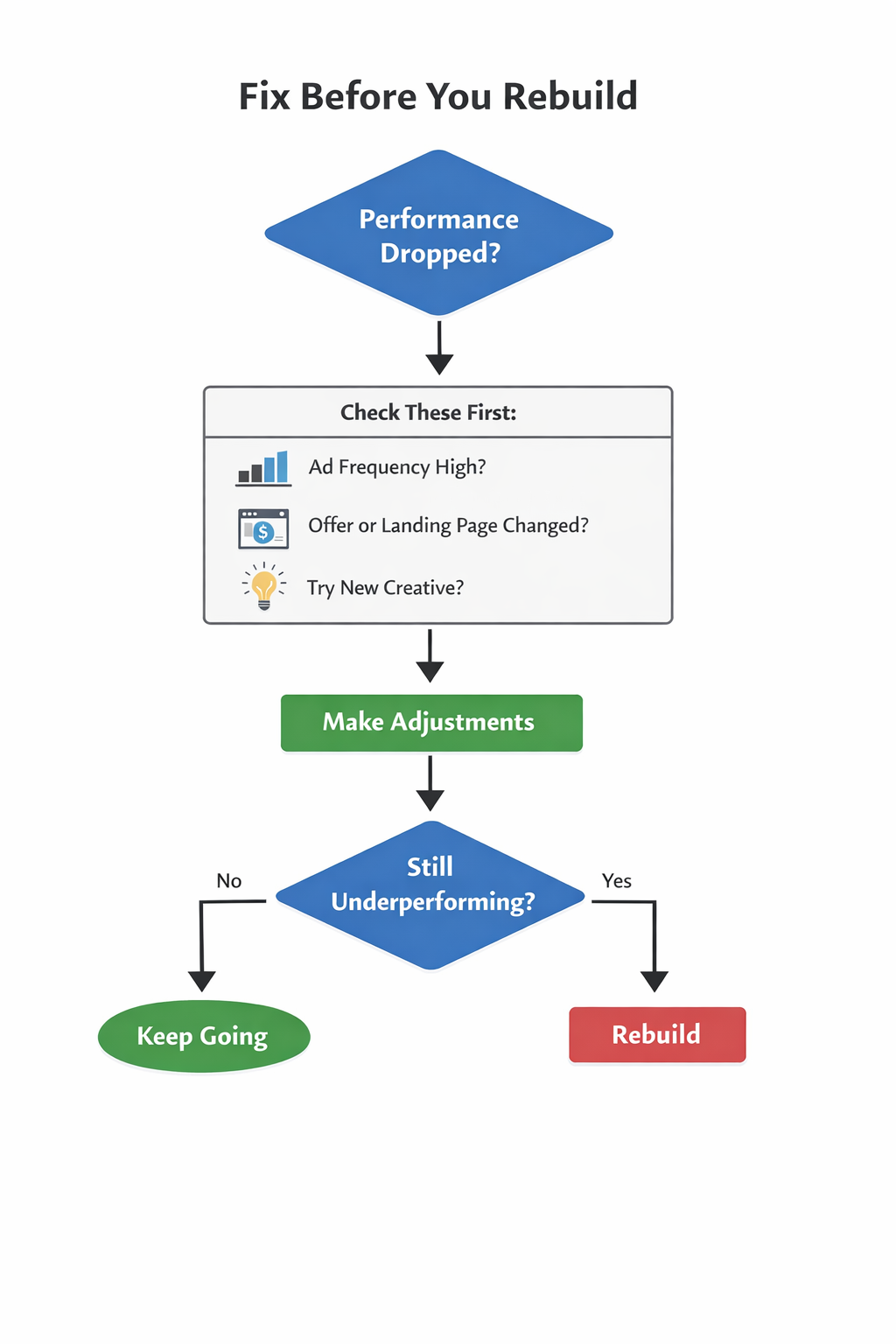
When results dip, most marketers shut the campaign down. But often, that’s premature. Many times, a simple adjustment can bring it back to life.
Questions to Ask Before Restarting:
-
Is it fatigue? Check frequency. If it’s above 3.5, try new creatives or angles.
-
Has the offer changed? If your landing page or pricing shifted, the ad might be out of sync.
-
Can small changes help? Try a new headline, CTA, or visual before rebuilding.
Suppose an education campaign sees sign-ups slow after three weeks. Updating the video thumbnail and changing the opening hook helps stabilize results without relaunching everything.
Always fix before you rebuild — it saves time, money, and momentum.
Final Thoughts
Great campaigns aren’t just launched — they’re built to evolve. If you want consistent performance from your Facebook and Instagram ads, design your campaigns to last from the start.
Here’s how to do it:
-
Build around a message that matters longer than a week.
-
Plan multiple angles, formats, and creative variations before launch.
-
Start with broad targeting, then refine using tools like LeadEnforce.
-
Use automation to protect your budget — not replace your strategy.
-
Choose ad formats that are easy to update, remix, and extend.
Longer-lasting campaigns aren’t luck. They’re built with better systems and smarter thinking from day one.