Many Facebook ad accounts don’t fail because of bad ideas. They fail because the structure can’t sustain growth.
Without a flexible, scalable framework, most campaigns either burn out quickly or get stuck. To build something that lasts, you need more than short-term wins — you need a repeatable system.
This article outlines how to design ad frameworks that keep learning, avoid burnout, and support long-term performance.
Why most ad setups break over time
At first, nearly any ad structure can work. With a good offer and small budget, Meta can find cheap results. But success at a small scale doesn't mean you're set up to grow. Most ad accounts collapse when trying to scale without a proper foundation.
Here’s what usually causes that breakdown:
-
Learning gets blocked. Fragmented campaigns don’t gather enough signal to optimize effectively. Meta's algorithm relies on clear data paths to know what’s working. If every campaign collects different signals, the algorithm can’t learn.
-
Audiences fatigue fast. Without a system to rotate creative or expand reach, results drop quickly. You may see performance nosedive simply because your top-performing ad hit the same users too many times.
-
No path to scale. Without consolidated budget and structure, there’s no safe way to increase spend without breaking performance.
A better system starts with campaign structure. For a deeper dive into this, see the role of campaign structure in predictable ad performance.
The goal: build a system, not just a winning ad
Successful ad accounts don’t rely on one good ad. They build a machine that generates winning creative, learns from losses, and improves week by week.
To make this happen, your framework should:
-
Turn strong ads into repeatable templates;
-
Make testing easy to track and scale;
-
Let performance data flow cleanly into decisions.
If your structure depends on one creative, or one campaign setup, you're always one burnout away from a drop in results. Meta rewards consistency and scale. A good framework makes both possible.
Key principles of high-performing ad frameworks
1. Group campaigns by function, not by segment
Too many advertisers separate campaigns by age, gender, or interests. It feels logical — but it splits your budget into small, weak pieces.
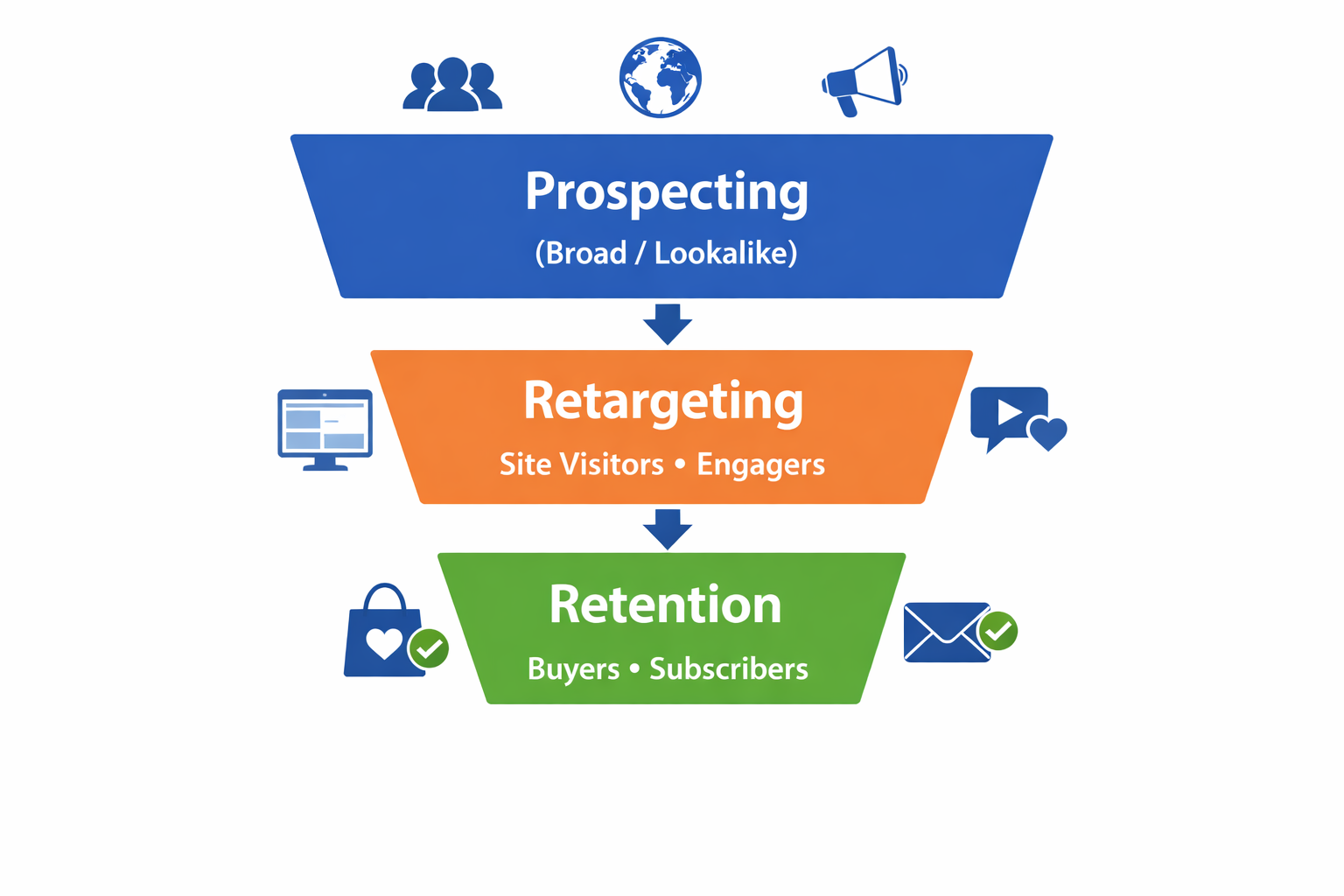
Instead, group campaigns by what they do. Define them by their function in the funnel:
-
Prospecting: Reach new audiences using broad or lookalike targeting. Keep this campaign optimized for discovery, not conversions.
-
Retargeting: Bring back site visitors, video viewers, or social engagers from the past 7–30 days. Use creative that reminds, not re-explains.
-
Retention: Re-engage your best customers, email list, or people who clicked but didn’t convert. This is your lowest-cost, highest-trust group.
Want more ideas? See the 3-campaign Facebook ad strategy for consistent growth.
2. Test creative inside a dedicated environment
Ad testing usually breaks down because it’s inconsistent, scattered, or mixed with scaling efforts. You need a dedicated campaign where creative tests run cleanly — and get clear results.
A strong testing structure includes:
-
One campaign for creative testing only, labeled clearly;
-
Broad or Advantage+ targeting to reduce audience bias;
-
2–3 ad variations launched weekly, with only one variable changed (e.g. headline, visual, or CTA).
Keep your tests narrow and disciplined. Don’t change 5 things at once. If an ad works, you won’t know why unless the variable was isolated.
For more, visit creative testing with limited budget: what’s worth prioritizing.
3. Separate testing from scaling
Scaling ads inside your test campaign is a fast way to ruin performance. Tests are volatile. When you increase spend or change variables mid-test, you interrupt the learning phase.
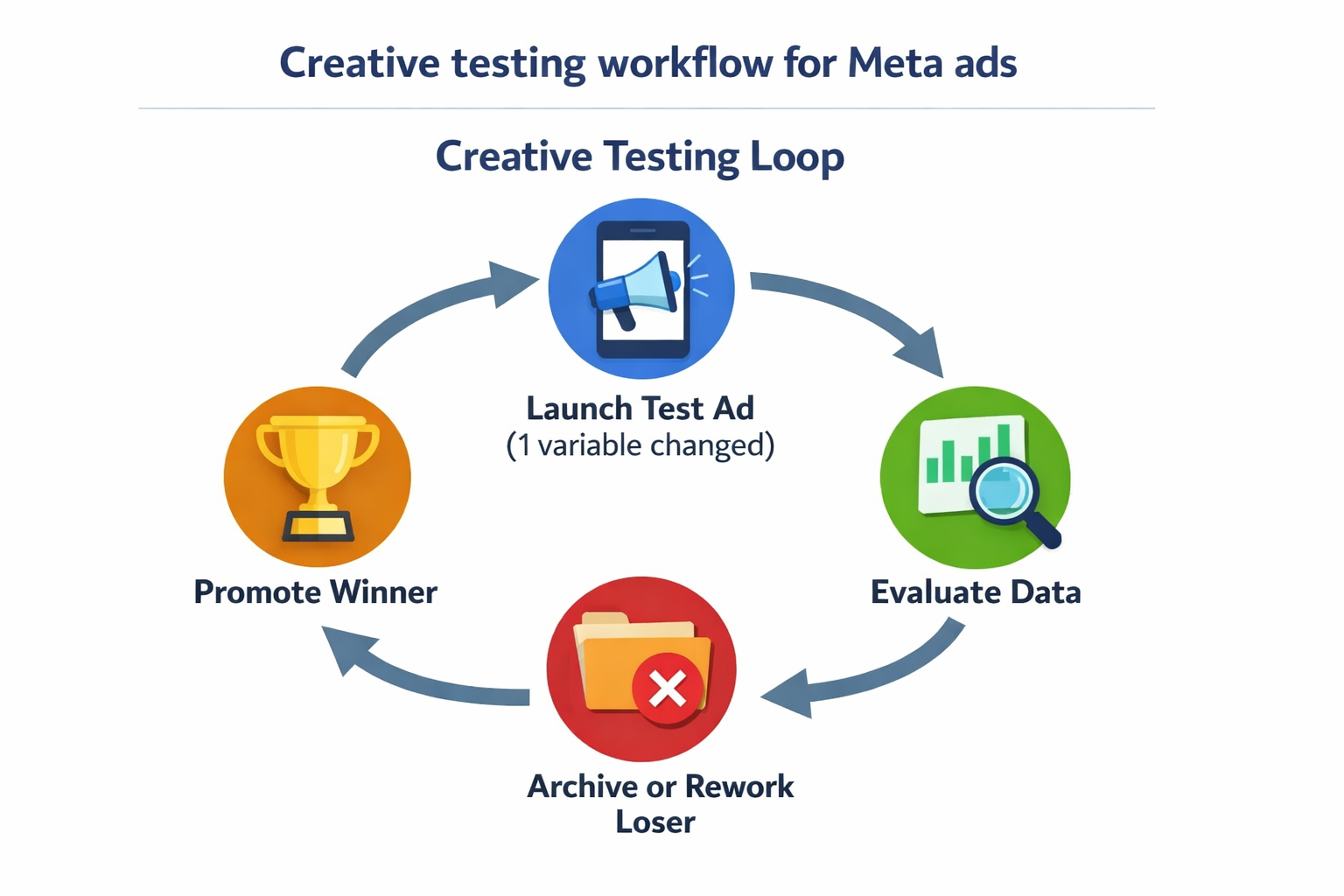
A better system:
-
Tests ads in one campaign (low budget, short run);
-
Moves winning ads into a scaling campaign (stable budget, steady audience);
-
Keeps scaling campaigns clean and consistent — no changes mid-flight.
If you're unsure how to do this, explore why your Facebook ads stop scaling (and how to fix it).
How to future-proof your framework
1. Use clear naming conventions
Your structure should help you move faster, not create confusion. Good naming keeps your tests organized, your top performers visible, and your insights replicable.
Here’s a useful naming format:
-
24Q1_Static_UGC_OfferA_BOGO
-
23Q4_Video_Demo_Hook2_30s
It’s clear which quarter, format, and message type is being tested. You can look at your reporting and spot winning types at a glance.
Need more help? Check what campaign naming conventions actually help you optimize faster.
2. Watch for early signs of fatigue
You shouldn’t wait until ROAS drops to refresh your ads. Smart frameworks monitor early indicators of creative fatigue.
Watch for:
-
A 20%+ drop in CTR week-over-week;
-
A rising CPM with stable audience size;
-
Falling conversions even when impressions are stable.
These are signs your ad is being over-served or ignored. Rotate creative proactively — before performance crashes.
3. Refresh your structure every 90 days
Meta changes. Markets change. Your campaigns should too. Set a recurring 90-day audit to:
-
Re-assess campaign functions and naming logic;
-
Remove underperforming tests;
-
Adjust budget splits based on what’s scaling now;
-
Review overlap and audience decay.
This lets you evolve while keeping what works. Stagnant frameworks eventually collapse. Active ones improve.
Framework variations by business model
SaaS or lead gen
-
Use 1-day and 7-day click retargeting audiences;
-
Lead magnet or demo offer-focused creative;
-
CRM data synced back into Meta for smarter targeting.
Also explore lead generation ads vs. conversion campaigns: what’s better for you.
Ecommerce
-
Segment creatives by product group (new arrivals, bundles, top-sellers);
-
Use Advantage+ shopping where possible;
-
Post-purchase retargeting with UGC or bundle offers.
More tips here: Facebook ads for e-commerce: how to drive sales through retargeting.
High-ticket services
-
Focus on credibility (before/after case studies, expert explainers);
-
Use message or lead form objectives first — then move to conversions;
-
Emphasize long-form content and testimonials.
Explore Facebook ads for service businesses: smart targeting tips for tailored advice.
Final thoughts: frameworks beat tactics
A single winning ad is helpful. A framework that keeps producing winners is powerful.
When you build on structure, not hacks:
-
You scale without stress;
-
You test with clarity and speed;
-
You protect against fatigue, algorithm shifts, and waste.
Long-term success with Meta ads isn’t about chasing what’s trendy. It’s about building frameworks that adapt, learn, and scale — consistently.