If you’re running Facebook or Instagram ads, you already know how fast things change. The algorithm shifts. Audiences behave differently. What worked last month might stall this month.
To stay ahead, you need more than reports. You need a system that helps you notice what’s working, spot problems early, and make better decisions. This is also why having a clear structure matters, not just isolated optimizations.
You can see this idea expanded in How to Build a Facebook Ads Framework That Scales Over Time.
That’s where feedback loops come in. They help you learn from your campaigns as you run them, so you can adjust before wasting time or budget.
What Is a Feedback Loop in Marketing?
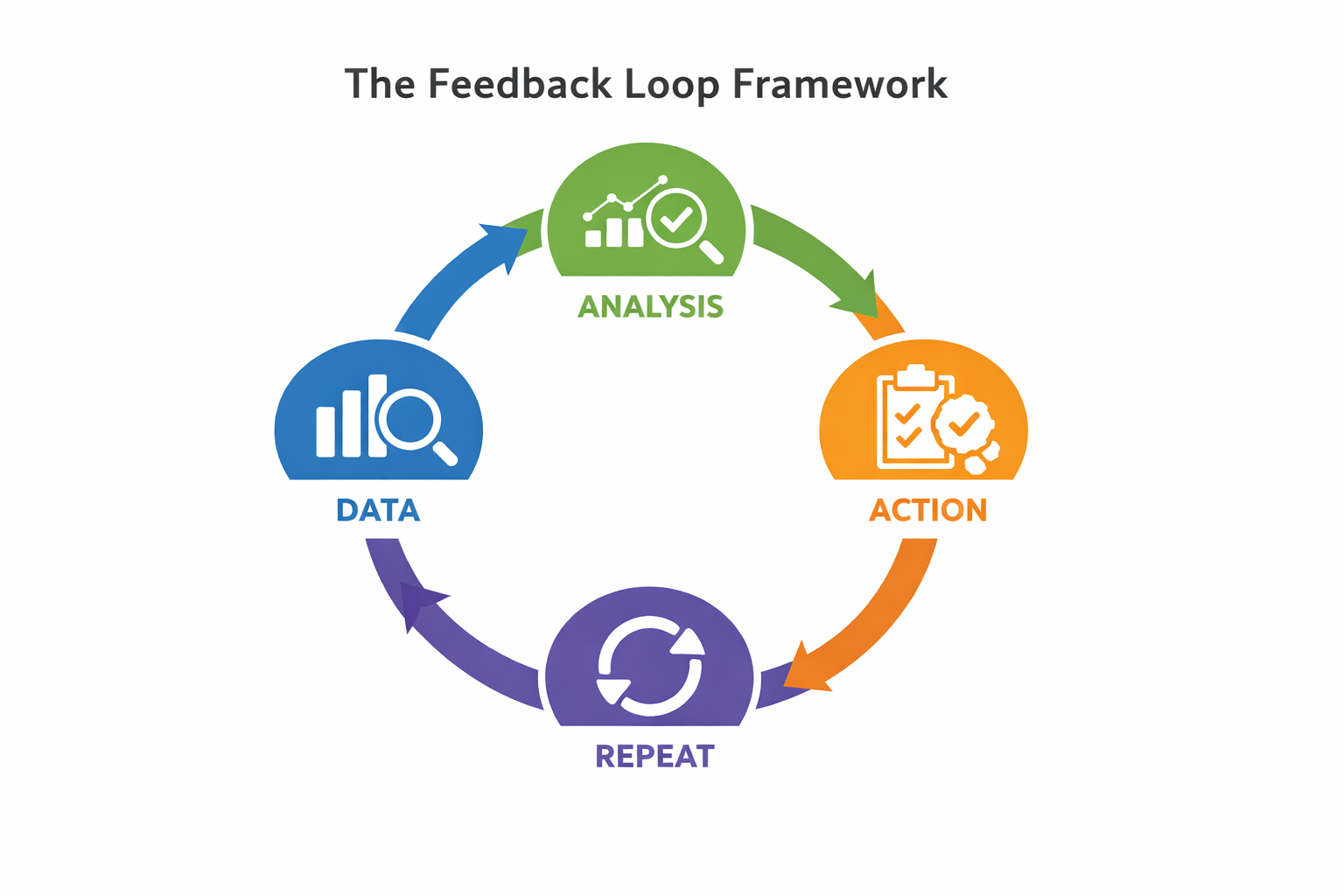
A feedback loop is a simple concept. You collect performance data, learn from it, and make changes. Then you repeat.
This cycle helps you improve your results without relying on guesswork. It’s not about reacting to every little dip in performance. It’s about spotting real patterns and adjusting with intention.
When you build a proper loop, you stop wondering if something is working. You start knowing why it’s working or why it isn’t. Many advertisers struggle here because they focus on surface metrics, which is covered in more detail in How to Analyze Facebook Ad Performance Beyond CTR and CPC.
The Three Core Pieces of a Feedback Loop
To make feedback loops useful, focus on three areas: input, analysis, and action.
1. Start With the Right Inputs
Not all data is helpful. Track the signals that support smart decisions.
Useful inputs include:
-
Performance data from Meta Ads Manager: CPM, CTR, ROAS, and cost per result.
-
Website behavior metrics: bounce rate, time on page, and drop-off points.
-
Customer feedback: support chats, product reviews, comments, or messages.
When you combine these data points, you get a clearer picture of what’s actually influencing your results, instead of guessing based on one metric.
2. Look for Patterns, Not Just Spikes
Once you have the data, the next step is understanding it. Don’t just check dashboards to see if numbers went up or down.
Ask yourself:
-
Are certain creatives consistently underperforming?
-
Is one audience clicking more but converting less?
-
Did results change after an edit to the landing page?
This kind of analysis helps you avoid panic-driven decisions. If clicks look good but sales are flat, the issue may not be the ad at all.
3. Take Action on What You Find
This is the most important step. Data is only valuable if it leads to action.
Based on what you learn, you can:
-
Replace creatives that are no longer performing.
-
Adjust or pause audiences that aren’t converting.
-
Shift more budget to the campaigns bringing in real results.
Knowing what to change first also matters. If everything is underperforming, testing blindly can slow you down. A clear testing order is outlined in What to Test First: Creative, Copy or Audience in Facebook Campaigns?
Even small moves, done regularly, can make a big impact over time.
Feedback Loops to Build Into Your Ad Workflow
You don’t need complicated systems. Just build a few repeatable loops into your process.
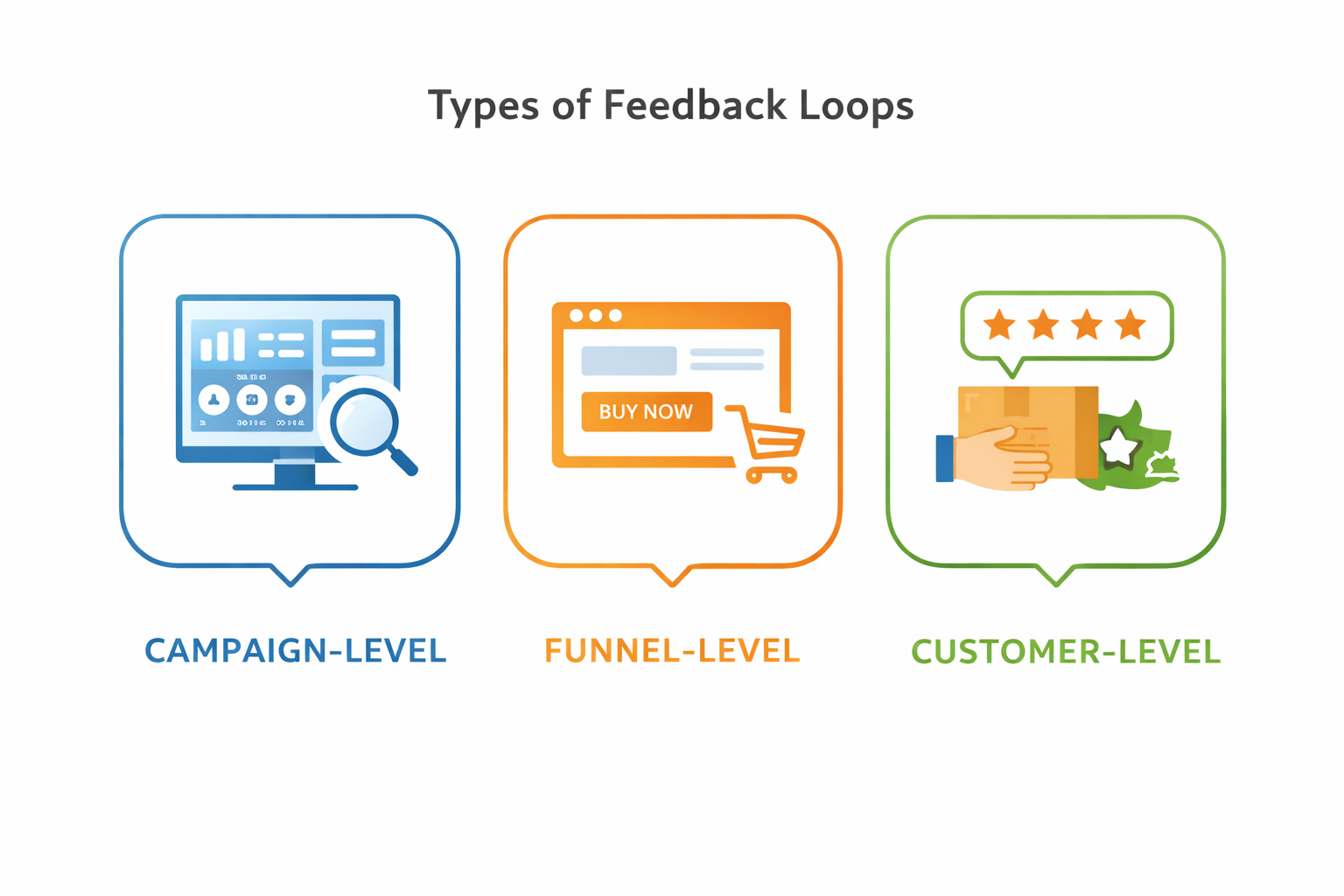
Campaign-Level Loops
This loop focuses on campaign performance within Meta’s ad platform.
You're looking at things like:
-
Fatigue signals such as lower CTR and rising CPM.
-
Placement-level performance, such as Feed versus Stories.
-
Changes in performance after editing copy or visuals.
Placement insights are often overlooked, even though they can strongly affect results. For a deeper dive, see Why Ad Placement Choices Can Make or Break Your Facebook Campaign.
Funnel-Level Loops
This loop goes beyond ad clicks to the full user journey.
If people are clicking but not converting, something between the ad and the sale needs attention. It might be a weak landing page, a confusing offer, or poor follow-up.
Middle-of-funnel data is especially important here and often ignored. This gap is explained well in Why Your Facebook Campaign Needs a Middle of Funnel Strategy.
By watching how users move through the funnel, you’ll know where to focus your fixes.
Customer-Level Loops
The final loop tracks what happens after the purchase.
You want to understand how customers feel and behave. Are they coming back? Referring others? Leaving reviews?
These signals help improve retention and inform future ad messaging. They also help you avoid optimizing only for short-term wins.
How to Make Feedback Loops Easier and Faster
You don’t need to check everything manually. A few small tools and routines can keep things moving smoothly.
Use Meta’s Tools
Meta offers useful features like:
-
Breakdown reports, which show how performance varies by device, age group, or placement.
-
Automated rules, which alert you when costs rise or results drop below a certain threshold.
Automation works best when paired with regular review, not when it replaces thinking altogether.
Build Simple Dashboards
Use tools like Looker Studio, Supermetrics, or Google Sheets to build clean dashboards.
Focus on the metrics that matter most to you. That way, you’re not getting lost in noise or reacting to every small fluctuation.
Set Weekly and Monthly Reviews
Make time to check your loops regularly.
-
Weekly: Review ad performance, test small updates, rotate creative.
-
Monthly: Look at funnel data and audience quality. Test new offers or landing pages.
-
Quarterly: Step back and review benchmarks, strategy, and market shifts.
Consistent reviews make feedback loops practical instead of overwhelming.
What to Avoid
Not all feedback is worth acting on. A few common mistakes to watch for:
-
Reacting to daily swings in performance. One bad day doesn’t mean the campaign is failing.
-
Over-relying on last-click data. Attribution is complex, and this often hides what’s really driving results.
-
Ignoring what customers say. Reviews, DMs, and comments often explain performance better than metrics alone.
Stay focused on trends and patterns, not one-off results.
Final Thoughts: Keep the Loop Going
Marketing is no longer about setting a campaign and waiting. The brands that grow are the ones that listen, learn, and adapt.
A simple feedback loop helps you do that. You get clear input, find real patterns, and make smart changes.
You don’t need complex systems or giant budgets. Just consistent tracking and thoughtful decisions.
Start small. Check in regularly. Let the data guide your next move.