Over-optimization happens when you try to control every detail of your ad campaigns — too early, too often, or without enough data.
It often shows up in ways like:
-
Making small targeting changes every few days, even when results are steady;
-
Pausing ads quickly after a short dip in results;
-
Creating too many ad sets with only minor differences.
At first, these actions might feel productive. But they often prevent Meta’s system from doing what it does best — learning and optimizing over time.
Why It Hurts Facebook and Instagram Ads
The Algorithm Needs Time to Learn
Meta’s ad platforms rely on machine learning. They need time and consistency to figure out which users are most likely to convert.
When you over-optimize, you interrupt that learning process.
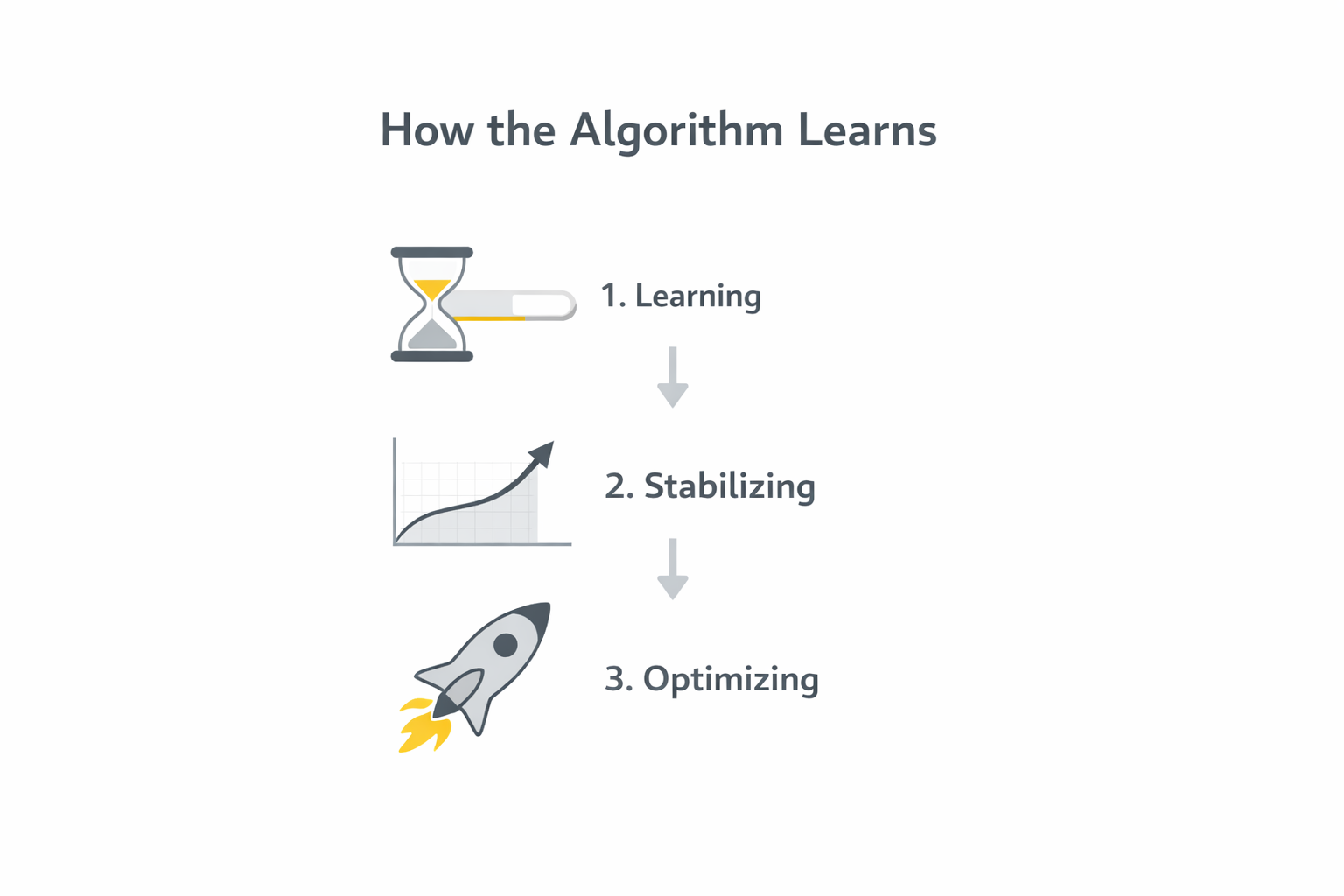
This causes:
-
Campaigns to re-enter the learning phase repeatedly;
-
Delivery patterns to become unstable;
-
Higher costs with fewer conversions.
Give your campaigns time to stabilize. Let the system collect data before jumping in to adjust. For more on this, read How to Finish the Facebook Learning Phase Quickly.
Smaller Isn’t Always Smarter
Many advertisers believe more precision equals better results. That’s not always true — especially on platforms that optimize using broader signals.
Over-segmentation often leads to:
-
Dozens of ad sets with small targeting tweaks that dilute delivery;
-
Creative tests with too many versions and not enough budget per variant;
-
Narrow audience definitions that limit reach and increase CPM.
Instead of gaining control, you lose scale and efficiency. Often, the system can't gather enough data to learn anything meaningful. Learn more in Over-Segmentation in Facebook Ads: Why Too Many Campaigns Kill Efficiency.
Too Many Changes, Not Enough Clarity
Constant changes don’t just confuse the algorithm. They also make it harder for you to understand what’s actually working.
When you over-optimize, you tend to:
-
React to short-term shifts instead of watching long-term patterns;
-
Make multiple changes at once, with no clear way to isolate the impact;
-
Burn out from micromanaging performance that doesn’t improve.
Stepping back gives you a clearer picture. Sometimes, waiting a few extra days tells you more than another round of edits.
When Optimization Helps — and When It Doesn’t
Use It With Purpose, Not Panic
Good optimization isn’t about fixing problems as fast as possible. It’s about making the right changes at the right time.
Before adjusting a campaign, ask yourself:
-
Has it been running long enough to gather reliable data?
-
Is there a clear trend — not just a one-day drop?
-
Have I isolated only one variable to test?
If you’re missing solid answers, hold off on making changes. A small delay can protect your results in the long run.
Signs You Might Be Over-Optimizing
Not sure if you’re going too far? These warning signs usually mean it’s time to slow down:
-
You’ve edited the same campaign more than twice this week;
-
Your ads never make it out of the learning phase;
-
Performance feels unpredictable, and your changes feel rushed.
If any of that sounds familiar, take a step back. Focus on strategy, not speed.
What to Do Instead
Build a Simple Testing Plan
Structured testing removes guesswork. Instead of making random edits, you create controlled experiments with clear goals.
Here’s how to approach it:
-
Run two ad creatives to the same audience over 5 to 7 days;
-
Compare targeting options one at a time with identical budgets;
-
Wait for a minimum number of results — like 50 conversions — before drawing conclusions.
This method gives you real insights, not just reactions. You can also explore Why Most Ad Tests Fail and How to Fix Them to avoid wasting test budgets.
Use Broader Targeting, Better Creative
You don’t need to narrow your audience to the smallest possible group. Often, broader targeting combined with high-quality creative leads to stronger results.
Why this works:
-
Broad audiences give the system more room to find qualified users;
-
The algorithm has more signals to optimize against;
-
Creative becomes your main driver of results — not micro-targeting.
Let Meta’s tools do what they’re built for. Focus your effort where it matters most: your message.
Set a Review Schedule — and Stick to It
Reviewing your performance is essential. But you don’t need to do it constantly. Set a rhythm that helps you stay focused without overreacting.
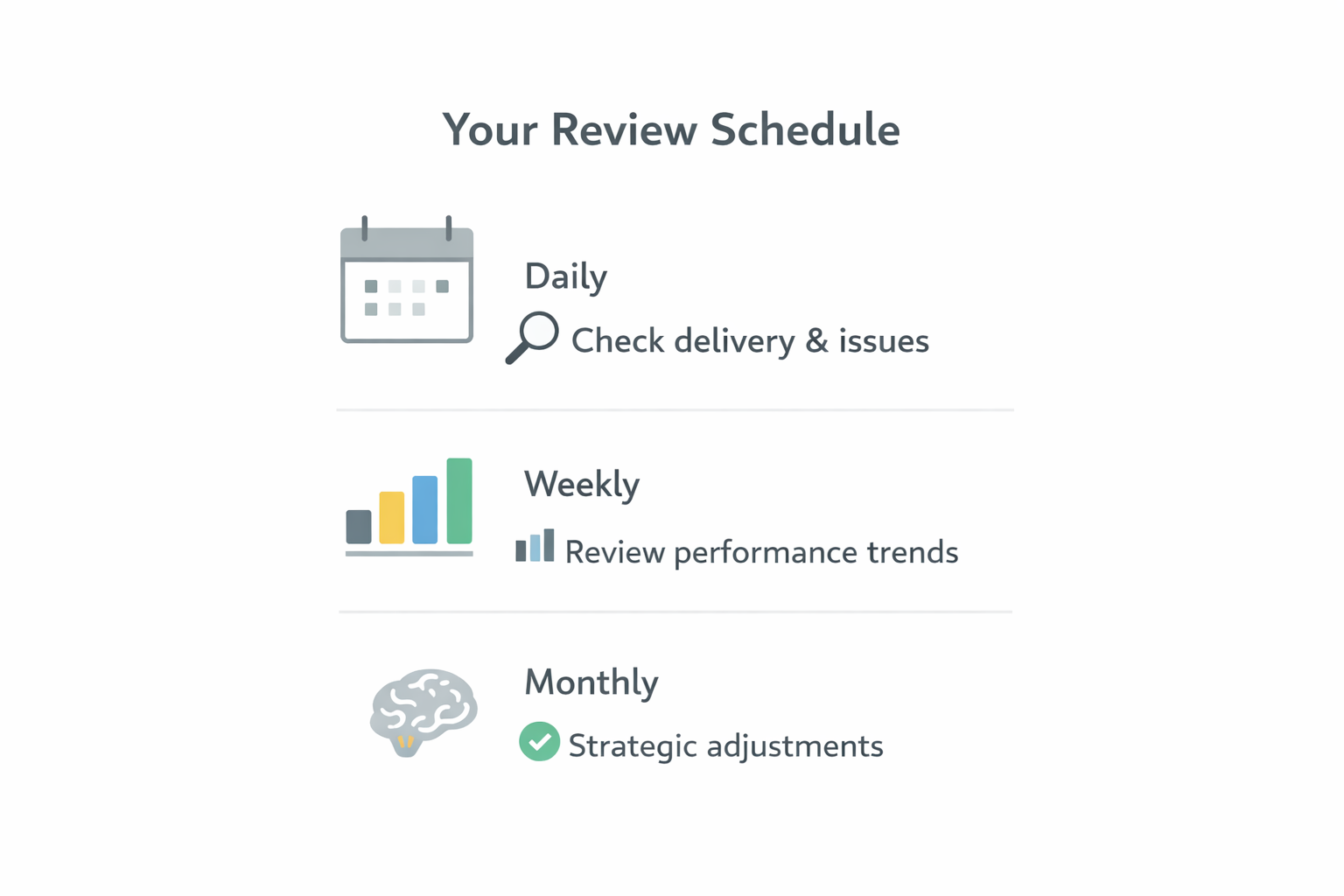
Here’s a simple structure to follow:
-
Daily: Check for delivery issues, disapprovals, or budget pacing problems;
-
Weekly: Review key metrics like CTR, CPA, and ROAS for trends;
-
Monthly: Assess broader performance and make strategic adjustments.
This gives you time to learn from patterns, not panic over dips. For a smarter budgeting mindset, see Why Daily Budget Increases Can Hurt Your Performance (and What to Do Instead).
Final Thoughts: More Isn’t Always Better
Over-optimization sounds like a smart move — but in practice, it often slows growth, increases costs, and creates confusion.
Meta’s systems are designed to learn and adapt. But that process takes time. Your job isn’t to micromanage it every hour — it’s to guide it with purpose, using real data and well-timed decisions.
Let campaigns run long enough to learn. Test one thing at a time. Focus on clarity over control.
In digital advertising, smart patience outperforms fast reactions.