Fake leads are one of the most expensive hidden problems in performance marketing. They inflate acquisition metrics, distort optimization decisions, and overload CRM systems with contacts that will never convert. Detecting them early—at the click, form, or first interaction stage—can significantly improve ROI and sales efficiency.
This article breaks down the most reliable early indicators of fake leads and practical ways to filter them out without hurting genuine conversions.
What Are Fake Leads?
Fake leads are submissions that do not represent real, reachable, or purchase-ready prospects. They may be generated by bots, click farms, incentivized traffic, or users submitting false information to access gated content.
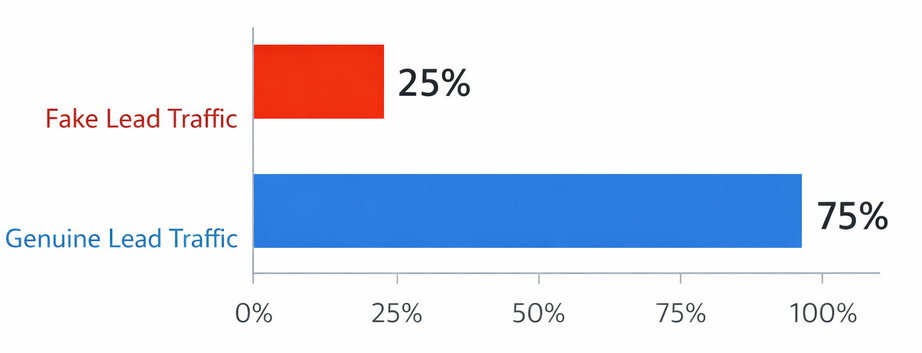
Proportion of lead generation traffic identified as fake vs. real submissions
According to industry reports, businesses lose 15–25% of their ad spend on invalid traffic and low-quality leads, while sales teams can waste up to 30% of their follow-up time contacting leads that will never respond.
Common Early Signals of Fake Leads
1. Abnormal Submission Speed
One of the earliest red flags is form completion that happens unrealistically fast. When a user fills out a multi-field form in a few seconds, it often indicates automation rather than human intent.
What to watch:
-
Form submissions under 5–10 seconds
-
Multiple submissions with identical completion times
2. Duplicate or Pattern-Based Data
Fake leads frequently reuse similar information across submissions.
Examples include:
-
Repeating names with slight variations
-
Sequential email addresses (e.g., name1@, name2@)
-
Identical phone numbers across different leads
Studies show that over 40% of fraudulent leads share detectable data patterns when reviewed in bulk.
3. Suspicious Email Domains
Early filtering of email domains can remove a large portion of fake leads.
High-risk indicators:
-
Random character strings in emails
-
Temporary or disposable email providers
-
Mismatched country domains and IP locations
Businesses that apply basic email validation report 20–35% reductions in invalid leads at the form level.
4. Geographic and IP Mismatch
If a campaign is targeted to a specific country or region, leads coming from unexpected locations are a major warning sign.
Look for:
-
IP addresses from non-target regions
-
Multiple leads coming from the same IP within seconds
-
Proxy or VPN-related traffic spikes
Invalid traffic audits indicate that up to 25% of fake leads originate from data centers or masked IP sources.
5. Unrealistic or Empty Field Values
Fake leads often fail basic logic checks.
Common examples:
-
Phone numbers with too few digits
-
Company names like “Test,” “NA,” or random characters
-
Job titles that do not match the selected industry
Early field-level validation can eliminate a significant portion of junk submissions without adding friction for real users.
Behavioral Signals After Submission
Even if a fake lead passes form checks, behavior after submission can expose it quickly.
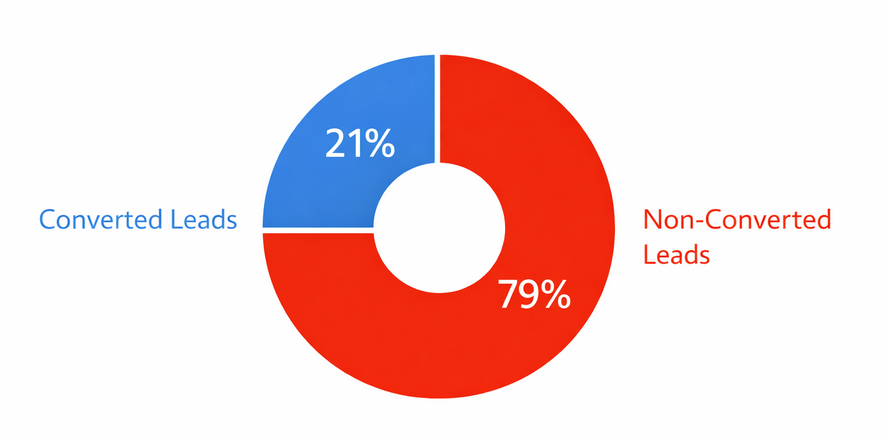
Breakdown of generated leads that ultimately convert to sales vs. those that never convert
Red flags include:
-
Zero email opens or link clicks
-
No website return visits
-
Identical inactivity patterns across multiple leads
Data shows that genuine leads typically interact with at least 2–3 touchpoints within the first 48 hours, while fake leads rarely show any follow-up behavior.
How to Detect Fake Leads at Scale
Use Multi-Layer Validation
The most effective approach combines multiple filters:
-
Real-time form validation
-
IP and geo analysis
-
Behavioral scoring in the first 24–72 hours
Relying on a single signal increases false positives and risks blocking real users.
Apply Lead Scoring Early
Assigning scores based on data quality and behavior helps teams identify suspicious leads before they reach sales pipelines.
Companies using early-stage lead scoring report up to 20% higher sales productivity by reducing time spent on unqualified contacts.
Monitor Source-Level Performance
Fake leads tend to cluster around specific traffic sources, placements, or publishers.
Key metrics to review:
-
Conversion-to-contact ratios
-
Lead-to-opportunity rates by source
-
Time-to-first-action per campaign
Early source analysis helps cut off low-quality traffic before it scales.
Mistakes to Avoid When Filtering Fake Leads
-
Blocking aggressively without testing, which can reduce legitimate conversions
-
Relying only on CAPTCHA, which bots increasingly bypass
-
Ignoring early behavioral data in favor of static rules
A balanced approach focuses on detection, not just prevention.
Recommended Related Articles
These articles explore data integrity, traffic quality, and long-term performance optimization strategies.
Final Thoughts
Fake leads are not just a traffic issue—they are a measurement and revenue problem. By identifying suspicious patterns early, validating data at the point of capture, and analyzing post-submission behavior, marketers can protect budgets, improve reporting accuracy, and help sales teams focus on real opportunities.
Early detection is not about adding friction—it’s about building smarter filters that let real prospects through while quietly stopping the rest.