Meta’s advertising system has shifted. Precise targeting based on interests, behaviors, and demographics used to be key to campaign success. Today, that control is fading.
Instead of manually narrowing your audience, Meta encourages you to target broadly and let its AI figure out who’s most likely to take action. This shift is driven by privacy updates, automation improvements, and the platform’s learning algorithm.
But there’s a catch — when targeting is broad, your ad creative must carry more weight. The creative becomes the first filter: it determines who stops, who clicks, and who converts.
Dive deeper into targeting changes in Facebook Ad Targeting 10.
Creative Now Drives Optimization, Not Just Attention
When you're advertising to a broad audience, you're showing your ad to a wide mix of people — some of them ideal customers, others not. The only thing that can sort them in real-time is your ad creative.
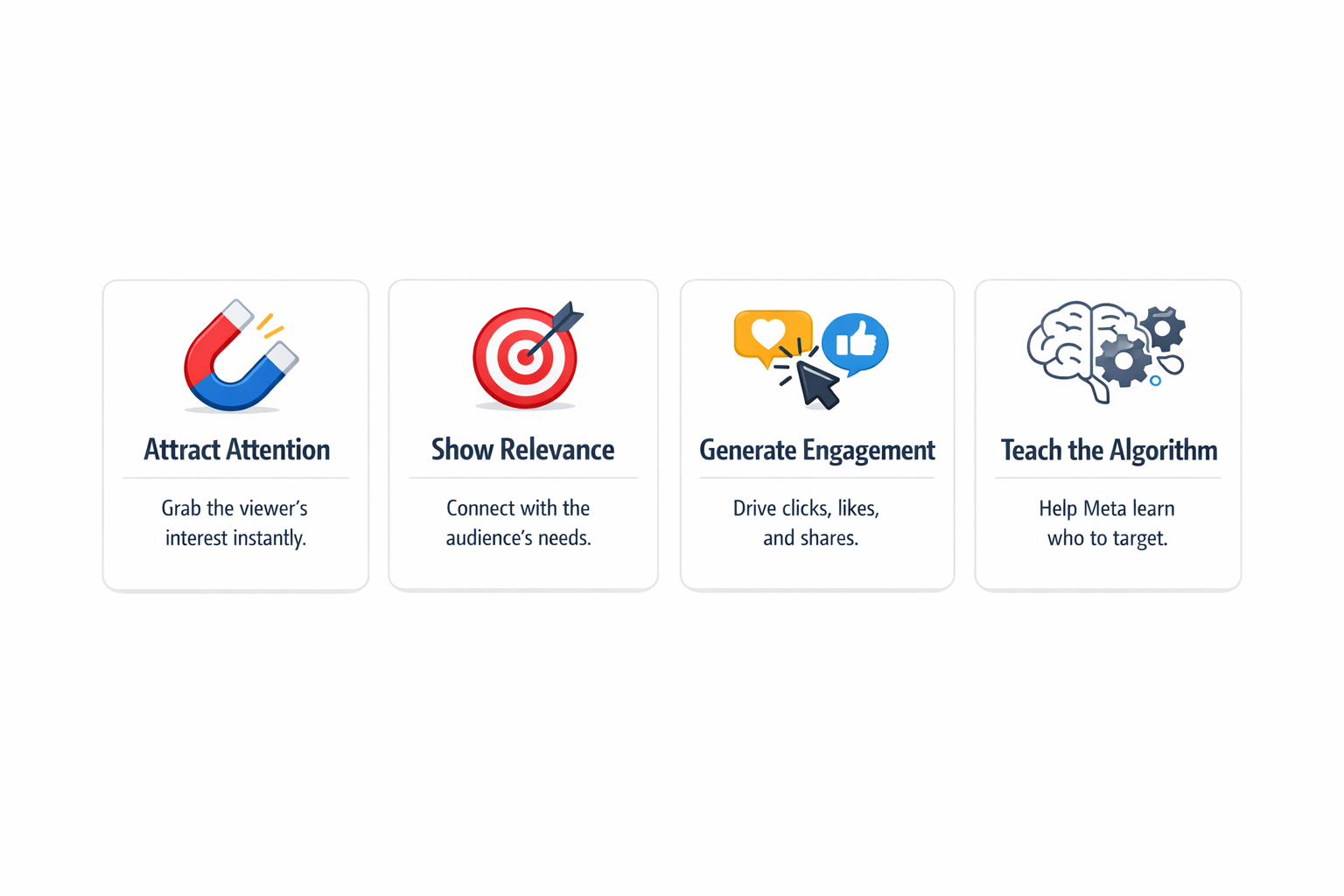
Here’s what strong creative does in broad campaigns:
-
Attracts the right people, even without detailed targeting;
-
Explains your offer quickly, so people know it’s relevant;
-
Triggers high-quality engagement signals, which help Meta improve delivery;
-
Builds trust and clarity, especially for those unfamiliar with your brand;
-
Filters out uninterested users, saving your budget for better matches.
Each of these jobs used to be shared between targeting and creative. Now, creative handles most of them alone.
What Makes Creative Work in Broad Campaigns
When you can’t rely on audience filters, your creative needs to do more — and do it faster.
Let’s break down the key creative elements that work best with broad audiences:
1. Clear Visual Focus
-
Use one strong visual — not a crowded layout with competing elements.
-
Show your product or service in use, not just a logo or packaging.
-
Highlight one benefit or message, so the viewer knows what to expect immediately.
Why it works: In a fast-scrolling feed, people decide in seconds whether to stop. A clear visual helps them understand the offer without reading every word.
2. Message-Market Fit
-
Lead with a real-world problem your audience faces.
-
Speak in a tone your customer would use — avoid jargon or sales clichés.
-
Connect benefits to outcomes, not features.
Example: Instead of “High-tech productivity planner,” try “Finally get to 5 PM with a clear to-do list.”
Why it works: People don’t buy features — they buy outcomes. Broad audiences need messaging that connects fast and feels personally relevant.
3. Ad Formats That Match the Viewer’s Behavior
Use different formats based on how people scroll:
-
Short-form video (under 15 seconds): Best for demonstrating quick benefits or showing transformation.
-
Carousel ads: Ideal for breaking down steps, showcasing variations, or comparing options.
-
Static images: Effective for punchy messages, bold visuals, and strong offers.
Why it works: Different users engage with different formats. Testing multiple types increases your chance of finding a format that resonates with each part of your broad audience.
Need help picking the right formats? Read How to Repurpose a Single Creative Into 5 Different Facebook Ad Formats.
How Creative Signals Help Meta Learn Faster
Every click, scroll, save, and purchase sends a message to Meta’s algorithm. That data teaches the system who is most likely to convert — and that improves ad delivery.
Here are the core signals Meta tracks — and why they matter:
-
Scroll-stops (impression-to-engagement): A strong image or hook keeps people from swiping past. This tells Meta the ad is attention-worthy.
-
Clicks and video views: Clicking through or watching means the user is interested. This improves predictive accuracy for future delivery.
-
Saves and shares: These actions show deeper interest. Meta values these signals because they suggest intent.
-
Purchases and conversions: The strongest signal. These users become the model for who to target next.
The takeaway: Better creative leads to better signals. Better signals lead to better results — and a more cost-efficient campaign.
Creative Testing for Broad Targeting Success
Testing creatives isn’t optional in broad campaigns — it’s a must. Without detailed targeting, testing becomes your way of finding what works.
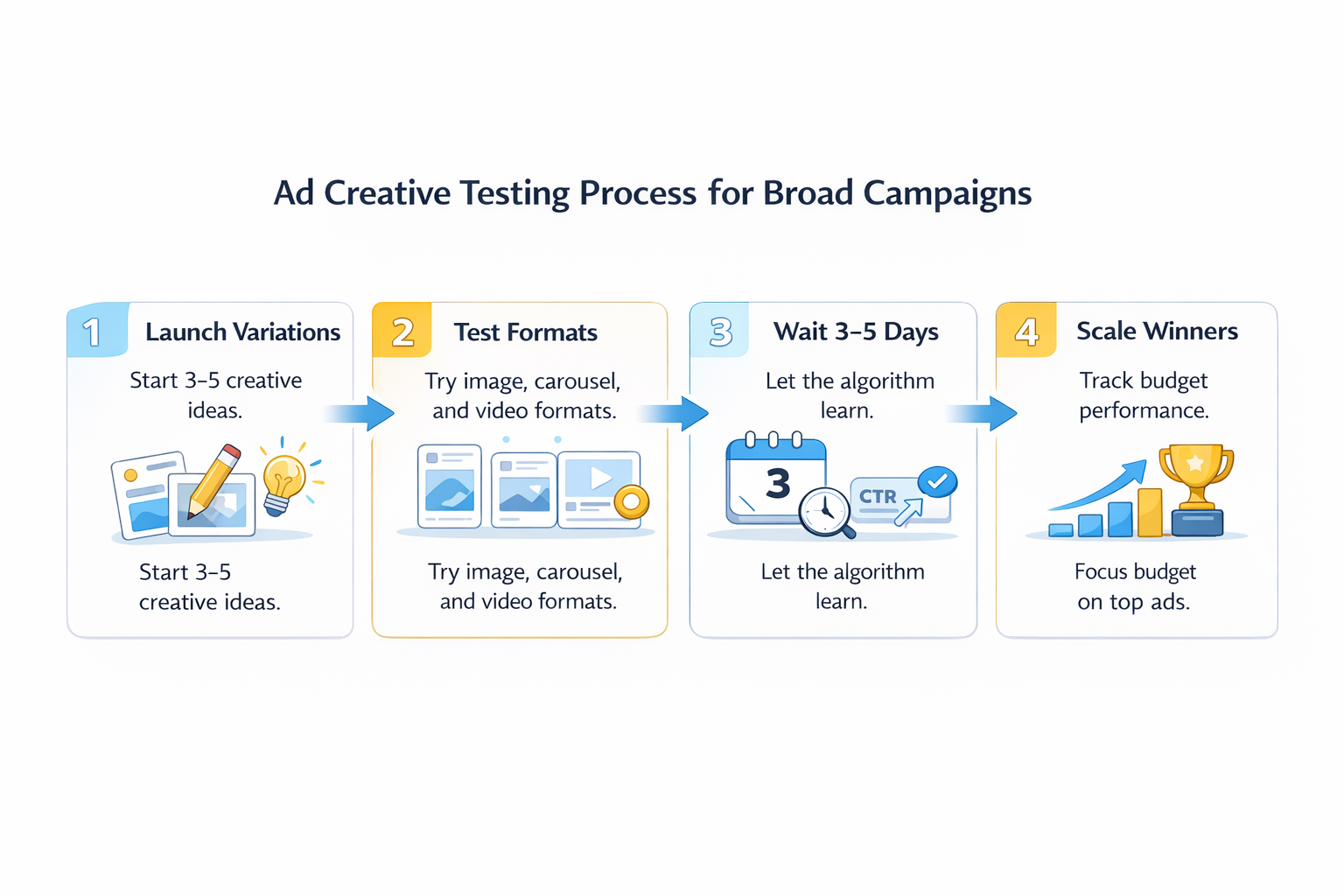
Here’s how to structure an effective creative test:
-
Start with 3 to 5 creative variations. Use different visuals, messages, or hooks — not just small edits.
-
Test multiple formats. Try video, carousel, and image to see what your audience responds to.
-
Let ads run for 3–5 days. Avoid turning them off too quickly — give the algorithm time to learn.
-
Track early indicators. Look at click-through rate (CTR), cost per click (CPC), and video watch time.
-
Scale the winners. Pause underperformers, and build new variations based on what worked.
Pro tip: Change only one major element per test — so you know what made the difference.
Learn about Meta’s built-in tools for testing in How to Use Advantage+ Creative Tools.
Refreshing Creatives Without Losing Momentum
Even your best creative won’t last forever. Audiences tire of seeing the same message too often — especially in broad campaigns where your reach is high.
Watch for signs of creative fatigue:
-
Drop in CTR or engagement rate;
-
Higher cost per result with no major change in targeting;
-
Frequency above 2.5–3.0;
-
Comments like “I’ve seen this too many times.”
Refresh ideas that work:
-
Update the visual, but keep the winning message.
-
Use the same structure, but test a new problem or hook.
-
Turn reviews or testimonials into creative themes.
-
Re-cut videos to shorten, speed up, or reframe the same story.
The goal: Keep performance steady without restarting the learning phase every time.
Learn more in Creative Fatigue vs Audience Fatigue.
Creative Is the New Targeting — Treat It That Way
You may not be able to hand-pick your audience anymore — but you can absolutely guide who connects with your ad. Your creative now is your targeting.
It attracts the right people, signals value, teaches Meta who to show the ad to next, and ultimately, drives the results that matter.
To recap:
-
Creative replaces detailed targeting in broad campaigns;
-
Strong visuals and clear messaging are key to early engagement;
-
Creative signals feed the algorithm — better signals mean better delivery;
-
Testing and refreshing are required to stay competitive and cost-effective.
When you treat your creative as a strategic asset — not just a design — your campaigns get stronger, your results scale faster, and your ad dollars go further.