When a Meta campaign performs badly, many advertisers change the targeting first. They add interests, remove interests, switch to broad, rebuild audiences, or launch another ad set.
Sometimes that helps. But often the audience is not the real problem. The offer, creative, landing page, or conversion event may be sending weak signals before targeting even gets a fair test.
Changing targeting too quickly can make the account harder to read. You may fix nothing and lose the little data the campaign had already collected.
Why poor results are not always a targeting problem
Bad targeting usually shows up as weak traffic quality. You get people who click but do not match the buyer profile, submit poor leads, or leave the landing page quickly.
But poor creative can create the same symptoms. If the ad attracts curiosity instead of intent, the audience may look bad even when Meta is reaching the right people.
The offer can also create confusion. A weak offer may bring low conversion rates across every audience, which makes advertisers think all targeting is broken.
This is why it helps to separate audience issues from message and offer issues. A good first step is to review what to do when Facebook ads look fine but do not drive results.
The targeting vs creative vs offer check
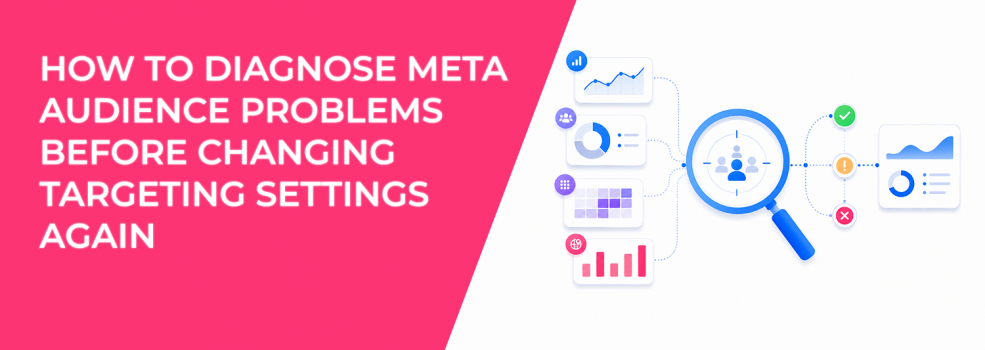
Before changing targeting, look at where the performance breaks.
If CTR is very low, the creative or message may not be earning attention. If CTR is decent but conversion rate is poor, the problem may be the offer, landing page, or audience quality.
If leads are cheap but sales rejects them, the issue is usually lead quality. That can come from targeting, but it can also come from broad messaging, weak form questions, or an offer that attracts the wrong people.
A simple diagnostic check:
- Low CTR and low engagement. Check the creative hook, format, and first impression before blaming targeting.
- Good CTR but weak landing page results. Check message match, page speed, offer clarity, and form friction.
- Cheap leads but poor sales quality. Check audience relevance, lead form questions, and whether the ad overpromises.
- High CPM with low reach. Check audience size, restrictions, exclusions, and auction competition.
This gives you a cleaner starting point. You are not guessing whether targeting is broken. You are looking at where the funnel starts leaking.
How to read audience quality inside Ads Manager
Ads Manager will not directly tell you “this audience is wrong.” You need to read several signals together.
For example, a low CPC can look good at first. But if those clicks do not turn into qualified leads, the campaign may be attracting people with low intent.
Frequency is another useful clue. If frequency rises quickly in a prospecting campaign, the audience may be too small or the creative may not be opening new demand.
You should also compare audience behavior after the click. If one audience has fewer clicks but more booked calls, it may be stronger than the audience with cheaper traffic.
This is why audience relevance matters more than reach in paid social campaigns. More reach does not help if the wrong people are entering the funnel.
What to check before rebuilding the audience
Many advertisers rebuild audiences too early. They see two bad days, assume the targeting failed, and launch another version before the campaign has enough useful data.
Before you do that, check whether the campaign had enough volume to judge. A campaign with five clicks and no leads has not proven much. A campaign with 200 clicks and no sales tells you more.
Review:
- Conversion event. Make sure Meta is optimizing for the action you actually care about.
- Audience size. Check whether the audience is too small for the budget or too broad for the offer.
- Creative promise. Make sure the ad attracts the type of buyer you want, not only easy clicks.
- Landing page match. The page should continue the same message the ad started.
This is also a good time to use a broader audit process. The guide on how to identify the bottleneck in your Facebook Ads funnel is useful when the problem is not clearly inside the audience settings.
When targeting probably is the problem
Targeting is more likely to be the issue when different audiences produce very different lead quality using the same creative and offer.
For example, if one audience brings booked calls and another brings fake or unqualified leads, the audience is clearly affecting quality. If every audience fails in the same way, the problem is probably higher in the funnel.
Targeting is also likely to be the problem when the campaign reaches people outside the real buyer profile. This can happen with broad interests, weak lookalike seeds, or Advantage+ setups based on poor conversion signals.
In that case, do not keep making random changes. Build one cleaner audience test and compare it against the current setup using the same creative, same offer, and same conversion event.
Final takeaway
Do not change targeting every time results drop. First, check whether the problem is actually the audience.
Look at CTR, conversion rate, lead quality, CPM, frequency, and post-click behavior together. If the audience is the issue, simplify the test and isolate the change. If the offer or creative is the issue, changing targeting will only hide the real problem for another few days.