Facebook ad review delays usually become a performance problem before the campaign spends a dollar.
The key problem is simple: the advertiser treats “published” as “live,” but Meta still has to review the ad before delivery starts. If the campaign is tied to a webinar, product launch, promo window, or lead target, that delay can compress the active delivery period and make performance look weaker than it really is.
Meta says the review process usually takes up to 24 hours, although some reviews may take longer. That means the launch plan should account for approval time before the campaign is expected to generate traffic, leads, or sales.
The problem: ad review delays break the planned launch window
A launch delay is not only an operational inconvenience. It changes how the campaign spends, learns, and reports.
If a campaign was supposed to run from Monday morning to Friday evening, but approval happens late Monday night, the system has less time to distribute budget. For daily budgets, that often means the campaign loses one full day of data. For lifetime budgets, the remaining delivery window becomes tighter, which can push spend into fewer auctions.
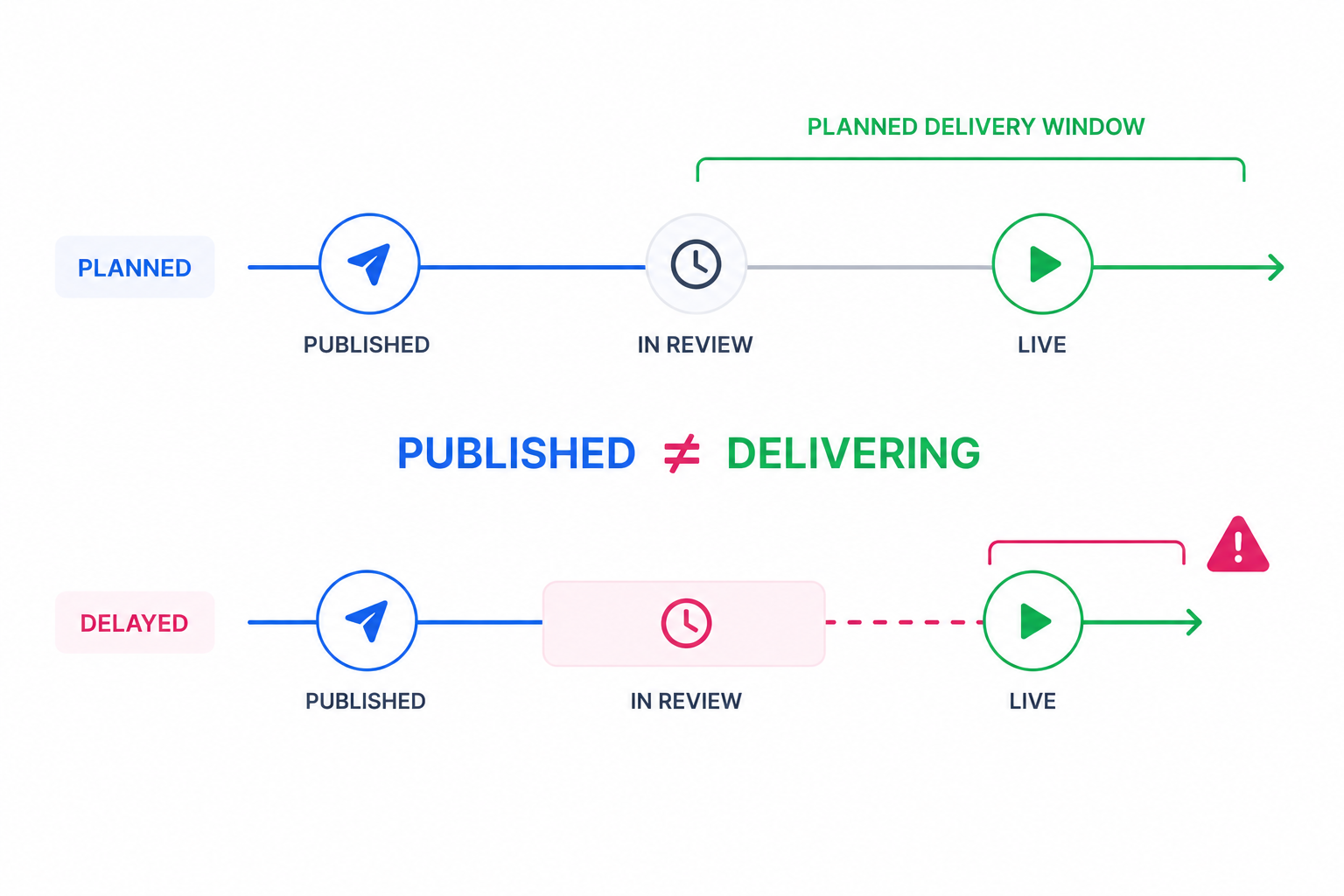
That can affect CPC, CPM, CPA, and lead volume. A campaign that needed five days to stabilize may only get three clean days of delivery, then the advertiser misreads the results as a targeting or creative issue.
This is especially risky for agencies and B2B lead generation teams. A delayed campaign can miss the period when sales follow-up capacity is highest, or when decision-makers are most active during the workweek.
Why review delays hurt performance data
A campaign that starts late often produces messy early data.
The first issue is pacing. When Meta has less time to spend the planned budget, delivery may cluster into a shorter window. That can make CPM look high because the campaign has fewer opportunities to find lower-cost auctions.
The second issue is diagnosis. A media buyer may see low spend, low impressions, and no conversions, then start editing the campaign too early. Those edits can create new delays or reset parts of the delivery process.
The third issue is reporting context. If the campaign was approved 14 hours after the scheduled launch, the “first day” is not a full day. Comparing that partial day against a normal daily target creates a false underperformance signal.
For a deeper read on status interpretation, review Facebook ads in review and rejection statuses before diagnosing delivery too aggressively.
The fix: separate publishing time from launch time
The cleanest fix is to stop scheduling approval and launch for the same moment.
Publish the campaign early enough to let Meta review it before your actual delivery window starts. If the ad is approved early, keep the campaign scheduled for the intended launch time rather than letting it spend immediately.
A practical launch workflow looks like this:
- Build the campaign at least one business day before the launch window. This gives review time without forcing the team to rush copy, creative, UTM checks, and landing page QA.
- Schedule the campaign to start after the expected approval period. This prevents the ad from spending before the offer, landing page, or sales team is ready.
- Avoid last-minute edits after submission. Changes to creative, copy, destination URLs, or targeting can send the ad back through review.
- Check Delivery status before judging performance. If the campaign has not actually delivered impressions, there is no performance signal to evaluate.
This turns review into a controlled step instead of an unexpected blocker.
Fix policy-sensitive copy before submission
Review delays often become worse when ads sit close to policy boundaries.
The most common issue is not obvious policy violation. It is copy that sounds too personal, too aggressive, or too difficult for the system to classify. Ads in finance, healthcare, employment, housing, supplements, personal attributes, income claims, or before-and-after positioning need extra care.
For example, “Struggling with debt and bad credit?” may create more review risk than “Compare financing options for your next project.” The second version still communicates the offer, but it avoids directly labeling the user’s personal condition.
Before submission, check:
- Personal attribute language. Avoid copy that implies Meta knows private traits, health conditions, income level, debt status, or personal struggles.
- Destination consistency. The landing page should match the ad claim, offer, price, and business identity.
- Sensitive vertical requirements. Regulated industries may require a Special Ad Category, disclaimers, or more conservative claims.
- Creative-text alignment. A compliant headline can still trigger review issues if the image suggests a prohibited promise or outcome.
If your account has a history of rejected ads, use How to Avoid Ad Rejection On Facebook as a pre-launch review checklist.
Protect the first delivery day from unnecessary edits
Once an ad is approved, the first active day should be treated as a data collection window.
Many advertisers create their own delays by editing ads too soon. They notice the campaign is not spending immediately, change the copy, adjust the destination URL, or duplicate the ad. That can restart review and push the real launch even further out.
Use the Delivery column first. Meta’s own help content points advertisers to delivery status when diagnosing whether a campaign, ad set, or ad is running. If the status indicates review or preparation, the fix is not usually a creative rebuild.
After approval, watch early delivery quality instead of reacting to the first few hours. What to watch in the first 24 hours of a Facebook campaign launch is a useful next step because delayed launches need context before performance decisions.
Use launch buffers for revenue-sensitive campaigns
Ad review delays matter most when timing affects revenue.
A B2B webinar campaign may lose registrants if ads go live after the reminder email sequence starts. A local service promotion may waste weekend demand if approval happens Monday. An ecommerce product drop may miss the highest-intent traffic if ads are stuck during the first launch window.
For these campaigns, approval should happen before the public offer goes live.
That means creative, copy, audience, tracking, and landing pages need to be ready earlier than the campaign calendar suggests. The ad launch date is not the same as the internal deadline. The internal deadline should be the review submission deadline.
If the campaign goal is not clear before submission, delays create even more waste. Build the campaign around one measurable outcome, then connect the launch plan to that goal. This is where launch Facebook ads with a clear goal fits naturally.
Final takeaway
The solution to Facebook ad review delays is not to rush Meta’s approval process. The solution is to build approval time into the campaign workflow.
Publish earlier, schedule delivery later, check policy-sensitive elements before submission, and avoid reactive edits while the ad is still moving through review. That protects launch timing, keeps early data cleaner, and prevents media buyers from mistaking an operational delay for a performance failure.