Publishing a Facebook ad does not always mean the ad is already running.
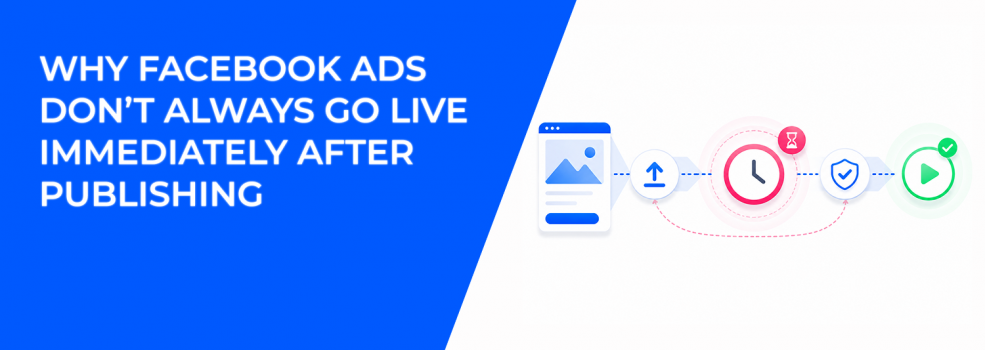
The key problem is that many advertisers treat the Publish button as the start of delivery. In reality, publishing usually submits the ad for review. The ad can only start delivering after Meta approves it.
This creates confusion because the campaign looks ready inside Ads Manager. The budget is set, the audience is selected, and the ad exists. But if it is still under review, it has not really started.
Why published ads may still show zero spend
Zero spend after publishing does not always mean something is wrong.
The ad may simply be waiting for approval. During this time, the campaign has no real delivery signal. There is no meaningful CTR, CPC, CPA, or ROAS to judge.
This is where many advertisers make the wrong move. They start changing the audience, increasing budget, or rebuilding the campaign. But if the ad was only waiting for review, those changes do not solve the problem.
A better first step is understanding Facebook ad statuses. Status labels show whether the issue is review, rejection, delivery, or setup.
What Meta is checking before the ad runs
Ad review is Meta’s check before your ad enters delivery.
The system can look at the ad text, image, video, targeting, landing page, and account history. It checks whether the ad follows advertising rules and whether it can be shown to users.
This does not mean every delayed ad is risky. A normal ad can still take time. But ads with bold claims, sensitive topics, or unclear landing pages often need closer review.
For example, an ad promoting a local event may pass quickly. An ad about loans, medical services, hiring, or personal outcomes may need more careful review.
How publishing confusion affects campaign decisions
The biggest performance risk is not the delay itself. It is the wrong reaction to the delay.
If a team expects leads immediately after publishing, they may think the campaign is failing. That creates pressure to edit the campaign before it has run.
This can lead to three common mistakes:
- Changing the ad before impressions begin. There is no delivery data yet, so the edit is not based on performance.
- Increasing budget too early. Budget changes cannot fix an ad that is still waiting for approval.
- Reporting day-one results too soon. A partial delivery day should not be treated as a full test.
- Blaming the audience too quickly. The audience cannot prove anything until the ad enters auctions.
These mistakes turn a normal review process into a messy launch.
How to solve it inside your workflow
The fix is to use clearer launch language.
Separate publishing from delivery. Publishing means the ad was submitted. Delivery means the ad has started showing to people. Reporting should start only after delivery begins.
This helps agencies, founders, and sales teams stay aligned. A campaign was not “live at 9 a.m.” if it was still in review at 9 a.m.
This also helps with expectations. If your sales team expects leads today, they need to know whether the ads are approved and delivering, not just published.
Wait for real delivery before judging results
A campaign needs time after approval to produce useful data.
Even after the ad starts running, Meta still needs to find people likely to take the action you selected. Conversion campaigns also need time because users may click now and convert later.
This is why why Meta ads take time to work is important context. Review, delivery, learning, and conversion lag are different timing layers.
If the ad starts late, use the actual delivery start time when reviewing results. Then use how long Facebook ads should run before judging results to decide when performance data is strong enough.
Final takeaway
Facebook ads do not always go live immediately after publishing because publishing is not the same as delivery.
The solution is to check status first, avoid editing before real impressions begin, and judge results only after the campaign has actually run.