Facebook and Instagram advertising is increasingly driven by automation and AI, but your creative still holds the greatest power to influence results.
While large brands can afford studio shoots and full-time designers, you don’t need a massive budget to compete. What you need is strategy, discipline, and a few smart tools.
In this guide, you’ll learn how to produce high-quality Facebook ad creatives that perform without overspending or compromising on results.
Why Creative Quality Drives Performance More Than Ever
Meta’s ad ecosystem rewards creative relevance and performance. Even the best audience targeting will fall flat if the creative fails to capture attention or communicate value.
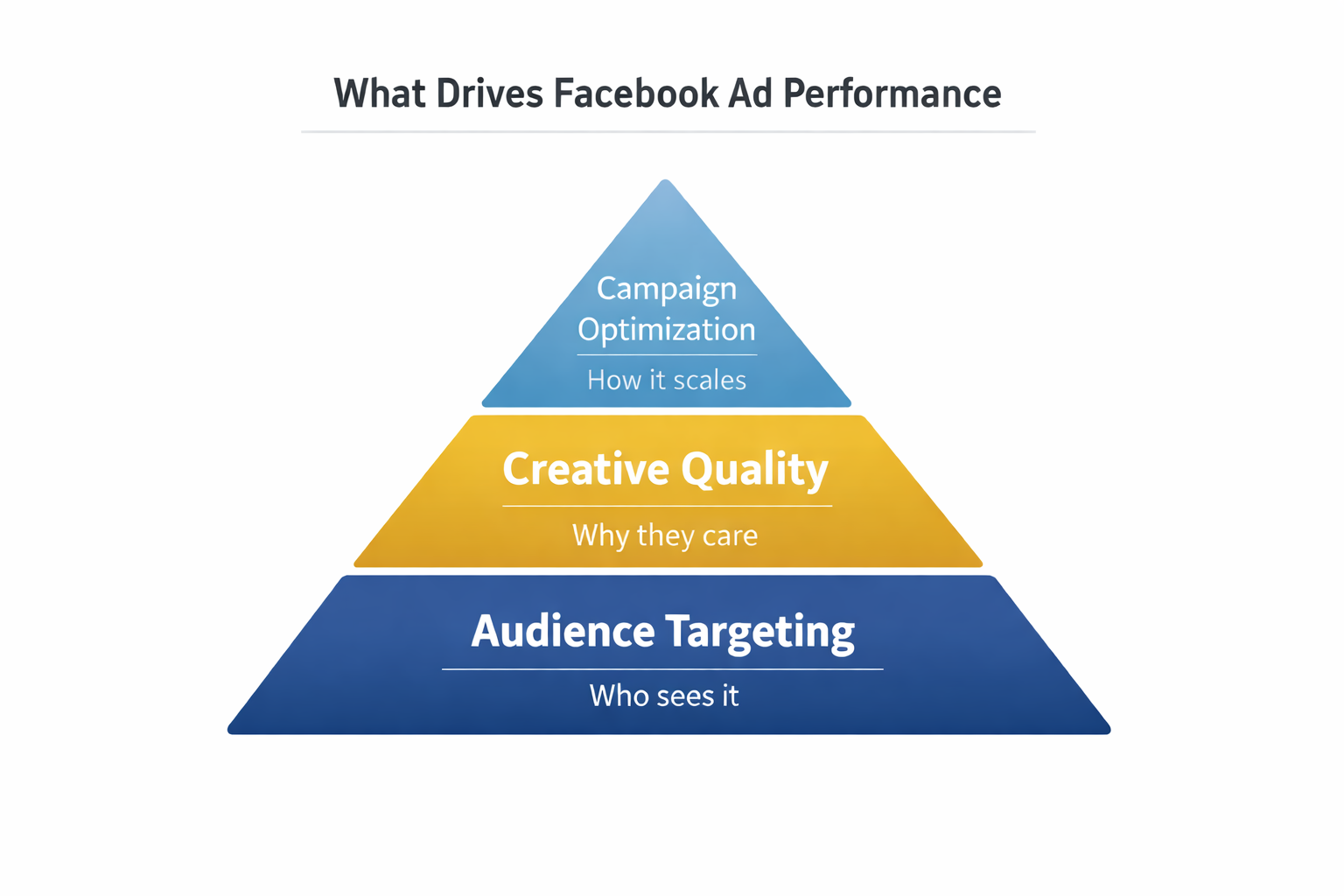
Your ad creative directly impacts:
-
Click-through rate (CTR): A high CTR signals strong engagement and relevance.
-
Conversion rate: Strong creative increases likelihood of action, whether it's a sign-up or sale.
-
Cost per result (CPR): Better performance leads to lower cost per action.
-
Return on ad spend (ROAS): Effective creatives improve efficiency across your funnel.
Put simply: good creative isn’t a bonus — it’s a necessity for performance marketing on Meta platforms.
Plan Creatives With Precision, Not Guesswork
Creating ad creatives “on the fly” often leads to wasted time and poor outcomes. Start with strategic clarity.
Set a Clear Objective
Every creative should align to one specific campaign goal. Common objectives include:
-
Driving traffic to your website or product landing page;
-
Generating leads through opt-ins, forms, or quizzes;
-
Increasing sales via product-focused ads or limited-time offers.
Defining your goal keeps messaging tight, visuals focused, and results measurable.
Understand Your Audience
Effective creatives are never generic. Build messaging and visuals around a clearly defined audience. Use:
-
Behavioral insights, such as page engagement or product views;
-
First-party data, like email lists or past purchases;
-
Lookalike audiences, modeled after high-value customers.
Need help deciding what to prioritize? Here’s how to determine whether to test your creative, copy, or audience first in a Facebook campaign: What to Test First: Creative, Copy, or Audience in Facebook Campaigns.
Leverage Templates to Streamline Design and Maintain Consistency
Custom design work for every campaign isn’t realistic for most advertisers. Templates help you move faster and stay on brand, even with a lean team.
Use Proven, Budget-Friendly Tools
You don’t need Photoshop or a design degree. Try these affordable platforms:
-
Canva – Offers hundreds of Facebook ad templates with drag-and-drop editing.
-
Adobe Express – Simple creative tools with brand kit integration.
-
Envato Elements – Premium social ad templates for more advanced needs.
These platforms allow you to produce polished, professional ads in minutes — not hours.
Build a Repeatable Creative Structure
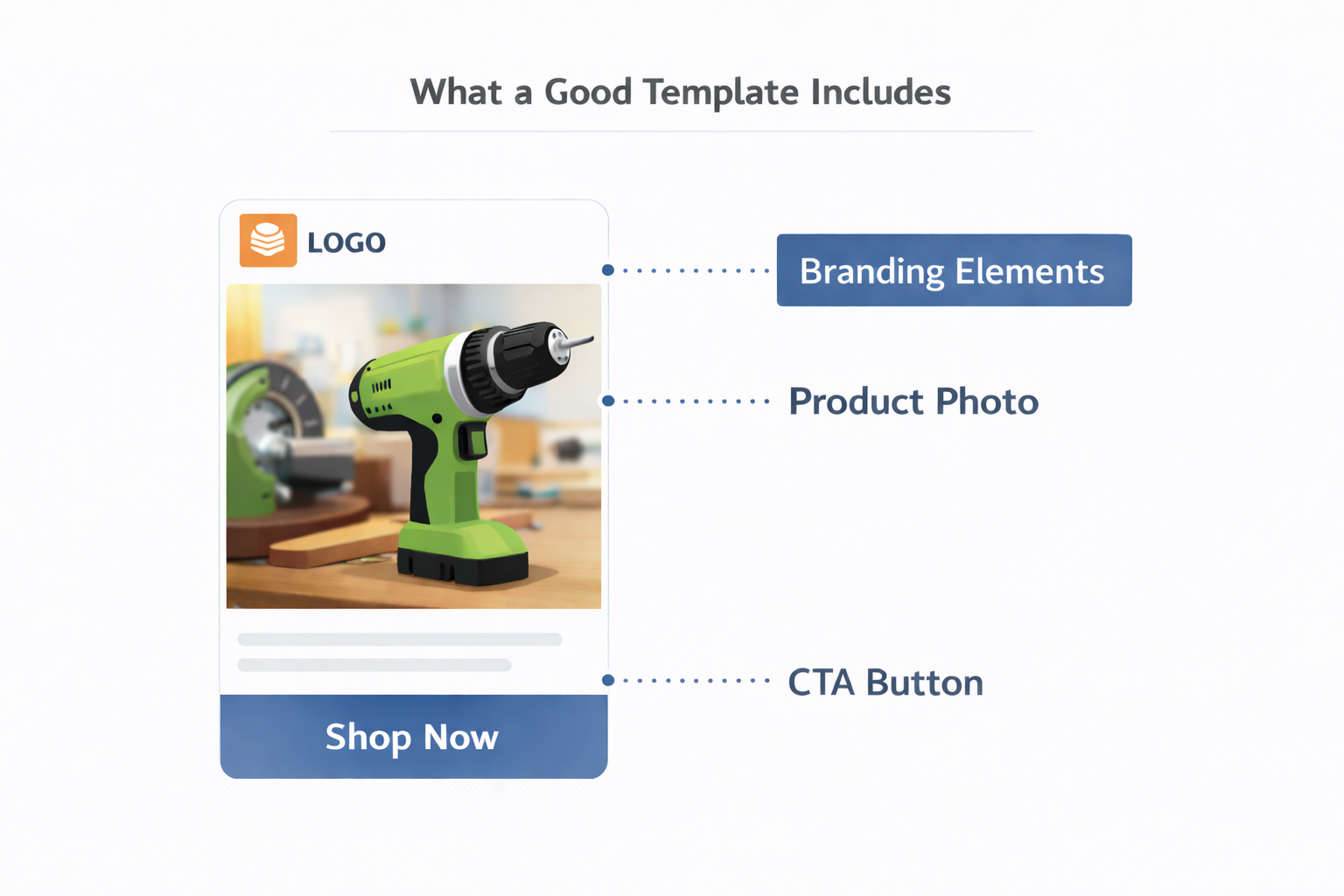
A strong template should include these core elements.
-
A clear product or offer visual that showcases what’s being promoted;
-
A bold headline area that communicates the main benefit or message;
-
Consistent branding using your colors, logo, or typeface;
-
A call-to-action (CTA) such as “Learn More,” “Shop Now,” or “Sign Up Today.”
Need inspiration? Learn how to build on-brand creative systems that perform: Stand Out and Stay on Brand With Stunning Facebook Ad Creatives.
Focus on High-Impact Creative Elements
While flashy effects and animations may look impressive, performance depends on clarity, message match, and format relevance.
Use Visuals That Capture Attention Quickly
You don’t need high-end production. What matters most is immediate relevance and recognizability.
Effective options include:
-
Close-up product images, shot with natural light and minimal distractions;
-
Lifestyle photos, showing real people using your product in everyday scenarios;
-
Short-form videos, such as 15-second reels, tutorials, or user testimonials.
Authentic content often outperforms polished but generic ads. Prioritize clarity and storytelling over special effects.
Write Text That Drives Action
Your copy needs to be benefit-focused and easy to digest — especially on mobile. Follow these best practices:
-
Keep it short—headlines under 8 words and primary text under 90 characters;
-
Lead with value—highlight what the user gains, not just what the product is;
-
Create urgency—mention time-limited offers or exclusive availability.
Example: “Save 20% Today — Upgrade Your Skin Routine Before Midnight.”
Repurpose Existing Assets for Faster, Cheaper Creative Production
Many advertisers overlook assets they already own. Repurposing existing content can cut production time dramatically and extend campaign life cycles.
Look for These Underused Sources
Dig into your existing content library for:
-
Customer-generated content — photos or videos posted by real users (with permission);
-
Product images from your website or ecommerce store;
-
Infographics, illustrations, or banners from blog posts or landing pages.
You can transform a testimonial video into a Story ad or convert a blog chart into a carousel post — at zero additional cost.
Test Creatives Strategically Before Scaling
Creative testing is essential for understanding what actually drives performance. But it doesn’t need to be expensive.
Test One Variable at a Time
Avoid testing multiple changes in one ad set. Instead, isolate variables such as:
-
Image vs. image — same copy, different visuals;
-
Headline vs. headline — same image, different messaging;
-
CTA placement — button in the first frame vs. final frame.
Want a framework for testing visuals properly? Read: How to A/B Test Your Facebook Ad Creative for Better Results.
Use Free or Low-Cost Editing Tools to Improve Production Quality
Even on mobile, you can create professional-looking creatives with the right tools.
Recommended Creative Tools
Consider these for editing and enhancement:
-
CapCut – Intuitive video editing with text overlays, transitions, and effects;
-
InShot – Great for creating Stories and Reels with music, stickers, and trimming;
-
Remove.bg – Automatically removes image backgrounds for cleaner layouts;
-
Mojo – Animates still content into Stories or motion ads.
Want more advanced, native creative tools built for Meta Ads? Explore Meta's own automation options: How to Use Advantage+ Creative Tools to Design Winning Facebook Ads.
Optimize Based on Real-World Performance Data
After publishing, your job isn’t done. Ongoing creative optimization separates high-ROI campaigns from average ones.
Monitor These Metrics Closely
Pay attention to the following:
-
CTR (Click-Through Rate): Indicates how compelling your creative is.
-
Frequency: When your ad is shown too often, it may cause fatigue and reduce engagement.
-
Conversion Rate: Tells you if the creative delivers not just attention, but actual results.
-
Thumb-Stop Ratio (Video): Measures how many users stop scrolling to watch your video.
Use this data to refresh creatives, rotate formats, and refine your approach.
Final Thoughts: Creative Excellence Is a Competitive Advantage — Not a Luxury
You don’t need a large team or a big budget to produce Facebook ads that work. What you do need is:
-
A clear understanding of your audience and objectives;
-
Efficient use of low-cost tools and templates;
-
A disciplined approach to testing, iteration, and optimization.
With the rise of automation in Meta Ads, creative is where advertisers now have the most control and the most opportunity. Use that to your advantage.
Smart, lean creative execution can outperform bloated budgets when guided by strategy, insight, and execution.