When prospecting breaks, it rarely collapses all at once. Leads still come in, CTR looks fine, and dashboards show steady delivery. Yet sales starts pushing back, close rates slide, and scaling feels unpredictable.
A broken prospecting pipeline is not about volume. It is about misalignment between who your ads attract and who actually buys. Fixing it requires structural changes, not cosmetic tweaks.
What a Broken Prospecting Pipeline Really Looks Like
Most advertisers notice the issue only after revenue softens. Media metrics often remain stable, which creates confusion. The problem hides between the ad click and the signed contract.
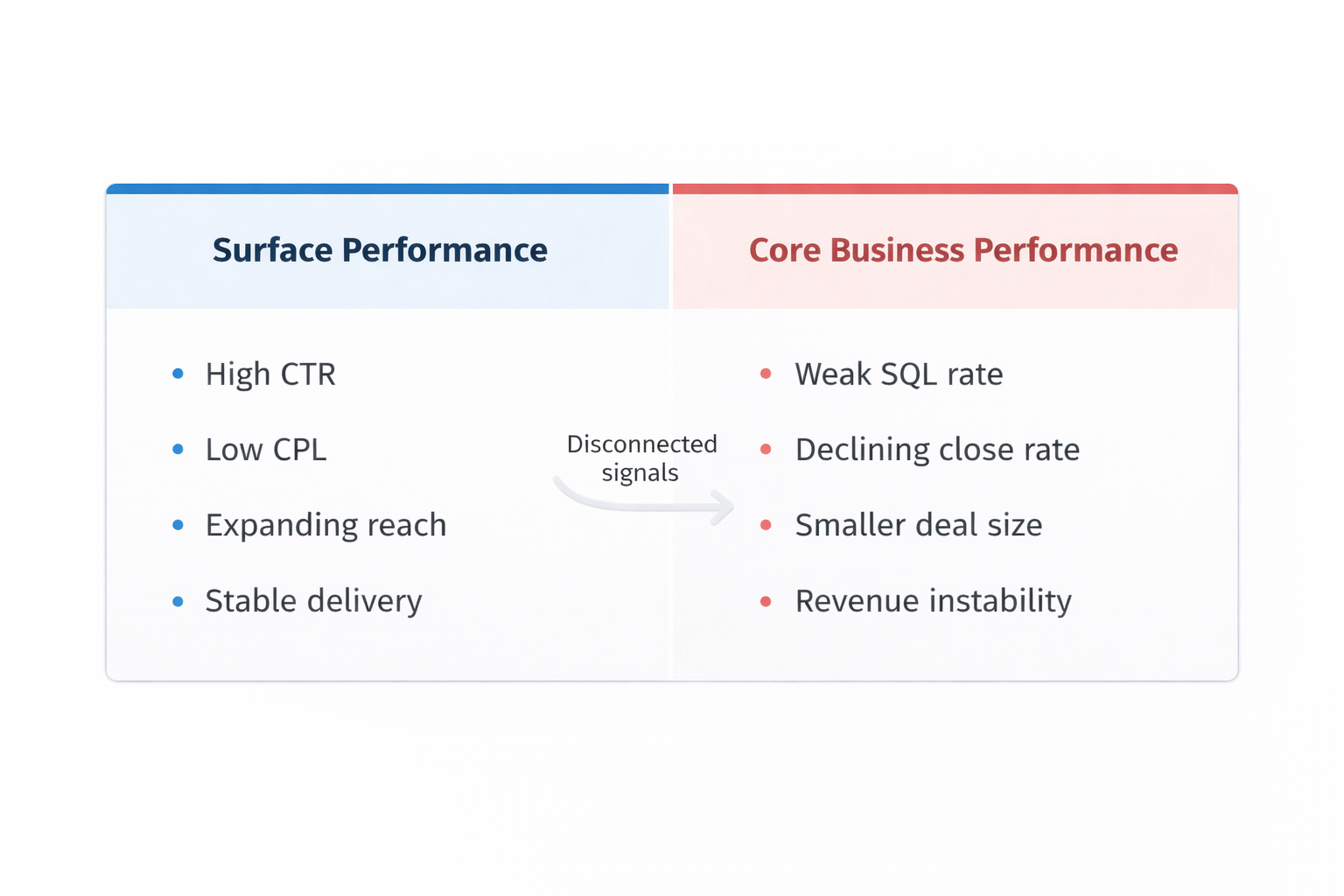
Common warning signs include:
-
High CTR with weak lead-to-opportunity rate; your hook attracts attention, but not qualified demand.
-
Low CPL with falling close rates; efficiency improves on paper while sales conversations decline in quality.
-
Expanding reach with declining performance; Meta scales into broader segments that look similar but convert worse.
-
Learning instability after edits; frequent resets prevent the system from building reliable delivery patterns.
If this sounds familiar, review why your ads get clicks but no sales and how to fix the audience misalignment. The issue is rarely the click itself. It is who that click represents.
Step 1: Fix the Signal Before You Touch the Spend
Meta optimizes toward the event you choose. If that event reflects shallow intent, the algorithm will efficiently scale shallow intent.
Before increasing budget, audit what your optimization event actually signals.
Check How Deep Your Optimization Event Goes
Many accounts optimize for lead submissions even when most leads never move forward. In that case, the platform learns to find people who complete forms quickly, not people who buy.
Strengthen signal quality by focusing on:
-
Lead-to-opportunity rate; if only a small share of leads reach qualified stages, your event is too early in the funnel.
-
CRM stage feedback; push qualified opportunity or closed-won data back through Conversions API so Meta sees real outcomes.
-
Revenue values; assign deal size to conversions so the system optimizes for economic impact, not volume alone.
If your signals are unstable, performance will fluctuate even with good creatives. A deeper diagnostic framework is covered in how to tell if Facebook Ads are optimizing for the wrong goal.
Eliminate Signal Fragmentation
Signal fragmentation happens when campaigns optimize for different outcomes without coordination. Prospecting may optimize for leads, while retargeting optimizes for purchases, and attribution windows vary across ad sets.
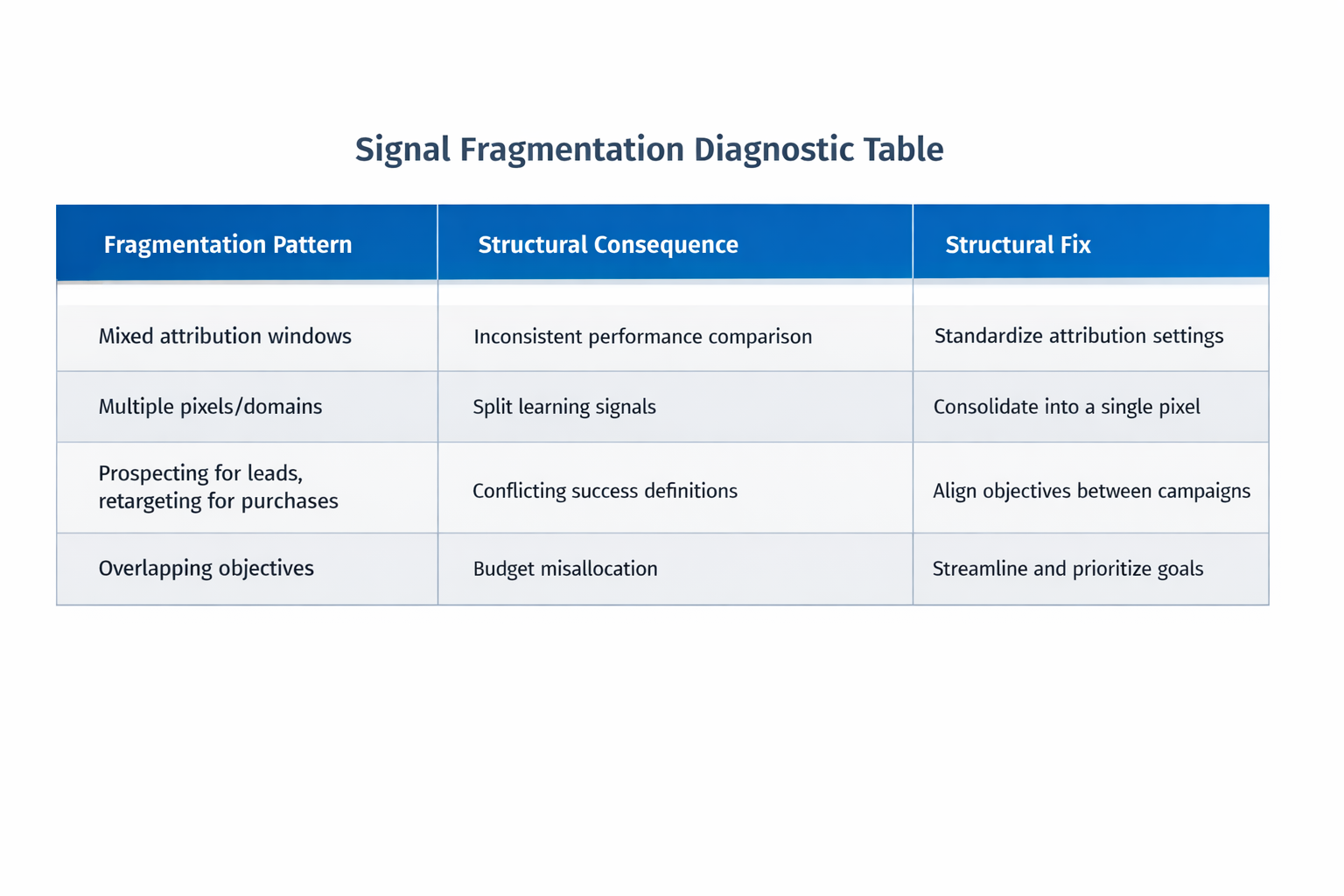
Typical fragmentation patterns include:
-
Different conversion windows across campaigns; reporting becomes inconsistent and learning weakens.
-
Multiple pixels or domains; event data splits and reduces modeling accuracy.
-
Competing objectives inside the same funnel; Meta receives conflicting definitions of success.
Consolidation often improves stability more than any creative refresh.
Step 2: Rebuild Audience Structure
Audience architecture determines how easily Meta can learn. Over-segmentation limits scale. Under-qualification attracts noise.
Simplify Cold Targeting
Many advertisers stack interests and behaviors in pursuit of control. In practice, this restricts exploration and reduces learning efficiency.
A stronger cold structure often includes:
-
Broad targeting with strict exclusions; exclude customers and recent leads while allowing exploration.
-
Lookalikes built from high-value customers rather than all leads; a seed of closed deals produces stronger modeling.
-
Regular seed refresh cycles; outdated data reduces predictive accuracy over time.
If you want a deeper breakdown of audience layering and intent levels, review the complete guide to warm, cold, and custom audiences in Meta Ads.
Separate Intent Stages
Do not mix awareness and conversion messaging inside the same ad set. Engagement behavior is not purchase intent.
Structure your funnel deliberately:
-
Educational campaigns optimized for engagement or landing page views; these warm audiences without forcing commitment.
-
Conversion campaigns optimized for qualified lead or opportunity events; these focus on buying intent.
-
Clear exclusions between stages; prevent warm audiences from re-entering cold campaigns.
Intent separation stabilizes learning and clarifies performance patterns.
Step 3: Realign Creative With Actual Buying Conditions
Creative is your strongest qualification filter. If your message promises universal benefits, you will attract universal curiosity.
Audit Your Hooks
Hooks determine who clicks. Broad hooks drive attention. Specific hooks drive fit.
Evaluate your ads for:
-
Curiosity-driven headlines; these attract researchers rather than decision-makers.
-
Generic value claims; wide appeal often lowers downstream quality.
-
Soft CTAs that invite low-commitment actions unrelated to your sales goal.
If lead quality feels inconsistent, examine how messaging shapes perception. The topic is explored further in how to qualify leads through Facebook Ads without adding friction.
Reflect Sales Reality in the Ad
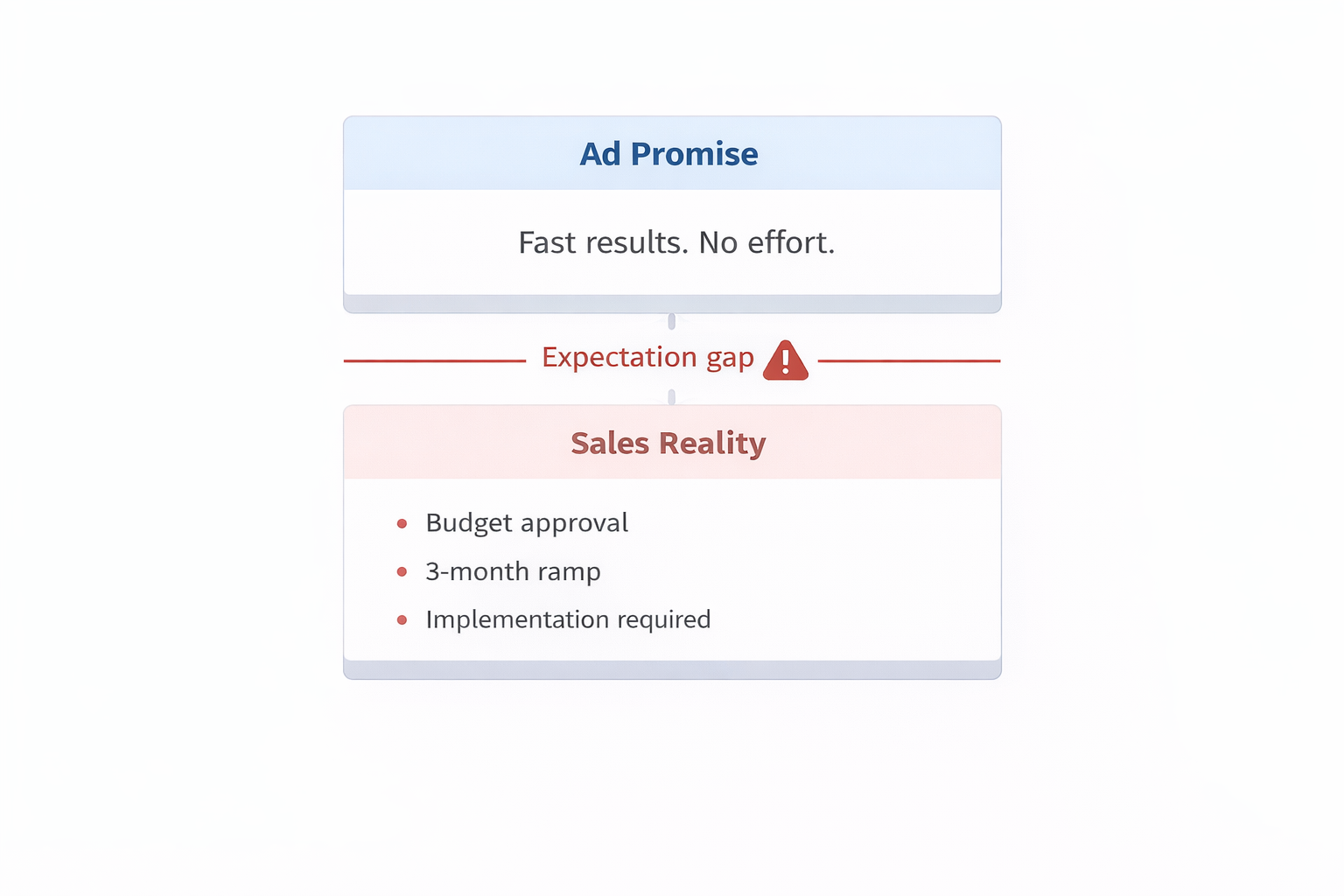
If your offer requires budget approval, onboarding, or implementation effort, your ad should signal that. Oversimplified promises create expectation gaps that show up in sales calls.
Practical adjustments include:
-
Mentioning minimum budgets or prerequisites; this filters out misaligned prospects early.
-
Setting realistic timelines; long-term buyers respond better to honest positioning.
-
Highlighting required commitment; serious prospects respect clarity.
CPL may increase slightly. Close rates often improve.
Step 4: Stabilize Budget and Learning Patterns
Frequent budget changes disrupt learning. Sudden increases force the system to search for new inventory quickly, often at lower intent levels.
Reduce Volatility
Reactive edits create unstable delivery. Stability compounds performance over time.
Adopt controlled scaling rules:
-
Limit daily budget increases; gradual adjustments protect learning history.
-
Avoid pausing strong ad sets abruptly; reduce spend progressively instead.
-
Consolidate overlapping ad sets; concentrated data strengthens modeling.
If scaling consistently hurts efficiency, review why Facebook Ads don’t scale even with good metrics for structural causes.
Scale Horizontally Before Vertically
Raising budget inside one ad set often pushes it beyond its efficient audience pocket. CPA rises because high-probability users are already saturated.
Horizontal scaling protects efficiency:
-
Expand into adjacent geographies with similar buyer profiles.
-
Introduce new creative angles targeting the same qualified audience.
-
Open additional placements after core ones stabilize.
Growth should follow signal strength, not precede it.
Step 5: Connect Marketing With Revenue Data
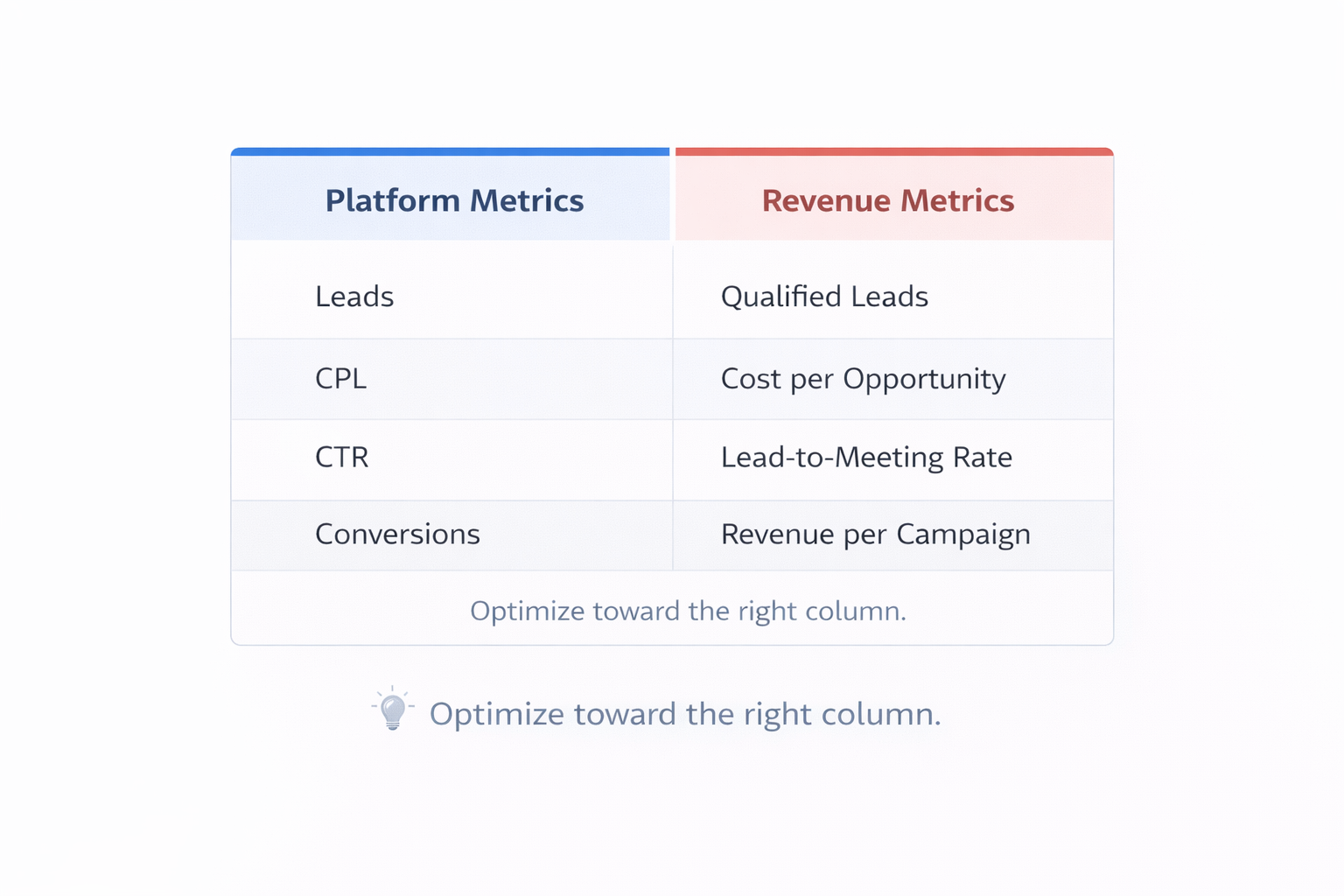
Prospecting fails when marketing optimizes for platform metrics and sales evaluates revenue. Without shared feedback, optimization drifts toward superficial wins.
Build Revenue-Based Reporting
Surface metrics rarely reflect economic performance. Connect ad data with CRM outcomes.
Track metrics such as:
-
Lead-to-meeting rate; reveals qualification strength early.
-
Meeting-to-close rate; shows whether messaging aligns with reality.
-
Average deal value by campaign; highlights profitability differences across audiences.
Weekly reviews of these metrics align prospecting with revenue, not just volume.
Create a Closed Feedback Loop
Closed-loop optimization feeds real revenue data back into Meta. Without it, the system optimizes for proxies.
An effective loop includes:
-
Offline event uploads for opportunity creation and closed deals.
-
Value parameters tied to actual contract size.
-
Consistent attribution logic across tools.
Over time, this feedback reshapes lookalike modeling and audience expansion toward real buyers.
Common Mistakes That Keep Pipelines Stuck
Teams often apply isolated fixes. They refresh creatives while ignoring signal depth, or restructure audiences without cleaning attribution.
Recurring traps include:
-
Chasing higher CTR; attention does not equal intent.
-
Scaling during instability; adding budget amplifies noise.
-
Launching too many simultaneous tests; fragmented data slows learning.
-
Ignoring exclusions; existing leads inflate performance without adding value.
A broken prospecting pipeline reflects structural misalignment. Repair requires coordinated adjustments across signal, audience, creative, and budget.
When Recovery Happens
Prospecting does not recover overnight. After structural fixes, stabilization typically appears within several weeks as learning consolidates around cleaner signals.
During this period, resist daily adjustments. Focus on qualified metrics tied to revenue. Stability comes before scale.
Final Thoughts
A broken prospecting pipeline is rarely a creative problem alone. It is usually a signal and structure problem expressed through creative symptoms.
Rebuild from the signal outward. Clean data, aligned messaging, and stable budget logic create predictable growth. Once the foundation holds, prospecting becomes an asset instead of a constant repair project.