Low CPL (cost per lead) looks good on paper. But if your leads never convert, you’re burning money. The real win isn’t getting the cheapest leads — it’s getting qualified ones at the best cost.
In this guide, you’ll learn how to lower your CPL without hurting lead quality. Every tactic is tailored for Facebook and Instagram advertisers who want better ROI without guessing.
Start by identifying what’s breaking your CPL
Before you change targeting or bids, get clear on why your CPL is rising. Often, it’s not just one thing — it’s a combination of missteps across targeting, creative, and post-click experience.
1. Avoid broad, untargeted audiences
Using broad interest targeting may seem like a fast way to scale, but it often brings in unqualified traffic. These users might click — but won’t convert.
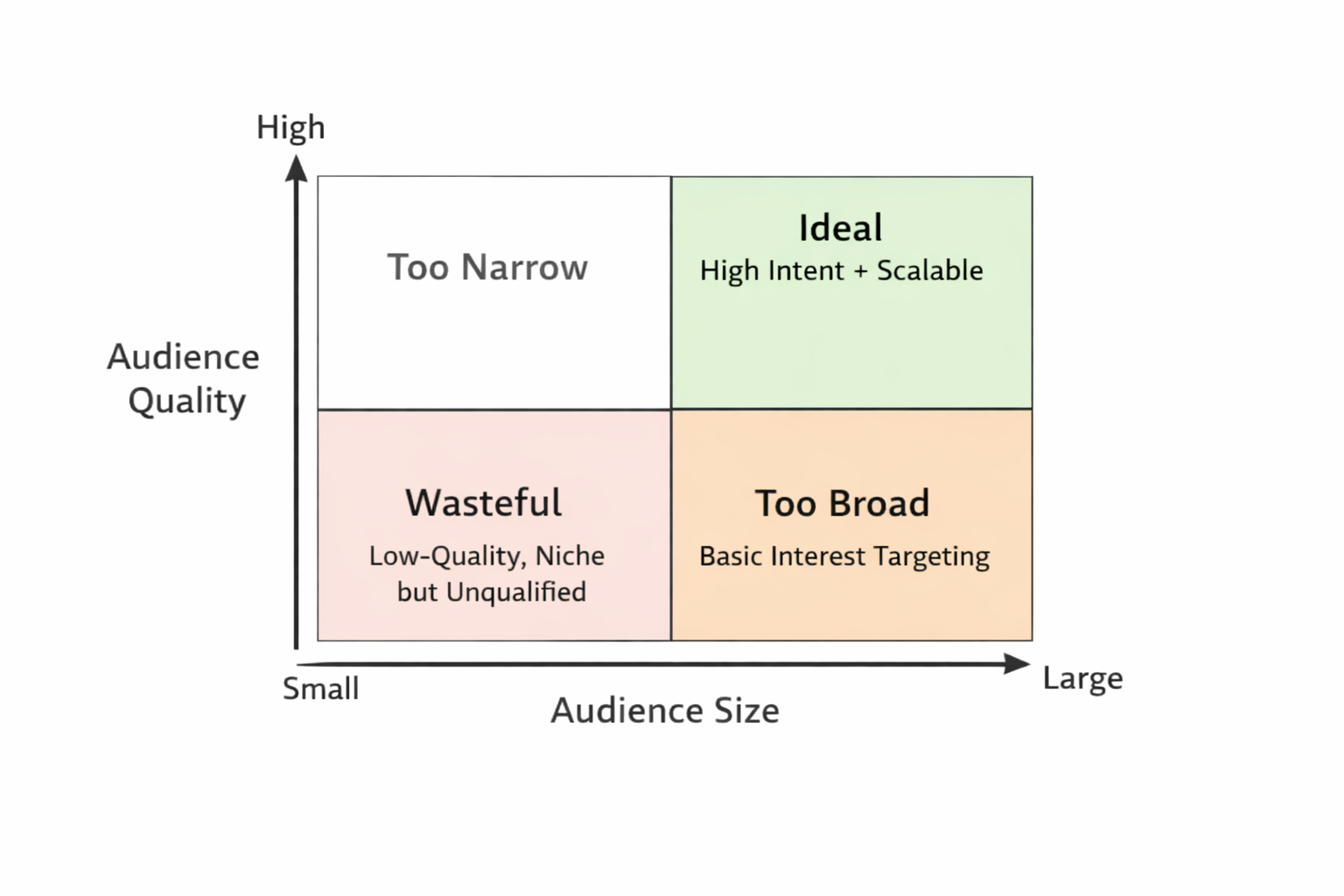
What to try instead:
-
Use profile-based audiences. Tools like LeadEnforce help you create custom audiences from followers of Facebook groups or Instagram accounts relevant to your niche. These people already follow your competitors or industry pages, so intent is higher. How to Build High-Performing Custom Audiences in LeadEnforce.
-
Refine lookalikes. A lookalike based on all past leads isn’t enough. Use high-quality source data like purchasers or demo bookings. The Ultimate Guide to Facebook Lookalike Audiences.
-
Exclude weak signals. Avoid retargeting people who watched 3 seconds of a video. Focus on those who spent time on site, clicked through, or engaged more deeply. Why Your Target Audience Might Be Too Broad — Even If It Looks Right.
Align creative, targeting, and landing page
Disjointed messaging drives up CPL fast. If someone clicks on an exciting ad but lands on a generic page, they bounce — and you pay for it.
Here’s how to align your funnel:
-
Keep visuals consistent. If your ad uses a bold red CTA and minimalist design, your landing page should feel similar.
-
Use direct headline match. If your ad says “Download the free CRO checklist,” your page should repeat that exact phrase.
-
Reinforce expectations. Add 1–2 bullet points summarizing what the user will get after converting. This reduces drop-offs.
Need a full breakdown? Check out Creating a Seamless Experience Between Ads and Landing Pages.
Don’t settle for "mobile-friendly" — go mobile-first
Most Meta users are on mobile. But “mobile-friendly” is no longer enough. Your creative needs to be designed for mobile attention spans and screen formats.
Mobile-first creative rules:
-
Use vertical formats (4:5 or 9:16) to take up more screen space;
-
Front-load motion and value in the first 2 seconds to stop the scroll;
-
Test native placements like Reels and Stories — they often outperform feed ads due to immersion.
Want more tips? Explore The Best Practices for Designing Mobile-Friendly Facebook Ads.
Pre-qualify without scaring people off
Lower CPLs often come at the expense of lower intent — unless you filter leads before they hit your CRM.
Add lightweight friction:
-
Ask simple qualifiers like “Do you own a business?” or “How soon do you need this?”;
-
Use multiple-choice instead of open-ended answers to reduce form abandonment;
-
Add a short line under your CTA that sets expectations: “We’ll send the PDF and a short follow-up.”
You can also qualify with content. A quiz or calculator works as a self-selecting tool. Example: “How ready is your funnel for scaling?”
More on this idea: How to Qualify Leads Through Facebook Ads Without Adding Friction.
Let your retargeting do the heavy lifting
If you’re trying to close cold leads with a single ad, your CPL will stay high. A better approach is a multi-step campaign structure.
Use a warm-up funnel:
-
Top-of-funnel: Run video view or engagement campaigns;
-
Middle-of-funnel: Retarget based on meaningful signals (e.g., 50%+ video views, landing page visits, clicks);
-
Bottom-of-funnel: Show lead ads or offer-based CTAs only to warm traffic.
This layered approach reduces CPL — and improves conversion.
Get tactical with The Ultimate Guide to Facebook Retargeting.
Use Meta lead forms with guardrails
Facebook and Instagram lead forms convert better than external landing pages — but they often bring poor quality. Here’s how to fix that.
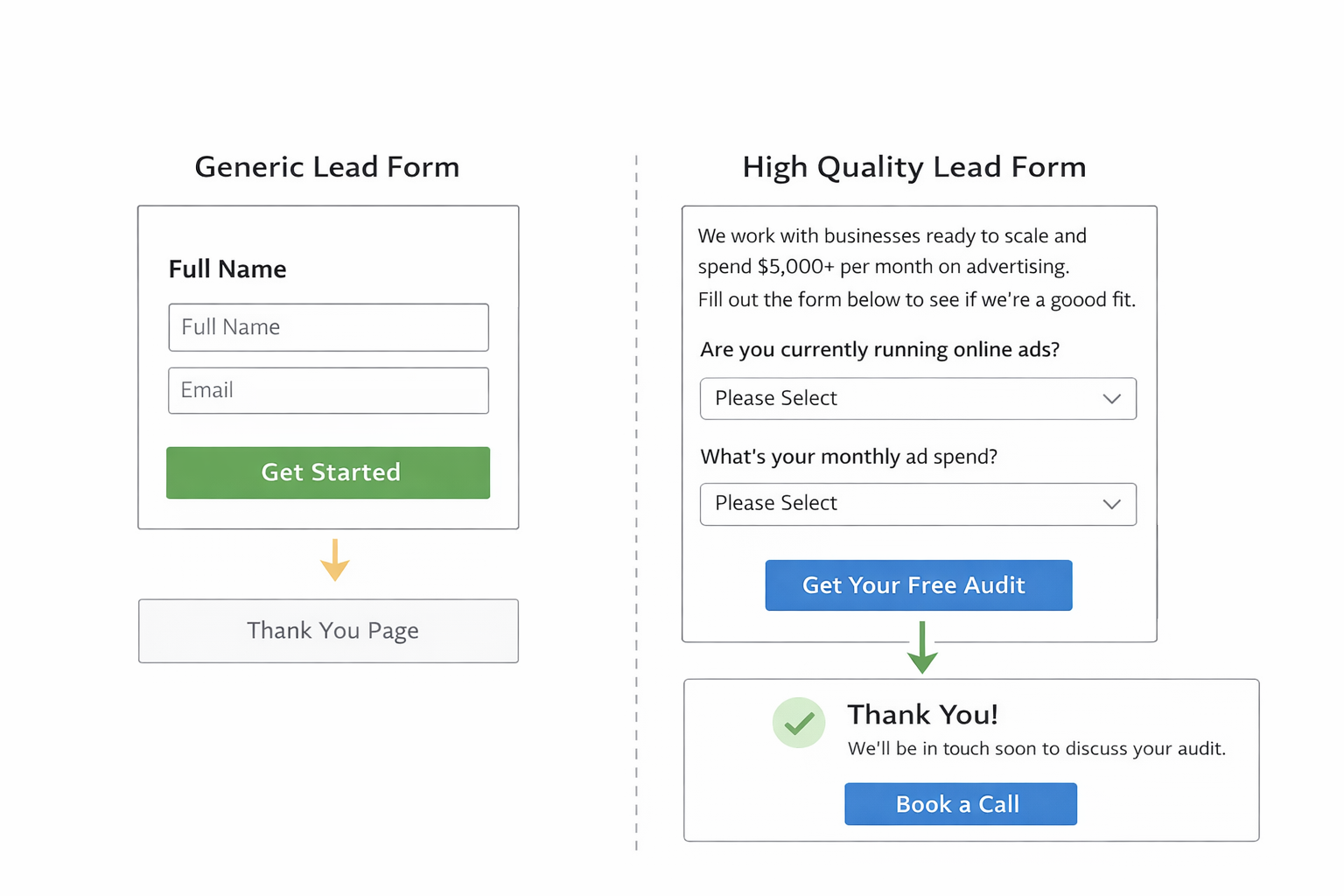
Boost form quality:
-
Ask 1–2 custom questions to make users think before submitting;
-
Use intro copy to filter out casual users ("This offer is for agencies spending over $5k/month");
-
Add instant confirmation and redirect to a thank-you page with an upsell or next step.
Try testing high-intent lead magnets like checklists, templates, or short consultations. These usually draw better-fit leads than generic newsletters.
Explore more: How to Use Facebook’s Lead Ads Features for Effective Lead Generation.
Follow up faster — and smarter
You can cut your true CPL in half by converting more of your leads.
Here’s how:
-
Integrate with your CRM or use Zapier to trigger instant email/SMS responses;
-
Retarget new leads with “what’s next” ads (e.g., “Still thinking about our free trial?”);
-
Segment based on lead source or intent questions for better nurturing.
Remember: speed kills drop-off.
Final checklist: reduce CPL without hurting lead quality
Use this checklist to review your next campaign setup:
-
Is targeting based on behavior or follower interest, not just broad interests?
-
Does the ad match the landing page in visuals, copy, and CTA?
-
Is the creative mobile-first and built for scroll behavior?
-
Are you filtering leads with questions, not just forms?
-
Are you retargeting based on meaningful actions, not just visits?
-
Is your lead form customized for quality?
-
Do you follow up immediately with context-aware messaging?
Small changes across your funnel can lead to major savings — without sacrificing the quality of your leads.