Many Facebook campaigns lose efficiency because of structure, not targeting. When ad sets fragment data, optimization slows and costs rise. ROAS drops even if creative and offer remain stable.
Restructuring restores signal concentration. It aligns budget, events, and messaging inside a cleaner framework. That shift often improves efficiency without changing audiences.
If your ROAS is already declining, review what to check first when Facebook ad ROAS drops before making structural edits.
This guide explains how to rebuild structure with revenue in mind.
Why Campaign Structure Directly Affects ROAS
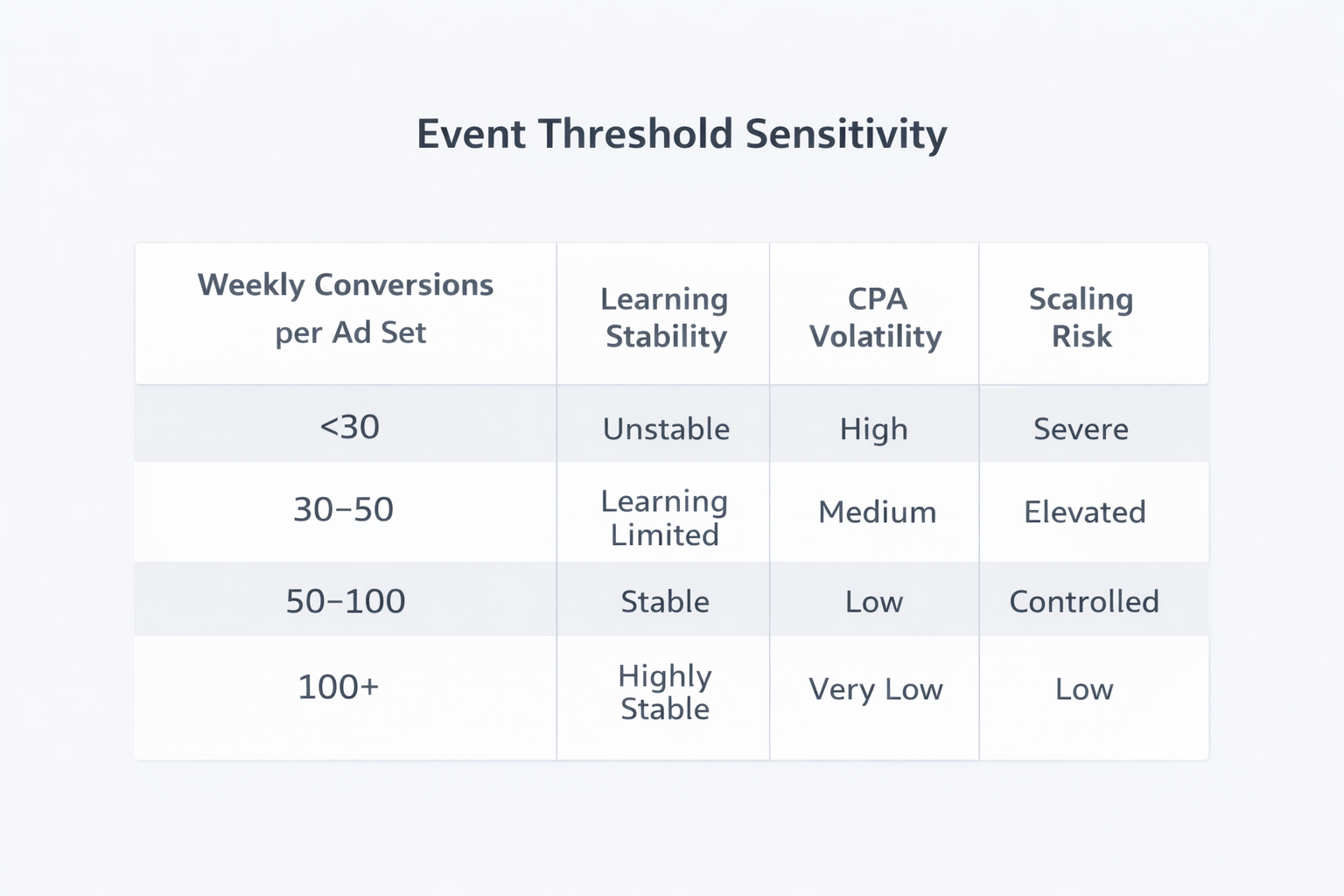
Meta optimizes based on event density per ad set. When events scatter across too many segments, learning becomes unstable. The system struggles to identify consistent delivery patterns.
Low event volume increases cost volatility. Budget spreads thin, and performance fluctuates. Scaling then amplifies inefficiency instead of profit.
Structure controls three economic drivers:
-
Event concentration; more conversions per ad set improve optimization stability and reduce cost per result.
-
Budget control; fewer decision points prevent internal competition between similar audiences.
-
Message clarity; each ad set should represent a distinct buying intent.
When these drivers align, ROAS becomes more predictable.
Step 1: Audit Event Density Before Changing Anything
Most restructuring fails because it ignores data thresholds. Before merging or deleting ad sets, analyze weekly event volume.
Check performance over the last 14 days. Focus on conversions, not clicks.
What to Look For
-
Ad sets with fewer than 50 optimization events per week; these struggle to exit learning consistently.
-
Overlapping audiences targeting similar interests or lookalikes; these compete internally and inflate CPM.
-
Small budget segments under 10 percent of total spend; these rarely generate meaningful data.
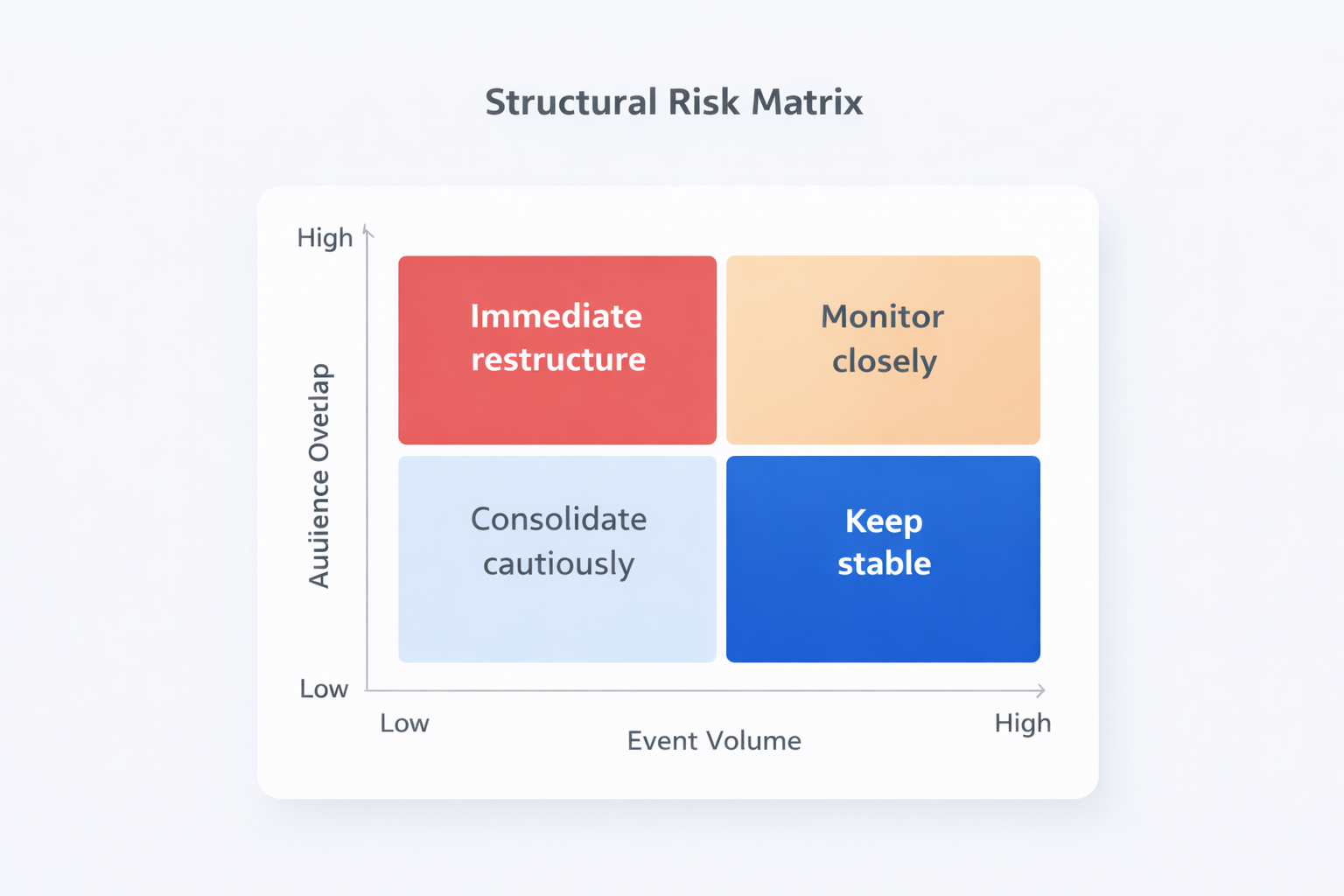
If multiple ad sets share similar intent and low event volume, consolidation is justified.
If overlap appears significant, review why audience overlap kills Facebook ad performance to confirm the issue before merging .
What Not to Fix
Do not restructure profitable high-volume ad sets. Stable segments with strong ROAS and sufficient data should remain untouched. Structural change introduces volatility.
Protect what already works.
Step 2: Consolidate Around Conversion Intent
Campaigns often mirror targeting logic instead of buying intent. That leads to unnecessary segmentation. Intent should define structure.
Group audiences based on decision stage, not interest detail.
Practical Consolidation Framework
Use three primary intent buckets:
-
Cold acquisition; broad or lookalike audiences optimized for first purchase.
-
Warm retargeting; users who visited key pages or engaged with content.
-
High-intent retargeting; cart viewers, checkout initiators, or repeat buyers.
Each bucket must accumulate enough weekly events. If warm retargeting generates only 20 purchases weekly, combine layers instead of splitting them.
For deeper structure models, study common Facebook campaign structures and when to use them.
More signal per ad set improves optimization speed.
Step 3: Simplify Budget Allocation Logic
Budget fragmentation often kills ROAS. Too many campaigns with small budgets create inconsistent delivery.
Decide between CBO and ABO based on control needs.
When to Use CBO
Campaign Budget Optimization works best when:
-
Ad sets represent similar intent levels.
-
Event volume is sufficient across segments.
-
You want the algorithm to reallocate budget automatically.
CBO centralizes spending decisions. That reduces internal bidding conflicts.
If you need a detailed comparison, read CBO or ABO: choosing the right Facebook ad budget strategy.
When to Use ABO
Ad Set Budget Optimization fits scenarios where:
-
Intent levels differ significantly.
-
Retargeting requires strict spend limits.
-
Testing new segments without affecting core performance.
ABO preserves control during experimentation. After validation, migrate stable segments into consolidated CBO structures.
Step 4: Remove Artificial Segmentation
Advertisers often split campaigns by age, gender, or minor interest differences. This reduces event density without improving control.
Unless creative or offer changes meaningfully, demographic splits are unnecessary.
Signals That Segmentation Is Hurting Performance
-
Similar CPA across multiple demographic ad sets.
-
High overlap scores in audience diagnostics.
-
Frequent learning phase resets after small budget edits.
In these cases, merge audiences. Allow the algorithm to allocate delivery dynamically.
Structure should reflect message differences, not reporting preferences.
Step 5: Align Creative With Structural Intent
Structural consolidation increases data per ad set. However, creative must reflect intent depth.
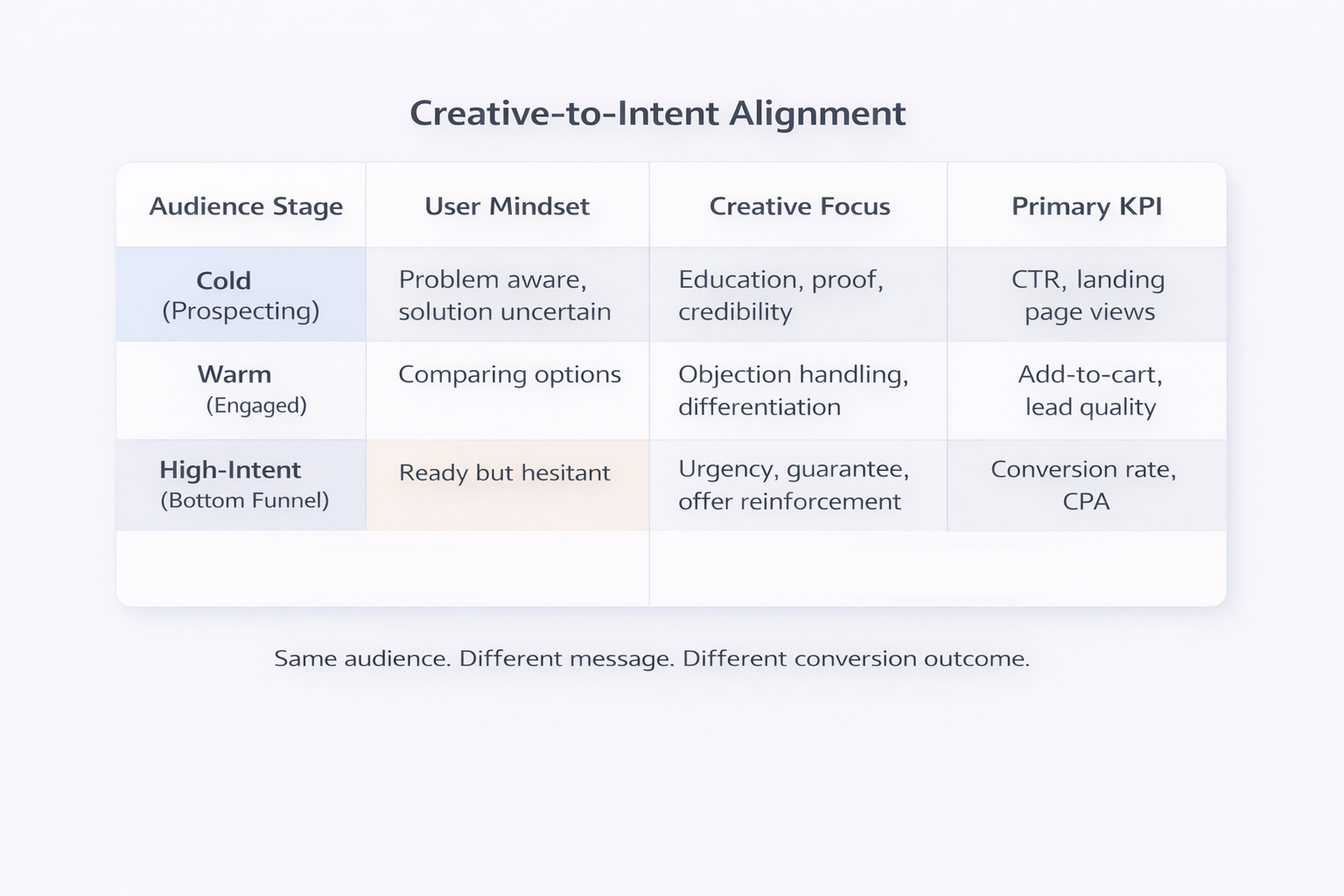
Cold audiences require education. Retargeting requires reinforcement. High-intent segments require urgency.
Creative Mapping by Intent
-
Cold acquisition; explain problem awareness and demonstrate proof of outcome.
-
Warm retargeting; address objections and clarify product differentiation.
-
High-intent retargeting; emphasize scarcity, guarantees, or incentives.
When creative matches structural intent, conversion rates increase. That further improves event density and lowers acquisition cost.
Step 6: Protect Learning During Restructure
Structural edits reset learning. Aggressive changes create performance swings.
Apply changes gradually.
Controlled Restructure Process
-
Duplicate the existing campaign; build the consolidated structure in parallel.
-
Shift 20 to 30 percent of budget into the new version.
-
Compare CPA and ROAS over seven days before scaling.
Avoid editing live high-spend campaigns directly. Parallel testing limits downside risk.
Step 7: Measure Structural Impact Correctly
Many advertisers judge restructure success within two days. That creates false negatives.
Evaluate structural performance based on:
-
Cost per purchase trend over 7 to 14 days.
-
Purchase volume stability; consistent daily conversions indicate healthy delivery.
-
Revenue per campaign; confirm that higher ROAS reflects real revenue growth.
Short-term volatility is normal. Long-term signal density is what matters.
Advanced Structural Adjustments for Scaling
Once the base structure stabilizes, scaling requires discipline.
Horizontal Scaling With Structure Control
Add new creatives inside existing high-volume ad sets. Do not create new campaigns for each variation. Concentrate spend where signal already exists.
This preserves learning while increasing reach.
Vertical Scaling Without Shock
Increase budgets gradually. Keep daily increases under 20 percent when event volume supports it. Large jumps destabilize delivery.
If you are unsure how to scale safely, review scaling ads safely to avoid common campaign mistakes.
Monitor frequency during scaling. Rising frequency without revenue growth indicates creative fatigue, not structural weakness.
Common Restructuring Mistakes
Structural optimization fails when changes ignore economic logic.
Avoid these errors:
-
Splitting campaigns by product category without sufficient volume; low event density reduces efficiency.
-
Creating separate campaigns for each lookalike percentage; similar audiences compete.
-
Restarting campaigns after minor performance dips; resets destroy accumulated learning.
Structure should evolve slowly and intentionally.
Conclusion
Better ROAS rarely comes from adding complexity. It comes from concentrating data and aligning structure with buying intent.
Audit event density first. Consolidate around intent. Simplify budgets. Align creative with depth of demand.
When structure supports signal concentration, the algorithm performs better. ROAS improves because optimization has clarity, not because targeting changed.