
Scaling lead generation sounds simple: increase budgets, expand audiences, and push volume. In reality, many teams see ROAS drop the moment spend goes up. Costs rise faster than conversions, lead quality falls, and profitability disappears.
The good news is that ROAS erosion is not inevitable. With the right structure, data discipline, and scaling order, lead generation can grow sustainably.
Why ROAS Breaks During Scaling
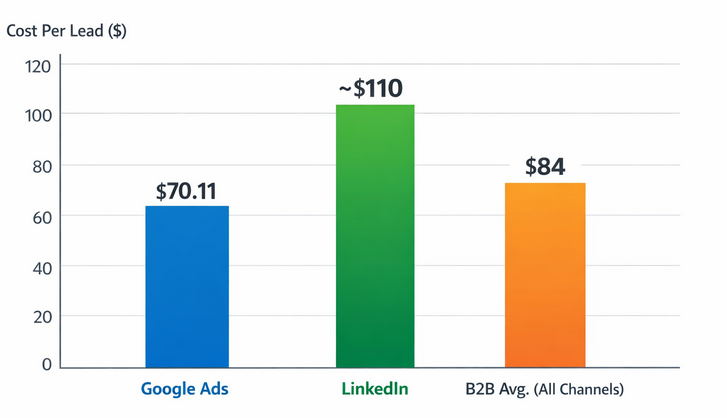
Average Cost Per Lead (CPL) across key paid channels in 2025
ROAS usually collapses for predictable reasons:
-
Audience saturation: High-intent users are exhausted first, leaving colder traffic at higher cost.
-
Algorithmic instability: Sudden budget jumps disrupt platform learning phases.
-
Creative fatigue: Existing ads stop resonating when reach expands.
-
Lead quality decay: Volume increases, but sales-qualified leads do not.
According to industry benchmarks, advertisers often see cost per lead increase by 20–40% when budgets are doubled without structural changes. Avoiding this requires scaling the system, not just the spend.
Step 1: Prove Elasticity Before Adding Budget
Before increasing spend, identify whether your current setup can absorb more volume.
Signs of elasticity include:
-
Stable or improving conversion rates at higher impression frequency
-
No sharp increase in CPA over 7–14 days
-
Consistent lead-to-sale conversion rates
Data from paid media platforms shows that campaigns scaled in 10–20% budget increments maintain performance far better than those doubled overnight. Gradual scaling allows algorithms to adapt while protecting ROAS.
Step 2: Scale Through Structure, Not Just Spend
One of the most common mistakes is pouring more budget into a single winning campaign. Instead, scaling should happen horizontally.
Effective structural scaling includes:
-
Duplicating proven campaigns into new audience segments
-
Separating prospecting and retargeting budgets
-
Isolating high-intent traffic (search, remarketing) from cold discovery
This approach limits performance volatility and makes it easier to identify where ROAS starts to degrade.
Step 3: Expand Audiences Without Diluting Intent
Audience expansion does not mean going fully broad immediately. The most profitable path usually follows this order:
-
Lookalike or similar audiences based on high-quality leads or customers
-
Interest clusters closely tied to buying intent
-
Broad targeting with strong conversion signals
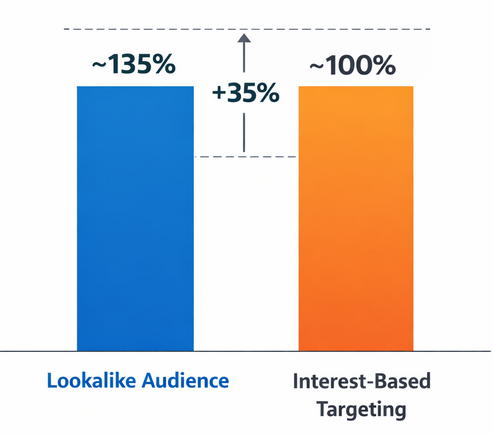
Conversion rate comparison: Lookalike audiences vs. interest-based targeting
Research across large-scale lead gen accounts shows that lookalike audiences built from post-sale or qualified leads convert up to 70% better than those built from raw form fills. Quality inputs matter more than audience size.
Step 4: Refresh Creatives Before Performance Drops
Creative fatigue accelerates during scaling because ads are shown to new users at higher frequency. Waiting for CTR to collapse is too late.
Best-performing teams:
-
Launch new creative variations every 2–4 weeks
-
Rotate messaging angles instead of only visual changes
-
Test value propositions aligned with funnel stage
Meta and Google data consistently shows that refreshed creatives can recover 15–30% of lost CTR during scaling phases, directly protecting ROAS.
Step 5: Control Lead Quality at the Conversion Point
Scaling often increases low-intent leads unless quality is managed deliberately.
Ways to protect quality include:
-
Adding friction to forms (conditional fields, qualifying questions)
-
Optimizing for deeper funnel events when available
-
Feeding offline conversion data back into ad platforms
Advertisers who optimize toward qualified leads instead of raw submissions report up to 25% higher ROAS, even at higher spend levels. Fewer, better leads almost always outperform higher volume alone.
Step 6: Measure Incremental ROAS, Not Blended Averages
Blended ROAS hides inefficiencies. When scaling, you need to know what the next dollar is doing.
Track performance by:
-
Budget tier or spend range
-
Audience and creative cohort
-
Time since scale event
Incremental analysis often reveals that the first 60–70% of spend delivers most profit, while the final portion drives volume at lower efficiency. Knowing this threshold lets you scale with intent instead of guesswork.
Common Scaling Mistakes to Avoid
-
Increasing budget and changing creatives simultaneously
-
Expanding audiences before refreshing messaging
-
Optimizing for volume metrics instead of revenue impact
-
Ignoring learning phases after structural changes
Each of these compounds ROAS loss and makes diagnosis harder.
Final Thoughts
Scaling lead generation without killing ROAS requires discipline. The goal is not maximum volume—it is profitable volume. By scaling gradually, expanding through structure, protecting creative performance, and measuring incremental returns, growth becomes predictable instead of painful.
Recommended Reading
If you want to go deeper into sustainable growth strategies, these articles are worth exploring next:
