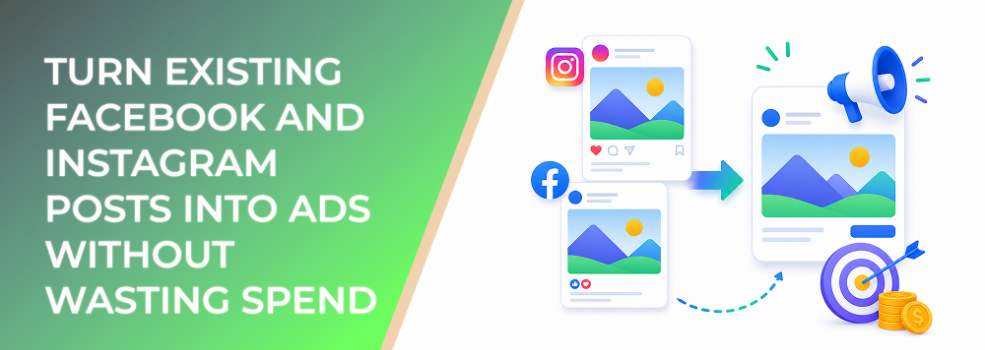
Using an existing post as an ad can be smart. It can preserve social proof, reduce creative production time, and help advertisers scale content that already has audience response.
But it can also waste budget.
Organic engagement does not automatically mean paid performance. A post may earn likes, comments, or shares because it is entertaining, controversial, or familiar to existing followers. That does not mean it will generate leads, purchases, bookings, or qualified traffic when shown to a paid audience.
The opportunity is to use existing posts carefully: keep the social proof that helps trust, but test the post like any other paid creative.
What creating an ad from an existing post really means
When you create an ad from an existing post, you are taking content that already exists on a Facebook Page or Instagram account and using it inside a paid campaign.
This can be useful because the ad may carry existing reactions, comments, or shares. For some campaigns, that visible engagement can make the ad feel more credible.
The tradeoff is control.
Existing posts may not be written like direct-response ads. They may lack a clear CTA, a strong offer, a conversion-focused headline, or a placement-ready format. If the post was built for organic distribution, it may depend on context that a cold paid audience does not have.
That is why advertisers should treat existing-post ads as a creative option, not a shortcut.
Business impact on CPC, CPA, CAC, ROAS, and lead quality
Existing-post ads can improve budget efficiency when social proof increases trust with the right audience. A post that already attracted relevant comments or questions may reduce friction and help paid users engage faster.
But the opposite can happen.
If the post attracts casual engagement, CPC may look acceptable while CPA rises. If comments are off-topic, skeptical, or outdated, they can damage conversion performance. If the post lacks a clear next step, users may engage without becoming leads or customers.
The business impact usually appears in:
- CPC, when engagement improves or declines after paid distribution.
- CPA, when the post either supports or weakens conversion intent.
- CAC, when paid traffic produces unqualified leads.
- ROAS, when the post connects social proof to purchase behavior.
- Lead quality, when the post attracts either serious prospects or casual commenters.
- Testing speed, because existing posts can be launched faster than net-new creative.
The key is to judge the post by commercial behavior, not popularity.
Typical scenarios where this applies
A post has strong buyer-relevant comments
If users are asking about pricing, availability, product fit, booking, or next steps, the post may have paid potential.
A founder, creator, or customer story performed well
Story-driven posts can work as ads when they build trust and connect clearly to an offer.
A product demonstration earned saves or shares
Educational product content may perform well if the paid campaign sends users to a relevant landing page or purchase path.
An agency wants to preserve engagement for a client
Using an existing post can prevent social proof from being split across duplicate ads.
A small business needs faster creative testing
Existing posts can reduce production time, but only if they are reviewed against paid campaign goals.
Risks and considerations
The main risk is confusing engagement with intent.
A funny or emotional post can attract reactions without producing qualified leads. A controversial post may drive comments but train delivery toward users who are unlikely to convert.
Another risk is weak creative fit. A post designed for Feed may not work well across Stories, Reels, or other placements. Cropping, text placement, and CTA clarity can all affect performance.
Comments can also become a liability. If the existing post includes complaints, irrelevant debates, outdated details, or unanswered questions, paid distribution may amplify those issues.
Finally, existing posts may limit how much you can adjust the ad. If the post needs major changes, creating a new ad may be cleaner than forcing an organic post into a paid format.
Prerequisites and dependencies
Before using an existing post as an ad, confirm:
- The post supports a clear campaign objective.
- The visible engagement is relevant and brand-safe.
- The comments do not create confusion or objections.
- The post has a clear offer or can support one.
- The destination matches the message.
- The format works across intended placements.
- The Page or Instagram account identity is correct.
- The audience is relevant enough to justify paid distribution.
A post should earn paid budget because it supports the campaign goal, not because it happened to get attention.
How LeadEnforce helps
LeadEnforce helps advertisers match existing-post ads to more relevant audiences.
This matters because social proof works best when the audience recognizes the context. A post about a niche product, industry problem, or community-specific topic may perform poorly with a broad audience but better with users who already show interest in that category.
LeadEnforce can help build audiences from Facebook groups, Instagram followers, Instagram engagers, LinkedIn professional data, and custom social-profile data.
For example, an agency can promote a client’s high-performing post to users connected to relevant competitor communities. A B2B team can test a thought-leadership post against professional segments. An ecommerce brand can use followers or engagers from niche Instagram profiles to create a more relevant audience pool.
The post still needs strong creative and a clear next step. LeadEnforce helps make the paid audience more intentional.
Practical recommendations
Audit the engagement before promoting
Look beyond likes. Review comments, shares, saves, profile activity, and buyer-relevant questions. Engagement quality matters more than engagement volume.
Choose posts with clear commercial relevance
A strong candidate usually teaches something, solves a problem, shows proof, explains a product, or creates trust around a specific offer.
Do not rely on social proof alone
Social proof can support conversion, but it cannot replace a clear CTA, relevant audience, and strong destination.
Check placement fit
Review how the post appears across the placements you plan to use. If the creative crops poorly or the message depends on Feed context, consider creating a new ad variation.
Separate organic winners from paid winners
A post that works organically may not work in paid. Test it against a clear KPI such as qualified lead rate, cost per purchase, booked call rate, or ROAS.
Preserve useful posts, duplicate weak tests
If the post has strong social proof and fits the campaign, using it can make sense. If you need to change the message heavily, create a new ad instead.
Final takeaway
Creating ads from existing posts can help advertisers move faster and preserve social proof, but only when the post supports a real paid objective.
The best existing-post ads combine relevant engagement, a clear offer, a qualified audience, and a conversion path that matches the message. Use organic performance as a signal, not a guarantee.
To test existing-post ads with more relevant audience segments, join the free 7-day LeadEnforce trial period.
Related LeadEnforce Articles
- How to Find and Use a Meta Page Post ID Without Losing Social Proof — Helps advertisers reuse existing posts while preserving engagement signals.
- How to Add New Ads to an Existing Meta Campaign Without Breaking Performance — Useful when adding existing-post ads into a live campaign structure.
- How to Customize Ad Creative for Placements in Meta Ads Manager — Explains how placement fit affects creative performance.
- How to Use Meta Ad Previews to Catch Creative Problems Before Launch — Relevant for checking how existing posts appear before publishing.