Buyer journey mapping helps you understand what your customers need at each step — from first discovering your brand to finally making a purchase.
If you're running Facebook or Instagram ads and struggling with high CPLs (cost-per-lead) or low ROAS (return on ad spend), this guide will help. We'll walk through how to map the journey, choose the right ad types, and create audiences that match intent — so your campaigns convert better.
What is buyer journey mapping?
Buyer journey mapping is a way to break down the steps people take before they become your customers. It helps you stop guessing and start showing the right message at the right time.
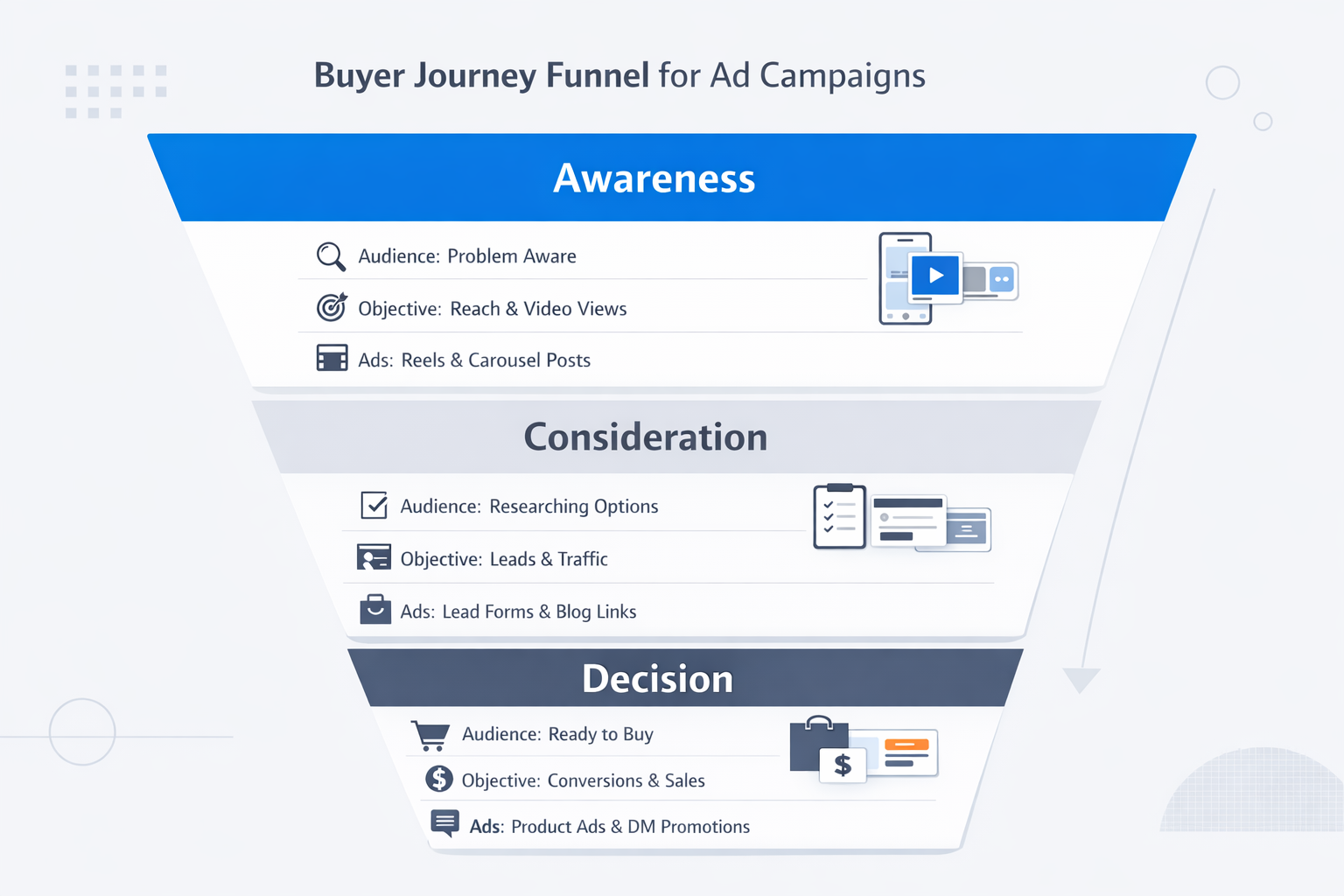
Most journeys follow these 3 stages:
-
Awareness: They realize they have a need or problem.
-
Consideration: They explore different ways to solve it.
-
Decision: They compare final options and decide who to buy from.
For example:
Let’s say you sell skincare for acne-prone skin. At the awareness stage, someone might search "why do I keep breaking out?" At the consideration stage, they compare solutions like diet changes, skincare routines, or dermatologist visits. In the decision stage, they’re comparing brands — maybe yours vs. a competitor.
If you try to sell to someone in the awareness stage with a product ad, they’ll scroll right past. But if you guide them through the journey with the right content and ads, they’re much more likely to convert.
Related: Mapping the Customer Journey to Facebook Campaign Structure.
Why journey mapping matters in Facebook and Instagram ads
Many advertisers focus only on sales ads — but ignore how people actually decide to buy.
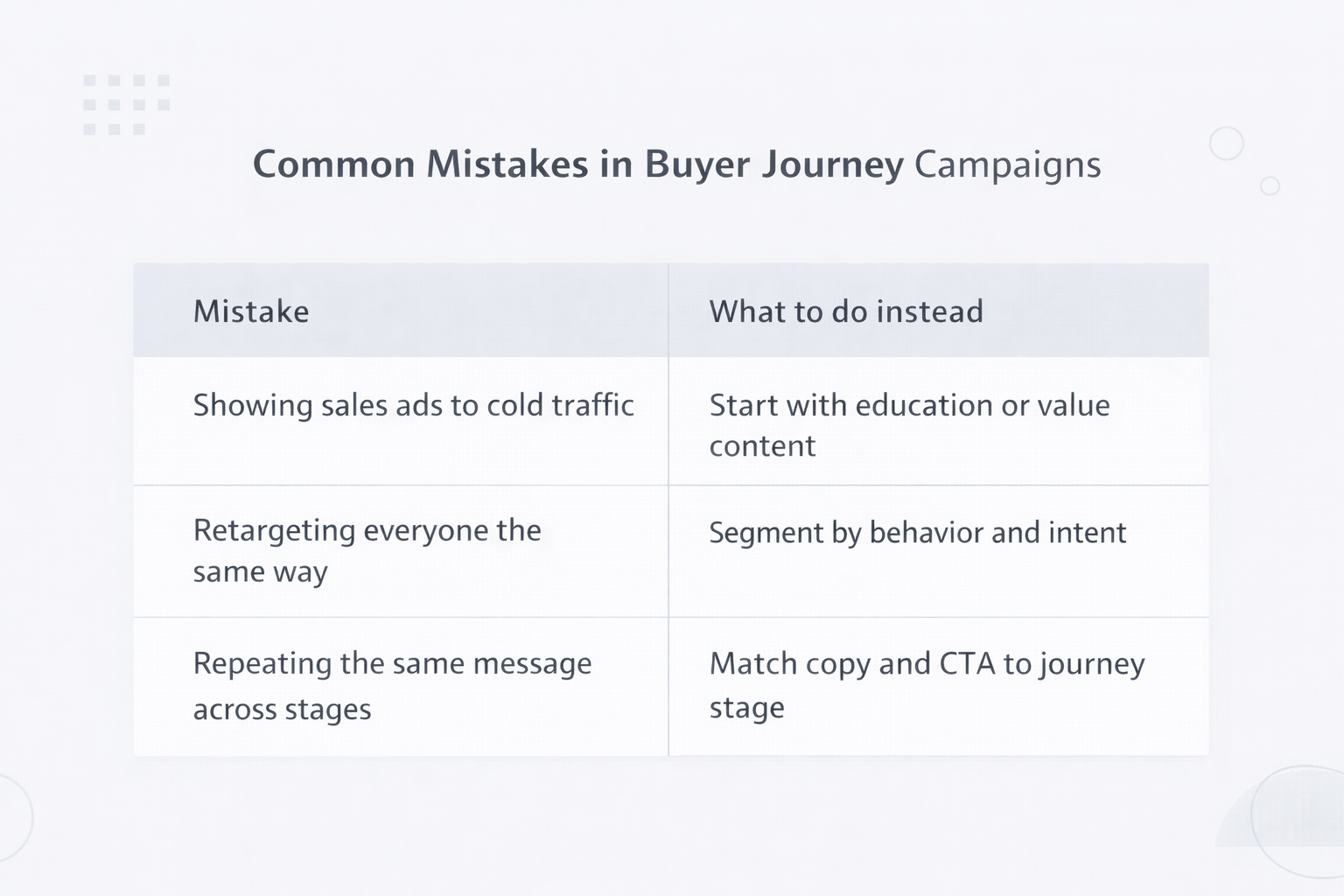
That causes problems like:
-
Wasted ad spend: You’re showing expensive retargeting ads to cold traffic who aren’t ready yet.
-
Ad fatigue: Your audience sees the same sales ad over and over, and tunes out.
-
Missed opportunities: People drop off because you don’t have a clear path between awareness and purchase.
Journey mapping fixes this by giving structure to your ad funnel. You know what to say, when to say it, and who to say it to.
For funnel tips: Facebook Ads Funnel Strategy: From Audience Identification to Conversion.
Step-by-step: map your buyer journey for ad campaigns
Let’s walk through how to do this in practice — with examples and specific tips for Facebook and Instagram ads.
1. Find out how people actually discover and buy from you
Start by understanding what your real customer journey looks like. You don't need fancy tools — just good data and simple questions.
Use tools like Meta Ads Manager, Google Analytics, or even Shopify reports to look at:
-
Where people first find you: Are they watching Reels? Clicking blog posts? Seeing tagged posts from influencers?
-
What they do before buying: Do they view multiple products? Sign up for your newsletter? Save posts?
-
How they convert: Do most people buy right after a retargeting ad, or after multiple touchpoints?
Pro tip: Check Facebook’s attribution settings. Use 7-day click and 1-day view to get a clearer picture of the buyer path.
Learn more: How to Use the Facebook Attribution Tool to Optimize Your Facebook Ad Performance.
2. Choose ad types that match the journey stage
Each stage of the buyer journey needs a different kind of ad — because people are thinking about different things at each step.
Awareness stage: make people care
At this stage, people don’t know you — or even that they need your product. Your job is to get noticed and spark interest.
Use:
-
Short Reels or vertical videos: Grab attention in the first 3 seconds. Use humor, curiosity, or a relatable problem.
-
Carousel posts: Show multiple angles of a problem or introduce product categories.
-
Page engagement or video view objectives: Optimize for low-cost visibility and interaction.
Example: A fitness coach could post a short Reel showing “3 signs your workouts aren’t working” — ending with a soft mention of their coaching.
Consideration stage: show value and build trust
Now they’re problem-aware and looking at options. This is your chance to educate, help them compare, and build credibility.
Use:
-
Lead ads: Offer a free workout plan, skincare quiz, or PDF guide.
-
Click-to-site campaigns: Drive to blog posts, product quizzes, or educational landing pages.
-
Testimonials and UGC: Show real customers explaining what changed after using your product.
Example: A skincare brand could run a lead ad offering “The Clear Skin Routine Guide for Hormonal Breakouts” — then follow up with email sequences and retargeting.
Decision stage: make it easy to buy
These people are ready to buy — don’t distract them. Make the offer clear and the CTA direct.
Use:
-
Conversion ads: Focus on urgency (e.g., “Only 24 hours left!”), scarcity (“Only 7 left”), or incentives (e.g., free shipping).
-
Catalog retargeting: Show products they’ve viewed or added to cart.
-
DM ads: Great for services or high-ticket items where trust matters.
Example: A coaching service could run a DM campaign saying “Spots for March are now open — message us to apply.”
3. Build audiences based on journey stage
Targeting matters as much as creative. Facebook’s native audiences are helpful, but using a tool like LeadEnforce gives you more control.
Here’s how to build buyer journey audiences:
For awareness
-
Cold lookalikes: Based on customers or high-LTV subscribers.
-
Instagram and Facebook followers of niche brands: Use LeadEnforce to target fans of competitors or relevant creators.
-
Broad interests: But test one interest per ad set for better optimization.
For consideration
-
Engaged users: 50%+ video viewers, post engagers, or profile visitors.
-
Lead form openers: Even if they didn’t submit — they showed intent.
-
People who visited your blog or product education pages.
For decision
-
Add-to-cart or checkout initiators.
-
Product viewers with time-on-site over 30 seconds.
-
People who messaged your brand or commented with intent (“How much is this?”).
Tip: Step-by-Step Guide to Retargeting with LeadEnforce shows how to build these audience segments effectively
Pro tip: Exclude BOF audiences from TOF campaigns. It prevents ad fatigue and keeps your funnel clean.
Bonus tips for better results
Here are a few additional strategies advertisers often miss:
Test more than one journey
Not all buyers take the same path. Some convert quickly, others need more education. Try different funnel setups for:
-
First-time vs. repeat buyers;
-
Low-ticket vs. high-ticket products;
-
Different entry points (organic, paid, referral).
Use journey-specific landing pages
If you send TOF traffic to a sales page, you’ll lose them.
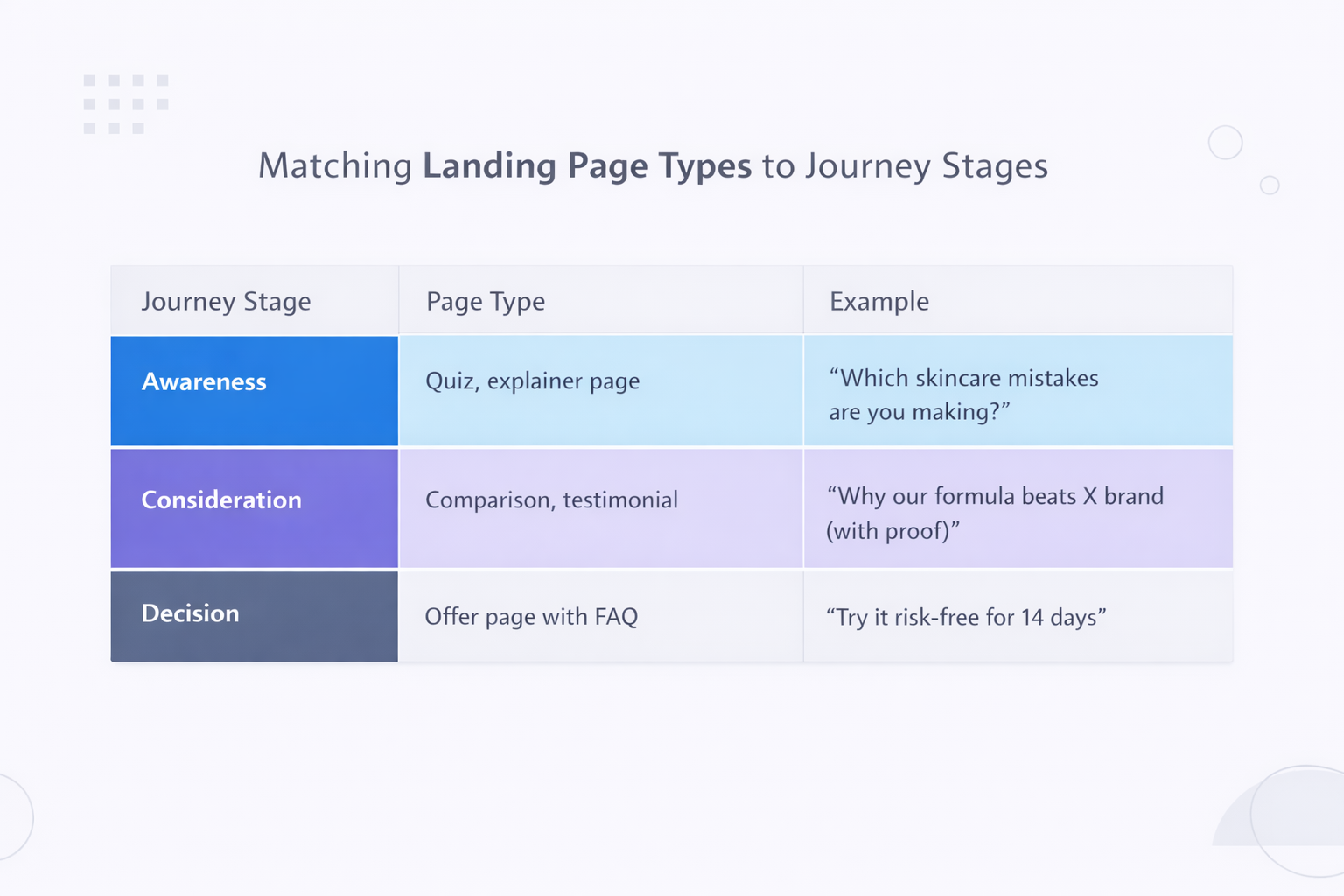
Create simple pages for:
-
Awareness: quizzes, problem explainer pages, short videos;
-
Consideration: case studies, reviews, comparison charts;
-
Decision: clear offer, FAQ, social proof, fast CTA.
Related: How to Optimize Landing Pages for Better Conversions.
Retarget with purpose
Don’t just say “Hey, come back!”
Instead, ask: what might they still need to feel ready?
-
Missed the offer? Show urgency.
-
Hesitant? Use proof.
-
Confused? Clarify in video.
Tailor your retargeting the same way you tailor cold outreach.
Final thoughts
Buyer journey mapping helps you stop wasting money on misaligned ads and start building real funnels that convert. When your campaigns match what your audience actually needs at each stage, everything improves: CTR, conversion rate, and ROAS.
If you’re not using buyer journey mapping yet, start simple:
-
Define your stages;
-
Map your content;
-
Match your audiences;
-
And test.
Once you get the hang of it, you can go deeper and scale smarter.