In modern Facebook and Instagram advertising, individual ads rarely win alone.
The best-performing campaigns today are structured around cohesive creative themes — multi-format, message-layered ad sequences that drive higher engagement, stronger memory, and improved conversion rates.
If your ads are underperforming, the issue may not be the product or offer — it may be how you're presenting it. In this article, we’ll break down how creative themes work, why they outperform one-off ads, and how to build and scale them inside your Meta campaigns.
Why Creative Themes Outperform Single Ads
A single ad doesn’t match how users make decisions
The buying process isn’t linear. Users see dozens of offers before they act. And rarely does a single message — or format — cover everything needed to persuade.
Creative themes solve this by guiding users through the decision journey with structured storytelling across multiple touchpoints. You’re not hoping they act on first glance — you’re meeting them at every step of the funnel.
Creative themes help Meta's delivery system learn faster
Meta’s algorithm doesn’t just optimize for CTR. It learns based on performance signals across ad sets, creative types, and user behavior. When you run variations built around a core message, you help the algorithm identify what’s working faster.
This leads to:
-
Lower CPMs;
-
Higher engagement rates;
-
Faster stabilization in delivery.
Compare that to a single ad with no variants — it gives Meta minimal data, leading to slower and less reliable learning.
You build mental availability for your brand
Consistent creative themes build brand memory through visual and message repetition. This is particularly important for:
-
New brands still building trust;
-
Retargeting users who’ve seen your offer before;
-
Mid-funnel audiences who need more persuasion.
What a Creative Theme Actually Is
A creative theme isn’t just a matching color palette or design style. It’s a strategic creative framework built around a core idea or value proposition.
This framework includes:
-
A unified concept (e.g., “built for freelancers” or “better sleep in 30 days”);
-
Multiple formats (static, carousel, video, reels);
-
Messaging angles tailored to different intent levels (awareness, consideration, conversion);
-
Visual consistency (brand colors, fonts, logo use, etc.).
Instead of saying the same thing the same way, you say the same thing differently — over and over — until it sticks.
Related: Stand Out and Stay on Brand with Stunning Facebook Ad Creatives.
Real-World Example: Creative Theme in Action
Imagine a brand selling sleep gummies. Here’s how a creative theme could look:
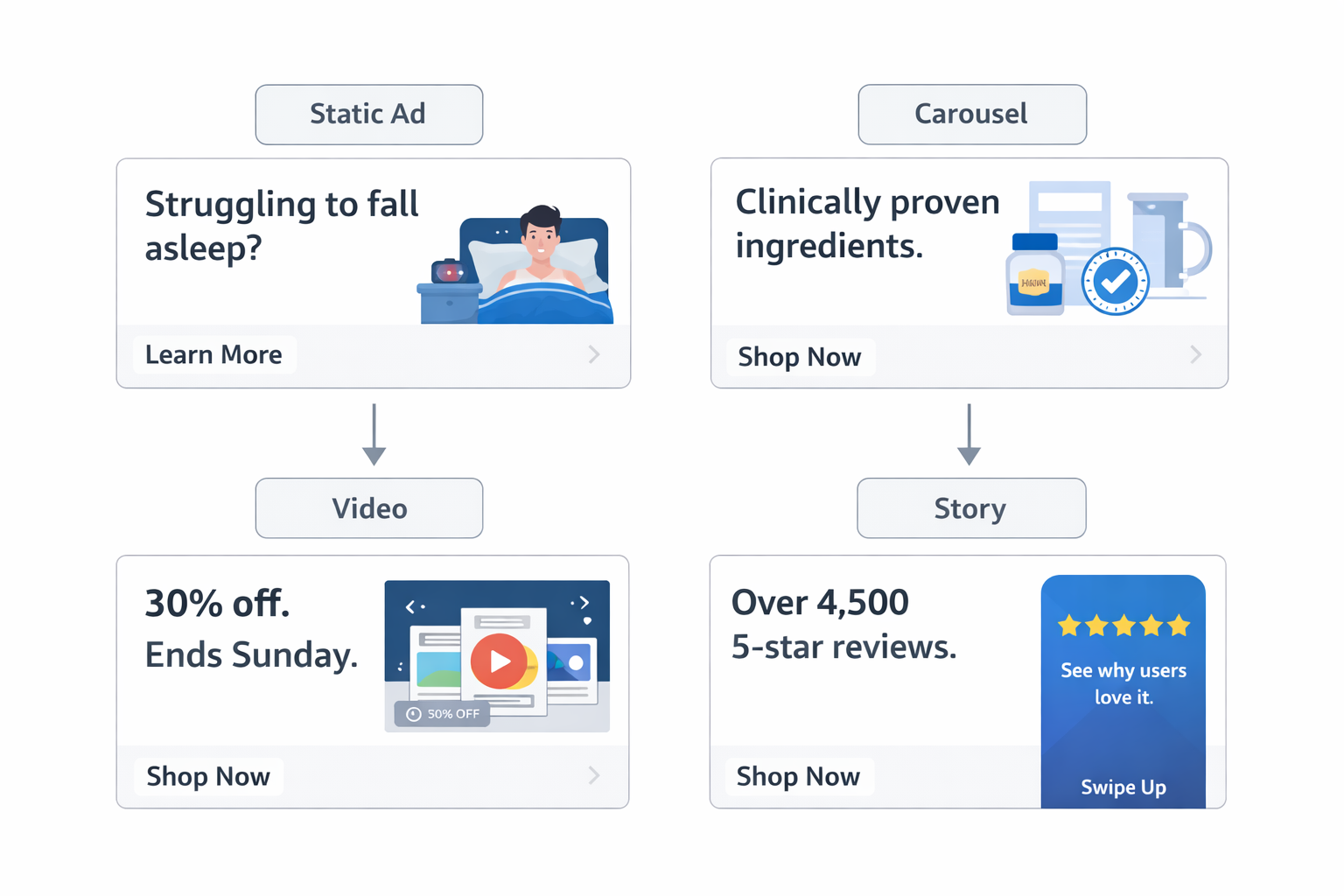
These ads feel different, but they work together to reinforce the same core promise: better sleep without side effects.
How to Build a Creative Theme From Scratch
You don’t need a full production team to create a high-performing theme. Here’s how to develop one step by step.
1. Define Your Central Promise
Before design, before messaging — you need clarity.
What do you want users to remember after they’ve seen three or four of your ads?
Examples:
-
Outcome-focused — “Lose 15lbs without crash dieting”.
-
Time-saving — “Finish invoices 5x faster”.
-
Lifestyle alignment — “Coffee made for remote workers”.
Avoid feature-heavy language early on. Start with a transformation or key benefit.
2. Choose 2–3 Supporting Angles
Each theme should be expressed through multiple angles that speak to different user types.
Angle types:
-
Problem recognition — “Tired of doing this manually?”
-
Product demo — “Here’s how it works”.
-
Social proof — “Join 10,000+ happy customers”.
-
Offer hook — “20% off for new users”.
-
Comparison — “Other brands use X. We don’t.”
Each of these supports the core message without repeating the same ad.
3. Match Angles to Formats
Some messages work best in specific formats:
-
Problem + Offer → Stories or Reels.
-
Proof + Benefits → Carousels or statics.
-
Demonstration → Short videos or tutorial GIFs.
Pair the format and message to match user expectations in-feed.
For inspiration: How to Repurpose a Single Creative Into 5 Different Facebook Ad Formats.
How to Deploy Creative Themes Inside Meta Campaigns
Building a great theme is only step one. You also need to deploy it strategically inside your ad account.
Keep Each Theme in Its Own Ad Set (or Campaign)
Don’t mix themes across the same ad set. Doing so dilutes optimization signals and muddies performance data. Instead:
-
Use one campaign for each theme (or one ad set per theme if budget is limited);
-
Run 3–5 creatives per theme to test variations;
-
Avoid unnecessary edits during the learning phase.
Use Naming Conventions for Clarity
Example naming structure: Theme_SleepSupport_Proof_Static_V1
Why it matters:
-
Easier analysis in Ads Manager;
-
Faster pattern detection across winners;
-
Enables smooth scaling later.
Monitor Metrics by Theme, Not Just Ad
Look beyond the top-performing individual ad. Ask:
-
Which theme has the lowest blended CPA?
-
Which theme drives the best post-click behavior?
-
Are users remembering the core message?
Creative-level metrics matter, but theme-level insight drives smarter budget allocation.
Why Creative Themes Are Crucial for Retargeting
Retargeting should never be a dumping ground for old ads.
It’s your second (or third) chance to close the deal. And creative themes let you make that sequence intentional.
A Themed Retargeting Funnel Example:
| Time Since Visit | User Mindset | Theme Variant Example |
|---|---|---|
| 1–3 Days | Still interested | Reminder + Proof (“Why 10,000+ switched”) |
| 4–7 Days | Comparing options | Differentiator (“No fillers. No drowsiness.”) |
| 8–14 Days | Losing interest | Urgency + Offer (“Ends tonight. 30% off”) |
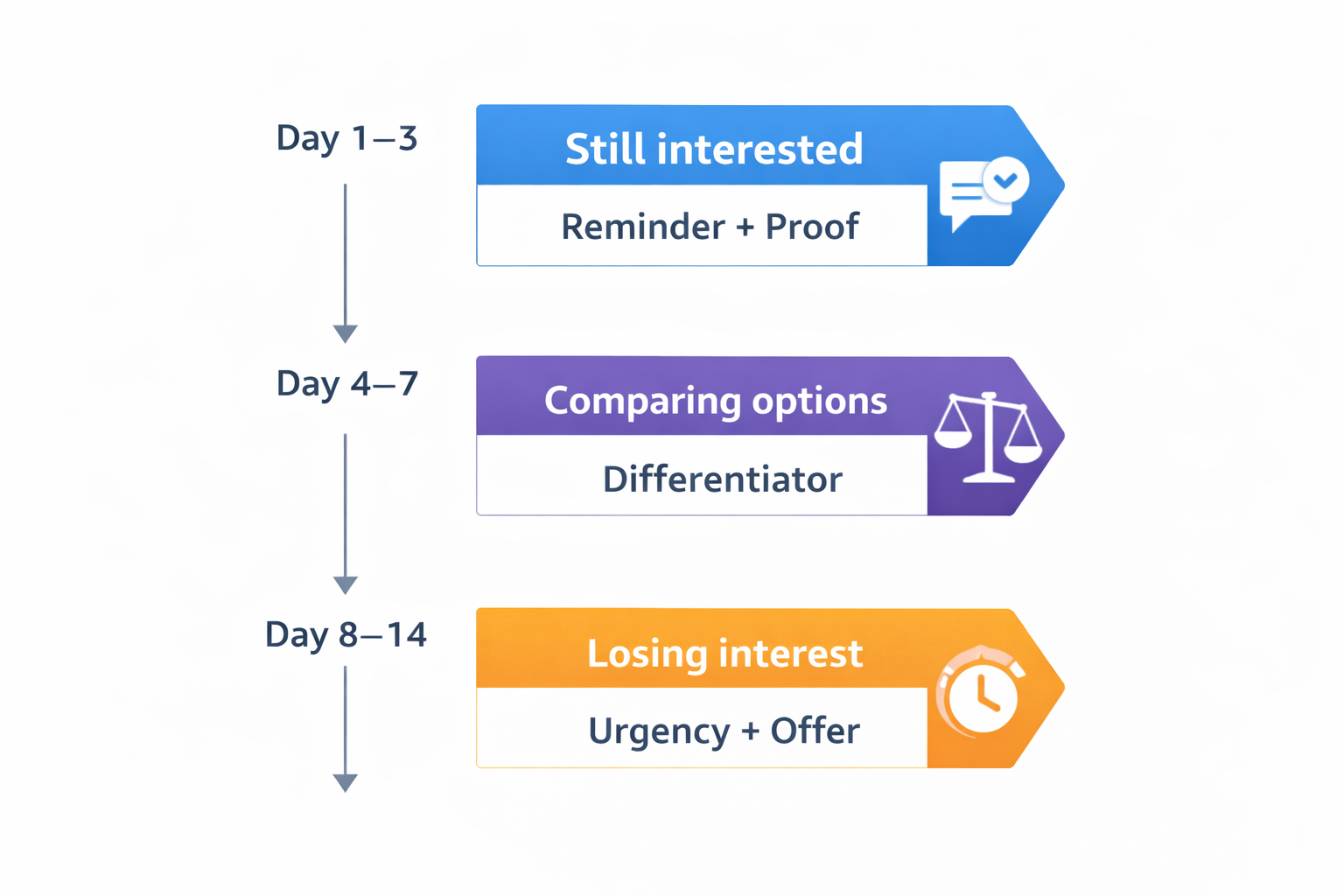
Each message has its place. The theme holds it all together.
Explore more: How to Use Advantage+ Creative Tools to Design Winning Facebook Ads.
Final Thoughts: One Idea, Many Angles
Today’s Facebook and Instagram users are distracted, impatient, and skeptical.
Creative themes give you a structured way to reach them — again and again — with clarity and consistency.
Instead of one “perfect ad,” aim for a network of related creatives that support the same message from different angles. That’s how you drive real performance, feed Meta’s optimization engine, and grow a brand that users remember.