If you're spending money on ads but not seeing the ROI you expected, here's the uncomfortable truth: you're probably underutilizing your customer data.
Most brands collect it. Few actually use it well.
Let's fix that.
What Is Customer Data?
Customer data isn't just about email addresses or birthdays. It includes everything you can legally collect about how your users behave, what they value, and how they interact with your business.
| Data Type | Example | How It's Used in Ads |
|---|---|---|
| Demographic | Age, gender | Audience segmentation |
| Behavioral | Site visits, clicks | Retargeting campaigns |
| Transactional | Purchase history | Product recommendations |
| Engagement | Email opens, video views | Timing of ad delivery |
Break it into four buckets:
-
Behavioral Data — Includes website actions (clicks, scrolls, bounces), in-app activity, and ad engagements.
-
Transactional Data — What people buy, how often they buy it, what they spend, and whether they return.
-
Demographic & Psychographic Data — Age, location, device, lifestyle, and interests.
-
Feedback Data — Reviews, survey responses, and chats with support.
When combined, these insights give you the full picture of who your best customers are and why they convert.
1. Build Precise Custom Audiences
Most Facebook and Instagram campaigns fail at the start—with poor audience setup.
The fix? Use real data to build laser-focused custom audiences:
-
Past purchasers, segmented by product category;
-
Email subscribers who clicked your latest promo but didn’t buy;
-
Visitors who abandoned cart in the last 14 days.
These aren’t just random retargeting pools. They’re intent-rich segments that drive higher CTRs, lower CPAs, and faster conversion.
Read: Maximize Engagement by Leveraging Custom Audiences on Facebook
Bonus tip: exclude low-value customers (one-time buyers with low AOV) to avoid training the algorithm on the wrong signals.
2. Create Smarter Lookalikes (That Actually Work)
Lookalike audiences are only as strong as your seed list. Garbage in, garbage out.
Start with your most valuable 5% of customers. Don’t just export your email list—filter it based on:
-
High AOV and LTV;
-
Purchase frequency;
-
Post-purchase engagement (opened emails, referred others, left positive reviews).
Then use that clean data to build lookalikes. You’ll train the algorithm to find people who act like your best customers, not just any customers.
See also: Custom vs Lookalike Audiences: What Works Best for Facebook Campaigns?
3. Personalize Creatives by Customer Journey Stage
Using the same ad copy for everyone is a quick way to waste your budget.
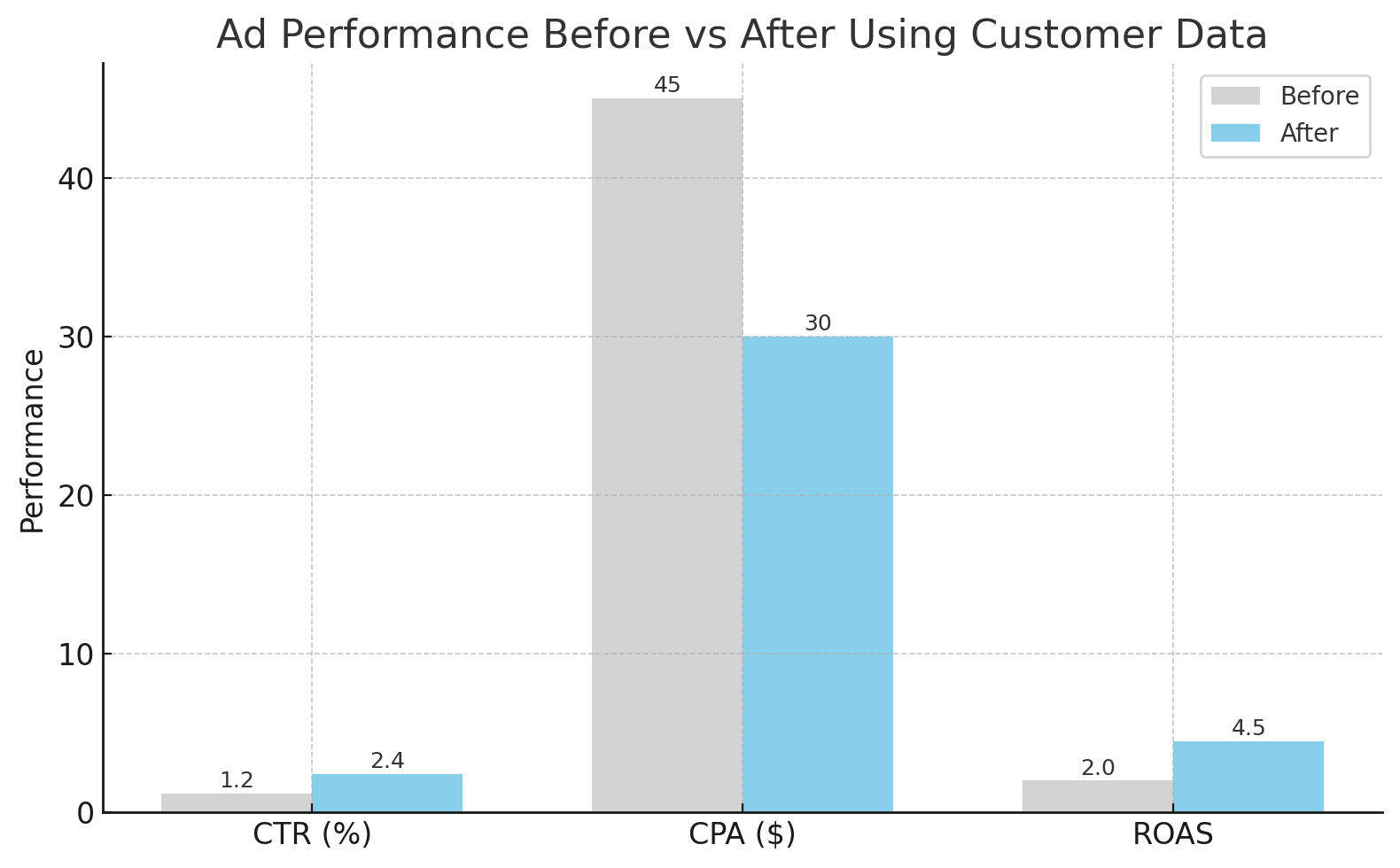
Your customer data can tell you what stage someone is in. Tailor your creative accordingly:
-
New visitors: Focus on value props, brand awareness, and testimonials;
-
Repeat visitors: Show comparisons, case studies, or influencer quotes;
-
Cart abandoners: Use urgency and clear CTAs to recover the sale.
Make sure your dynamic ads update copy, creative, and CTA based on user behavior. The tech is there. You just have to use it.
Need a primer? Here's a tactical walkthrough on Facebook Ad Targeting 101: How to Reach the Right Audience
4. Bridge the Gap Between Ad Platforms and CRM Data
Ad platforms give you clicks, impressions, and leads.
Your CRM gives you purchases, churn rates, upsells, and LTV.
When you connect the two, you unlock real business insight:
-
Which campaigns drive not just leads, but high-quality customers;
-
What timeframes lead to higher retention;
-
How lead quality changes across platforms.
Integrate tools like Zapier, Segment, or direct API connections with your CRM. Feed your ad platforms with enriched offline data to optimize based on value, not just volume.
5. Use Segmented Data to Improve Ad Testing
A/B testing doesn’t help much if you’re lumping everyone into the same bucket.
Instead, segment users by:
-
First-time vs. returning;
-
Product interest;
-
Lead source.
Then test variables like CTA language, creative format, or ad placement within each segment. This helps you:
-
Spot which offers work for cold vs. warm audiences;
-
Stop wasting budget on irrelevant tests;
-
Optimize more quickly based on real differences.
Treat Customer Data Like a Feedback Loop
Most advertisers think of data as something you review after a campaign.
But the real value is in using data before, during, and after to make smarter decisions.
Start small: set up one new custom audience. Sync your CRM for one campaign. Personalize one creative asset.
Then watch what happens when your ads stop guessing and start reacting.