Most advertisers focus too heavily on the final sale. But only a small percentage of users convert right after clicking an ad — especially in high-ticket, service-based, or B2B offers. The majority go through multiple steps before deciding to buy.
If you're only tracking purchases or leads, you're missing out on earlier signals that can help improve campaign performance and lower wasted spend.
That’s where micro-conversion tracking comes in.
What are micro-conversions?
Micro-conversions are small, meaningful actions users take on their way to converting. These actions don’t generate revenue directly, but they show engagement, curiosity, and intent.
Some common examples include:
-
Clicking a “See pricing” or “Get demo” button;
-
Watching at least 75% of a product video;
-
Completing a quiz or interactive tool;
-
Visiting pages like Pricing, Testimonials, or Product Features;
-
Starting a form, even if not submitted.
Each of these steps indicates that a person is warming up. They're not ready to buy yet — but they’re moving closer.
If you’re unsure how to match these actions to campaign structure, this article on mapping the customer journey to Facebook campaign structure breaks down the stages clearly.
Why micro-conversions matter for ROAS
Tracking only purchases hides a huge part of the story. You’ll wait too long to know whether an ad is effective — and spend too much in the meantime.
Micro-conversions help by providing early, actionable feedback.
1. Faster algorithm training
Platforms like Meta Ads rely on conversion data to learn who to show your ads to. If you're only getting a few purchases per week, the algorithm can't optimize properly.
Micro-conversions solve this by giving it more frequent signals to work with.
Let’s say you're running a campaign for a free trial. Instead of optimizing only for completed signups, you can track:
-
Button clicks on “Start Trial”;
-
Form starts;
-
Pricing page views.
These actions happen more often, giving the platform more data to learn from. You’ll start seeing better ad delivery and lower cost per result.
2. Clearer insight into what’s working (and what’s not)
Micro-conversion data helps you find the exact step where people drop off. This is a powerful way to fix funnel issues without relying on end-result conversions alone.
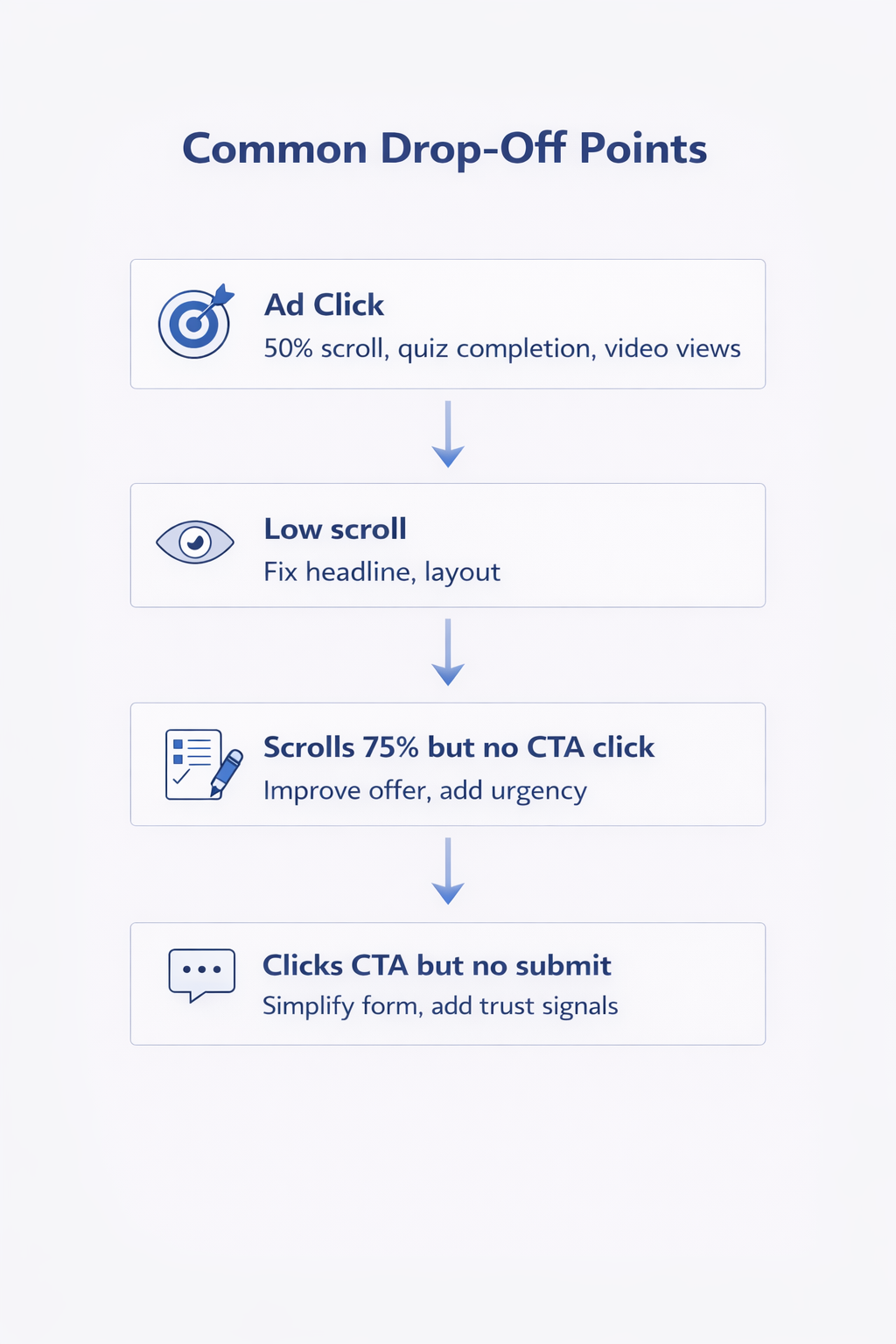
To dig deeper into common funnel breakdowns, read From click to conversion: where funnels usually break.
3. Smarter retargeting
Not all visitors are equal. Retargeting everyone the same way often leads to wasted budget. But when you track micro-conversions, you can build smarter remarketing audiences based on behavior.
You can create different segments like:
-
People who watched 75% of a video but didn’t click;
-
Visitors who explored multiple pages but didn’t convert;
-
Users who started a form but didn’t submit it.
Learn how top brands are already using this strategy in behavior-based audiences: segmenting by page scrolls, time on site & more.
How to set up micro-conversion tracking
You can use tools like Meta Events Manager, Google Tag Manager, or analytics platforms like GA4, Hotjar, or Mixpanel.
Here’s a simple process:
Step 1: Map your funnel
Think about the steps users take before converting. Break it down into journey stages:
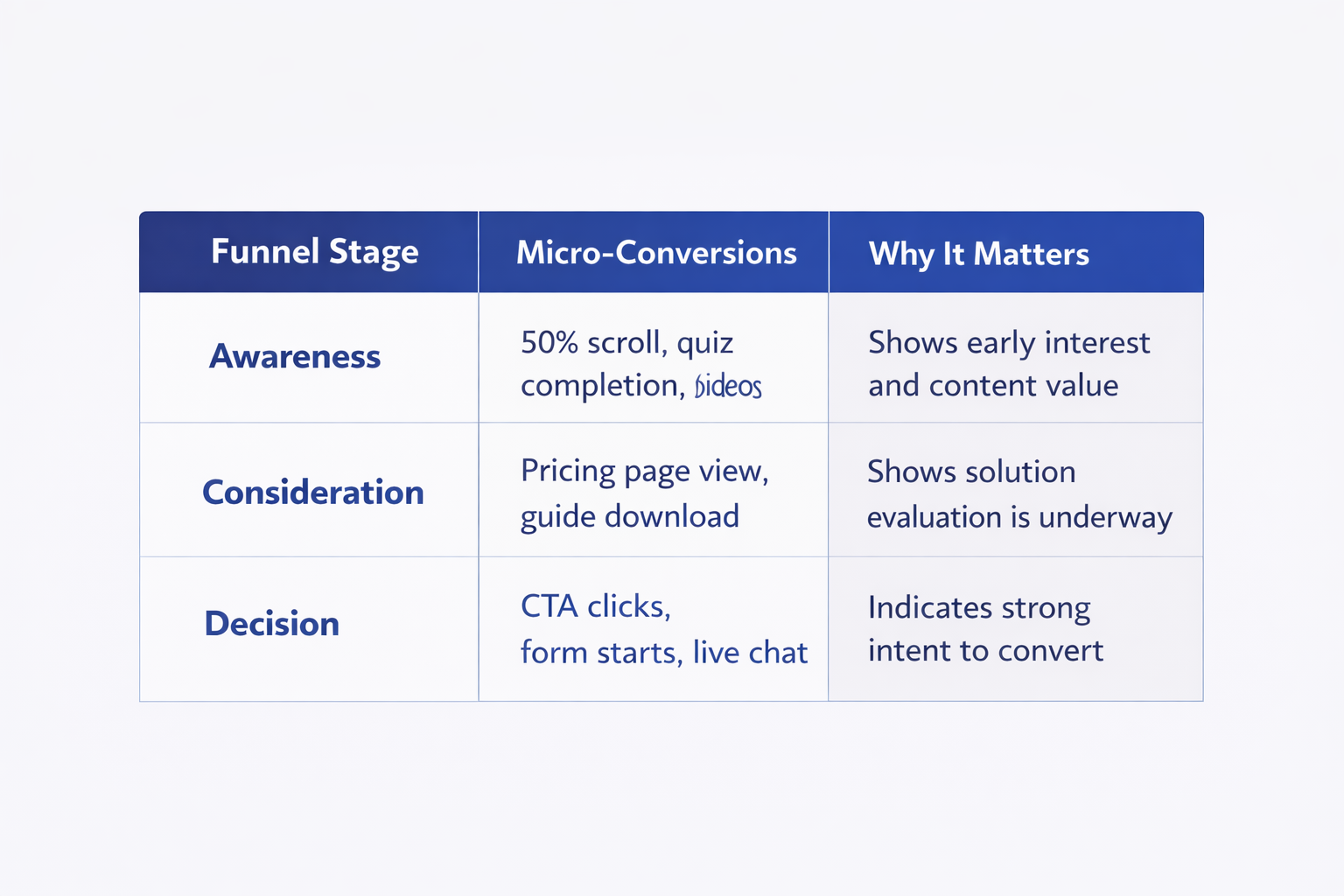
Don’t just track every click. Focus on actions that show real interest.
Step 2: Add tracking to your site
Use:
-
Meta Events Manager: Create custom events like
PricingClickorFormStart; -
Google Tag Manager: Track scroll depth, button clicks, or page views;
-
GA4 or Mixpanel: Build funnels and visualize drop-offs.
Step 3: Align with your ad strategy
Use micro-conversions as optimization goals — especially if your offer has a long sales cycle or low volume.
How to use the data to improve campaigns
Tracking micro-conversions is only part of the equation. You need to use the data to drive decisions.
Here are practical ways to apply what you learn:
Identify strong-performing creatives earlier
If certain videos get a lot of 75% views or quiz completions, that’s a sign they resonate — even if final conversions aren’t there yet.
Improve landing pages with behavioral clues
Use scroll and click data to decide if CTAs need to be more prominent, if trust signals should be added, or if your messaging needs more clarity.
Create behavior-based retargeting sequences
Send custom messages to users based on their actions — not just their visit.
Common mistakes to avoid
Here are a few pitfalls that can reduce the impact of micro-conversion tracking:
-
Tracking too much: Avoid cluttering your analytics with low-value events;
-
Not tying events to strategy: Track only what aligns with your funnel and campaign goals;
-
Retargeting everyone the same way: Use behavior to guide segmentation and creative messaging.
Final thoughts
Improving ROAS isn’t just about cheaper traffic or better creatives. It’s about seeing the full journey — and reacting to it.
Micro-conversions help you:
-
Spot what's working before final results come in;
-
Train ad platforms with better data;
-
Segment users more intelligently for retargeting.
Whether you're working with high-ticket services, long sales cycles, or awareness-first funnels, tracking these mid-funnel signals will give you an edge.