Seasonality is not merely a fluctuation in demand; it is a structural shift in intent, urgency, and purchasing psychology. Winter campaigns are typically shaped by peak retail events, compressed buying windows, and promotional saturation. Spring, in contrast, introduces renewal-driven consumption patterns, longer research cycles, and expanding budgets in B2B environments.
Failing to recalibrate campaigns between these periods often leads to inflated acquisition costs, declining engagement rates, and inefficient budget deployment. Understanding how key performance indicators (KPIs) shift seasonally enables advertisers to maintain efficiency and scale predictably.
Winter Ad Performance: High Intent, High Competition
1. Compressed Purchase Cycles
During winter months—particularly November through January—consumer urgency peaks due to major shopping events and year-end budget deadlines. Industry data consistently shows:
-
Conversion rates increase by 15–30% during late Q4 compared to annual averages.
-
Retail search volume can rise by 20–40% year-over-year in peak weeks.
-
B2B procurement spikes before fiscal year closures, accelerating decision timelines.
However, elevated intent is offset by aggressive competition.
2. Rising Costs Per Click (CPC)
Advertising platforms typically experience significant auction pressure in winter:
-
CPCs often rise 10–25% in competitive industries.
-
CPMs increase due to higher advertiser participation.
-
Cost per acquisition (CPA) may remain stable only if conversion rates offset bid inflation.
In other words, winter rewards precision. Poor targeting or broad audience strategies become disproportionately expensive.
3. Creative Fatigue Accelerates
Because audiences are exposed to more ads during winter peaks, ad fatigue sets in faster. Click-through rates (CTR) can decline by 15–20% within weeks if creative is not refreshed.
Successful winter campaigns rely on:
-
Strong promotional framing
-
Clear deadlines and urgency
-
Highly segmented audiences
-
Frequent creative iteration
Spring Ad Performance: Expanding Interest, Longer Consideration
As winter urgency subsides, spring introduces behavioral recalibration.
1. Broader Exploration Behavior
Search trends in Q1–Q2 frequently shift from transactional to exploratory queries. For example:
-
Informational search queries can increase by 20% compared to Q4.
-
Average session duration rises in industries tied to planning (travel, SaaS evaluation, home services).
-
B2B buyers re-enter research cycles after budget resets.
Conversion rates may decline 5–15% compared to winter peaks—but lead quality often improves due to more deliberate evaluation.
2. Reduced Auction Pressure
After the holiday surge, many advertisers reduce spend:
-
CPCs often decline 5–15% in early spring.
-
CPM volatility stabilizes.
-
Cost per lead can decrease when campaigns are optimized for research-phase audiences.
This creates an opportunity window for strategic expansion and top-of-funnel growth.
3. Messaging Shift: From Urgency to Opportunity
Spring performance improves when messaging transitions away from deadlines and discounts toward:
-
Growth
-
Planning
-
Optimization
-
Improvement
Psychologically, spring aligns with forward-looking decisions rather than reactive purchasing.
Data Comparison: Key KPI Trends
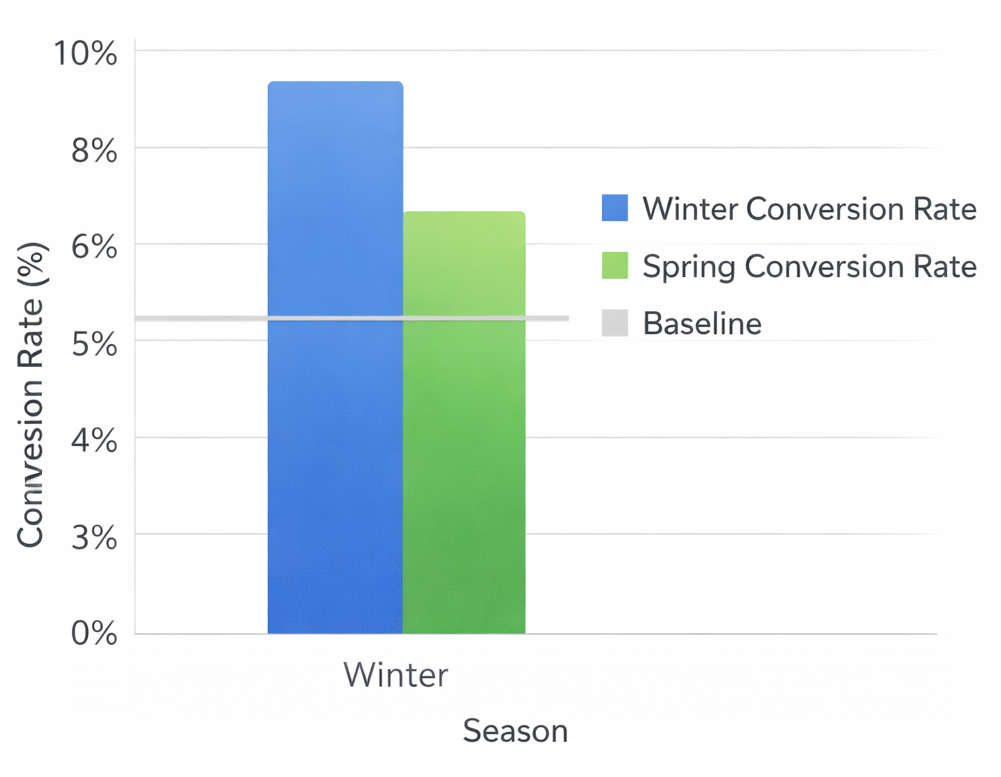
Seasonal conversion rate comparison showing higher winter conversion driven by urgency versus spring’s exploratory buying behavior
| Metric | Winter Trend | Spring Trend |
|---|---|---|
| Conversion Rate | +15–30% | -5–15% vs winter |
| CPC | +10–25% | -5–15% |
| CTR | Initially high, declines quickly | Moderate, more stable |
| Lead Quality | Mixed (promo-driven) | Often higher (research-driven) |
| Sales Cycle Length | Shorter | Longer |
These shifts highlight a fundamental truth: winter maximizes immediacy; spring maximizes strategic positioning.
Strategic Adjustments by Season
Winter Optimization Framework
-
Tighten audience targeting to high-intent segments
-
Increase budget on proven converting audiences
-
Refresh creatives every 2–3 weeks
-
Monitor frequency to prevent saturation
-
Use urgency-based copy and time-sensitive offers
Spring Optimization Framework
-
Expand lookalike and prospecting audiences
-
Invest in educational content and lead magnets
-
Optimize for engagement metrics, not just immediate conversions
-
Lengthen attribution windows
-
Test value-based messaging over discount-based messaging
B2B Considerations: Budget Cycles Matter
In B2B environments, winter often correlates with:
-
End-of-year budget utilization
-
Procurement acceleration
-
Vendor switching decisions
Spring frequently reflects:
-
New budget allocation
-
Strategic planning initiatives
-
Platform evaluation cycles
Marketers who align campaign objectives with fiscal behavior rather than calendar assumptions consistently outperform competitors.
Forecasting and Budget Allocation
A practical seasonal allocation model may look like:
-
Allocate 35–45% of annual paid media budget to Q4 if revenue is retail-driven.
-
Reserve 20–30% of annual testing budget for Q1–Q2 experimentation.
-
Shift KPI benchmarks seasonally rather than maintaining fixed targets year-round.
Rigid KPI expectations across seasons distort performance evaluation and lead to unnecessary optimization errors.
Common Mistakes
-
Maintaining identical targeting structures across seasons
-
Ignoring CPC inflation during winter
-
Cutting spring budgets due to lower conversion rates without evaluating lead quality
-
Failing to adjust messaging psychology
-
Over-scaling winter campaigns without frequency monitoring
Conclusion
Seasonal shifts in advertising performance are driven by measurable changes in buyer intent, auction dynamics, and psychological context. Winter campaigns benefit from urgency and high transactional momentum but require disciplined cost control. Spring campaigns offer lower competition and higher-quality engagement but demand patience and longer-term optimization strategies.
Advertisers who proactively recalibrate targeting, bidding, creative, and KPIs between these seasons consistently achieve stronger return on ad spend and more stable growth trajectories.