Every paid click represents intent, cost, and opportunity. Yet in most digital funnels, only a small fraction of that intent turns into revenue. The problem is rarely traffic quality alone. More often, funnels break due to small, compounding issues across pages, messages, load times, and tracking. Understanding where and why users drop off is the first step toward reclaiming lost conversions.
Industry benchmarks show that the average landing page conversion rate across industries is around 2–4%, while top-performing funnels consistently exceed 10% by removing friction at critical steps. The gap between average and elite performance is usually funnel integrity, not traffic volume.
1. The Click–Expectation Mismatch
The first break often happens immediately after the click. Ads promise one thing; landing pages deliver something slightly different.
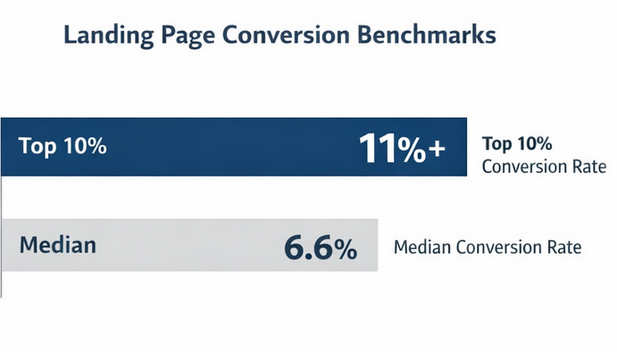
Median vs. top-performing landing page conversion rates across industries
Common causes include:
-
Messaging that shifts between ad and page
-
Visual inconsistency that breaks trust
-
Offers that feel diluted or unclear
Research shows that message-matched landing pages can improve conversion rates by up to 212% compared to generic pages. When users feel even mild confusion, bounce rates spike within seconds.
2. Slow Load Times and Technical Friction
Speed is not a UX luxury; it is a conversion requirement. Users rarely wait for funnels to catch up.
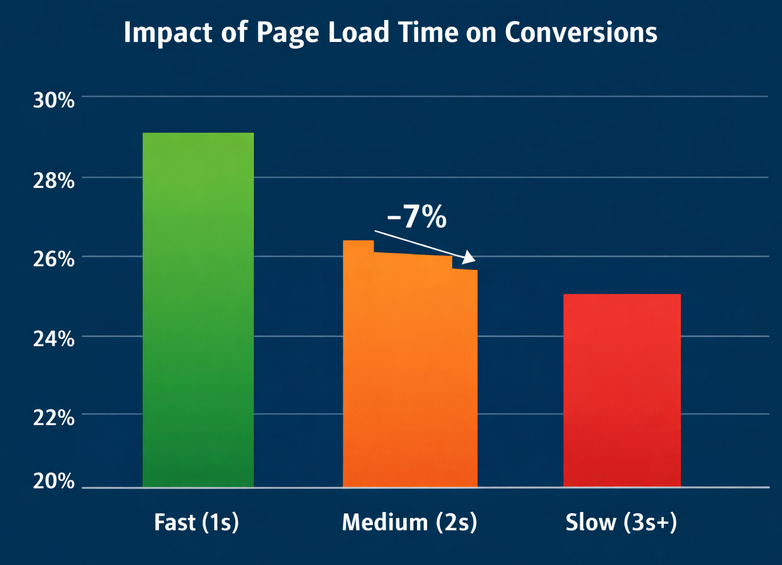
Conversion rates decrease significantly as page load time increases
Key statistics:
-
A 1-second delay in page load can reduce conversions by 7%
-
Over 50% of mobile users abandon pages that take longer than 3 seconds to load
Beyond speed, technical issues such as broken forms, validation errors, or poor mobile responsiveness silently kill conversions without obvious warning signs.
3. Weak Above-the-Fold Clarity
If users cannot instantly answer three questions — Where am I? What is this? Why should I care? — the funnel leaks.
Funnels often fail because:
-
Headlines focus on features instead of outcomes
-
Value propositions are buried below the fold
-
Calls to action are vague or overloaded
Data from usability studies shows that users form a first impression in under 50 milliseconds, meaning clarity must exist before scrolling begins.
4. Overloaded Forms and Checkout Steps
Every additional field or step introduces friction. Many funnels collapse at the form or checkout stage, even when prior steps perform well.
Common mistakes:
-
Asking for non-essential information too early
-
Multi-step flows without progress indicators
-
Lack of reassurance around privacy or security
Studies consistently show that reducing form fields from 10 to 4 can increase conversions by up to 120%. Simpler paths outperform "complete" data collection in early funnel stages.
5. Lack of Trust Signals
Even interested users hesitate when trust is not established clearly.
Funnels break when they lack:
-
Social proof (reviews, usage stats, logos)
-
Clear pricing or expectation-setting
-
Visible security and compliance indicators
According to surveys, 92% of users hesitate to convert if a site does not feel trustworthy, even if the offer itself is compelling.
6. Post-Click Drop-Off Between Steps
Not all funnel leaks are visible on a single page. Drop-offs often occur between steps due to:
-
Unclear next actions
-
Delayed redirects or confirmation pages
-
Email or verification steps that interrupt momentum
Analyzing step-to-step conversion rates frequently reveals that the biggest losses happen between pages, not on them.
7. Poor Measurement and Attribution
Funnels also break at the analysis level. When teams cannot see where users drop off, optimization becomes guesswork.
Common measurement issues include:
-
Missing or misfiring events
-
Over-reliance on last-click attribution
-
Inconsistent tracking across devices
Without clean data, even high-traffic funnels can appear healthy while bleeding revenue underneath.
How to Identify Where Your Funnel Breaks
To systematically diagnose funnel issues:
-
Map the full click-to-conversion path
-
Measure drop-off rates at every step
-
Segment by device, traffic source, and intent level
-
Prioritize fixes by impact, not aesthetics
High-performing teams treat funnels as living systems, not static assets.
Suggested Reading
For deeper insights into funnel optimization and testing, explore these related articles:
Conclusion
Funnels rarely break in one dramatic place. They fail quietly, step by step, through mismatched expectations, slow experiences, unclear messaging, and invisible friction. By focusing on post-click integrity rather than traffic volume alone, teams can unlock meaningful conversion gains without increasing spend.
From click to conversion, the difference between average and exceptional performance is attention to detail — and the discipline to fix what users never explicitly complain about.