Instagram ads often look good on the surface — but poor decisions behind the scenes can quietly kill conversions. Many advertisers keep running campaigns without realizing that small missteps are stopping users from clicking, engaging, or buying.
If your Instagram ads get impressions but no results, review your setup for these often-overlooked mistakes.
Misreading performance by relying on Instagram-only data
Instagram's native ad data doesn’t tell the full story. It overweights top-of-funnel metrics like reach and engagement.
But conversions happen later — often off-platform. If you only use Instagram Ads Manager to judge success:
-
You miss what happens after the click. For example, a post with 10,000 likes may drive zero purchases.
-
You overvalue formats that get swipes and saves, not sales.
-
You ignore lag between view and conversion, especially on high-ticket items.
Fix it: Track conversions using server-side tools (e.g., Conversions API), not just pixel events. Compare performance in your CRM, Shopify, or other business systems — not just inside Meta’s dashboard. For a deeper breakdown, see Meta Ads attribution: what to know about windows, delays, and data accuracy.
Repeating the same creative across placements
Instagram placements (Stories, Reels, Explore) behave differently. Yet many advertisers push the same ad to all.
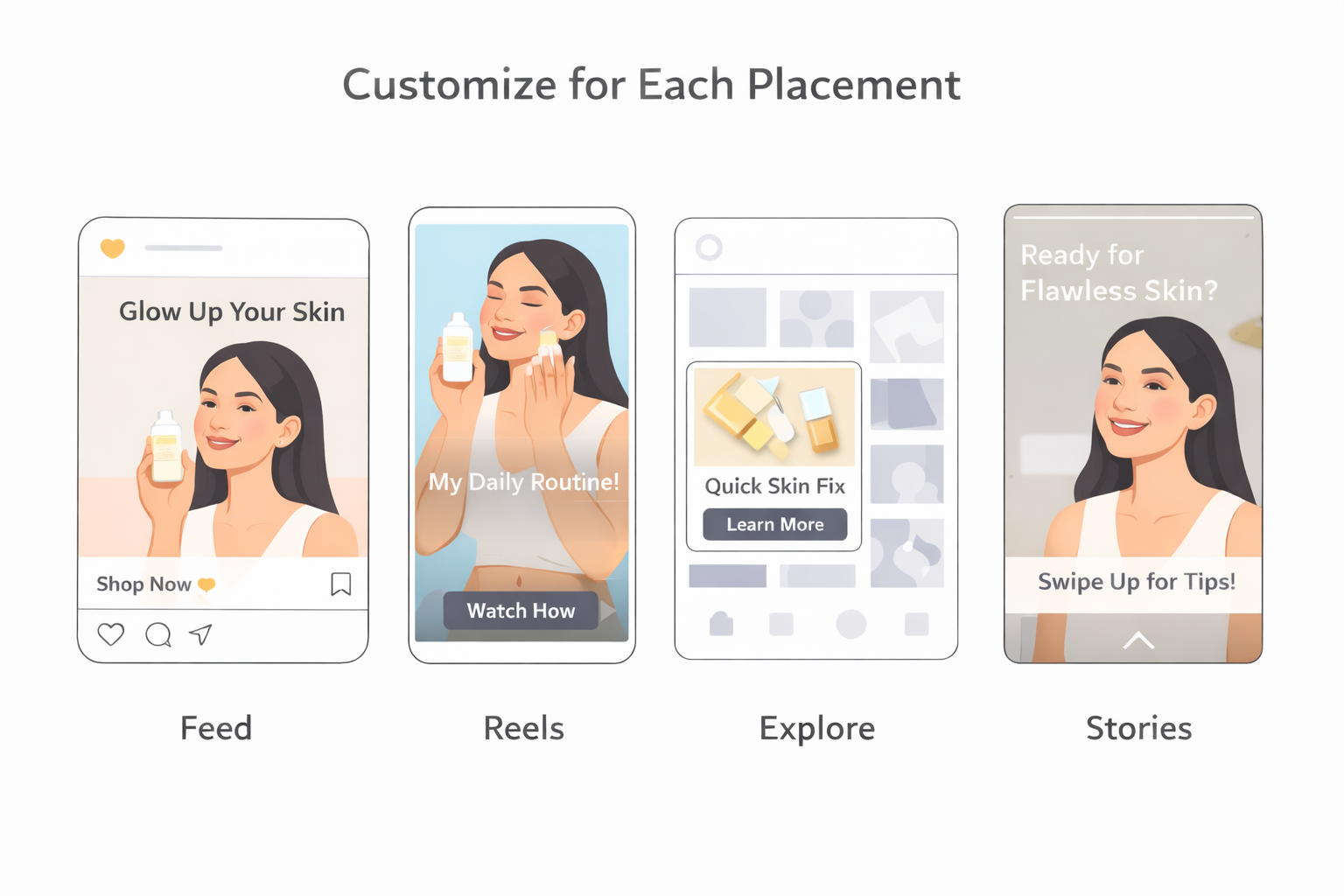
That leads to poor fit:
-
A static 1:1 feed image appears stretched or cropped in Reels.
-
A voiceover-heavy Story ad runs with sound off by default.
-
A long caption in a carousel disrupts the swipe flow in Explore.
Fix it: Customize assets per placement. For example:
-
Use short, vertical video for Reels.
-
Add burnt-in subtitles for Stories.
-
Test tighter copy for Explore placements with shorter attention spans.
Learn more in Instagram ad placements: what drives results for your business.
Using high-production ads that feel like ads
Polished Instagram ads often get ignored. Users scroll past anything that looks too professional or scripted.
Why? Because native-style content blends in and feels more trustworthy.
Ads that underperform often include:
-
Studio lighting and actors.
-
Overlays and CTA graphics.
-
Long intros before getting to the point.
Fix it: Try content that looks like a real post:
-
Use iPhone-shot UGC with real users showing the product.
-
Open with the payoff, not the setup ("I’ve used this every day for a month — here’s what happened").
-
Let comments and reviews do the selling through screenshots or text overlays.
This approach aligns with the most common design mistakes in Instagram ads (and how to avoid them).
Ignoring post-click friction
Even strong Instagram ads fail if the landing experience breaks. Yet many campaigns send traffic to pages that aren’t optimized for mobile, speed, or clarity.
Common mistakes:
-
Sending traffic to a homepage instead of a dedicated product page.
-
Using landing pages that load slowly over mobile data.
-
Breaking message match — the headline doesn’t connect to the ad promise.
Fix it: Minimize steps to conversion. Align the ad and the page:
-
Match the headline and offer ("Get 20% off this week only" in both places).
-
Load fast — under 2 seconds on 4G.
-
Pre-fill forms using autofill or Lead Ads.
For tips on better conversion setup, check how to create a high-converting landing page.
Testing too much creative without structure
Instagram lets you upload up to 150 assets in Advantage+ campaigns — but quantity without structure leads to chaos.
Without clear testing logic:
-
You can’t tell which hooks or formats drive results.
-
Weak creatives dilute the strong ones.
-
Meta’s optimization may favor easy clicks, not purchases.
Fix it: Use modular creative structure. Break content into repeatable blocks:
-
Hooks: Openers like "Tired of overpriced skincare?" or "This fixed my sleep in 3 days."
-
Formats: Carousels, 15-second Reels, before-after UGC.
-
CTAs: "Try it free", "Get 40% off today", "See how it works."
For a practical approach, read what to test first: creative, copy, or audience in Facebook campaigns.
Over-targeting based on interests
Overly narrow Instagram audience targeting can kill reach before a campaign starts. Many advertisers select too many interest layers, hoping to “zero in” on buyers.
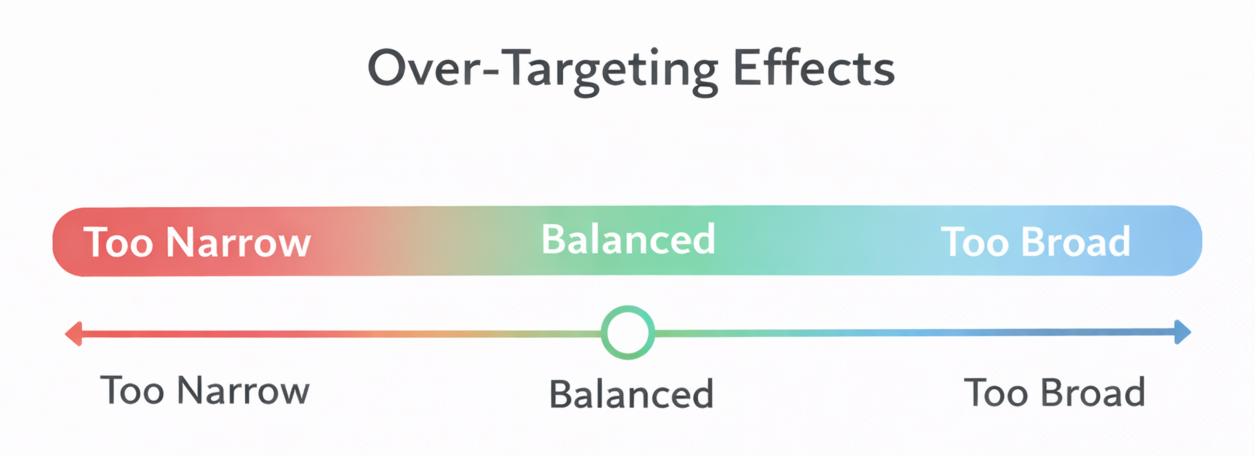
This often backfires:
-
Meta's algorithm has less data to learn from.
-
CPMs go up because the auction pool shrinks.
-
Your ad never exits the learning phase.
Fix it: Start broader and let the algorithm optimize. Use:
-
Broad geo + age + gender + Advantage+ audience.
-
A few top-level interests, not stacked filters.
-
Custom audiences (site visitors, email lists) with clear intent.
If you're selling a niche product, rely on creative and offer relevance — not targeting complexity — to qualify users.
Letting Instagram’s auto-placements override business priorities
By default, Meta distributes your ad spend across placements based on lowest cost per result. But cheapest doesn’t mean most valuable.
Example: You might get 80% of impressions in Reels, but conversions actually come from the feed. Instagram’s algorithm often favors low-cost inventory, not high-intent users.
Fix it: Review performance by placement inside breakdown reports:
-
Check ROAS and conversion rate, not just CTR.
-
If Reels gets volume but no sales, reduce or exclude it.
-
Create ad sets with manually selected placements when needed.
Let performance data — not Meta defaults — shape your allocation.
Using product benefits that matter to you, not the buyer
Many Instagram ads highlight features the brand finds impressive — not what the customer actually cares about.
Examples:
-
"Patented dual-layer foam system" sounds technical but doesn’t explain comfort or durability.
-
"Available in 17 colors" may matter after the purchase, not before.
Fix it: Reframe features into outcomes. Ask:
-
What does this help the customer avoid? (e.g., pain, waste, time loss)
-
What proof makes it believable? (e.g., reviews, stats, social proof)
Then restructure your creative to show why it matters now. If it’s not urgent, it won’t convert.
Ignoring how users move between Instagram and other channels
Instagram ads rarely drive a direct click-to-buy. Users often take detours:
-
Save the post, then Google the brand days later.
-
Watch the ad, then click on an email or YouTube link.
-
View a Story, then buy via desktop.
If you only look for conversions inside the same session, you’ll miss delayed attribution.
Fix it: Map the broader journey:
-
Use UTMs and Google Analytics to trace the full path.
-
Match campaigns to lift in branded search volume.
-
Analyze multi-touch data across CRM, ads, and email.
The value of Instagram often shows up outside Instagram. Treat it as a driver — not always the closer.
Summary: better structure beats more spend
Instagram ads that convert don’t just look good — they’re structured with intent, tested methodically, and tracked beyond the platform.
To improve conversions:
-
Track what matters, not just what’s visible in Ads Manager.
-
Design for the platform, not your internal creative deck.
-
Reduce user effort after the click.
-
Let the algorithm learn by starting broad.
-
Use modular creative systems, not random asset dumps.
Instagram rewards advertisers who understand both the feed and the funnel.