
You’re getting add-to-carts, which means the ad is doing something right.
But purchases aren’t happening — which means the system is optimizing toward the wrong outcome.
That gap is where most campaigns quietly fail.
Add-to-Cart Is Where Misdiagnosis Starts
Add-to-cart feels like progress because it sits close to the purchase event.
In reality, it’s often just a soft commitment.
People use carts to:
-
check total price,
-
compare options,
-
postpone the decision.
So when you see strong ATC volume, the real question isn’t “why aren’t they buying?”
It’s “what exactly did they expect when they clicked — and what changed after?”
That distinction is what sits behind patterns described in Why clicks don’t equal demand. The system can generate intent signals that never translate into actual buying behavior.
The Fastest Way to Kill Purchases: Late Friction
Most teams look at targeting first.
In practice, the break is usually mechanical.
A typical scenario: the user clicks, likes the product, adds to cart — and then sees shipping that adds 25% to the total.
That’s not hesitation. That’s a reset. Or the checkout asks for account creation. Or the payment page lags. Or Apple Pay is missing on mobile traffic.
None of this shows up in Ads Manager. The platform still reports “high intent.”
You only see the problem when you step outside the ad account and watch behavior directly — the kind of analysis discussed in How to use heatmaps and click maps to improve post-click performance.
When the Ad Creates the Wrong Expectation
Sometimes the checkout is fine. The problem starts earlier.
The ad pulls people in with one mental model, and the product page replaces it with another. This happens more often than you'd expect.
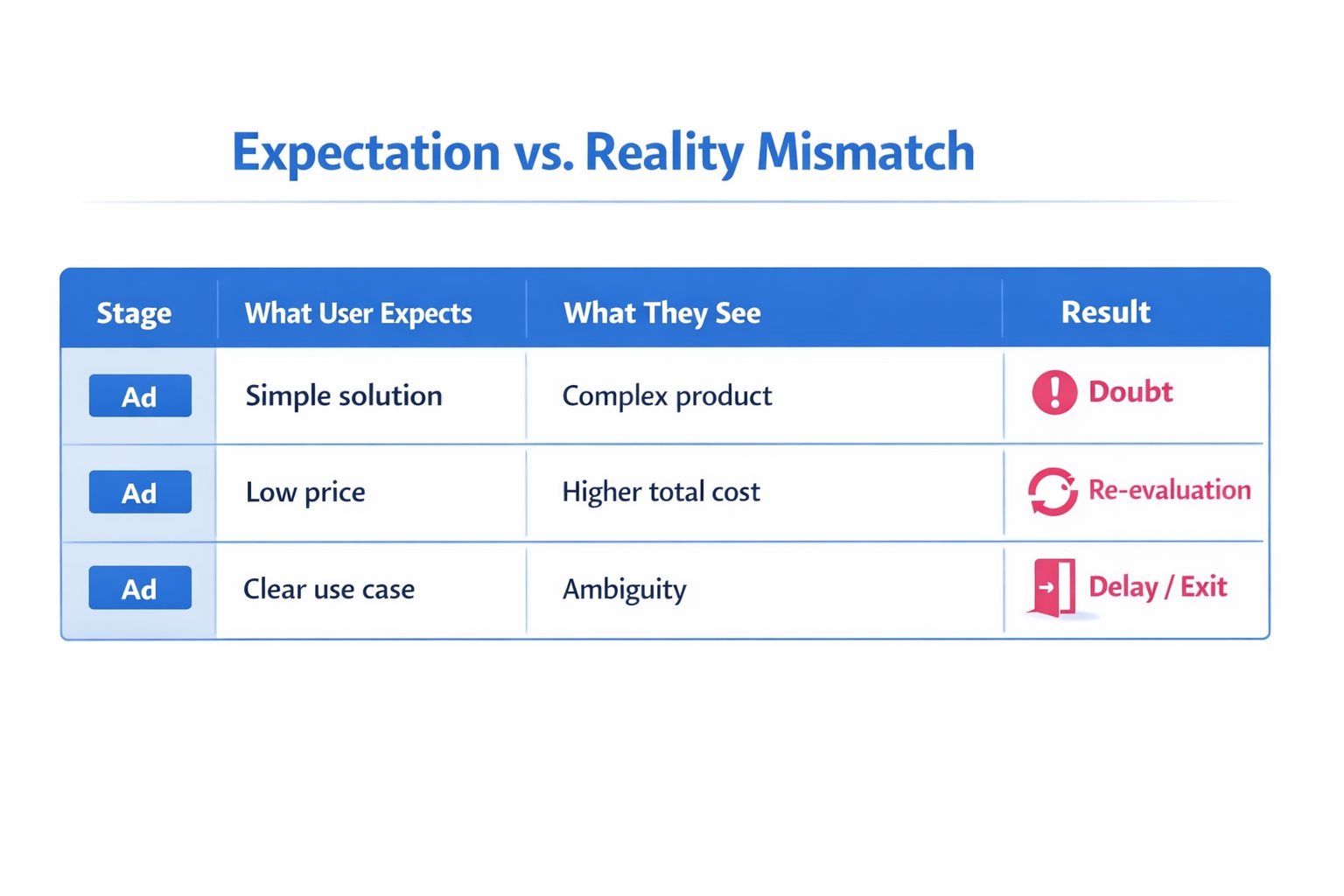
For example:
-
The ad frames the product as a quick win, but the page reveals complexity.
-
The price feels low in isolation, but high in context.
-
The use case seems obvious in the ad, but unclear on the page.
So users add to cart while they’re still in that initial mental frame — then drop once reality catches up.
That’s not “bad conversion rate.” It’s expectation mismatch.
The same dynamic is behind cases outlined in Why your ads get clicks but no sales, where the system optimizes for engagement patterns instead of real buying intent.
The Quiet Drop Between Product Page and Checkout
There’s a specific moment most people don’t analyze closely.
Not the click. Not the purchase.
The transition in between.
This is where hesitation shows up:
-
the page keeps offering alternatives instead of closure,
-
the CTA competes with other elements,
-
trust signals appear too late.
At that point, the user isn’t confused. They’re unconvinced.
And once doubt appears that late in the process, recovery is unlikely.
This is why post-click structure matters more than most teams expect, as explored in Optimizing for post-click experience: what happens after.
When the Algorithm Starts Working Against You
If this pattern runs long enough, it compounds.
The system learns that add-to-cart is a reliable signal and starts finding more users who behave the same way.
Not buyers — adders.
You’ll see it clearly:
-
ATC volume holds or grows,
-
purchase rate declines,
-
frequency creeps up without revenue following.
At that point, the issue is no longer just funnel friction. It’s optimization drift.
And unless you correct the signal (or force the system toward purchase events), it keeps scaling the wrong behavior.
What Actually Changes the Outcome
This isn’t a “test more creatives” situation.
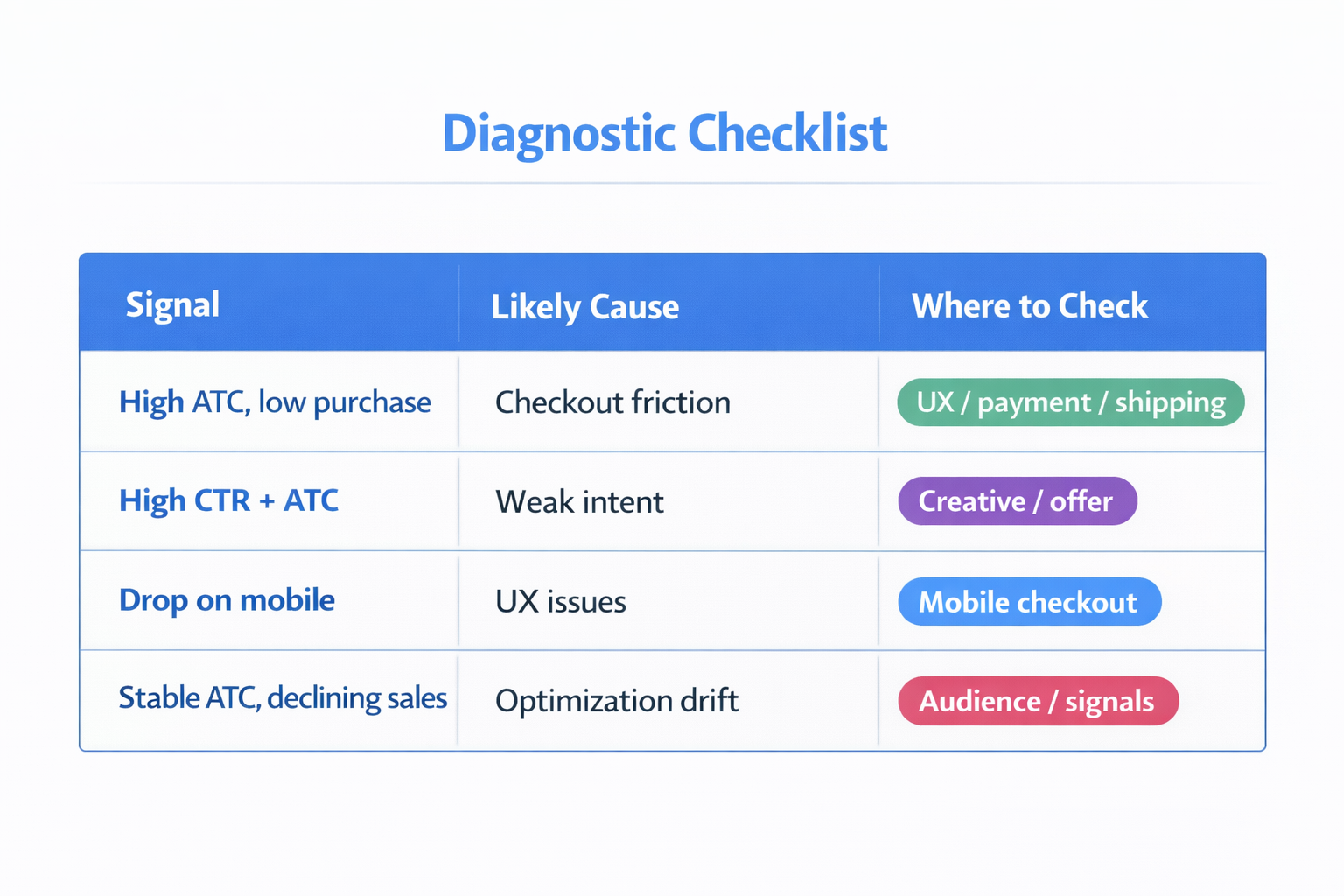
The fix usually comes from removing a single break in the chain:
-
making the final price obvious earlier,
-
simplifying the decision at the product level,
-
aligning the ad with the real buying experience,
-
or tightening optimization toward purchases instead of proxy signals.
Most of the time, it’s not multiple issues. It’s one structural mismatch that keeps repeating across every user.
Final Thoughts
Add-to-cart without purchases is not a partial win. It’s a system that learned the wrong lesson.
Once you identify where the user pauses — not just where they click — the path to fixing it becomes very direct.