If you're only watching ROAS and CTR, you're not seeing the full picture of your Meta ad performance. Meta's reporting highlights surface-level numbers — but the deeper signals often hide behind default columns or are easy to misinterpret.
This article breaks down not just the commonly misunderstood metrics, but also lesser-known ones that offer clearer insight into how your campaigns are really performing.
Metrics Can Mislead If You Don’t Know What They Reflect
Meta's ad platform is built to optimize for outcomes — based on your chosen goal. That doesn't mean it will show you why something worked or didn’t.
Some numbers are useful in theory but unhelpful in practice. Others, rarely looked at, can show you exactly where things are going wrong or right — especially during testing, scaling, or diagnosing a performance drop.
Let’s look at how to read your metrics in a more informed and structured way.
1. CTR (Click-Through Rate): High Doesn’t Always Mean Good
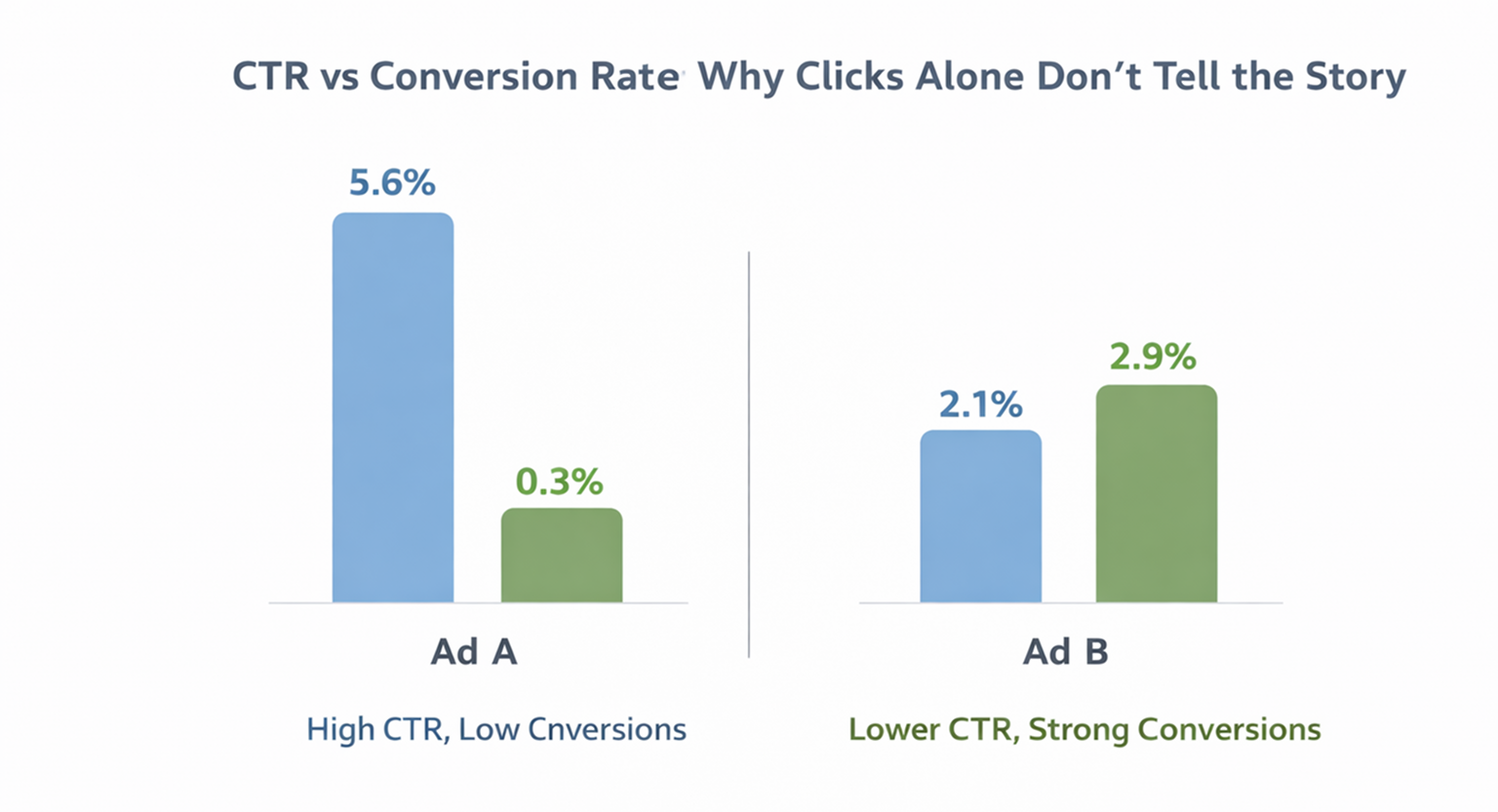
CTR is often treated as a creative quality score. But a high CTR doesn’t necessarily mean people are interested in what you’re offering.
What it really tells you:
-
People clicked — but that could be due to curiosity, confusion, or even a misleading hook.
-
It says nothing about the quality of the traffic or whether they took meaningful action after clicking.
This is why CTR frequently looks “healthy” in accounts where conversions lag. For a deeper explanation, see Why Click-Through Rate Can Be Misleading.
More helpful when paired with:
-
Outbound Click-Through Rate, to see how many actually left the platform.
-
Post-click conversion rate, to measure what percentage took action after arriving.
2. ROAS: Slow, Skewed, and Easy to Misread
ROAS is widely used — and widely over-trusted. It's often shaped by attribution rules rather than actual ad impact.
Why it can be misleading:
-
It includes purchases days after the click, even if they weren’t driven by the ad.
-
It favors retargeting and bottom-of-funnel traffic, which can give inflated results.
-
It doesn't help you understand creative or audience-level performance.
This becomes especially risky when ROAS is used as the sole scaling signal. A deeper breakdown is covered in The ROAS Trap: Why High ROAS Isn’t Always Profitable.
Use it as a trend, not a decision point. Combine it with:
-
New customer ROAS, if available.
-
Customer LTV and repeat purchase data from your CRM.
3. CPM and Frequency: Often Misread as Red Flags
Rising CPMs and high frequency often make advertisers nervous. But those changes aren’t always bad.
What to consider instead:
-
CPM often increases when Meta identifies your ad as effective — because it's now competing in higher-value auctions.
-
Higher frequency is normal in retargeting or complex sales funnels. It's only a problem if performance drops alongside it.
In many cases, CPM and frequency are better read together than separately. Related reading: Why Your Ad Frequency Matters More Than You Think.
How to use these together:
Track performance change over time, not the CPM or frequency alone. If conversion rate holds steady or improves, higher cost may be worth it.
4. Link Clicks vs. Landing Page Views: Where You Might Be Losing Traffic
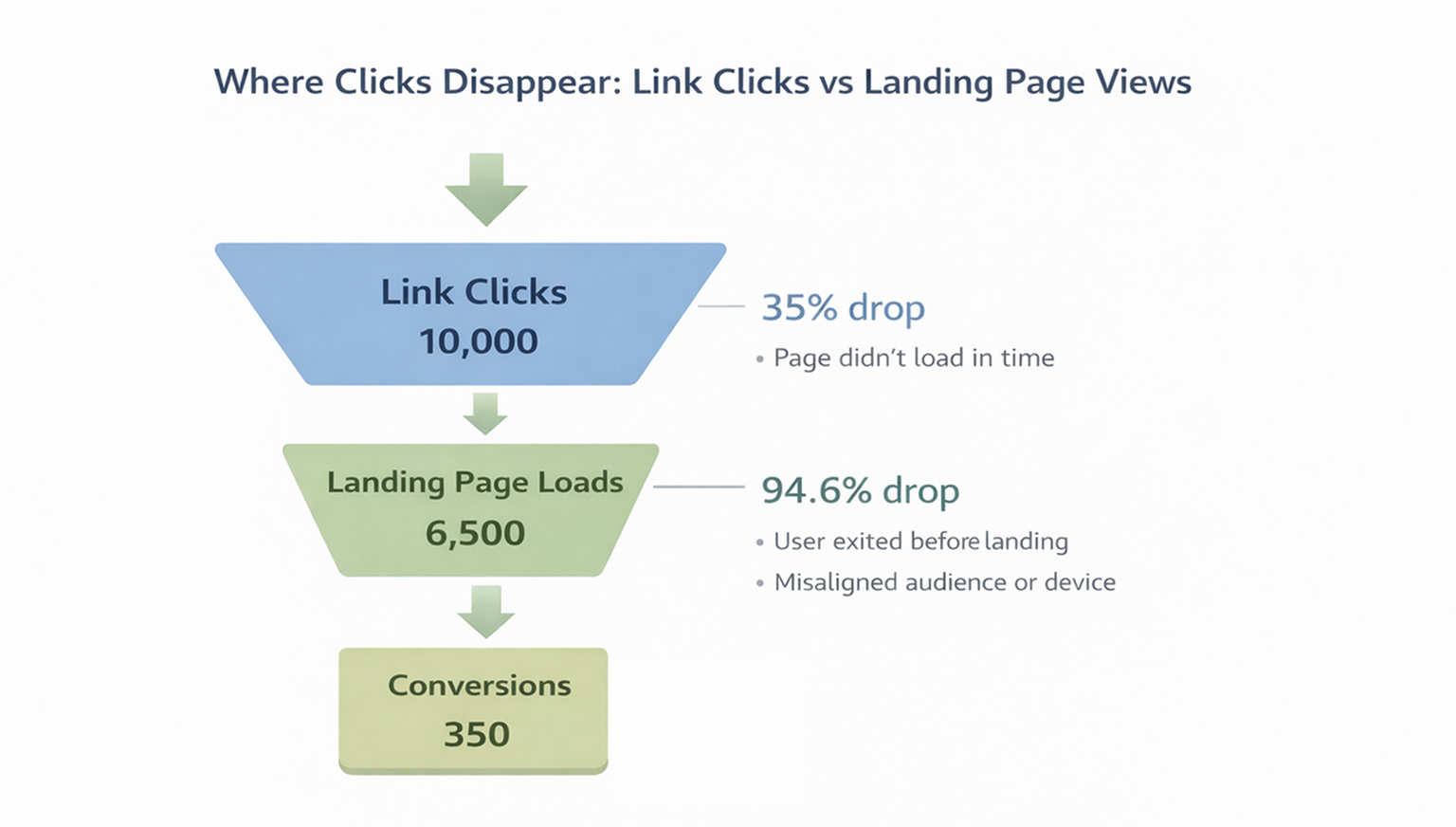
Most advertisers don’t notice how many people click but never see the full landing page.
Why this matters:
-
Link clicks are counted the moment someone taps your ad.
-
Landing Page Views only count if the page fully loads — and that gap reveals drop-off.
-
A large gap points to issues like slow load times, device mismatch, or poor targeting.
This gap is one of the clearest indicators of wasted spend. See Click-to-Landing Page Drop-Off: How Much Is Too Much in Facebook Ads?
5. Cost Per Result: Only Useful If You Chose the Right Goal
“Result” means different things depending on your campaign objective. If the goal isn’t aligned with your business outcome, this metric doesn’t help.
Examples:
-
A traffic campaign with low cost per result might be sending unqualified visitors who don’t convert.
-
A lead form campaign might show strong CPL, but deliver poor lead quality.
-
A more expensive conversion campaign could still bring in better customers.
This issue is closely tied to campaign structure and optimization choices. See Meta Campaigns Explained: How to Structure High‑Performance Campaigns.
Always evaluate this number in relation to your objective, not in isolation.
6. Learning Phase Status: More Than a Temporary State
Many campaigns stay in the Learning Phase longer than they should. Some never exit. But this isn’t just a platform label — it reflects how confident Meta’s system is in your setup.
Why it matters:
-
Learning resets every time you make a major change (audience, creative, budget).
-
Staying stuck usually means too few optimization events, or unstable delivery.
-
Campaigns still perform during learning, but scaling is riskier if the system hasn’t stabilized.
If this is a recurring issue, see How to Optimize Facebook Campaigns for Faster Learning Phase Exit.
7. Quality Ranking Metrics: Quiet Indicators of Auction Strength
Meta gives every ad three rankings that compare its expected performance to other ads targeting the same people:
| Metric | What It Measures |
|---|---|
| Quality Ranking | Perceived relevance of the ad |
| Engagement Rate Ranking | Expected interactions |
| Conversion Rate Ranking | Expected likelihood to convert |
These are often ignored, even though they directly affect auction efficiency. For practical interpretation, see How to Interpret Facebook’s Quality Ranking, Engagement, and Conversion Rates.
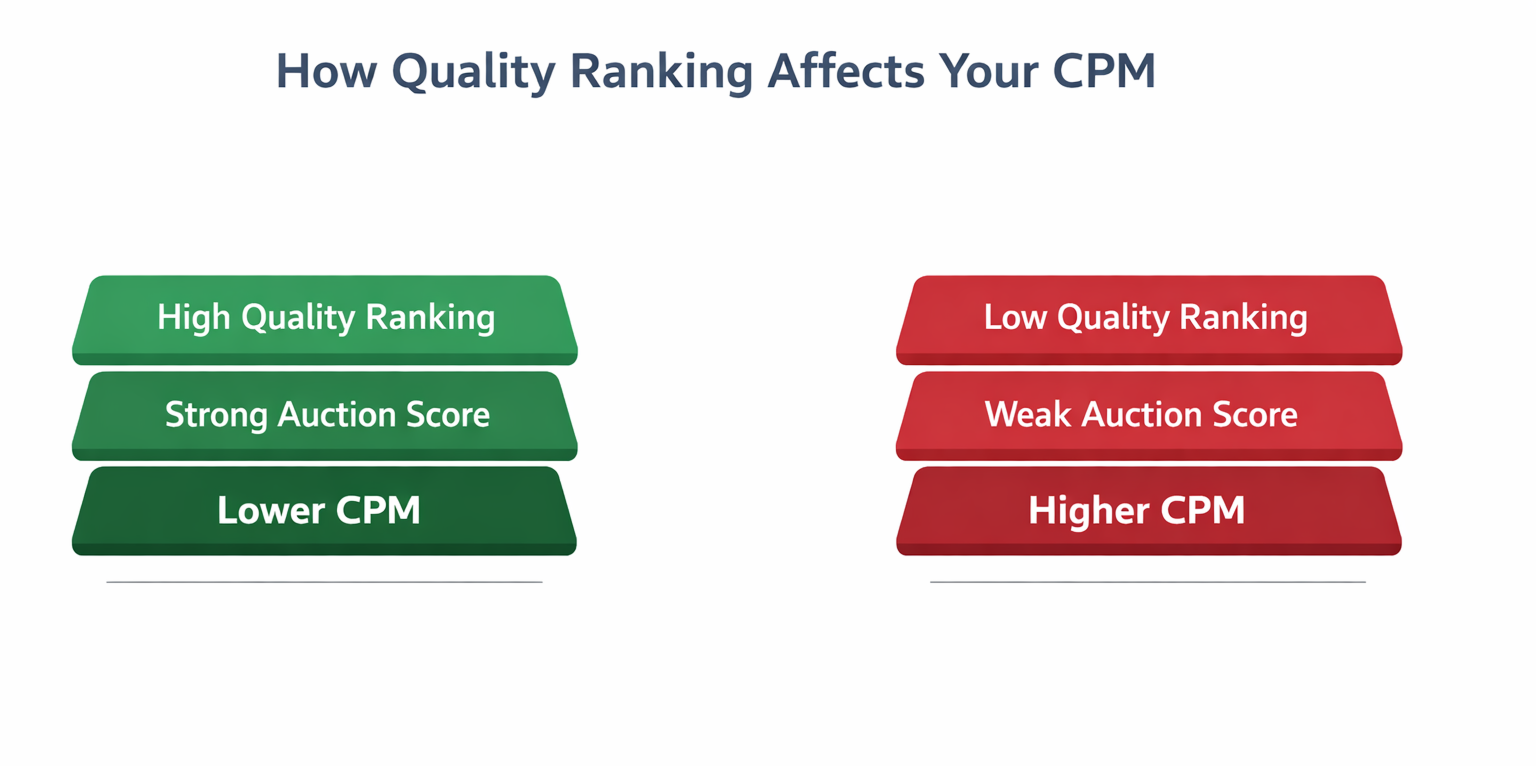
Use them for diagnosis, not as performance goals.
Metrics Only Work When Read in Context
No single number in Ads Manager will tell you if your campaign is doing well. Every metric is part of a larger system: your targeting, creative structure, optimization settings, and business model.
Before you make decisions, ask:
-
Is this number tied to a meaningful action or outcome?
-
What could be influencing it outside the ad (page load, attribution, offer)?
-
Is it a real trend — or just short-term noise?
Smart advertisers don’t react to data. They interpret it.