If your broad ads aren’t delivering, it’s not because Meta’s system is broken.
It’s because broad targeting is designed to work best for advertisers who already have strong performance signals.
This doesn’t mean small or mid-sized brands can’t succeed. But you need to understand the system you're entering.
Meta’s algorithm isn’t neutral. It prioritizes ad sets that help it predict outcomes with high certainty.
Let’s explore why broad ads tend to favor big brands — and what you can do about it.
Why Meta Prefers Big Brands in Broad Audiences
Meta’s delivery system runs on machine learning. The goal isn’t to test every advertiser equally — it’s to maximize performance based on prior data.
Bigger advertisers usually have more and stronger signals, which help Meta make faster and more confident predictions. When you compete in a broad audience, you’re not competing on a level playing field. You’re competing on predictability.
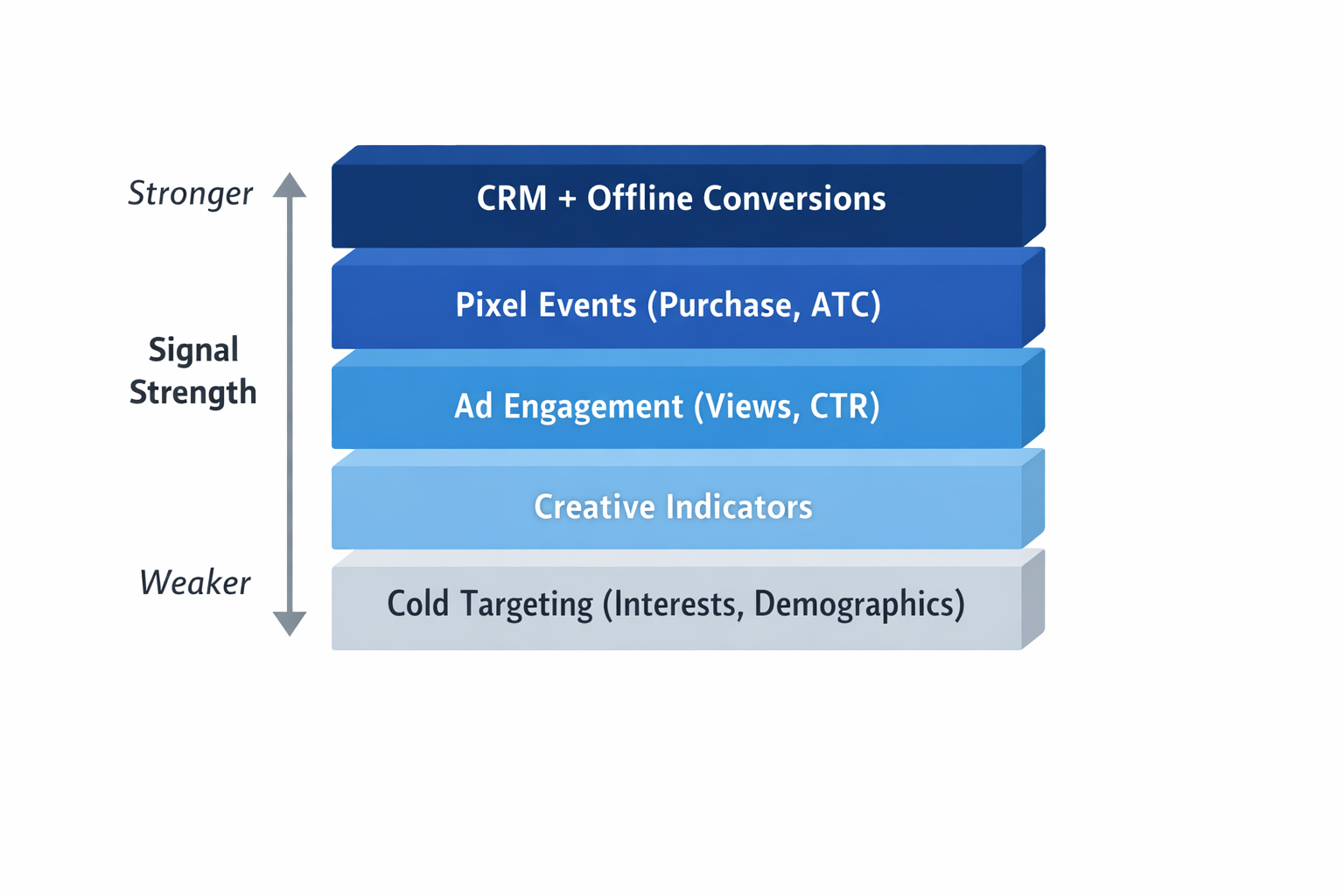
What big brands usually bring to the table:
-
Higher volume of conversions. This gives Meta more data to model performance.
-
More creative inputs. Bigger brands run dozens of ad variations to generate optimization signals.
-
Richer pixel data. Thousands of daily website actions (like views and add-to-carts) improve conversion prediction.
-
Offline inputs. Many large advertisers also upload high-quality CRM data.
This is why Meta will often spend more behind their ad — it simply knows what to expect.
More on this bias: Why Meta Ads Favor Patterns Over Precision.
Why Broad Doesn't Work the Same for Smaller Brands
Smaller advertisers often struggle in broad targeting because they enter the system with weaker or less consistent signals.
That doesn't mean your product or offer is poor — it just means Meta doesn’t have enough history to back you.
Common signals that you're not gaining traction:
-
High CTR, but your ad stays in the learning phase.
-
Ad sets spend unpredictably or stall.
-
CPMs fluctuate even when your offer is stable.
You're not failing. You're just playing in an environment that wasn’t designed for early-stage campaigns.
To dive deeper into these dynamics, see Why Broad Targeting Fails for Some Brands But Works for Others.
How to Compete Without Going Fully Broad
The key isn’t to avoid broad targeting entirely — it’s to build signal-rich systems that give Meta more to work with.
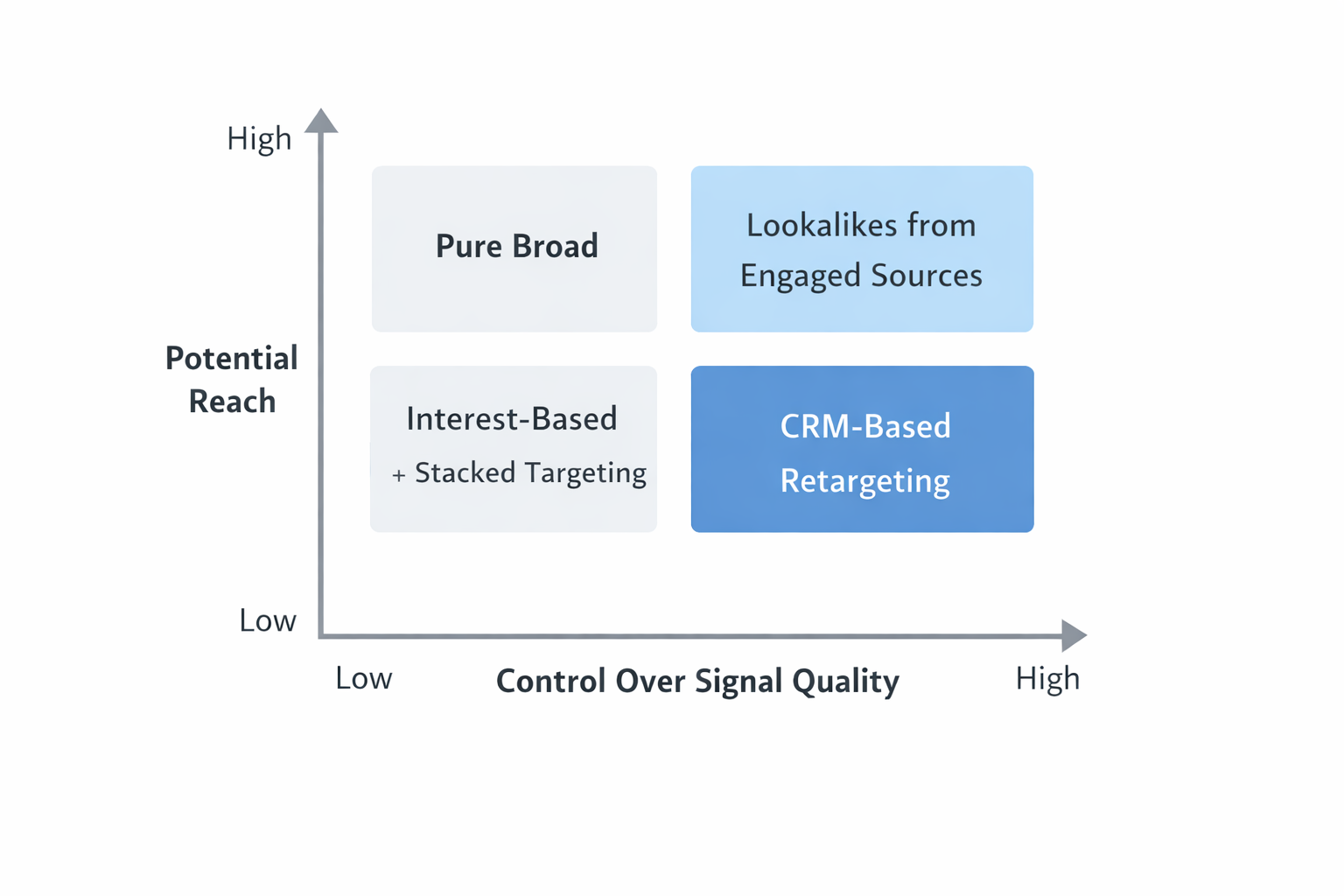
Instead of relying on volume, focus on clarity. Use structured source-based targeting and build warm pools.
Try these strategies:
-
Retarget high-intent video viewers or site visitors who stayed longer.
-
Create lookalikes based on past purchasers or email subscribers.
-
Use behavioral segmentation — not just demographics or interests.
Want to get more out of every data point? This guide will help: How LeadEnforce Simplifies Audience Segmentation for Better Ad Results.
In Broad Campaigns, Creative Is Targeting
When your audience is wide, creative becomes your targeting filter. Meta interprets the content of your ad to decide who to show it to.
You need to treat creative as more than a message — it’s a predictive signal.
What to do differently in broad campaigns:
-
Make your offer obvious in the first frame or scroll.
-
Show clear use cases and relatable customer types.
-
Use creative frameworks that let you iterate systematically (without guessing).
For tactical guidance, check out Creative Testing With Limited Budget: What’s Worth Prioritizing.
Summary: Predictability Beats Scale
Meta’s system doesn’t optimize for fairness. It optimizes for performance with the least uncertainty.
That’s why broad campaigns favor big advertisers — and why smaller brands often get left behind unless they engineer stronger inputs.
If you're struggling to scale, don’t assume broad is broken. Fix the upstream data. Build signal-rich audiences, structure creative for intent, and focus on predictability.
Need a more detailed breakdown of how broad targeting stacks up against other methods? Read Retargeting vs Broad Targeting: Which Strategy Drives Better Results?