Scaling Meta Ads often looks simple on paper. Increase budget, reach more people, drive more conversions. In practice, CPA frequently rises as soon as spend grows. The issue is rarely random. It usually comes from structural weaknesses exposed by higher budgets.
When you scale, Meta expands delivery into new auctions and audience pockets. That changes competition, frequency, and signal quality. If the account is not stable, performance becomes volatile. Below are the most common scaling mistakes that increase CPA and how to correct them.
Why CPA Rises During Scaling
Higher budgets force Meta to find more impressions. That means entering more competitive auctions and testing colder segments. Efficiency that worked at low spend may not hold at higher volume. CPA increases are often a sign of stretched delivery.
As budgets grow, several shifts occur:
-
Auction pressure increases; you compete in more expensive placements.
-
Audience quality declines; delivery expands beyond high-intent users.
-
Signal density weakens; optimization spreads across broader pools.
-
Frequency patterns change; some users see your ads more often.
Each shift reduces precision. If multiple shifts happen at once, CPA climbs quickly. The solution is to isolate which variable changed before reacting.
Scaling Budgets Too Fast
Rapid budget increases destabilize campaigns. Doubling spend after a few strong days feels logical, but it often resets performance. Meta’s system relies on consistent conversion patterns. When those patterns shift suddenly, optimization becomes less reliable.
Aggressive scaling triggers several effects:
-
Delivery expands into less responsive users.
-
CPM rises as you enter more competitive auctions.
-
Conversion rates fluctuate due to weaker matching.
-
Learning phases restart or become unstable.
This often gets mistaken for creative fatigue. In reality, it is delivery shock. For a safer framework, review scaling ads safely and avoiding common campaign mistakes . Gradual increases of 15–30 percent every few days maintain stability and protect CPA.
Expanding Audiences Too Early
Audience expansion should follow strong performance, not precede it. Many advertisers switch to broad targeting or larger lookalikes without sufficient conversion data. That weakens optimization accuracy. CPA increases because signal clarity drops.
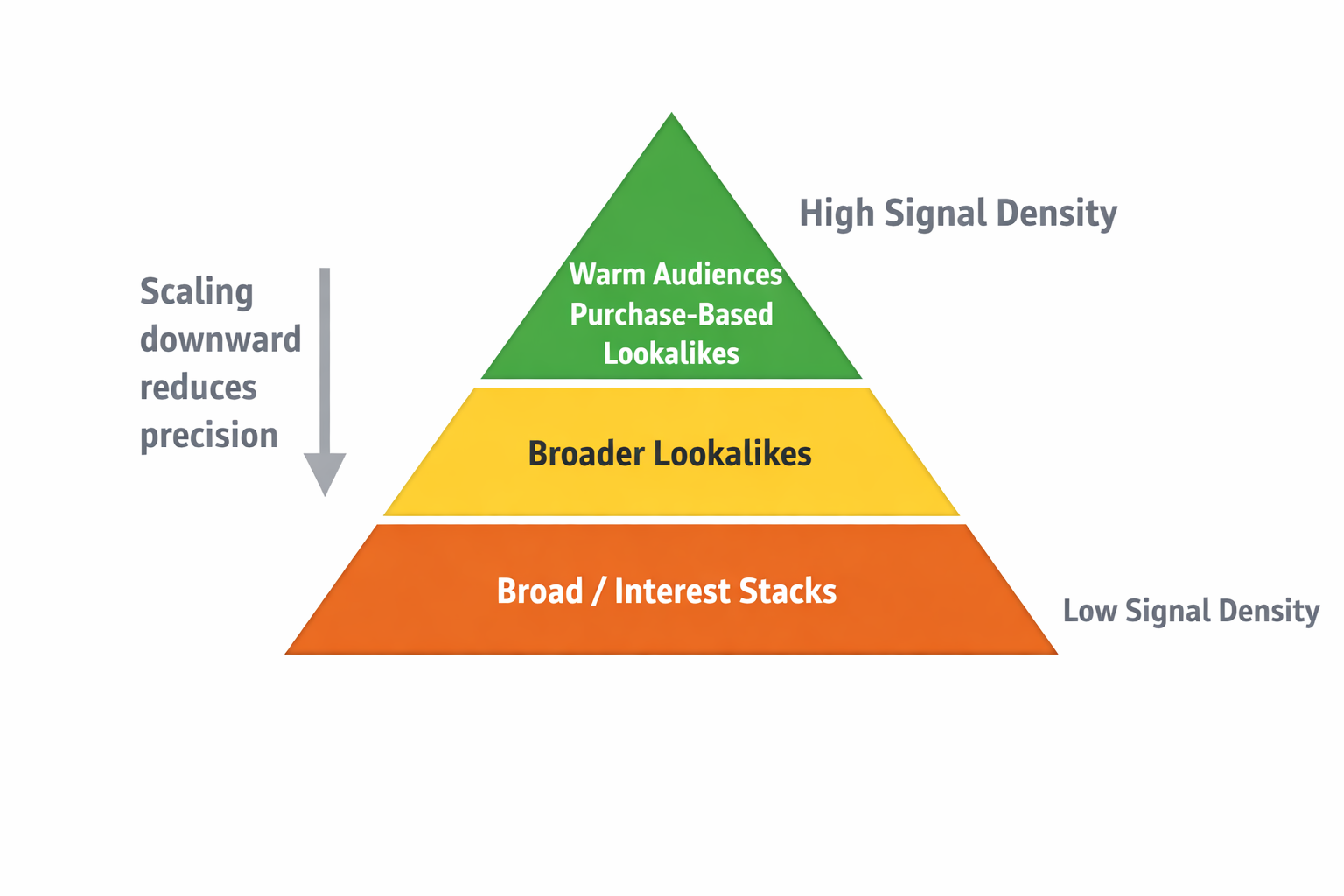
Common expansion errors include:
-
Moving to broad targeting with low weekly conversion volume.
-
Adding multiple lookalike percentages simultaneously.
-
Expanding geography before validating core market profitability.
-
Over-layering interests, which reduces signal precision.
These changes dilute performance data. To understand how lookalikes behave at scale, see The Ultimate Guide to Facebook Lookalike Audiences . Expand in stages and keep a stable benchmark audience for comparison.
Scaling Without Creative Depth
Budget growth without creative variation increases frequency. When users see the same message repeatedly, engagement declines. That decline raises CPA even if targeting stays constant. Creative capacity often limits scale more than audience size.
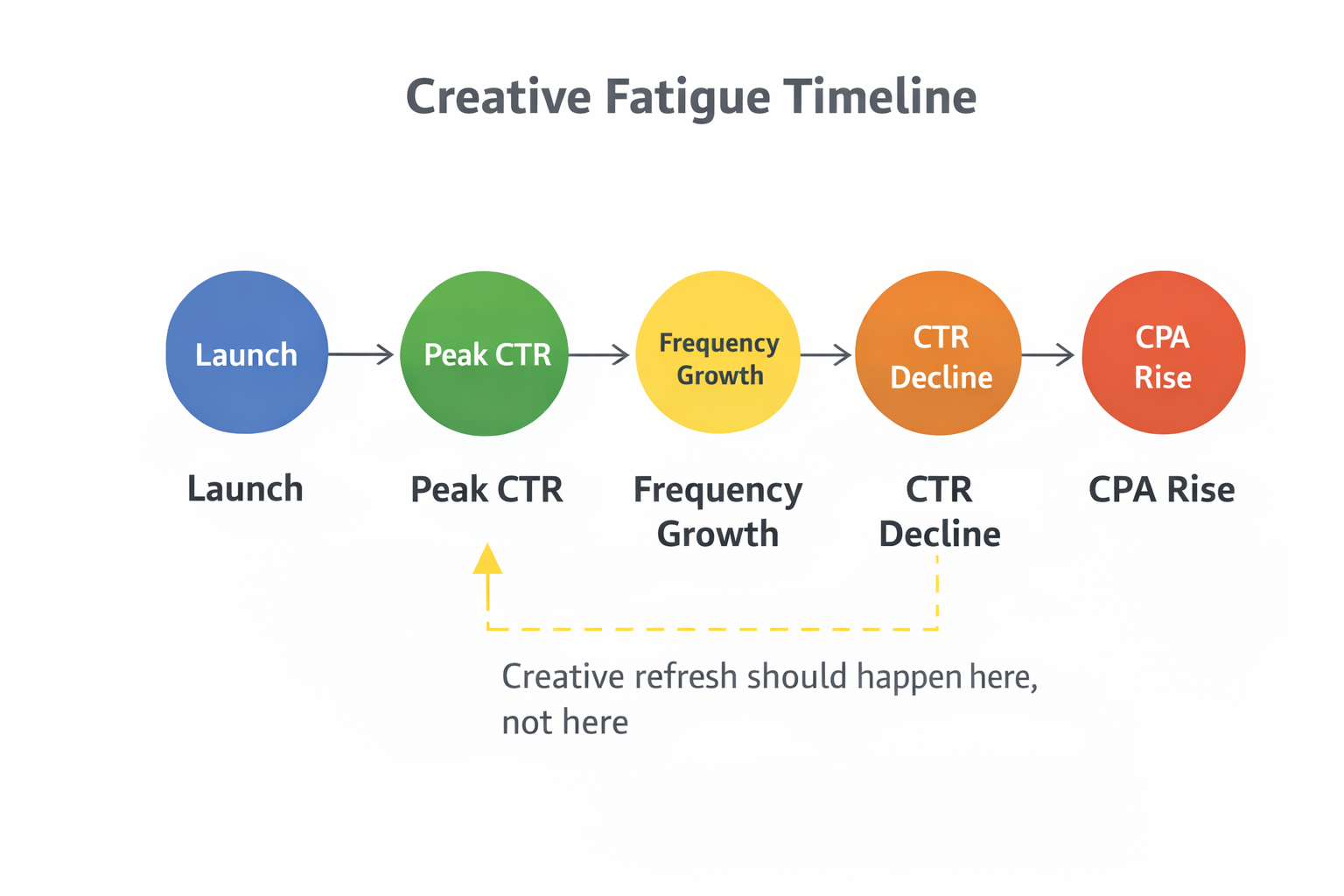
Low creative depth shows up in these signals:
-
Frequency climbs quickly after budget increases.
-
CTR drops while CPM remains stable.
-
Conversion rate declines despite steady traffic.
-
Reach growth slows even with higher spend.
This pattern indicates fatigue. For more context, read The Truth About Ad Fatigue — and How to Avoid It . Add new angles and formats before increasing budgets further.
Ignoring Placement Economics
Placement performance becomes more visible at scale. Some placements absorb budget but convert poorly. Others convert efficiently but receive less spend. Without reviewing breakdown data, inefficiencies go unnoticed.
Placement-related mistakes include:
-
Disabling low-volume placements that generate cheaper conversions.
-
Forcing feed-only delivery, increasing competition.
-
Scaling vertical formats without adapting creative.
-
Skipping placement-level CPA analysis before raising budgets.
These decisions distort allocation. To refine placement strategy, review How to Decide Between Automatic Placements vs Manual Placements for Meta Ads . Adjust creative and budgets based on actual placement results.
Scaling Based on Surface Metrics
Early success can be misleading. High CTR and low CPM do not guarantee scalable CPA. Some ads attract clicks without strong purchase intent. As budgets rise, weak intent becomes costly.
Misleading signals during scale include:
-
CTR without conversion rate context.
-
Small-sample CPA results from low budgets.
-
CPM comparisons across different audience types.
-
Short-term performance spikes.
Scaling requires stable conversion data. Wait for meaningful volume before major increases. Evaluate performance across longer windows to avoid reacting to noise.
Overlooking Funnel Balance
Scaling prospecting alone can strain the funnel. More cold traffic increases remarketing demand. If warm campaigns do not scale accordingly, overall efficiency drops. CPA rises even if top-of-funnel metrics look strong.
Funnel imbalance appears in these patterns:
-
Add-to-cart costs rise while purchases stay flat.
-
Remarketing frequency becomes excessive.
-
Blended conversion rate declines.
-
Time to purchase lengthens after traffic increases.
These signals point to structural imbalance. Allocate spend across funnel stages as volume grows. Refresh warm creatives more often than prospecting assets.
Final Thoughts
Scaling Meta Ads requires structural discipline. Budget increases amplify weaknesses in targeting, creative, placement, and funnel design. CPA rises when expansion outpaces stability.
Controlled growth keeps performance predictable. Expand gradually, protect signal quality, and maintain creative depth. When CPA increases, investigate structure first. Stable systems scale better than aggressive ones.