A campaign starts underperforming.
The issue is visible in Ads Manager. Metrics shift, and the next step seems clear. But instead of immediate action, changes happen later than expected — sometimes hours later, sometimes the next day.
Nothing is technically broken. The delay comes from how decisions are structured.
This is where roles inside Meta Business Portfolio start to matter.
Roles Define How Work Moves, Not Just Who Has Access
Roles are often treated as permission settings. In practice, they define how work moves between people.
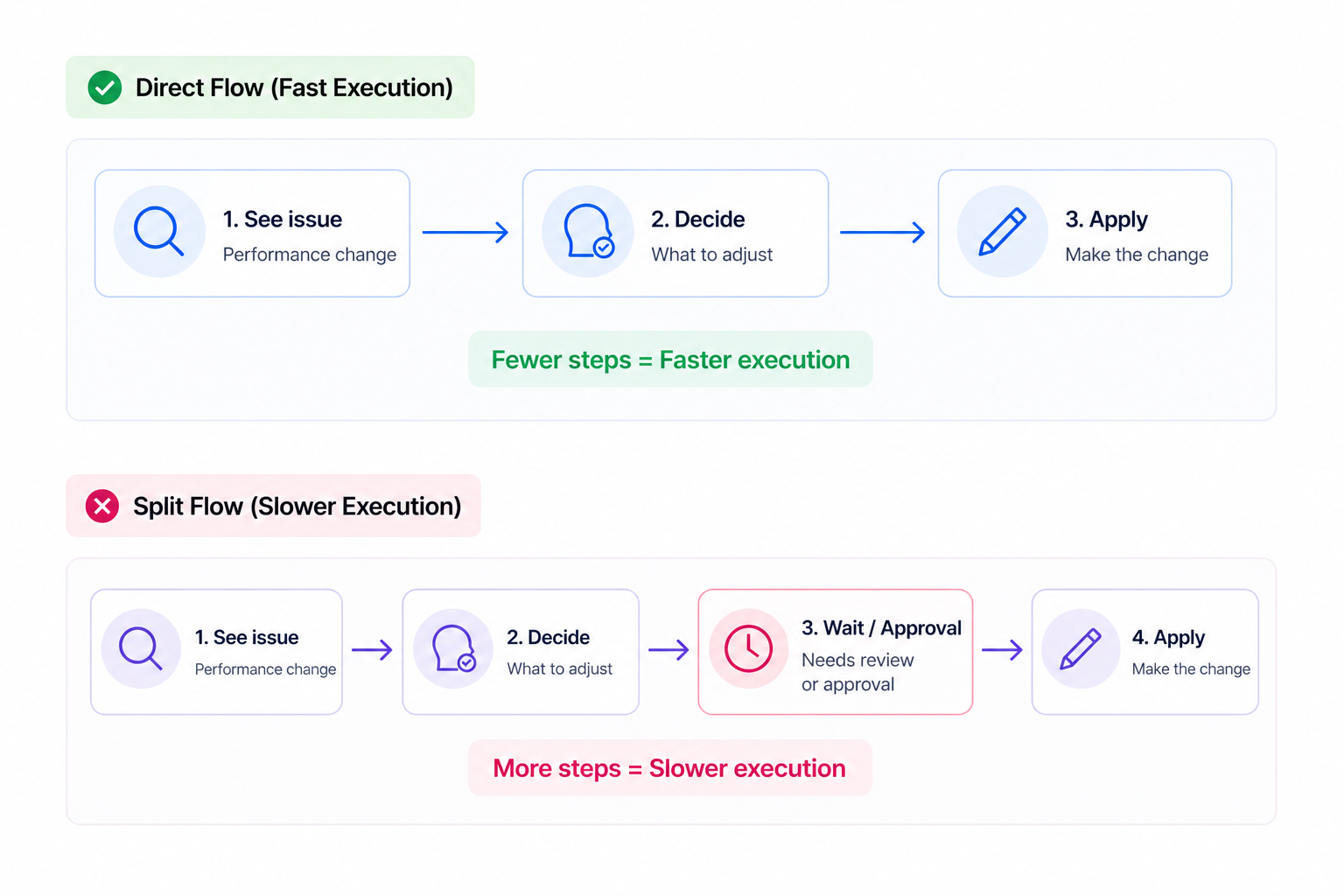
Every campaign adjustment follows a simple sequence:
- Someone notices a change in performance.
- Someone decides what should be adjusted.
- Someone applies that change.
If one person handles all three steps, execution is immediate. When these steps are split across different roles, coordination becomes necessary.
That coordination introduces delay, even when the team knows exactly what needs to be done.
Where Role Structure Slows Down Execution
Delays usually appear when responsibility and authority are separated.
In real accounts, this shows up in several ways:
- The person monitoring performance cannot edit campaigns directly.
- Budget adjustments require approval from someone not actively managing campaigns.
- Multiple stakeholders can make changes, but ownership of results is unclear.
These situations do not stop campaigns from running, but they slow down how quickly they can be adjusted.
In fast-moving environments, timing affects whether a decision has full impact or reduced effect.
Why This Matters in Practice
Meta’s system continuously reacts to user behavior and campaign signals.
Advertisers do not need to match that speed perfectly, but they do need to respond within a timeframe where changes still matter.
When roles introduce delays:
- Some decisions are applied later than intended.
- Certain adjustments are postponed or skipped.
- Campaign updates happen in batches rather than in response to real-time signals.
These effects are operational. They do not change how the algorithm works, but they shape how effectively you can interact with it.
How This Connects to Permissions and Structure
Roles operate within a broader system of access.
Permissions define what actions are technically possible, while roles determine how those actions are used in practice. If access is limited or fragmented, roles cannot function efficiently.
To understand this relationship, it helps to look at how access is structured at the asset level. How to Give Access to Your Facebook Business Manager shows how permissions are assigned and why misalignment often starts there.
At the same time, role structure becomes more complex when multiple stakeholders are involved. How to Manage Facebook Ads for Multiple Clients Without Risking Account Issues explains how coordination challenges grow as more users interact with the same assets.
The Tradeoff Between Control and Speed
Role structure is often designed to balance control and flexibility.
Restrictive roles reduce the risk of uncoordinated changes, but they also introduce additional steps before action can be taken. More flexible roles allow faster execution, but require stronger internal coordination.
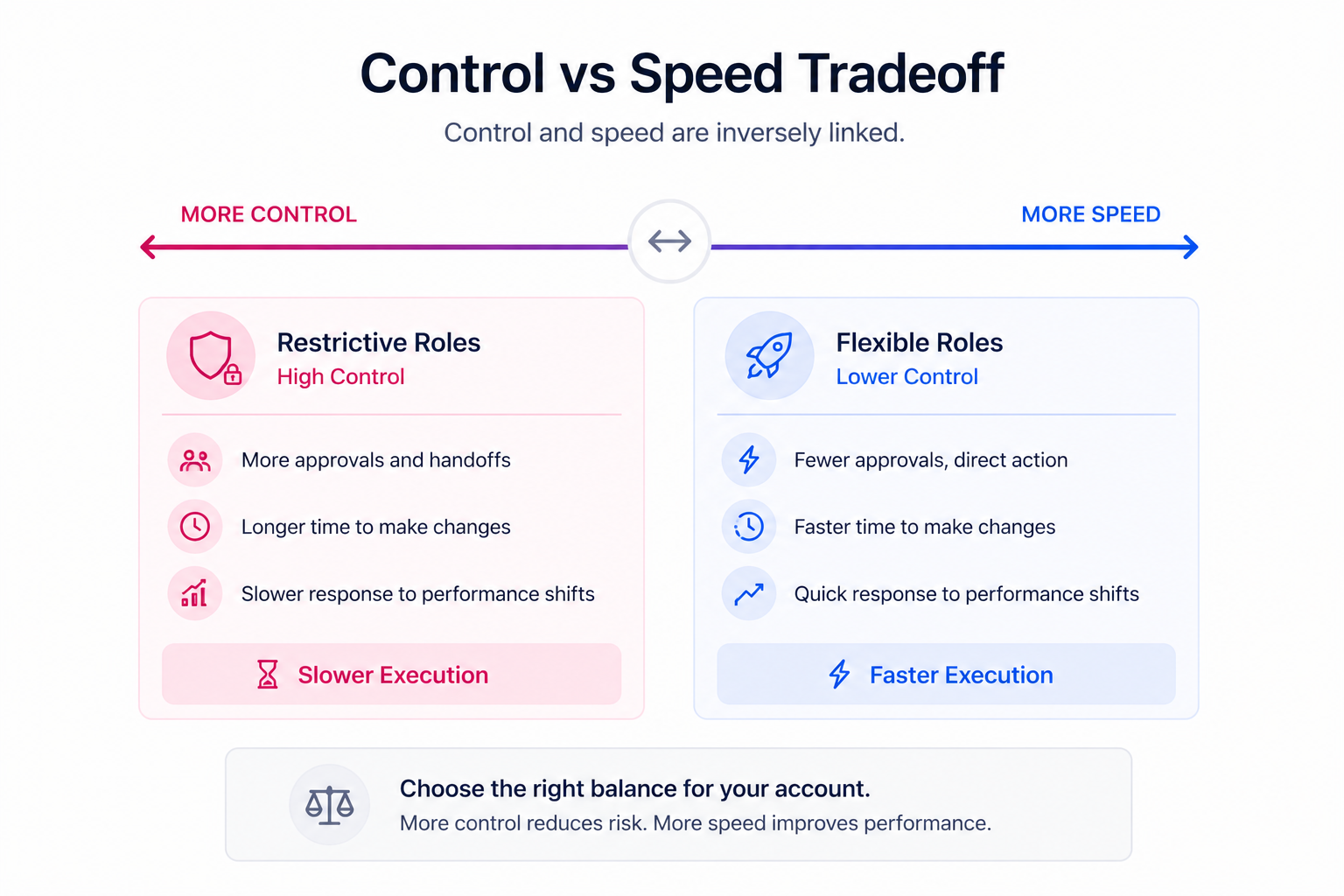
There is no universal setup that works for every account.
The key question is whether your structure matches how your campaigns are actually managed. If campaigns require frequent adjustments, delays caused by role separation become more noticeable.
What Needs to Be Clear Before Changing Roles
Changing roles without understanding existing workflows rarely improves performance.
Before making adjustments, it’s important to clarify:
- Who is responsible for monitoring campaign performance.
- Who is expected to implement changes.
- How decisions move from identification to execution.
Without this clarity, role changes often shift responsibility without removing delays.
A Practical Way to Evaluate Your Setup
Instead of reviewing roles in settings, observe how your team operates during real campaign changes.
When an issue appears, ask:
- How many people are involved in making the change?
- How long does it take from identifying the issue to applying a fix?
- Where does the process slow down?
These observations reveal whether roles are aligned with actual workflows.
If execution depends on multiple approvals or handoffs, delays are expected. If the process is direct, adjustments tend to happen faster.
Final Takeaway
Roles in Meta Business Portfolio do not directly determine campaign results. They determine how quickly and consistently decisions are executed.
When roles align with responsibilities, campaign management becomes more efficient. When they do not, coordination increases, and adjustments take longer than expected.
The difference is not in strategy, but in how effectively that strategy can be applied.