Not every valuable conversion happens online.
A lead may submit a form online but become qualified only after a sales call. A customer may browse online and buy in-store. A dealership may close deals after multiple offline conversations. A B2B company may care more about accepted opportunities than raw form submissions.
If your Meta campaigns only optimize around online actions, they may miss the outcomes that actually matter to your business.
Offline event audiences help advertisers use real-world outcomes to create stronger custom audiences and lookalike audiences.
What offline event audiences solve
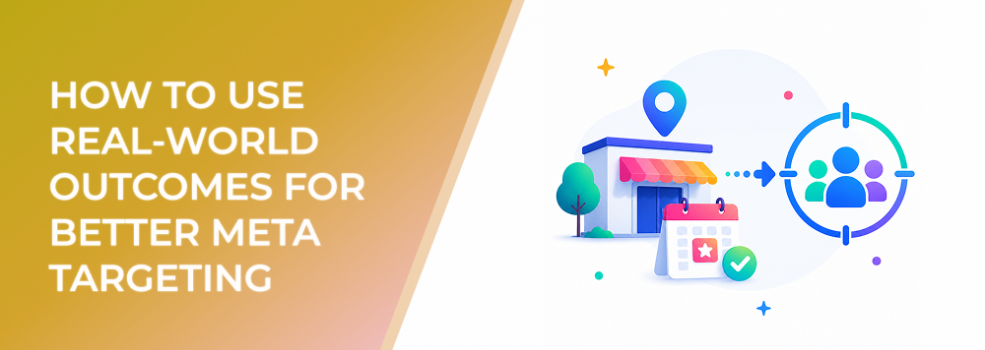
Offline event data helps connect Meta advertising strategy to business outcomes that happen outside the website or app.
That can include purchases, qualified leads, booked appointments, in-store transactions, phone sales, consultations, contract signings, or other offline milestones. Once that data is available in Meta, advertisers can use it to create audiences and guide future campaign strategy.
The value is simple: you can move beyond surface-level signals.
Instead of building audiences from everyone who clicked, visited, or submitted a form, you can build from people who became real customers, qualified prospects, or valuable opportunities.
Business impact on CPA, CAC, ROAS, and lead quality
Offline event audiences can change how advertisers judge performance.
A campaign with a low CPL may look strong until the sales team reports that the leads are unqualified. A campaign with a higher CPL may produce fewer leads but better close rates. Offline data helps expose that difference.
Used strategically, offline event audiences can support:
- Better lead quality by prioritizing users similar to qualified outcomes.
- Lower true CAC by focusing on customers who actually close.
- Stronger ROAS measurement when offline purchases matter.
- Less wasted spend on audiences that produce cheap but poor-fit leads.
- Better lookalike seeds based on real revenue or qualification signals.
This is especially important for businesses with longer sales cycles or offline conversion paths.
Typical scenarios where this applies
B2B lead generation
A form submission is not always a good lead. Offline event data can help distinguish raw leads from sales-qualified leads, booked meetings, opportunities, or closed customers.
Local service businesses
Many service businesses close through calls, consultations, or appointments. Offline outcomes can help Meta learn from users who completed the real revenue action.
Retail and in-store sales
If customers research online but buy offline, offline event data can help connect ad strategy to store-level outcomes.
High-ticket purchases
Industries such as automotive, real estate-related services, education, finance-adjacent services, and professional services often require offline follow-up before conversion.
Event, webinar, or appointment funnels
Attendance, consultation completion, or post-event sales may be more meaningful than registration alone.
Risks and considerations
Offline data is only useful when it is clean, recent, and meaningful.
If offline event data includes old customers, unqualified leads, duplicates, incomplete records, or inconsistent outcome definitions, the audience may reflect the wrong pattern.
Another risk is delay. If offline data is updated too slowly, campaigns may optimize from stale information. For fast-moving campaigns, delayed feedback can reduce usefulness.
Advertisers should also be careful about data permissions, privacy obligations, and platform rules. Offline customer or lead data should be handled responsibly and used only where appropriate.
Finally, not every offline event should become a seed audience. A broad “all leads” list may be less useful than a smaller audience of qualified leads or high-value customers.
Prerequisites and dependencies
Before using offline event audiences, advertisers should have:
- A clear definition of the offline outcome that matters.
- Clean CRM, sales, transaction, or appointment data.
- Consistent identifiers that can support audience matching.
- A process for keeping data current.
- Permission and policy alignment for data use.
- Separate segments for raw leads, qualified leads, customers, and high-value customers.
- A plan for exclusions, lookalikes, and campaign evaluation.
The most important prerequisite is business clarity. Know which offline action actually predicts revenue before building audiences around it.
How LeadEnforce helps
LeadEnforce helps advertisers combine real-world outcomes with stronger audience discovery.
Offline event data is excellent for identifying who converted, qualified, or bought. LeadEnforce helps with the other side of the equation: finding more people who are likely to fit the same market, niche, professional profile, or social-intent pattern.
Advertisers can use LeadEnforce to build custom audiences from Facebook groups, Instagram profiles, followers, engagers, LinkedIn professional data, and custom social-profile sources. These audiences can support prospecting when website traffic is low or when the best conversion data lives in CRM.
For example, a B2B team can use offline qualified lead data to identify what good prospects look like, then use LeadEnforce to build audiences around relevant professional and social signals. A local advertiser can combine offline customer outcomes with community-based audience sources. An agency can use offline conversion quality to refine which audience sources are worth scaling.
Offline events tell you which outcomes matter. LeadEnforce helps you build more relevant audience inputs to pursue them.
Practical recommendations
Build from quality, not volume
A smaller list of qualified leads or high-value customers is often more useful than a large list of raw leads.
Separate offline outcomes by value
Do not group every offline action together. Segment booked calls, qualified leads, closed deals, repeat customers, or high-value accounts where possible.
Keep data current
Offline data loses usefulness when it reflects outdated offers, old sales processes, or customers who no longer match your current ICP.
Use offline audiences for lookalikes carefully
Lookalikes built from offline outcomes can be valuable, but only if the seed reflects the outcome you want to scale.
Compare Ads Manager results with business results
Do not judge campaigns only by platform conversions. Compare lead quality, sales acceptance, close rate, revenue, and CAC.
Use LeadEnforce to strengthen prospecting
When offline conversion data is valuable but small, use LeadEnforce-built audiences to bring more relevant prospects into the funnel before building stronger custom and lookalike audiences.
Final takeaway
Offline event audiences help advertisers align Meta targeting with real business outcomes. They are especially valuable when purchases, qualification, appointments, or revenue happen outside the website.
The key is to use clean, recent, meaningful data and build audiences around outcomes that truly matter. When offline signals are paired with stronger prospecting inputs, campaigns can become more efficient, more relevant, and more accountable to CAC, ROAS, and lead quality.
To combine real-world outcome signals with more relevant social-profile audience inputs, join the free 7-day LeadEnforce trial period.
Related LeadEnforce Articles
- Facebook Targeting Without Website Traffic: Offline Data to the Rescue — Directly relevant for advertisers who need audience strategy when website traffic is limited.
- Creating High-Value Custom Audiences from CRM Exports — Helpful for turning CRM and offline business data into more useful custom audience inputs.
- How to Build High-Performing Custom Audiences in LeadEnforce — Explains how LeadEnforce supports more precise custom audience creation.
- Smarter Lookalikes: How to Use LeadEnforce to Reach High-Intent Audiences — Useful for turning stronger source audiences into better scaling signals.
- Custom vs Lookalike Audiences: What Works Best for Facebook Campaigns? — Helps decide when offline event audiences should be used for retargeting versus expansion.