More and more B2B buyers are using their phones to discover, research, and even make purchasing decisions. Whether they’re scrolling LinkedIn on the train, tapping through Instagram Stories between meetings, or responding to Facebook ads on the weekend — mobile is now a key part of the B2B journey.
But many ad funnels still act like it's 2012. They’re clunky on phones, built for big screens, and ask too much from busy people with thumbs and short attention spans.
If your funnel isn’t mobile-friendly, you're not just missing clicks — you're wasting ad spend. Let’s fix that.
Why mobile behavior is different in B2B
B2B buyers don’t just sit at desks anymore. They research tools while commuting, compare solutions while watching TV, or forward ads to teammates in group chats.
Mobile isn’t just a device shift — it’s a mindset shift. Here's what that looks like:
-
Shorter attention spans: People are multitasking or skimming during micro-moments.
-
More distractions: A Slack ping or call can easily break the journey.
-
Faster decisions on smaller screens: Mobile users don’t read, they scan.
If your funnel isn’t built for this reality, buyers won’t stick around. And they won’t come back.
For more on improving post-click behavior, see Why Your Mobile Landing Page Is Killing Conversions (And How to Fix It).
Step 1: Audit your current mobile performance
Before changing anything, find the weak points. Start with your existing data — it’s more helpful than guesses.
| Funnel Stage | Desktop | Mobile |
|---|---|---|
| Impressions | 100,000 | 100,000 |
| Click-through rate (CTR) | 1.9% (1,900 clicks) | 1.8% (1,800 clicks) |
| Bounce rate | 35% | 62% 🔴 |
| Avg. time on page | 1 min 42 sec | 27 sec 🔴 |
| Form open rate | 48% | 30% 🔴 |
| Form completion rate | 35% | 12% 🔴 |
| Cost per lead (CPL) | $18.90 | $29.50 🔴 |
Here’s what to check:
-
Meta Ads performance breakdowns: Go to your ad reports and break down by device. If mobile clicks are strong but conversions are weak, the problem is likely post-click.
-
GA4 mobile metrics: In Google Analytics, compare bounce rate, session time, and conversion rate between mobile and desktop.
-
Watch real user sessions: Tools like Hotjar or Clarity can show scroll paths, rage clicks, and friction points.
Want more ways to analyze your funnel? Read Funnel Drop-Off Fixes: How to Improve Each Stage with Facebook Ad Data.
Step 2: Use mobile-first ad creatives
Mobile-first design means you think about thumb-scrolling, small screens, and attention spans before you start designing.
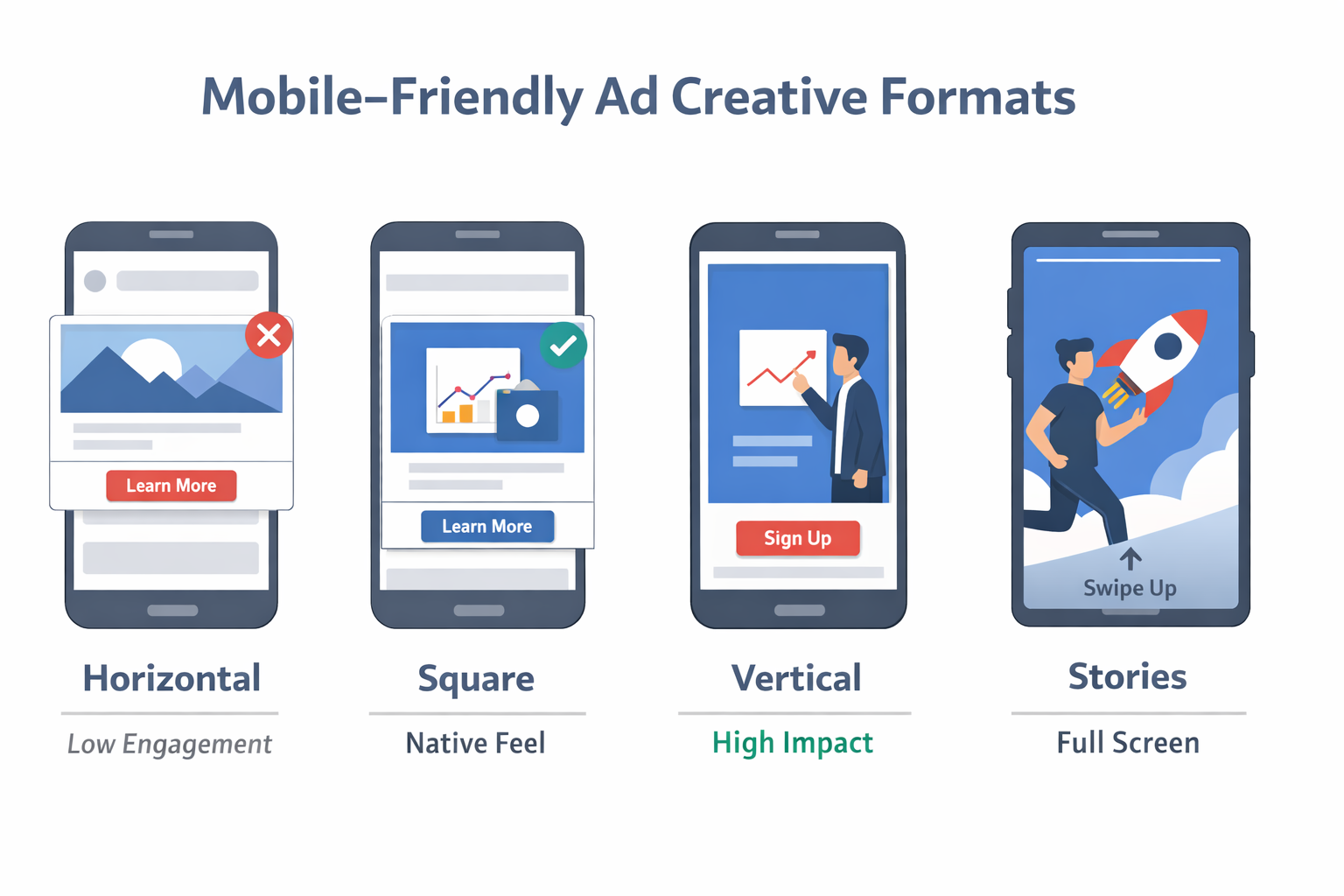
Here’s how:
-
Vertical and square formats: They take up more screen real estate in feeds and Stories.
-
Fast-loading videos or GIFs: Keep them under 15 seconds with a visible CTA.
-
Simple visuals: One key point per frame. Don’t crowd it.
Learn more in The Best Practices for Designing Mobile-Friendly Facebook Ads.
Step 3: Rebuild your campaign structure with mobile in mind
Structure your funnel based on attention, not just intent.
-
Top of funnel (TOF): Run Reels, short videos, or educational carousels.
-
Middle of funnel (MOF): Use retargeting and Lead Ads to reduce friction.
-
Bottom of funnel (BOF): Show social proof, urgency, and offer clarity. Avoid long forms or generic CTAs.
If you're not sure how to map this journey, start with Facebook Ads Funnel Strategy: From Audience Identification to Conversion.
Step 4: Improve mobile landing pages and forms
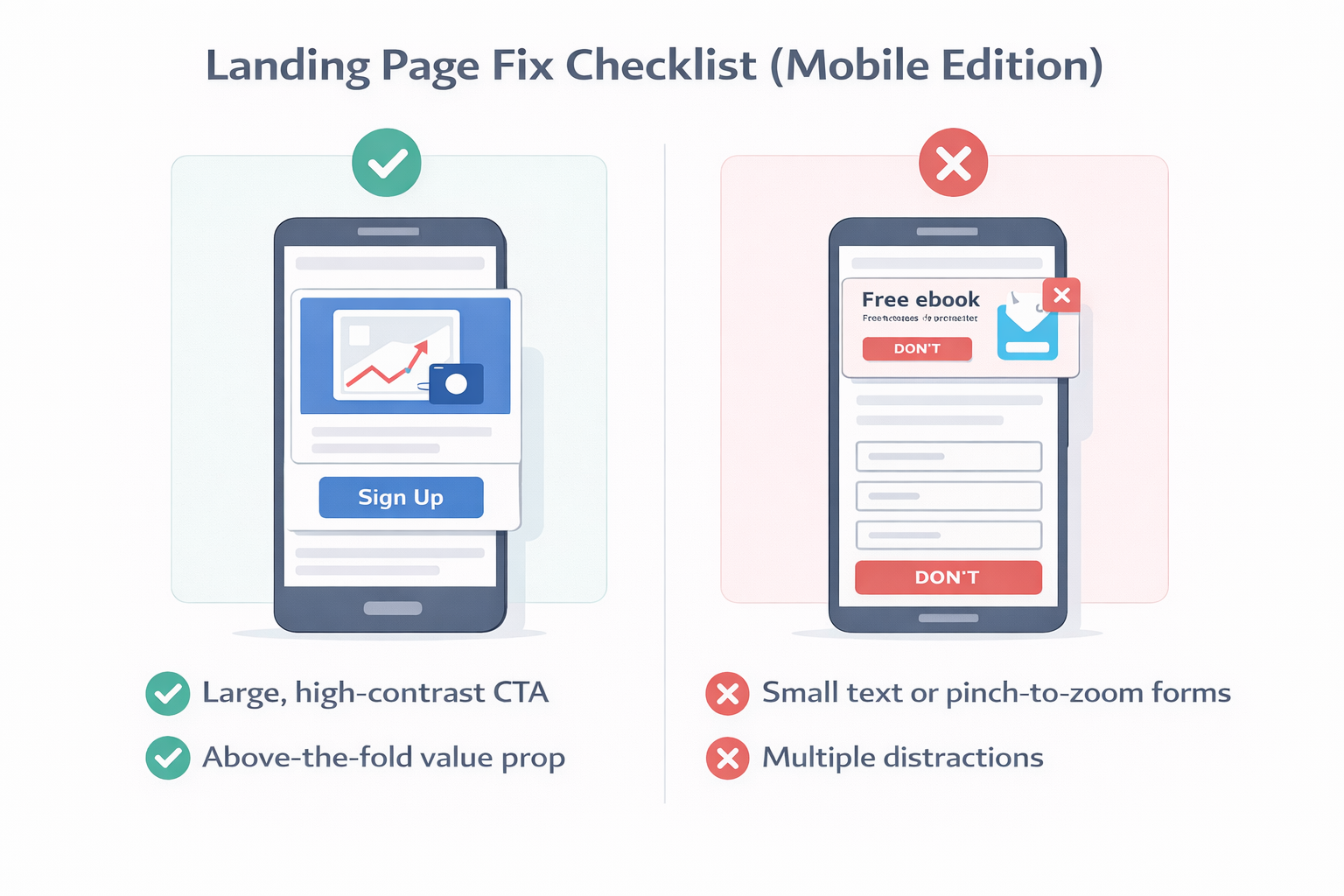
Here’s what a mobile-optimized post-click experience looks like:
-
Fast loading: Aim for under 2 seconds.
-
Above-the-fold value prop: Show what you offer immediately.
-
Tap-friendly CTA buttons: Keep them big, bold, and not buried.
Thinking of switching from landing pages to in-app forms? You’re not alone. Check out Using Lead Forms vs. Landing Pages: What Works Better?
Step 5: Retarget based on real mobile behaviors
Retargeting is powerful — but only if it’s personalized.
-
Clicked but didn’t convert? Try a testimonial or behind-the-scenes explainer.
-
Started a lead form but didn’t submit? Use urgency or time-based reminders.
-
Watched a video but didn’t click? Show them something new — don’t just repeat.
For advanced tactics, use this guide: Retargeting Leads Who Didn’t Submit: Timing, Messaging, and Format.
Step 6: Test and iterate every week
Mobile user behavior changes fast. Don’t treat your funnel like a one-time project.
Use a weekly rhythm:
-
Monday: Launch 1–2 new mobile ad variants.
-
Wednesday: Check CTR, conversion rate, and time on page.
-
Friday: Cut poor performers, scale winners, and log your learnings.
Need a full mobile-focused testing plan? See Quick Tips for Better B2B Lead Generation on Facebook.
Final thoughts: simplify, shorten, speed up
You don’t need to rebuild your funnel from scratch. Focus on small wins:
-
Clearer CTA buttons;
-
Faster page speed;
-
Shorter, auto-filled forms;
-
Smarter retargeting that reflects mobile actions.
B2B buyers are busy and mobile-first. Make it easy for them to say “yes” on their terms — not yours.