Paid media platforms evolve faster than most internal processes. Algorithm updates, attribution model changes, privacy regulations, and interface redesigns regularly disrupt campaigns that rely too heavily on platform-specific tactics.
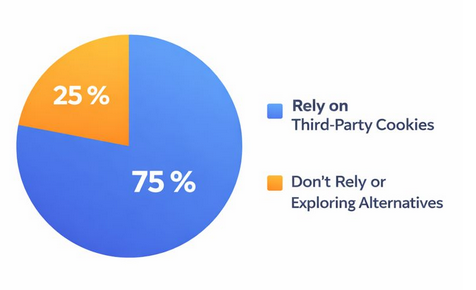
Proportion of marketers still depending on third-party cookies for ad targeting
Recent industry data highlights the scale of the issue:
-
More than 70% of performance marketers report that algorithm updates negatively impacted their results at least once in the last 12 months.
-
The removal of third-party cookies is expected to affect over 60% of current digital targeting strategies.
-
Campaign volatility increased by nearly 40% year-over-year as platforms accelerated automated bidding and delivery changes.
The common thread behind fragile systems is over-dependence on one platform, one audience source, or one attribution view.
The Core Principle: Systems Over Tactics
Tactics change. Systems endure.
A paid media system is the combination of data flows, audience logic, measurement frameworks, and decision rules that guide how campaigns are built and optimized. When this system is stable, individual platform changes become manageable adjustments instead of existential threats.
Survivable paid media systems share three traits:
-
Platform-agnostic audience logic
-
Redundant measurement and attribution
-
Structured experimentation loops
Build Platform-Agnostic Audience Foundations
Audience definitions should not live exclusively inside ad platforms. When they do, every platform change forces a full rebuild.
Instead, resilient systems rely on:
-
First-party data as the primary audience input
-
Behavioral segmentation that can be replicated across platforms
-
Clear audience hierarchies (core, expansion, exclusion)
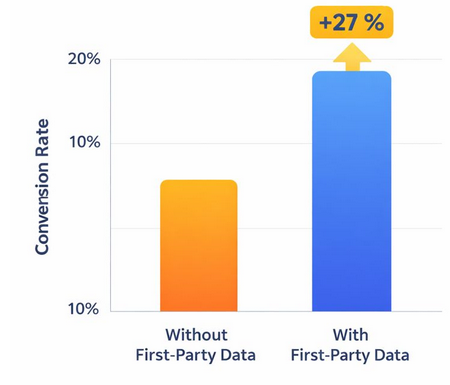
Conversion uplift when first-party data is used in paid media campaigns
Statistics show that advertisers using first-party audiences see up to 2.9x higher conversion rates compared to those relying mainly on third-party signals. More importantly, first-party audiences remain usable even when platform targeting rules change.
Design Measurement That Survives Attribution Shifts
Attribution models are among the most volatile elements of paid media. Platform-reported conversions can change overnight without any real performance shift.
A survivable system includes:
-
Multiple attribution views (platform, analytics, and modeled)
-
Directional KPIs instead of single-point truth metrics
-
Trend-based decision making rather than day-to-day volatility reactions
After major privacy updates, advertisers who relied on blended or modeled attribution maintained up to 25% more stable budget allocation than those relying solely on platform-reported data.
Standardize Creative and Testing Frameworks
Creative performance is increasingly influenced by automated delivery systems. Without structure, testing becomes noise.
Resilient systems use:
-
Consistent creative hypotheses
-
Controlled variable testing
-
Cross-platform creative learning documentation
Brands that follow structured creative testing frameworks test 35% fewer assets while achieving higher average click-through and conversion rates.
Build Feedback Loops, Not One-Time Optimizations
One-off optimizations fail when platforms change. Feedback loops adapt.
A strong paid media system continuously:
-
Collects performance signals
-
Updates audience and creative assumptions
-
Feeds learnings back into planning
This approach reduces reaction time to platform changes by up to 50% and prevents panic-driven budget shifts.
What Paid Media Systems That Survive Have in Common
Across industries and budgets, durable systems consistently show:
-
Less than 15% performance variance after major platform updates
-
Faster recovery times after algorithm changes
-
Higher confidence in scaling decisions
The difference is rarely the platform itself. It is the structure behind how decisions are made.
Continue Reading
If you want to deepen your understanding of durable paid media systems, these related articles may be helpful:
Final Thoughts
Platform changes are inevitable. Performance collapse is not.
By shifting focus from fragile tactics to durable systems, advertisers can build paid media engines that absorb change, maintain stability, and continue driving growth regardless of how platforms evolve.