Paid social results usually do not improve because of a clever trick. They improve when the account setup supports learning and decision-making. Most advertisers focus on visible elements like creatives or audiences. Fewer focus on how the system behaves over time. That is where real gains come from.
Optimize the whole system, not individual ads
It is tempting to judge ads one by one. An ad has a high CPA, so it gets paused. Another looks promising, so it gets duplicated. This approach often creates instability. Meta optimizes across campaigns, ad sets, and time, not in isolation.
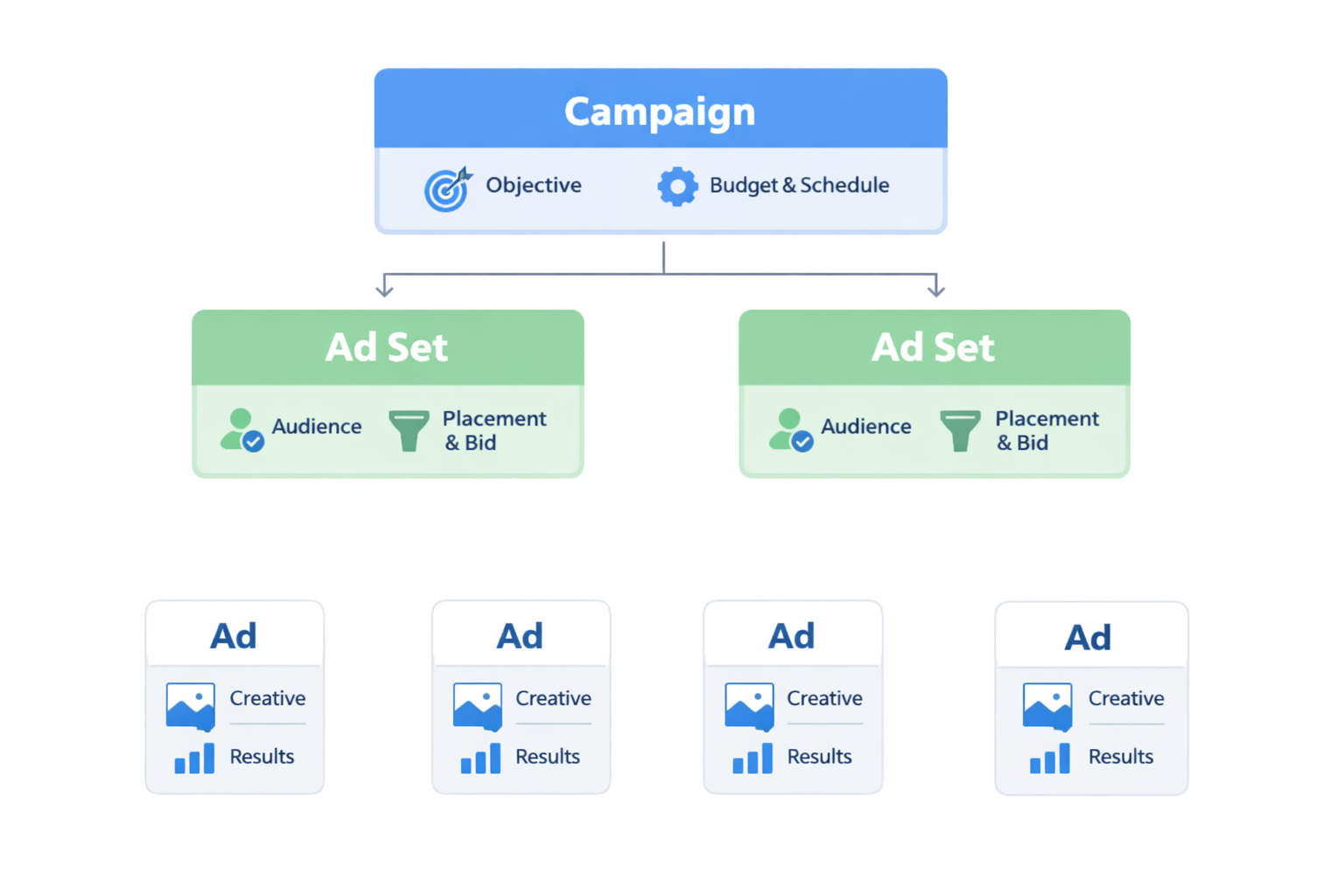
When the system keeps changing, it never settles. Learning stays incomplete, delivery fluctuates, and results become unpredictable. Many of these issues come from over-segmentation, which is explained in why simpler campaign setups lead to stronger performance.
Build fewer campaigns with clearer goals
Accounts with fewer campaigns usually perform better because learning signals are concentrated. Meta can understand what works faster when data is not split across many setups.
For example, instead of running three prospecting campaigns split by small targeting differences, run one campaign with a clear conversion goal. If all campaigns aim to sell the same product to similar buyers, splitting them only slows learning. A single campaign gathers more conversions, exits learning faster, and delivers more consistently.
This works because:
-
Learning happens at the campaign level, not the ad level.
-
Budget shifts more efficiently toward stronger ads.
-
Performance trends become easier to read and act on.
Clear structure reduces guesswork and wasted spend.
Avoid campaigns competing with each other
Internal competition happens when multiple campaigns target similar people. This pushes CPMs up without improving results.
For example, a broad prospecting campaign may overlap with a 180-day website retargeting campaign. Meta then bids against itself to reach the same users. Costs rise, but conversion volume stays flat.
This usually happens because of:
-
Duplicated prospecting campaigns created during testing.
-
Retargeting windows that are too long for the buying cycle.
-
Product-based campaigns that share the same audience logic.
Audience overlap is a common hidden cost, covered in why audience overlap is killing your Facebook ad performance.
Treat creative as input data, not decoration
Creative does more than attract attention. It teaches Meta who should see the ad. When the message is unclear, the system attracts mixed users and learns weak patterns.
Clear creative produces cleaner signals and more stable optimization.
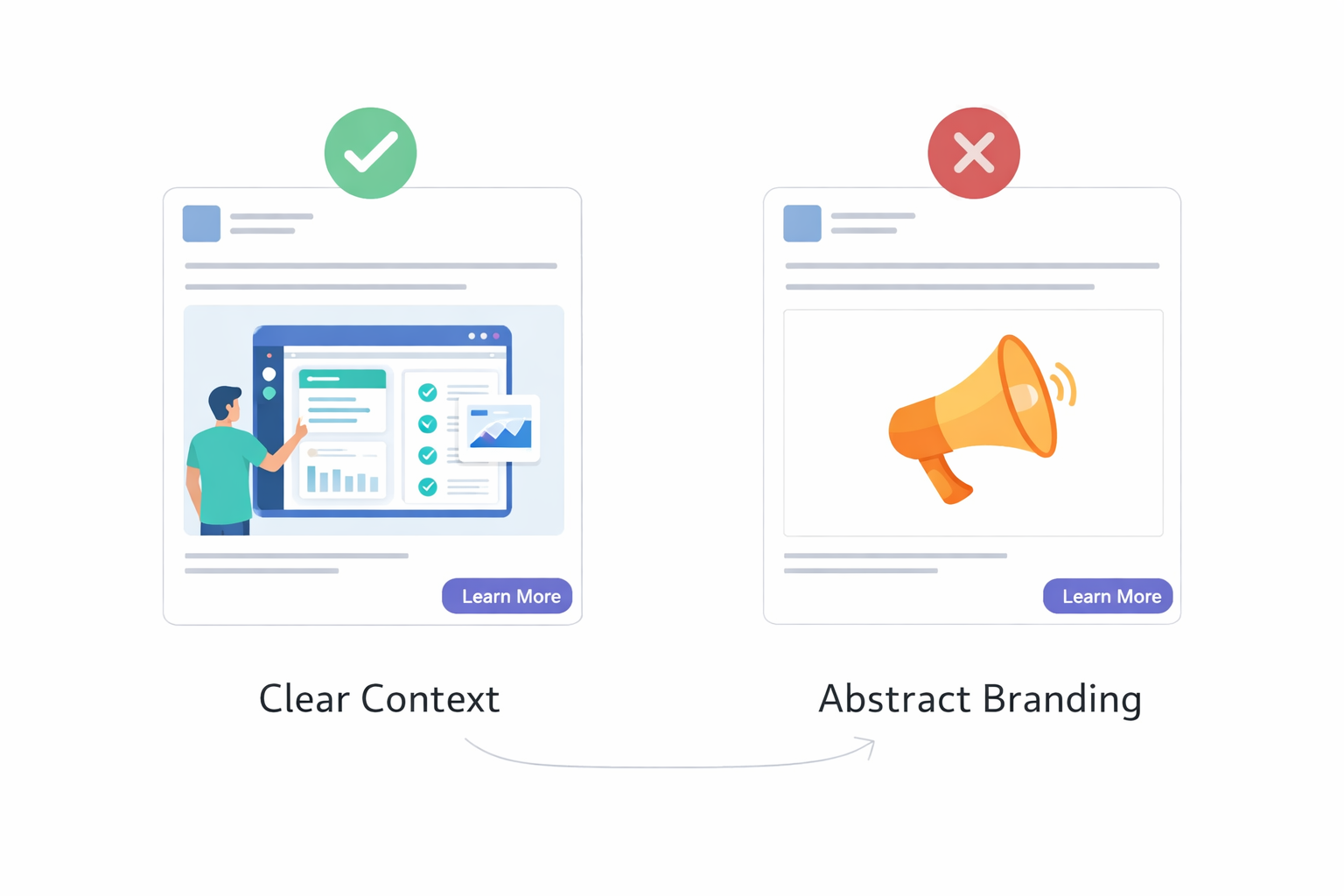
Make the offer and use case obvious
High-performing ads explain themselves quickly. They show what the product does and why someone would care.
For example, a SaaS ad that shows the product dashboard solving one clear problem often outperforms a polished brand video with vague messaging. The first attracts users who recognize the problem. The second attracts curiosity clicks that rarely convert.
Clear ads usually include:
-
The product shown in use, not abstract visuals.
-
One main problem, not multiple benefits.
-
Context that filters users, such as role, scenario, or price range.
This improves both conversion rate and learning quality.
Test meaning, not small design changes
Many tests change colors, formats, or layouts. These tests often show minor differences that do not scale.
More useful tests change what the ad communicates. For example, one version may focus on saving time, while another focuses on reducing errors. Both promote the same product, but they attract different intent levels.
Meaningful tests include:
-
Different problems solved by the same product.
-
Different buyer roles seeing the same offer.
-
Different awareness levels, such as problem-aware versus solution-aware.
A structured approach to this kind of testing is outlined in how to run A/B tests on Facebook ads.
Improve signal quality before chasing scale
Meta optimizes toward the conversion event you choose. If that event does not reflect real business value, scaling becomes unstable.
High volume does not mean high quality. The system learns from what you reward.
Optimize for events that show real intent
Optimizing for easy actions can look good at first, but often breaks later.
For example, optimizing for landing page views or unqualified leads may generate volume. However, if most of those users never buy, Meta learns to find more low-intent users.
Stronger events usually:
-
Happen closer to revenue.
-
Filter out weak intent.
-
Align better with business outcomes.
Fewer, higher-quality signals usually scale better.
Account for delayed conversions
Not all users convert on day one. Short decision cycles are rare, especially for B2B or higher-ticket products.
If campaigns are judged after 24 hours, strong setups get paused too early. Comparing early results with longer windows reveals true performance. This issue is explained in how Facebook conversion windows affect reported results.
Better attribution leads to better decisions.
Control how often you make changes
Frequent changes create noise. Each major edit resets learning and increases volatility.
Stable campaigns allow Meta to identify patterns. Constant intervention prevents that.
Batch changes on a fixed schedule
Strong teams plan optimizations instead of reacting daily. They let campaigns run long enough to produce reliable data.
This usually means:
-
Making changes once or twice per week.
-
Setting minimum spend thresholds before acting.
-
Reviewing results over consistent time windows.
This reduces emotional decision-making.
Separate testing from scaling
Testing and scaling have different goals. Mixing them leads to confusion.
Testing requires controlled budgets and isolation. Scaling requires stability and volume. When both happen in the same campaign, results become hard to interpret.
Separating them protects learning and prevents unnecessary resets.
Find constraints before increasing budgets
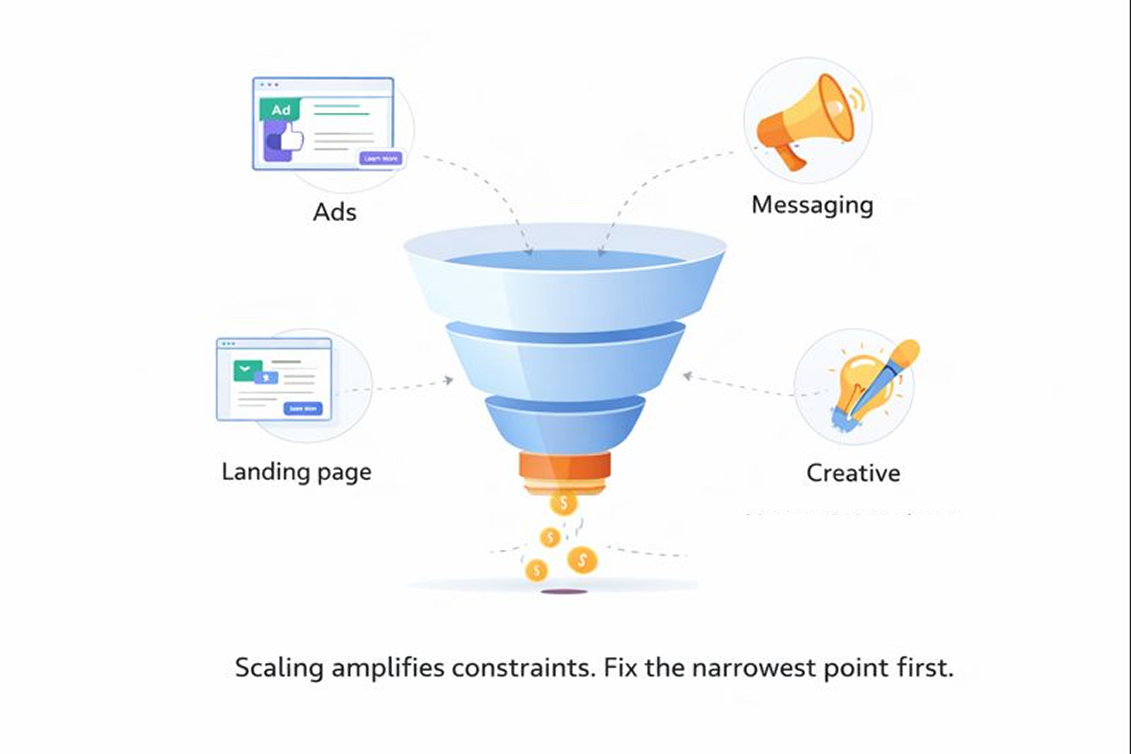
Scaling fails when hidden limits are ignored. More spend only amplifies existing problems.
Before increasing budgets, identify what limits growth.
Identify the real bottleneck
Sometimes ads perform well, but the funnel breaks later. Other times creative fatigues before budgets reach meaningful levels.
Common constraints include:
-
Too few creative angles for sustained delivery.
-
Messaging that appeals to a narrow audience.
-
Landing pages that lose users after the click.
Fixing these often improves results without higher spend.
Scale inputs, not just budgets
Budget increases work best when inputs expand too.
For example:
-
New creative angles create more delivery room.
-
Broader messaging attracts new buyers.
-
Faster pages and smoother checkout flows raise conversion rates.
This creates real capacity for growth.
What to focus on when results stall
When performance plateaus, adding more ads rarely helps. Plateaus usually signal structural limits.
Start by reviewing:
-
Account simplicity and overlap.
-
Conversion event quality and attribution.
-
Creative clarity and intent.
-
Change frequency and evaluation habits.
These areas reveal deeper opportunities than surface metrics.
Final takeaway
Paid social results improve when systems are simple and signals are clean. The biggest gains come from better structure, clearer intent, and fewer unnecessary changes.
Advertisers who focus on stability and learning consistently outperform those who chase constant tweaks.