For marketers running paid campaigns, the choice between paid social and search ads isn't just about platform preference. It’s about understanding where your audience is in the buying process and choosing the right tool to reach them there.
This article breaks down how each channel works, where it fits in the funnel, and how to use both in a performance-driven strategy.
What Are Paid Social Ads?
Paid social ads run on platforms like Facebook, Instagram, LinkedIn, and TikTok. They’re served based on user data — interests, behaviors, and demographics — not keyword intent. The ad appears as part of the user’s content feed.
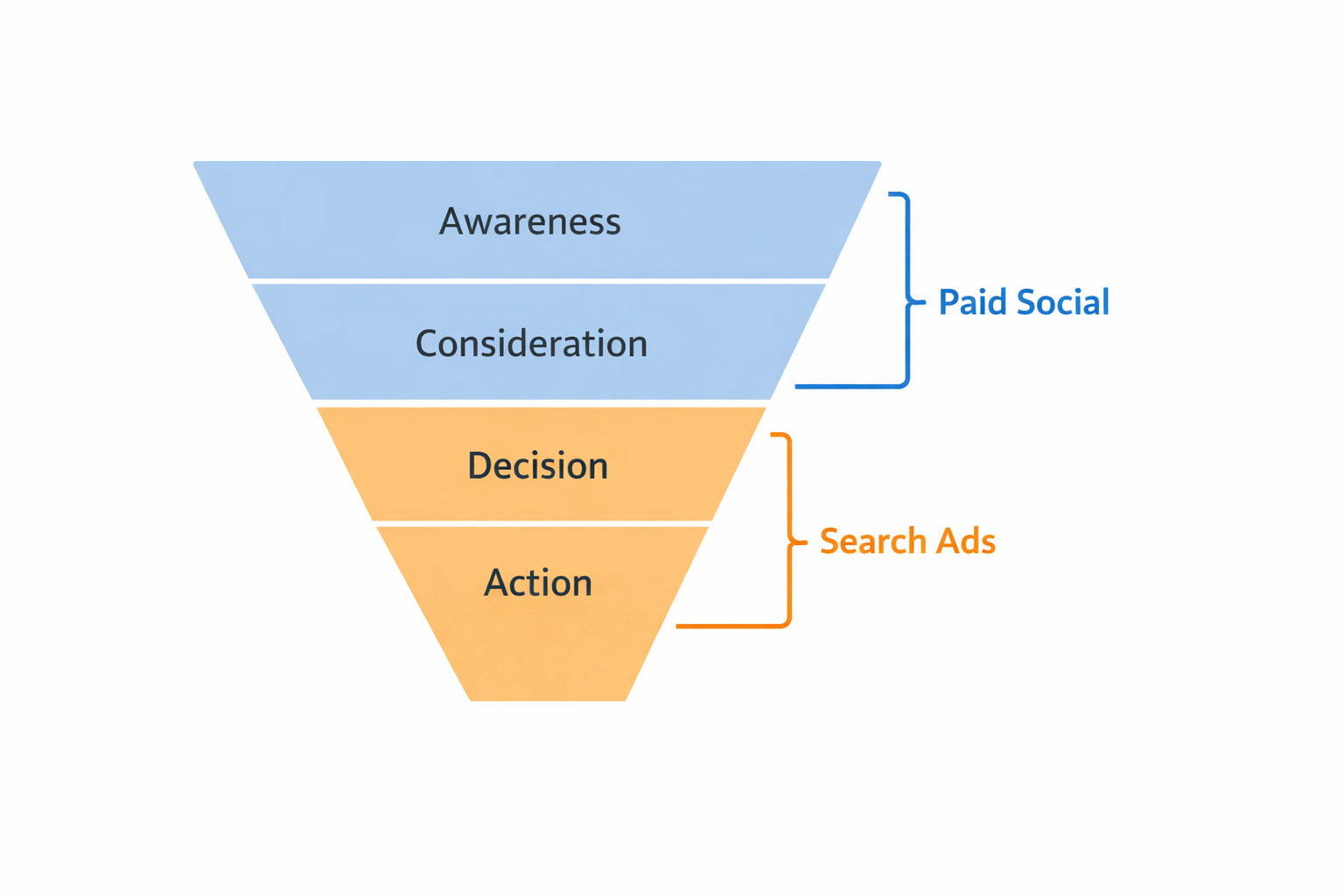
You’re not targeting someone who is actively searching. You’re introducing an offer in a way that feels native to their platform experience.
Why Paid Social Works
-
Audience targeting: You can build audiences based on behaviors, interests, job titles, lookalikes, or website visitors. Facebook’s targeting engine remains powerful when paired with custom audience strategies.
-
Creative-driven formats: Ads rely on visuals — images, short videos, carousels, Reels — to stop the scroll. Strong creative determines whether people engage or keep scrolling.
-
Engagement-based signals: Paid social lets you measure soft conversions — video views, engagement, landing page visits — and use them to retarget.
-
Full-funnel flexibility: While great for top-of-funnel awareness, social ads can also support mid-funnel nurturing and post-click retargeting.
In short, paid social helps brands create demand. You’re reaching people who aren’t actively searching — yet — but may become customers with the right message and creative.
What Are Search Ads?
Search ads appear in response to user queries on platforms like Google or Bing.
These users are already expressing interest or intent, making search ads ideal for capturing demand at the decision stage.
Rather than building awareness, you’re entering an existing conversation already happening in the user’s mind.
Why Search Ads Work
-
Keyword-based targeting: Your ads show based on specific search terms. This allows for high targeting precision and message relevance.
-
High-intent traffic: Users clicking search ads are often actively comparing solutions or looking to buy — they’re problem-aware and close to action.
-
Text-focused delivery: Search ads prioritize headlines, ad copy, and extensions over visuals. What you say — and how directly you say it — matters most.
-
Bottom-of-funnel efficiency: With the right keywords and landing page alignment, search campaigns often deliver strong cost-per-lead or cost-per-sale performance.
If paid social is about introducing offers, search is about closing. It converts people who already want something — and just need the right reason to choose you.
Side-by-Side Comparison
Here’s how paid social and search ads differ across strategic categories:
| Category | Paid Social Ads | Search Ads |
|---|---|---|
| User Intent | Passive — based on interests and activity | Active — based on what users type or ask |
| Targeting Method | Audiences (interests, behaviors, lookalikes) | Keywords, location, time, device |
| Formats | Visual: videos, carousels, images | Text: headlines, links, descriptions |
| Funnel Role | Awareness, engagement, nurturing | Conversions, lead capture, bottom-of-funnel |
| Learning Curve | Accessible but creative-heavy | More technical; involves bidding and search behavior analysis |
| Budget Model | CPM (cost per 1,000 impressions) | CPC (cost per click) |
This breakdown helps clarify why the two ad types often serve different purposes.
Social grabs attention and builds interest. Search converts interest into action.
When to Use Paid Social vs Search Ads
Understanding the job of each channel helps you align them to your goals — not just your budget.
Paid Social Works Best When:
-
You’re introducing a product or brand to a cold audience.
-
Your goal is to drive traffic, engagement, or video views to warm up an audience.
-
You want to build a retargeting pool for lower-cost conversions later.
-
You have a compelling visual product that benefits from creative storytelling.
For example, an e-commerce brand might use Instagram Reels to promote a new product line, using custom audiences and interest targeting to find new buyers.
You can go deeper with this guide to building high-performing custom audiences.
Search Ads Work Best When:
-
You’re targeting keywords with clear commercial or navigational intent.
-
You want to reach users actively researching or comparing providers.
-
Your offer solves a problem people are aware of and already searching to fix.
-
Your business depends on lead generation or phone calls from bottom-of-funnel buyers.
For example, a local dentist might run search ads for “emergency dentist open now” — reaching people ready to act immediately.
Want to better understand audience types? This beginner’s guide to Facebook targeting breaks it down step-by-step.
Why Using Both Channels Is Smarter
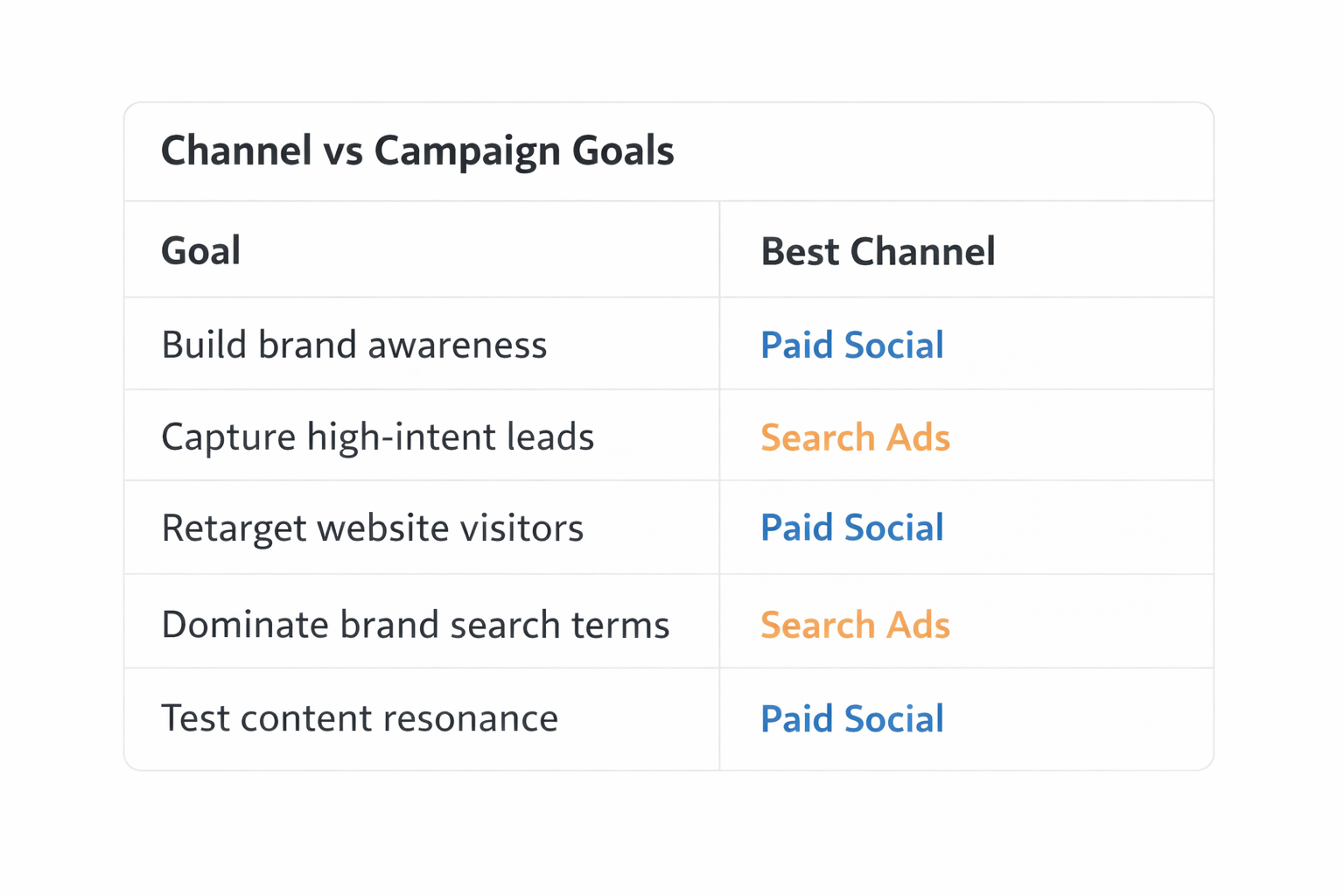
In practice, most growth-focused advertisers use both paid social and search in tandem — and with good reason.
These platforms support different parts of the user journey.
Smart Ways to Combine Them
-
Use social to pre-qualify: Introduce your offer on Facebook, then retarget warm users with bottom-of-funnel search ads.
-
Reverse the funnel: Capture high-intent leads through Google Ads, then retarget with Instagram video testimonials or feature highlights.
-
Message alignment: Use search data (top queries and pain points) to inform your paid social ad copy and creative direction.
Want to build a layered approach? This guide to Facebook retargeting strategies is a strong starting point.
This dual-channel strategy lets you build, nurture, and convert — without forcing one platform to do everything.
Final Thoughts
Search and social ads each play a specific role in a performance marketing strategy. The key isn’t choosing one — it’s knowing how and when to use both.
Paid social helps create demand. Search ads help capture it.
If your budget allows, treat these as complementary tools — not competitors. You’ll often find your best results when they work together, not in isolation.