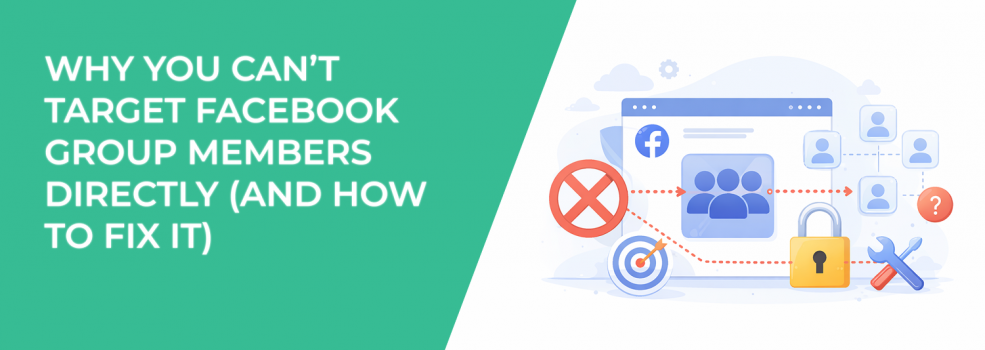
Advertisers love precision. But when it comes to Facebook groups, that precision hits a wall. You can’t target group members directly in Meta Ads Manager — even if the group is public, active, and full of your ideal customers.
This isn’t a bug. It’s a deliberate policy decision by Facebook. And it forces advertisers to either work around the limitation or risk wasting budget on irrelevant audiences.
In this article, we’ll look at why this restriction exists, what kinds of campaigns are affected, and how tools like LeadEnforce help you reach group audiences in a compliant and effective way — without ever using or storing personal data.
Why You Can’t Target Group Members on Facebook
Facebook removed access to group member targeting as part of a broader shift toward privacy and platform control.
Here’s why:
-
Privacy regulations — Facebook must comply with laws like GDPR and CCPA, which limit how user data is collected and shared.
-
Community protection — Groups are built for peer-to-peer interaction. Facebook keeps group participation private to maintain trust.
-
Platform control — Meta wants advertisers to rely on built-in targeting tools rather than external data scraping or audience workarounds.
Even if a group is public, advertisers can’t access or build audiences based on its members. That means no custom audiences, no member lists, and no visibility into who’s actually in the group.
Why Group-Based Targeting Still Matters
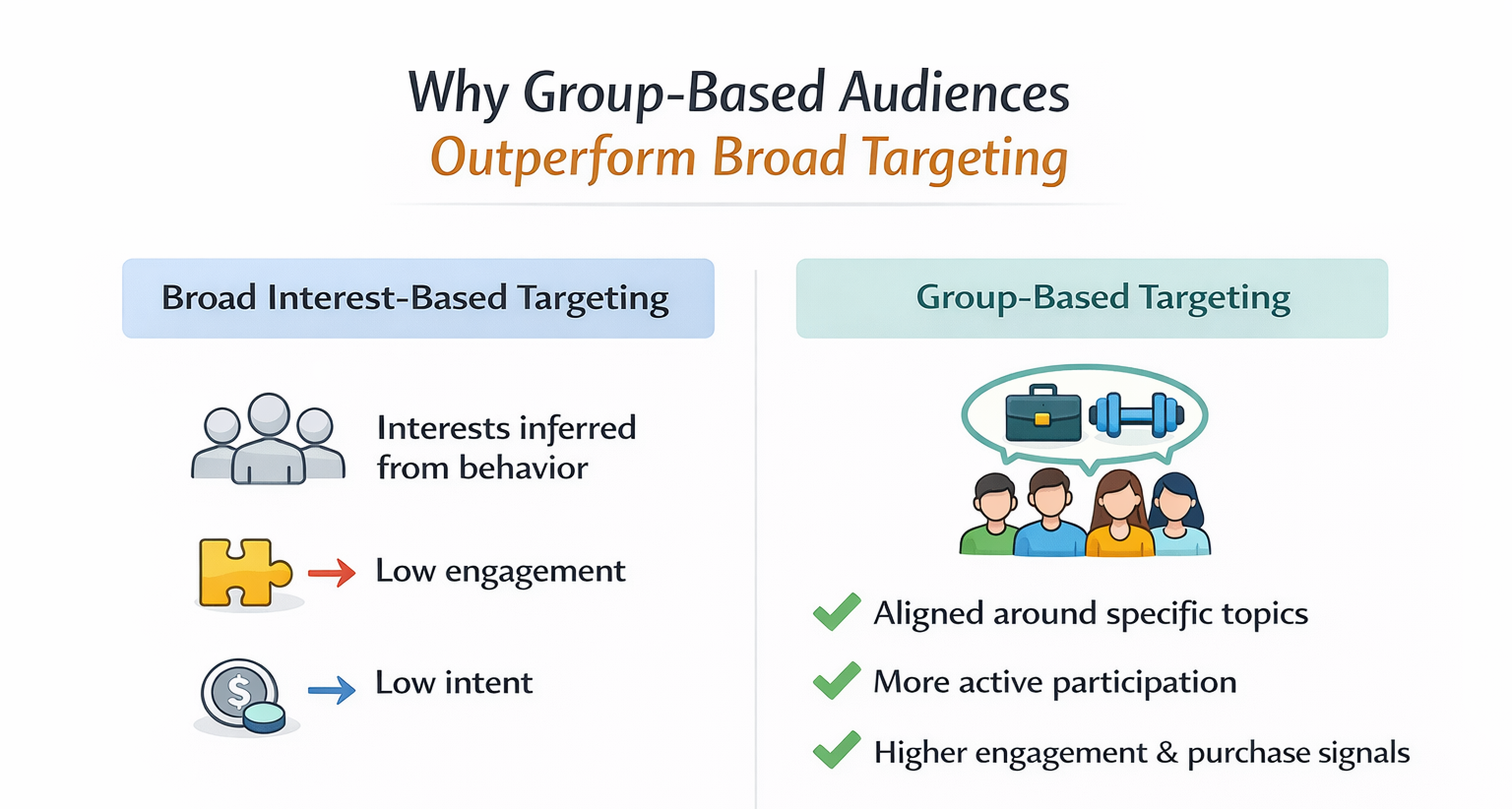
Just because you can’t target group members directly doesn’t mean they’re not valuable. In fact, they’re often more valuable than broad interest-based audiences.
-
Shared interest — Members of niche Facebook groups are aligned around specific topics, lifestyles, or industries.
-
High intent — Group discussions often reflect active problem-solving, research, or purchase consideration.
-
More active behavior — Group followers tend to comment, react, and engage more than casual page followers.
These qualities make them ideal for targeted campaigns — especially when launching in niche markets, competing against known brands, or promoting products that solve well-defined problems.
How to Reach Facebook Group Audiences Without Breaking the Rules
LeadEnforce is a tool that helps you build custom audiences based on the followers of Facebook groups without accessing personal data.
How it works:
-
You input the URL of a Facebook group you want to target.
-
LeadEnforce analyzes the group.
-
The platform builds a custom audience that you can share to your Facebook Ads Manager.
LeadEnforce also lets you create lookalike audiences from these segments, either within the platform or inside Meta Ads.
Important: LeadEnforce does not collect or store any personal user data. You never receive access to names, emails, or member lists.
How This Strategy Differs from Traditional Targeting
Let’s compare a few common targeting options:
| Targeting Type | Precision | Scale | Privacy Risk | Best Use Case |
|---|---|---|---|---|
| Interest- or demographics-based (Meta) | Low | High | Low | Broad awareness |
| Retargeting (pixel-based) | High | Medium | Low | Warm audiences |
| Email list custom audience | High | Low | Medium | Known leads or customers |
| Group followers (with LeadEnforce) | Medium | Medium | Low | Niche, community-focused |
LeadEnforce sits in the middle. You get more precision than interest targeting, more scale than retargeting, and full compliance with Facebook policies.
Where Group-Based Targeting Works Best
This strategy is most effective when:
-
You’re entering a niche category (e.g., indoor cycling, vegan skincare, AI content tools).
-
Your product aligns with a specific identity or problem (e.g., plant-based eating, freelancing, ADHD coaching).
-
You want to capture demand from existing communities (e.g., groups built around competing products or solutions).
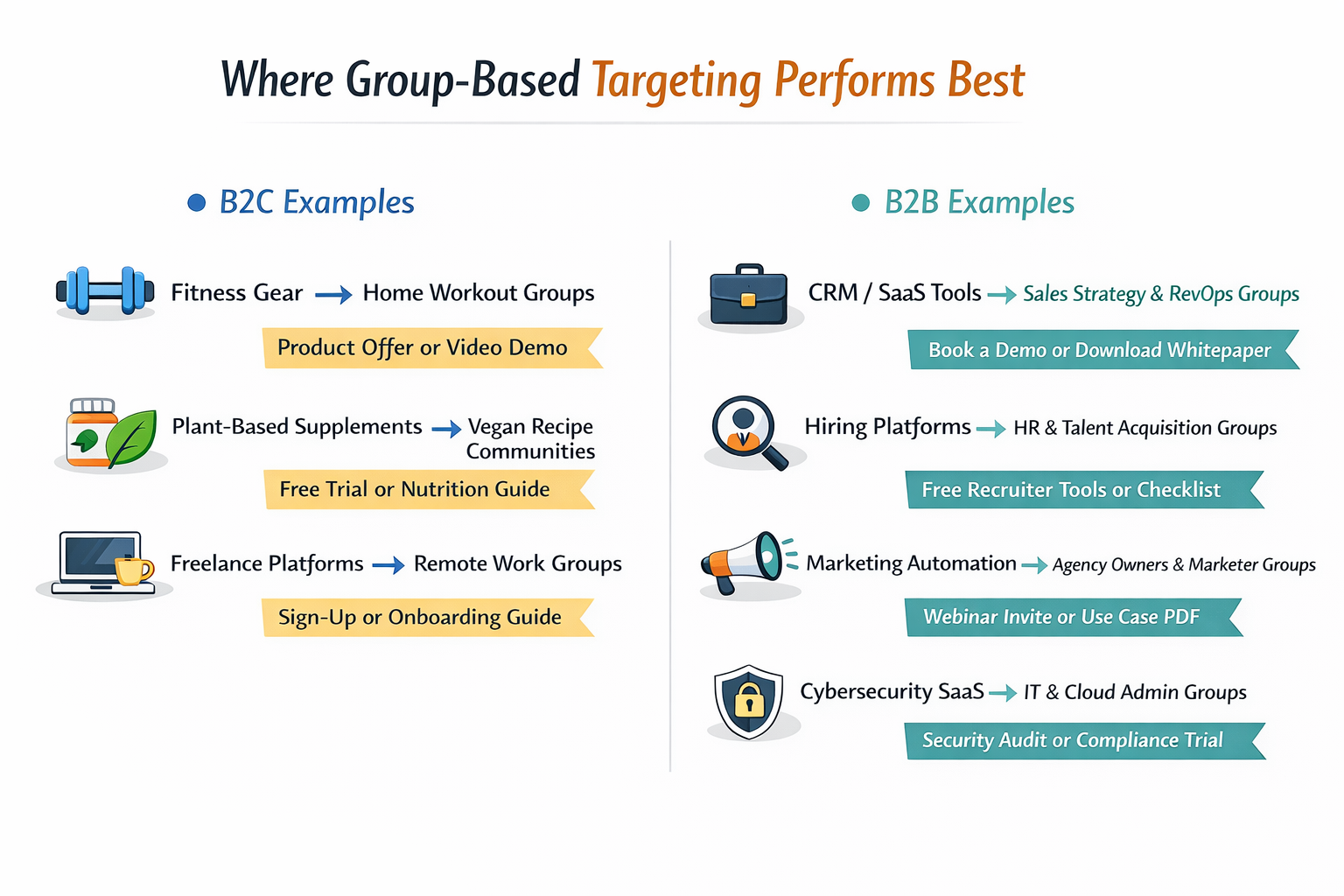
In these cases, group-based audiences usually outperform broad targeting because relevance is built in from the start.
Caution: Don’t Over-Filter
Once you’ve built a custom audience, it’s tempting to add layers of demographic, interest, or behavioral filters.
Be careful. Every additional filter reduces audience size. In niche segments, that can hurt delivery and increase CPMs.
Use filters with intent and test before locking yourself into an audience that’s too narrow to scale.
Best Practices for Campaign Setup
To get the most from LeadEnforce audiences:
-
Start broad, then narrow — launch with the base audience before layering filters.
-
Avoid ad fatigue — rotate creatives that reflect the group’s real interests and problems.
-
Test lookalikes — in some cases, lookalikes outperform the original custom audience. Try different percentages to find the best option for you.
-
Keep messaging aligned — don’t just sell; mirror how people talk inside the group.
For help choosing the right audience sources, see How to Select Facebook and Instagram Sources for Targeting with LeadEnforce — it walks through how to prioritize high-quality groups and pages when building your strategy.
Final Thoughts
You can’t target Facebook group members directly anymore — and that’s unlikely to change.
But platforms like LeadEnforce give advertisers a compliant, practical way to reach these audiences through custom and lookalike targeting.
If you’re tired of spending on broad audiences that don’t convert, it may be time to get more specific.