Some sales take time. If you're selling real estate, B2B software, consulting, or high-ticket programs, people rarely buy on impulse. These prospects move slowly, evaluate options, and need trust before making a decision.
That means your paid traffic strategy must reflect reality. Quick-win campaigns won’t work. You need a multi-stage approach that guides users from interest to action — over time.
Understanding the Full Buyer Journey
Before you create your first campaign, you need to map out the buyer’s path.
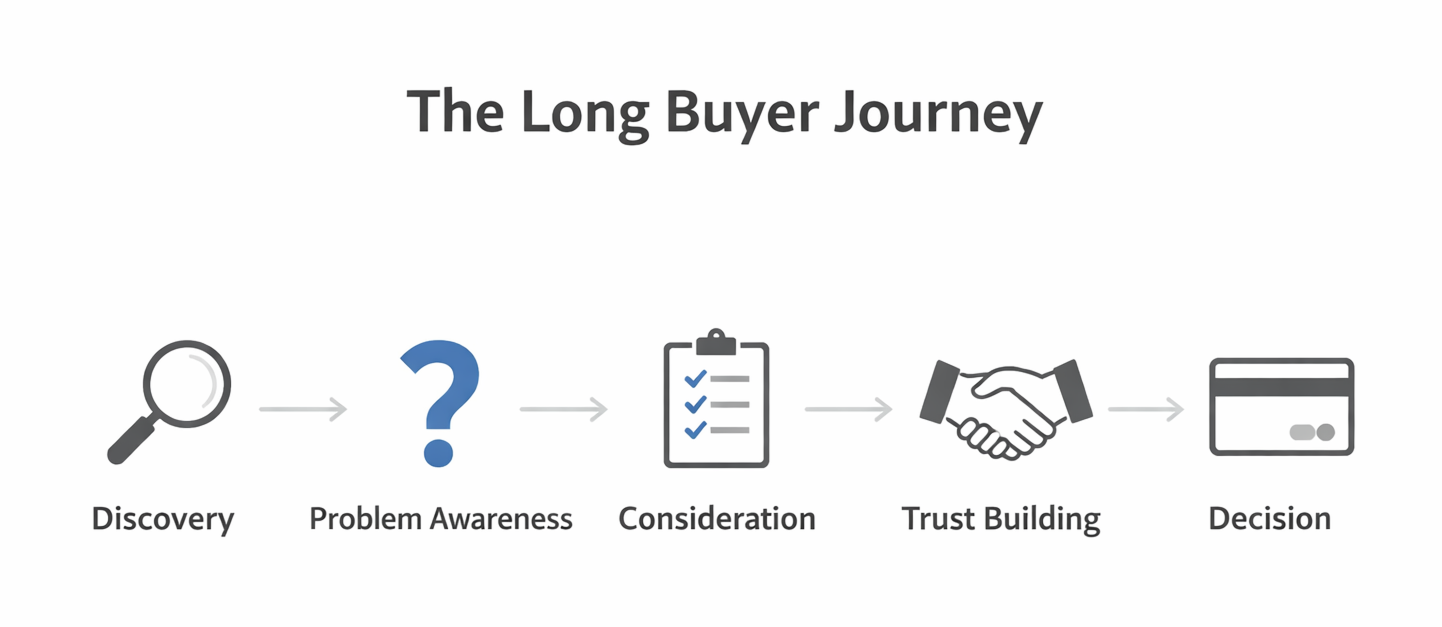
In long sales cycles, this journey typically includes:
-
Discovery – A user sees your brand for the first time through an ad or piece of content.
-
Problem awareness – They begin to realize they have a need you can solve.
-
Consideration – They research, compare options, and look for answers.
-
Trust building – They evaluate your credibility, case studies, or reviews.
-
Decision – They finally act — book a call, request a quote, or make a purchase.
Each stage requires a different message, creative, and goal. If you rush it, you'll waste budget and lose high-potential leads.
Read more: How to Map the Customer Journey Before Launching Ad Campaigns.
How to Build Paid Campaigns That Support Long Sales Cycles
Structure Your Campaigns Around the Funnel
Using one generic campaign for everyone doesn’t work. You need to align your structure with how people buy.
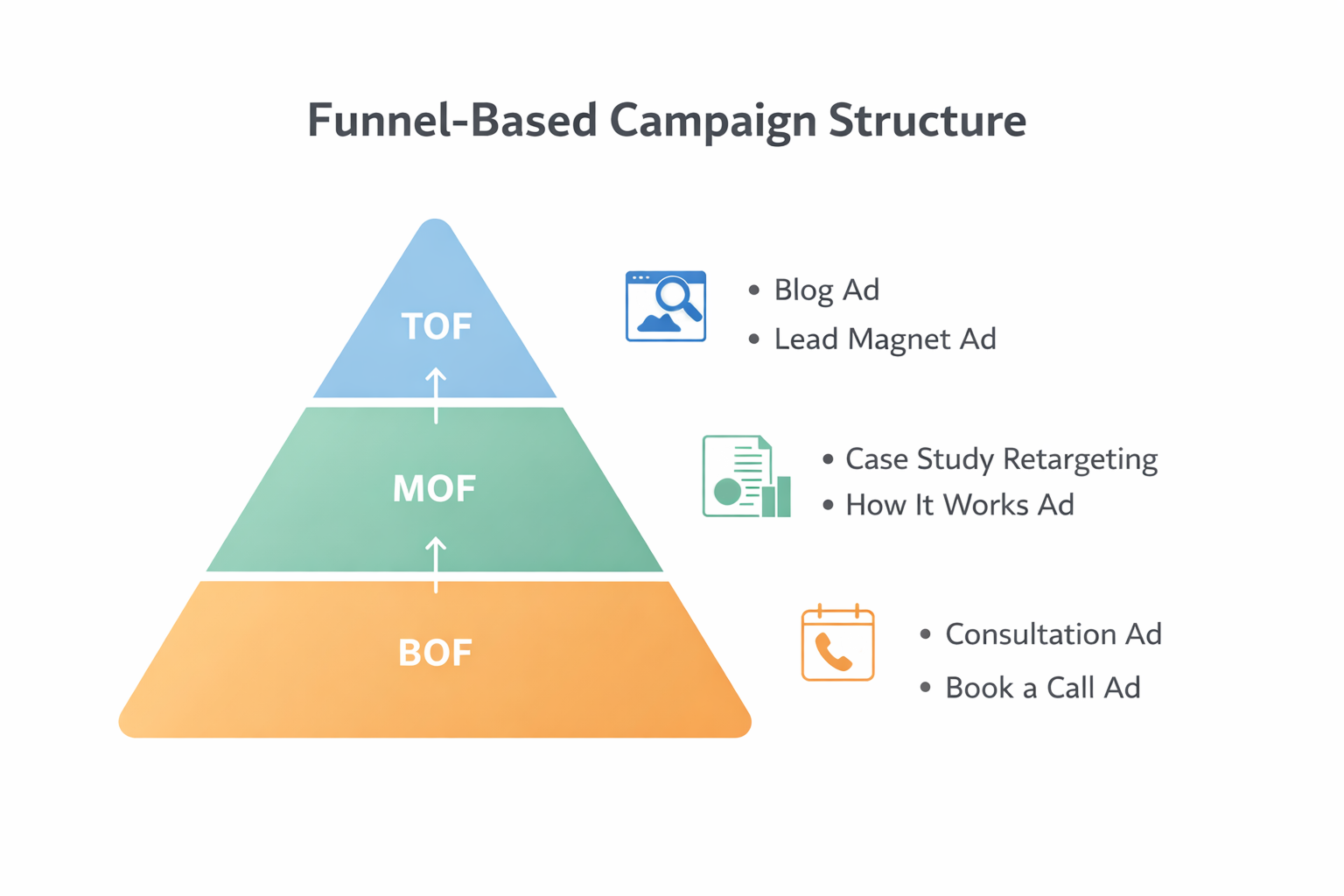
That means setting up:
-
Top-of-funnel (TOF) campaigns – Use video content, blog links, or lead magnets to build awareness.
-
Middle-of-funnel (MOF) campaigns – Share case studies, product explainers, or comparison guides.
-
Bottom-of-funnel (BOF) campaigns – Offer consultations, demos, or limited-time offers to ready-to-act leads.
Each layer plays a role. Together, they push the buyer forward — without overwhelming them.
Try this: 5 Common Facebook Campaign Structures — and When to Use Each One.
Focus on Capturing Leads, Not Just Making Sales
Long sales cycles rarely convert cold traffic into purchases. Instead, your first goal should be to capture a lead — then nurture.
Proven ways to do this include:
-
Lead magnets – Offer checklists, templates, or guides in exchange for an email.
-
Webinars – Host live or pre-recorded events to educate and build authority.
-
Interactive tools – Quizzes, calculators, or assessments that deliver value and collect contact info.
Once a lead opts in, you can follow up through email, retargeting, or direct outreach — on their timeline.
Use Multi-Touch Retargeting
Don’t expect one retargeting ad to close the deal. Buyers in long cycles need several reminders, validations, and reasons to come back.
Here’s a smart multi-touch retargeting flow:
-
Touch 1 – Re-introduce your offer with a short video and answer a common objection.
-
Touch 2 – Share a client success story or a case study focused on results.
-
Touch 3 – Present a low-risk next step like “Book a free call” or “Try the calculator.”
Rotate your creatives every 10–14 days to keep engagement high. Avoid stale messaging — especially if you're investing heavily in retargeting.
Target Based on Life Stage, Not Just Demographics
In longer sales journeys, timing matters more than age or location. That’s why status-based targeting works so well on Facebook and Instagram.
You’re not just selling a product — you’re aligning with what’s going on in someone’s life.
Some examples:
-
New homeowners – Ideal for insurance, furniture, or home services.
-
Recently engaged – Perfect for wedding planners, travel agents, or financial advisors.
-
New business owners – Great for accounting, software, or marketing services.
Targeting based on real-world status helps your ads feel timely — and gets more clicks, engagement, and conversions.
What to Measure When Conversions Take Time
You won’t see instant revenue from long-cycle campaigns. Instead, monitor signals that show your funnel is working.
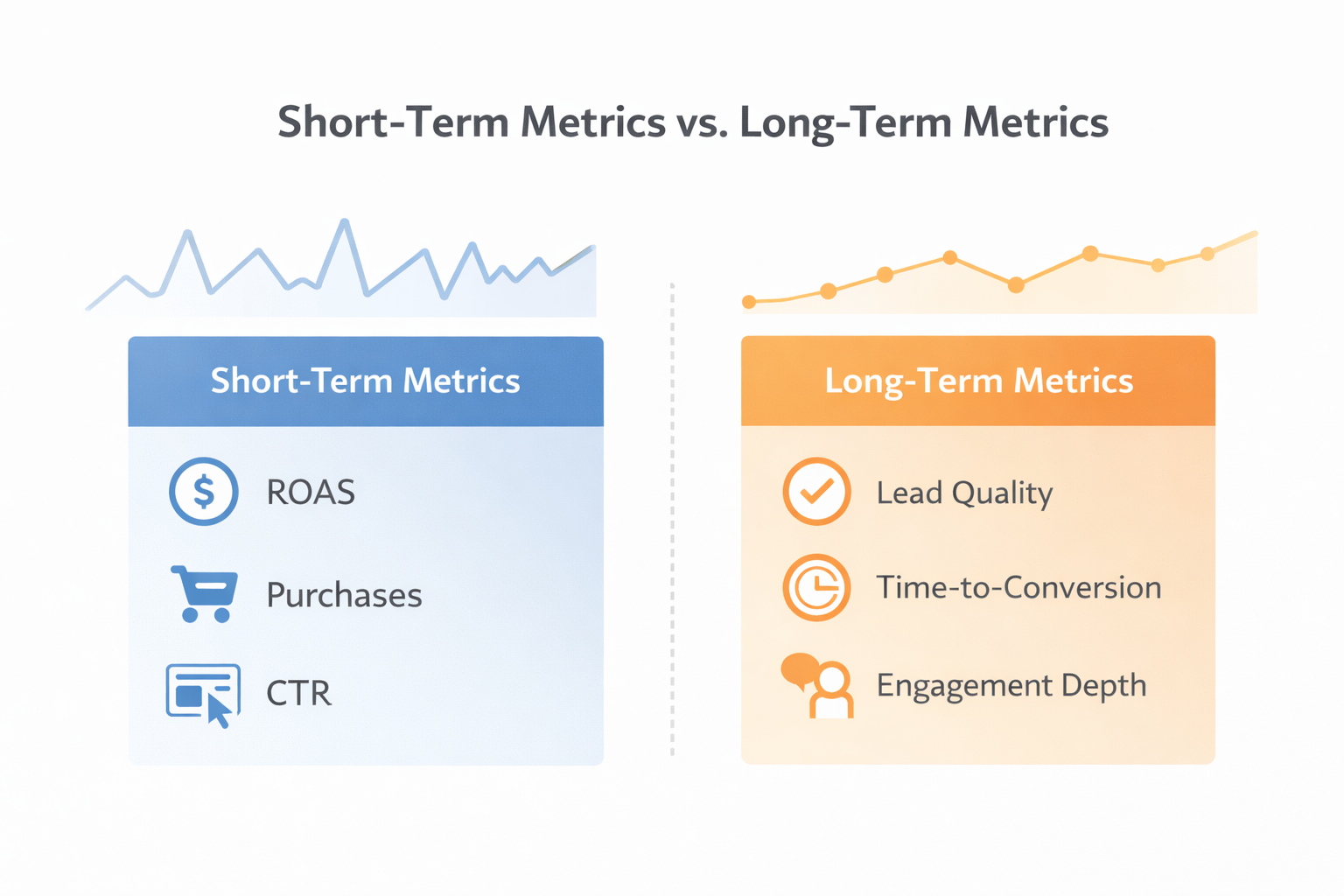
Watch These Key Metrics:
-
Cost per lead (CPL) – Are you acquiring contacts affordably and sustainably?
-
Lead quality – Are they engaging with emails, booking calls, or revisiting your site?
-
Time-to-close – How long does it take, on average, from opt-in to sale?
Don’t rely solely on pixel-based data. Use first-party tracking, CRMs, and Meta’s Conversion API to connect the full journey.
The Role of Content in Long Sales Cycles
Content is how you stay top-of-mind between the ad click and the final decision. It builds trust, answers objections, and reduces buyer friction.
Your paid traffic should drive people to content that fits their stage in the journey.
Educational Content
Use early-stage content to teach, not pitch.
Examples include:
-
Blog posts or videos explaining a common industry problem.
-
Checklists for getting started or making informed decisions.
-
Infographics that break down complex processes.
Social Proof and Validation
In the middle of the funnel, buyers want reassurance. Provide:
-
Video testimonials or client interviews.
-
Case studies with before-and-after results.
-
Press mentions or industry recognition.
Low-Commitment Offers
Make it easy to take the next step. Great options include:
-
Free assessments or consultations.
-
ROI calculators or cost estimators.
-
Demo requests or intro calls.
Related read: The Buyer Journey Triggers That Predict Larger Orders.
Final Thoughts: Success Requires Patience and Precision
Paid traffic can drive results for long sales cycles — if you stop expecting fast wins.
Instead of rushing the sale, structure your ad strategy to guide, educate, and build trust. Focus on content that supports decision-making. Use retargeting as a conversation, not a pitch. And measure success across the full funnel, not just last-click purchases.
To recap, here’s what works best:
-
Funnel-based campaign structure — matched to user intent;
-
Lead capture strategies — to start conversations before selling;
-
Multi-step retargeting — with rotating creative and smart sequencing;
-
Status-based targeting — aligned with life stage triggers;
-
Full-funnel measurement — including lead quality and time-to-convert.
Long sales cycles aren’t harder — just different. Advertisers who understand this can outperform competitors who still chase shortcuts.