Wondering if your product actually fits the market?
Your ad performance is often the first place you'll see the answer.
Marketers love to focus on cost-per-click, ROAS, and reach. But sometimes, your best insights don’t come from dashboard KPIs — they come from behavioral clues.
Let’s look at the ad performance signals that point to real product-market fit — and how to recognize them before you waste budget or scale too soon.
1. Ad Comments That Read Like Mini Testimonials
When your ad’s comment section turns into a casual review board, you're getting more than engagement — you're seeing early validation.
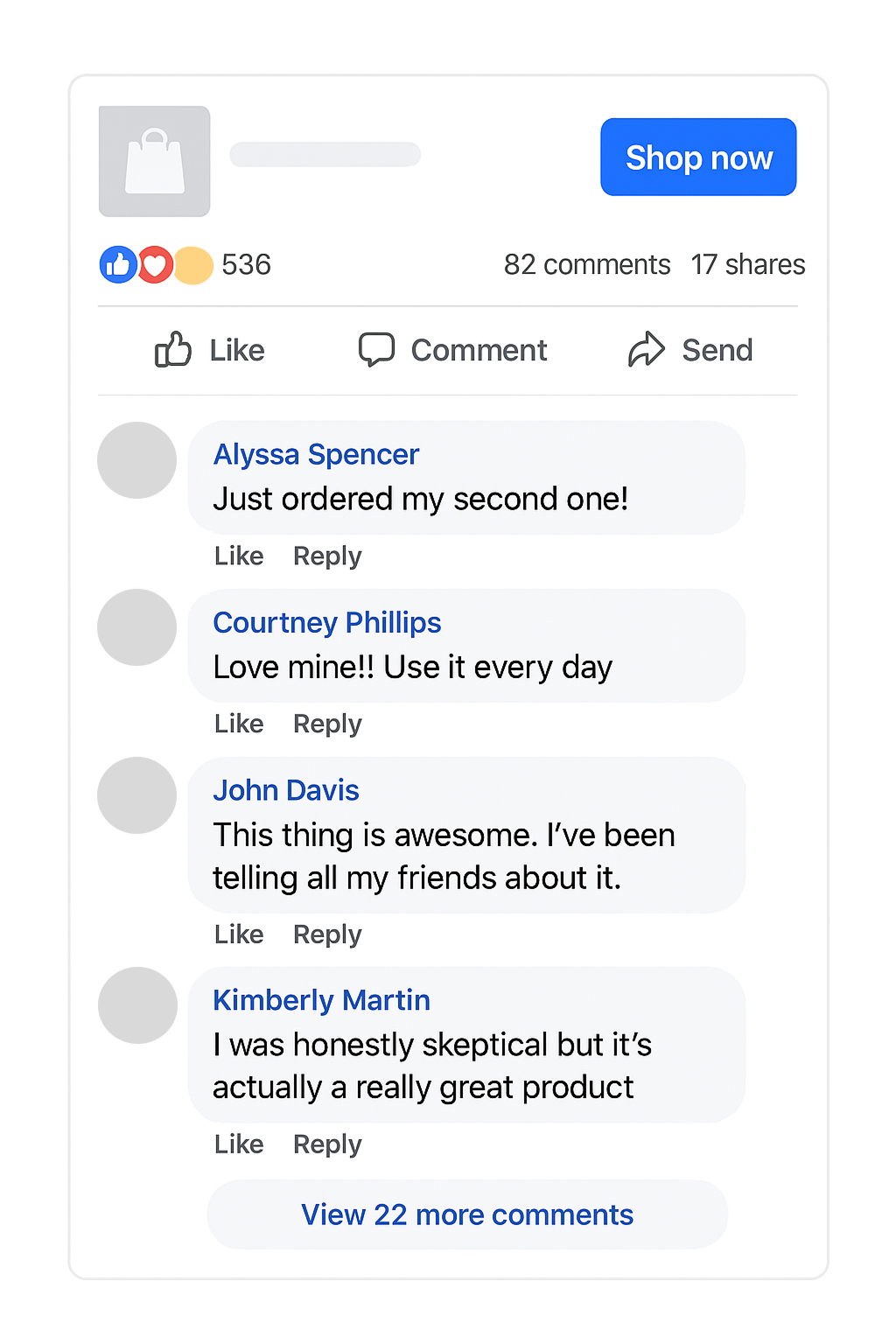
Look for comments like:
-
“Just ordered — can’t wait!”
-
“This product changed the game for me.”
-
“Second purchase. You need this.”
These aren’t fluff. They’re proof that the product does what it promises — and people care enough to talk about it. That’s one of the strongest signals you're hitting a real pain point.
Want to turn these into conversions? Use them in your creative. Or, if you're designing social proof-driven ads, check out The Best AI Text and Image Generators to help build fast visuals from user comments.
2. Strong CTR on Broad Targeting
CTR is a surface-level metric — but when it’s high on broad audiences, it tells a deeper story.
Here’s what to look for:
-
CTR above 1.5% with broad or unfiltered audience settings.
-
Good performance on “no interest” or very general demographic targeting.
-
Clickthrough consistency across placements or campaign types.
If you’re seeing strong CTR without hyper-targeting, your product is likely cutting across segments — a classic sign of market pull.
Pro tip: Make sure your campaign goals align with your testing. This article on Meta Ad Campaign Objectives breaks down how to set the right objective when you’re testing for product-market fit.
3. Drop in Bounce Rate After the Click
Low bounce rate = strong message match. It means people saw your ad, clicked through, and stayed.
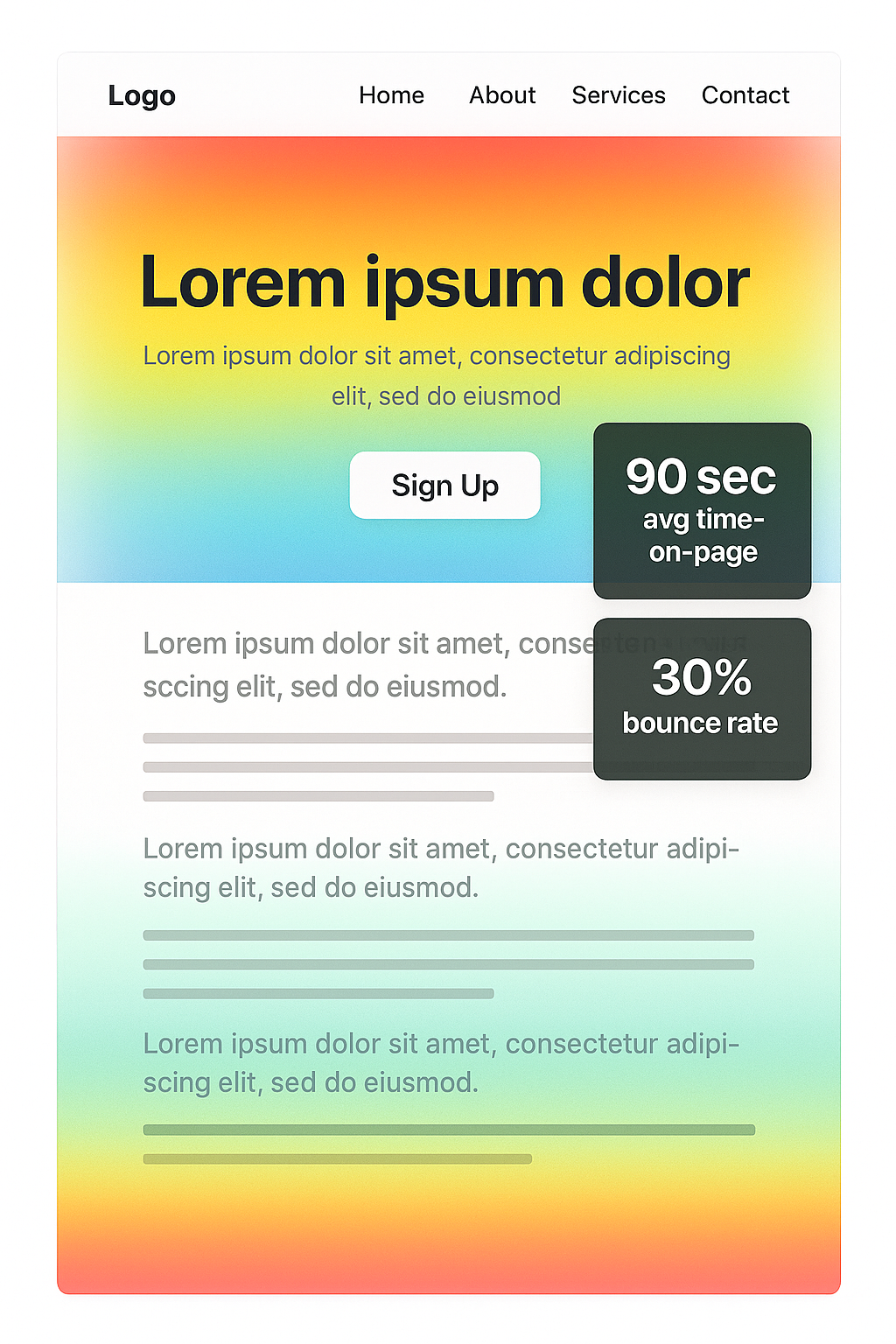 User attention varies across the landing page — checking the heatmap reveals which sections get the most engagement.
Watch for:
-
Bounce rate under 30%.
-
Session duration over 90 seconds.
-
Scroll depth or CTA clicks that indicate deep engagement.
This often means that the ad sets expectations and the landing page delivers. In short, your messaging aligns with your market’s needs.
Still not converting despite low bounce? Run through this checklist: Facebook Ads Not Converting: How To Fix It. It’ll help you spot friction beyond the first click.
4. Affiliates Want to Promote You (Without Being Asked)
When affiliates or creators start asking if they can promote your product, that’s a big deal.
Look for:
-
Inbound affiliate interest through email, DMs, or your site.
-
Reposts and reviews from niche influencers you haven’t contacted.
-
Repeat promotions from the same partners.
Affiliates only push what converts. They know if your offer looks like a winner — and they’ll move fast to monetize it.
Want to attract more of them? Make sure you're targeting the right audience in the first place. This quick guide on Facebook Ad Targeting 101 walks you through how to reach high-intent groups.
5. Retargeting Ads Get Cheaper — and Faster
When product-market fit is solid, retargeting doesn't need to be aggressive. People already want the thing — you just have to remind them.
Key signals:
-
Conversion windows under 72 hours after first ad view.
-
Retargeting ROAS climbing even as CPMs rise.
-
Buyers who comment things like “Finally grabbed it” or “Been thinking about this.”
These are performance patterns you’ll only see when your product is actually solving a real problem — and when customers already see the value.
Want to scale from here without breaking performance? Read The Science of Scaling Facebook Ads Without Killing Performance.
6. Even Average Ads Drive Results
Sometimes your ad isn't clever, flashy, or especially persuasive — and it still converts. That’s when you know your product is doing the heavy lifting.
Look for:
-
Low-effort creatives with solid ROAS.
-
Simple copy + static image formats pulling better than polished video.
-
A clear offer that's converting across multiple formats.
When weak creative still works, your offer is strong. Period.
Want to spot winners faster? Here's a great framework for early ad testing: How to Identify Winning Ads Before They Exit the Learning Phase.
7. CPMs Rise — but Conversions Hold
Let’s say your cost per 1,000 impressions (CPM) increases. Normally that’s bad — but not if your conversions hold or even improve.
This shows that your offer is resilient. People still buy, even when competition or platform costs rise.
Look for:
-
Stable or improving ROAS with climbing CPMs.
-
Performance that holds up across new geos or audience types.
-
Minimal drop-off even as frequency increases.
This is the kind of pattern that gives you confidence to scale or push into new platforms.
Wrap-Up: Don’t Wait for a Survey to Tell You
Product-market fit doesn’t only show up in user feedback forms or revenue charts. It often reveals itself through how people behave inside your campaigns.
So before you jump to assumptions, ask:
-
Are people talking about the product in comments?
-
Are retargeting costs dropping over time?
-
Do weak ads still convert?
-
Are bounce rates falling while time on site increases?
Those aren’t just signs of decent ad performance — they’re some of the strongest early clues that your product is ready to scale.