Selling B2B products or services takes time. It’s rarely a quick, one-click decision. Instead, you’re dealing with long sales cycles, multiple decision-makers, and buyers who need a lot of information before they commit.
Because of this, retargeting in B2B advertising — especially on platforms like Facebook and Instagram — needs a very different approach from B2C. The typical short-term strategies don’t work here. What you need is a smart, well-paced, and behavior-driven system that guides your prospects over time.
For a solid foundation, you may want to read how to build a B2B Facebook ads strategy that works.
Why retargeting works differently in B2B
Unlike B2C, where people often buy on impulse, B2B purchases are more deliberate. Buyers are cautious. They evaluate options, gather input from colleagues, and need to justify their decisions internally.
This longer path to conversion means retargeting can’t just be about “staying visible.” It has to support the buyer’s research process, answer questions, and gradually build trust.
If you want to avoid the most common issues with campaign performance, see why your Facebook ads aren’t converting — and how to fix it.
Segmenting your audience by intent
One of the biggest mistakes in B2B retargeting is treating all site visitors the same. A person who read a blog post is not at the same stage as someone who downloaded a pricing sheet.
To make your retargeting work, you need to group users based on what they’ve actually done — and respond accordingly.
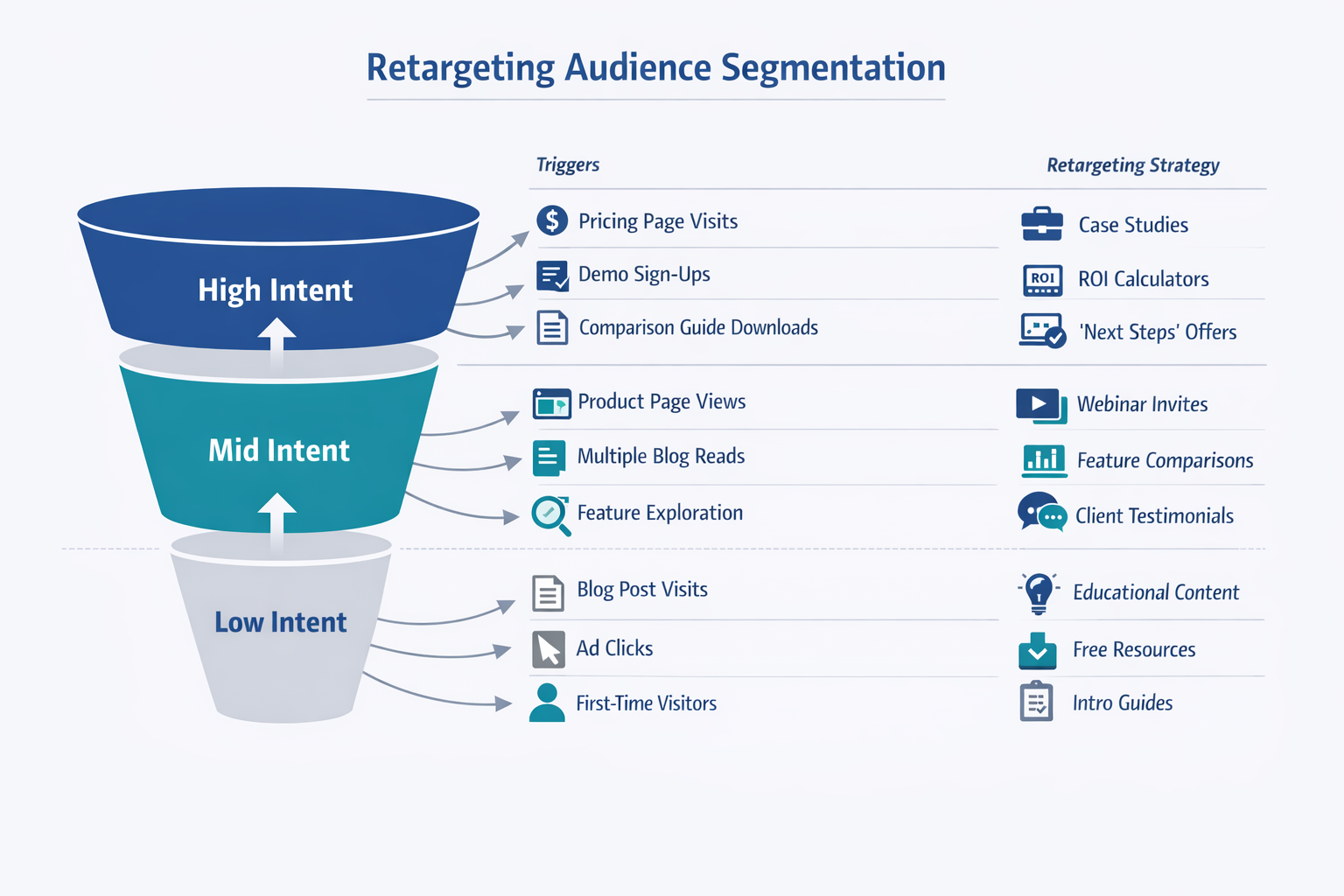
Three useful audience segments to build:
1. High-intent visitors
These are people who have shown strong buying signals — such as viewing your pricing page, starting a demo signup, or downloading a product comparison guide.
What to show them:
-
Case studies, to prove real-world results.
-
ROI calculators, to help justify the investment.
-
“What happens after you buy” content, to reduce friction and uncertainty.
2. Mid-intent researchers
These users are exploring your product or service but haven’t taken clear buying steps.
What to show them:
-
Webinars or video explainers, to go deeper on your solution.
-
Feature comparisons, showing how you differ from competitors.
-
Testimonials or client quotes, to build social proof and credibility.
3. Low-intent or first-time visitors
These people landed on your site through an ad or link but didn’t engage much.
What to show them:
-
Educational blog posts that speak to their problems.
-
Thought leadership content that positions you as an expert.
-
Downloadable resources like checklists or templates, to encourage further engagement.
You can explore more ideas in this guide to smart audience segmentation.
Timing and pacing: how often should your ads appear?
B2B leads often take weeks or months to convert. During that time, the same retargeting ad can quickly become stale or annoying.
Instead of blasting your audience with one message, spread your touchpoints out with a clear rhythm.
Three timing strategies that work:
1. Use frequency caps.
Set limits on how often each user sees your ads — such as no more than 3 impressions per week.
Why this matters: It prevents fatigue and keeps your brand presence from becoming irritating or forgettable.
2. Create time-based ad sequences.
Change the message a user sees based on how long it has been since they first visited.
For example:
-
Days 1–7: Show a customer story or testimonial.
-
Days 8–14: Share a feature breakdown or comparison post.
-
Days 15–30: Present a soft CTA, like a webinar or free trial.
Why this matters: It reflects the natural research stages of a B2B buyer — and keeps content feeling fresh.
3. Exclude inactive users after a set period.
If someone hasn’t engaged after 45 or 60 days, remove them from your retargeting lists.
Why this matters: It saves budget and ensures you’re only spending on active leads, not dead ends.
For more on this approach, read Retargeting Without Waste.
Use soft CTAs for early-stage prospects
Many advertisers jump too quickly to “Book a Call” or “Start a Free Trial.” But most B2B leads aren’t ready for that right away.
Pushing a hard CTA too early can drive people away. Instead, use softer calls to action that feel more helpful and low-pressure.
Examples of effective soft CTAs:
1. “See how we compare to [Competitor Name]”
This CTA encourages competitive research and positions your solution without being aggressive.
2. “Explore how [Industry] companies use our platform”
This helps the lead see themselves in the success story — making your offer feel more relevant.
3. “Watch a quick 2-minute demo”
Short demos feel like a small commitment but offer real value. They also create familiarity with your product.
4. “Download the ROI calculator”
This provides a helpful tool that also frames your product as a worthwhile investment.
5. “Save your seat for our next Q&A session”
This adds a sense of urgency while offering live, human connection — perfect for building trust.
These types of CTAs move prospects forward without overwhelming them.
Refreshing creative during long sales cycles
Since B2B cycles can stretch out over months, leads will see your ads many times. If the content doesn’t change, they’ll stop paying attention — or worse, develop banner blindness.
Rotating your creatives keeps your brand interesting and increases the chance of re-engagement.
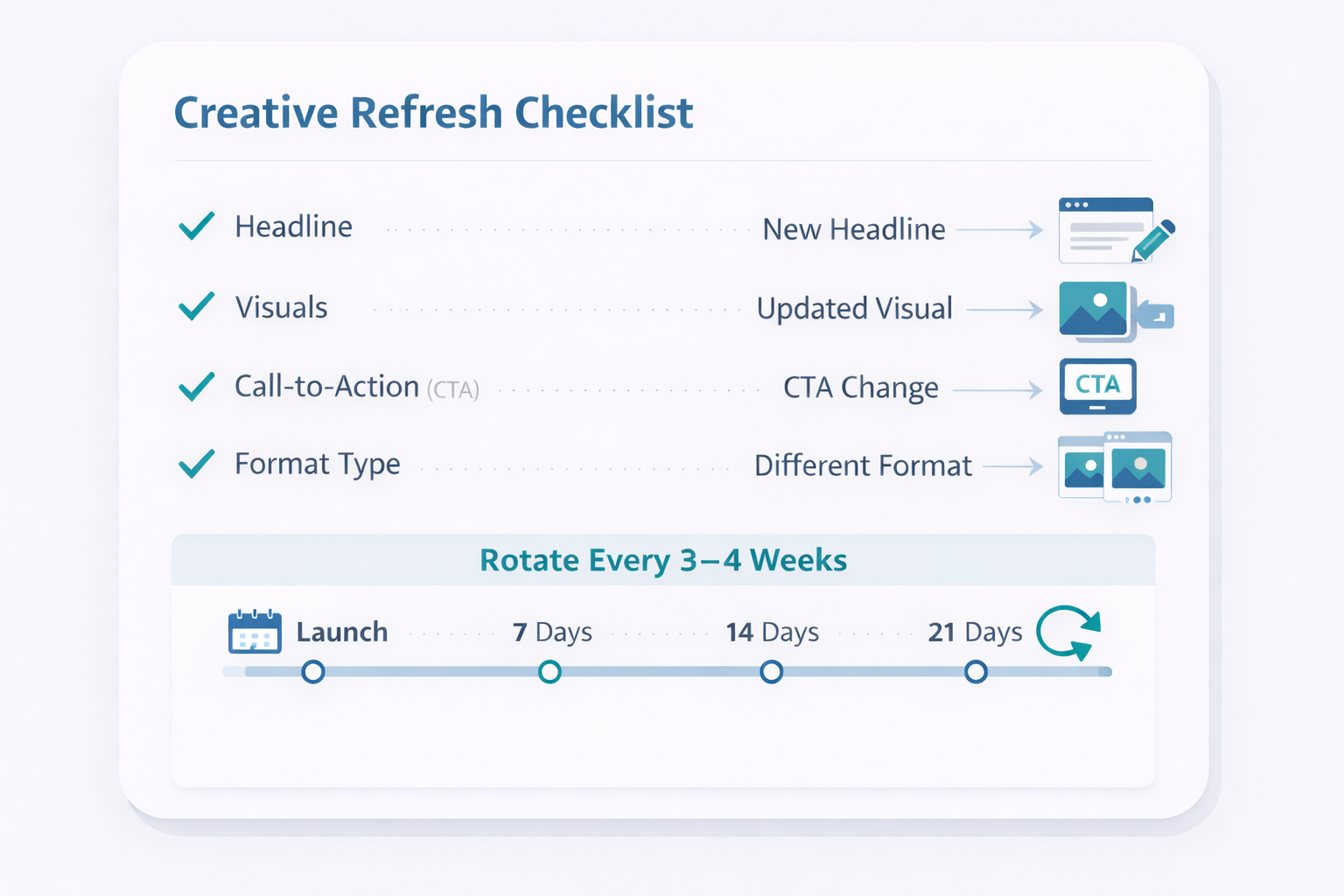
How to keep your ads fresh:
1. Vary your ad formats.
Don’t just rely on one type of creative. Use a mix — such as carousels, videos, single-image ads, and story placements.
For example: Start with a video demo, follow up with a carousel of use cases, then switch to a testimonial image.
2. Focus on different messaging angles.
Instead of repeating the same message, highlight different aspects of your product or service — such as ease of setup, customer support, or specific features.
Why this matters: Different buyers care about different things. Rotating angles helps you speak to each one.
3. Update creative assets every 3–4 weeks.
Even small changes — like a new headline or background color — can help your ad stand out again.
Why this matters: Repetition causes decline in engagement over time. Regular updates reset attention.
To avoid creative burnout, see how to prevent ad fatigue and optimize performance.
Aligning retargeting with sales conversations
In many B2B businesses, advertising isn’t the end of the funnel — it’s the beginning of a conversation. If you have a sales team working leads, your retargeting campaigns should support those efforts.
Ways to keep ads and sales aligned:
1. Retarget leads based on sales stage.
If a deal goes quiet, serve ads that reignite interest — like a new feature, a limited-time offer, or a case study from a similar company.
2. Create lookalike audiences from closed deals.
Take your converted leads and build new prospecting audiences based on their profiles.
3. Share ad insights with the sales team.
Make sure your reps know which ads and offers a lead has seen or clicked.
When sales and marketing work together, retargeting becomes part of the buyer’s overall experience — not a disconnected series of ads.
Don’t forget mobile behavior
Most B2B buyers may be researching your offer during a commute, between meetings, or after hours — all on their phones. Even though the final decision may happen on desktop, the first impression often happens on mobile.
But here’s the problem: many B2B landing pages are designed like desktop whitepapers. They’re heavy, slow, and difficult to navigate on smaller screens. That’s a major issue if your retargeting ads are sending people straight to those pages from Instagram or Facebook.
Mobile friction can silently destroy performance. If you want your retargeting to convert, you need to meet your audience where they already are — on mobile.
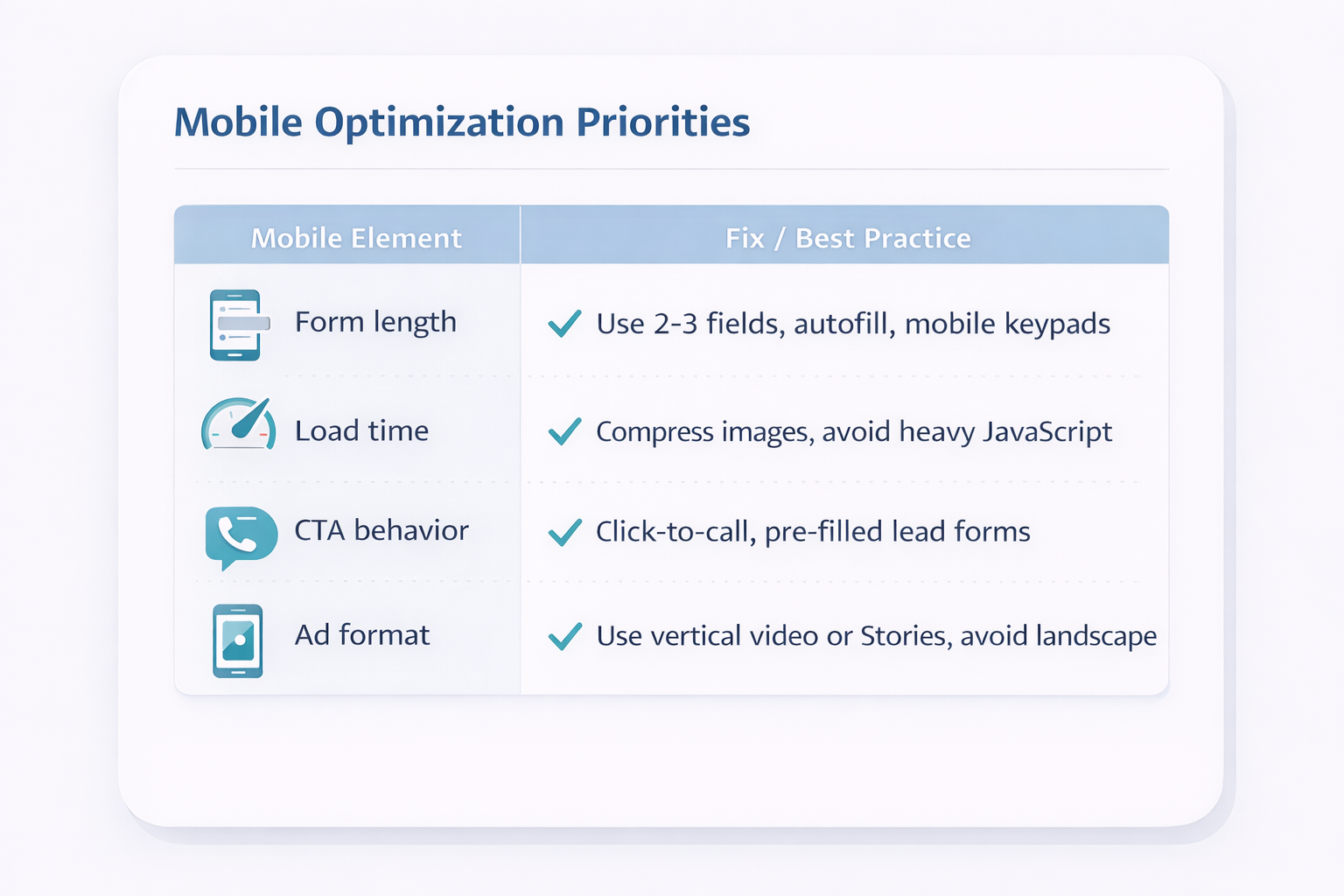
Four critical ways to optimize your mobile experience:
1. Use fast, mobile-first landing pages.
To improve load times and usability:
-
Minimize large image files — compress them without losing quality.
-
Avoid overloading the page with animations or video embeds.
-
Use responsive design so content automatically adjusts to different screen sizes.
-
Host pages on reliable infrastructure.
2. Simplify your forms.
Make it easier with:
-
Autofill-enabled fields.
-
Fewer fields — only ask what’s essential.
-
Progress bars or multi-step forms for long formats.
3. Use mobile-native ad formats.
Consider:
-
Instagram Stories or Reels — vertical video with captions.
-
Facebook Instant Experience — fast-loading, immersive formats.
-
Carousel ads — swipeable feature walkthroughs.
4. Offer low-friction conversion options.
Try:
-
Click-to-call buttons for quick action.
-
Click-to-Messenger for fast chat flows.
-
Pre-filled lead forms to reduce drop-off.
For more best practices, read how to design mobile-friendly Facebook ads.
Final thoughts
B2B retargeting is not about chasing people with ads until they give in. It’s about supporting real business decisions with the right content at the right time.
To succeed, your strategy should:
-
Segment users based on behavior and intent;
-
Space out touchpoints instead of overwhelming your leads;
-
Rotate creative to avoid fatigue and disinterest;
-
Align closely with your sales team’s needs and timing; and
-
Prioritize the mobile experience to ensure smooth engagement.
Retargeting, when done right, becomes less about pushing — and more about guiding. If your sales cycle is long, your retargeting strategy should be just as thoughtful.