
Marketing teams often struggle with knowing when to push creative boundaries and when to play it safe. Sandbox testing provides a controlled environment to try unconventional ideas, gather performance insights, and understand audience reactions—without affecting your primary campaigns.
What Is Sandbox Testing?
Sandbox testing is the practice of running isolated, small-scale ad experiments where variables can be tested without influencing ongoing performance. It allows teams to:
-
Explore unconventional visuals or messaging
-
Test new hooks, angles, or storytelling formats
-
Validate audience engagement with minimal risk
-
Compare creative variants before scaling winners
This safe experimental space encourages innovation while preventing underperforming ideas from draining your ad budget.
Why It Matters: The Performance Gap Between Tested and Untested Creatives
Data shows that creative experimentation leads to measurable improvements:
-
Advertisers who test at least two creative variations see up to 30% lower cost per result compared to those running a single ad.
-
Brands that refresh creative every 2–3 weeks report up to 50% higher engagement rates in long-term campaigns.
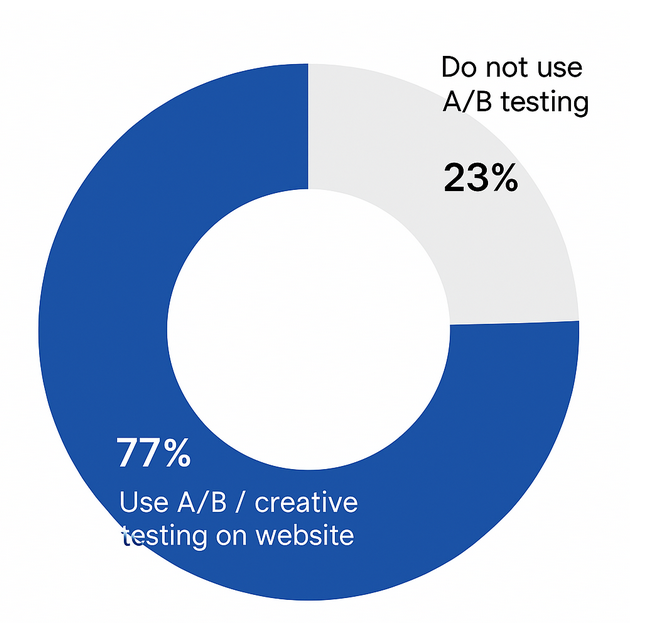
77% of firms worldwide run A/B or creative testing on their websites
These trends highlight a simple truth: creative tests reveal which ideas resonate and which fail quietly in a sandbox rather than in your main campaign.
How Sandbox Testing Works
1. Define a Small, Controlled Budget
Start with a small budget segment—enough to gather clean data but low enough to mitigate risk. The goal is insight, not scale.
2. Test One Creative Variable at a Time
To ensure reliable results, isolate variables such as:
-
Headline
-
Visual style
-
Offer framing
-
CTA placement
Focused testing prevents data from being muddled by overlapping changes.
3. Run Short Cycles for Fast Learning
Sandbox tests often run for a few days to a week. This duration captures initial engagement patterns without wasting spend.
4. Identify Winning Signals Early
Key metrics include:
-
CTR and CPC for engagement
-
Conversion rate for intent
-
Cost per result for efficiency
A sandbox quickly exposes underperformers while highlighting scalable creative winners.
When to Use Sandbox Testing
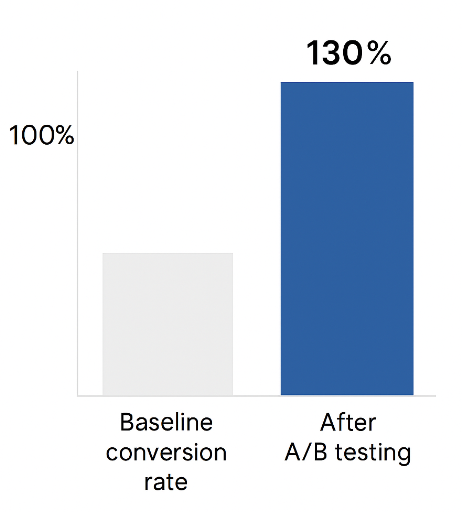
Conversion rate uplift of up to 30% seen after A/B / creative testing
Sandbox testing is especially valuable when:
-
Launching a new product or offer
-
Considering a bold creative shift
-
Entering a new market segment
-
Struggling with declining performance in evergreen campaigns
Using sandbox experiments regularly ensures constant creative evolution.
Example Sandbox Testing Workflow
-
Create 3–5 creative variations with a single differentiated element.
-
Allocate a fixed micro-budget.
-
Run tests simultaneously to eliminate timing bias.
-
Pause the weakest performers.
-
Move the top performer(s) into your primary campaign.
This workflow prevents untested creative assumptions from influencing your main results.
Scaling Insights from Sandbox to Full Campaigns
Once strong creative assets emerge from testing, the next step is structured scaling. Because sandbox tests identify high-potential ideas early, scaling them in your primary campaign reduces risk and increases ROI. This structured process creates a feedback loop of continuous learning.
Conclusion
Sandbox testing empowers marketers to take creative risks safely and intelligently. By isolating tests, controlling budgets, and analyzing performance data, teams can confidently innovate while protecting overall results. Testing often reveals surprising winners—ideas that might never have been used without a risk-free space to explore.