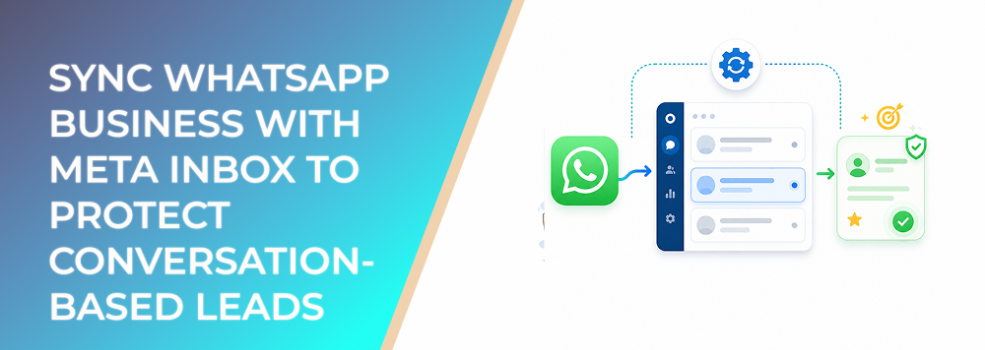
WhatsApp can be one of the most direct lead channels in Meta campaigns.
When users click a WhatsApp ad, they are not just browsing. They are opening a conversation. That creates a valuable opportunity for local businesses, service providers, ecommerce brands, agencies, and B2B teams.
But WhatsApp conversations can also become fragmented. If messages live outside your central workflow, teams may miss context, duplicate replies, or lose track of which conversations came from paid campaigns.
Syncing WhatsApp Business with Meta Business Suite Inbox can help centralize that workflow.
The issue: WhatsApp leads lose value when conversation context is scattered
Click-to-WhatsApp campaigns depend on fast, informed replies.
If WhatsApp chats are managed separately from Messenger, Instagram, and Facebook interactions, your team may lose visibility into the broader customer journey. A user may comment on a post, click an ad, and then message on WhatsApp. If those touchpoints are disconnected, follow-up becomes weaker.
For performance marketers, that creates a measurement and operations problem. You may know the campaign generated WhatsApp messages, but not whether the conversations were handled well, qualified properly, or followed up consistently.
Business impact on CPA, CAC, ROAS, and lead quality
WhatsApp sync can support performance by improving visibility and response consistency.
When WhatsApp conversations are easier to manage, advertisers can better understand which campaigns create meaningful interactions. That can help reduce wasted spend and improve follow-up quality.
The impact can show up as:
- Better lead quality control because teams can review conversations more consistently.
- Lower CPA pressure because fewer high-intent chats are missed.
- Improved CAC when WhatsApp leads are handled quickly and routed correctly.
- Higher conversion potential because prospects receive timely answers.
- More accurate campaign evaluation because paid WhatsApp activity is easier to connect to outcomes.
The channel is only as strong as the workflow behind it.
Typical scenarios where WhatsApp sync matters
Click-to-WhatsApp campaigns
If ads send users directly into WhatsApp, centralizing chat visibility helps protect the conversion path.
Local service businesses
Appointments, quotes, location questions, and availability checks often happen quickly through WhatsApp.
Ecommerce brands
Buyers may ask about sizing, shipping, compatibility, or payment before purchasing.
Agencies managing client communication
A centralized inbox helps teams avoid missing conversations when several people support the same client.
B2B or high-consideration offers
WhatsApp can support fast qualification, especially when prospects want a direct answer before booking a formal call.
Risks and considerations
The first risk is assuming sync automatically improves results. Sync improves visibility, but your team still needs a strong response process.
The second risk is mishandling historical context. If previous chat history is available, teams should use it responsibly and avoid making assumptions from incomplete information.
The third risk is access confusion. Not every team member should necessarily see every WhatsApp conversation. Permissions and ownership matter.
Another consideration is channel fit. WhatsApp works well when users expect direct conversation. It may not fit every market, audience, or offer. Test it against other lead paths rather than assuming it will outperform by default.
Prerequisites and dependencies
Before syncing WhatsApp Business with Inbox, confirm:
- Your WhatsApp Business account is active and eligible.
- It is connected to the correct business assets.
- The right team members have access.
- Your campaigns send users to the correct WhatsApp number.
- Your team has response templates for common questions.
- You have a process for assigning or escalating conversations.
- You can evaluate WhatsApp leads beyond message volume.
A clean setup prevents confusion once campaign volume increases.
How LeadEnforce helps
LeadEnforce helps advertisers send WhatsApp campaigns to more relevant audiences.
WhatsApp is personal and direct. That makes audience quality especially important. If you invite the wrong users into WhatsApp conversations, you may create noise for your team and frustration for users.
LeadEnforce lets marketers build audiences from Facebook groups, Instagram profiles, followers, engagers, LinkedIn professional data, and custom social-profile data. This helps advertisers focus WhatsApp campaigns on users who are more likely to understand the offer and want direct interaction.
For example, a local business can target people connected to relevant local communities or Instagram profiles. A B2B team can build audiences around professional characteristics. An ecommerce brand can target followers of related brands or creators.
Better-fit audiences make WhatsApp conversations easier to qualify and more likely to produce useful outcomes.
Practical recommendations
Keep WhatsApp replies fast and specific
WhatsApp users often expect direct answers. Reply with the most useful next step, not a long generic introduction.
Match the first reply to the ad
If the ad offered a quote, start with quote-related information. If it promoted a product, answer product questions first.
Assign ownership clearly
Decide who handles WhatsApp leads and when conversations should move to sales, support, or fulfillment.
Review WhatsApp lead quality separately
Do not mix WhatsApp performance with all message channels. Compare WhatsApp conversion quality, response speed, and follow-up outcomes on their own.
Use audience testing before scaling
Test different audience sources to see which ones create serious WhatsApp conversations. Scale only when the quality supports the spend.
Final takeaway
Syncing WhatsApp Business with Meta Inbox can help advertisers centralize conversation-based leads and protect follow-up quality.
But the sync itself is only the foundation. The performance gain comes from fast replies, clear ownership, relevant audiences, and disciplined review of conversation outcomes.
For WhatsApp campaigns, success depends on both the channel and the quality of the people you invite into it.
You can test more relevant WhatsApp campaign audiences by joining the free 7-day LeadEnforce trial period.
Related LeadEnforce Articles
- How to Use Click-to-WhatsApp Ads to Build High-Intent Leads — Directly relevant for campaigns that send users into WhatsApp conversations.
- How WhatsApp Ads Fit Into Meta’s Ad Ecosystem — Explains how WhatsApp campaigns work within broader Meta advertising strategy.
- How WhatsApp Ads Can Help Small Businesses Reach Local Customers — Useful for SMBs using WhatsApp to handle local inquiries and bookings.
- Why You Can’t Add or Connect Business Assets in Meta — Helps troubleshoot structural connection issues that can affect WhatsApp and Inbox workflows.