B2B marketers used to think that platforms like Instagram and Facebook were just for B2C brands. Not anymore.
Paid social has become a powerful tool for B2B companies to reach decision-makers, build awareness, and generate demand. But the way B2B brands succeed on social is changing. Fast.
If you're still running the same ads you ran last year, or targeting the same audiences, you're already behind.
This article breaks down what’s changing — and what to do about it.
Why B2B brands are shifting to paid social
Most B2B buyers don’t click on cold emails. They don’t respond to sales reps right away. And they don’t always Google what they need.
Instead, they discover new products while scrolling. They read content, watch videos, and save posts before they ever fill out a form.
Paid social helps you meet those buyers earlier in the journey:
-
They're already on Instagram and Facebook, even during work hours;
-
They don’t need to know they need you — yet. Paid social helps plant the seed;
-
They talk to teammates, so reaching more than one stakeholder matters.
If you wait for them to search for you, you’re late. Paid social gives you the chance to be found first.
More on that shift here: Why LinkedIn isn’t enough: using Facebook Ads for B2B lead generation.
Paid social is moving up the funnel
A few years ago, most B2B advertisers used Facebook only for lead generation. Click to a landing page, fill out a form, get a PDF. That was the playbook.
But the most effective advertisers today use social much earlier in the journey.
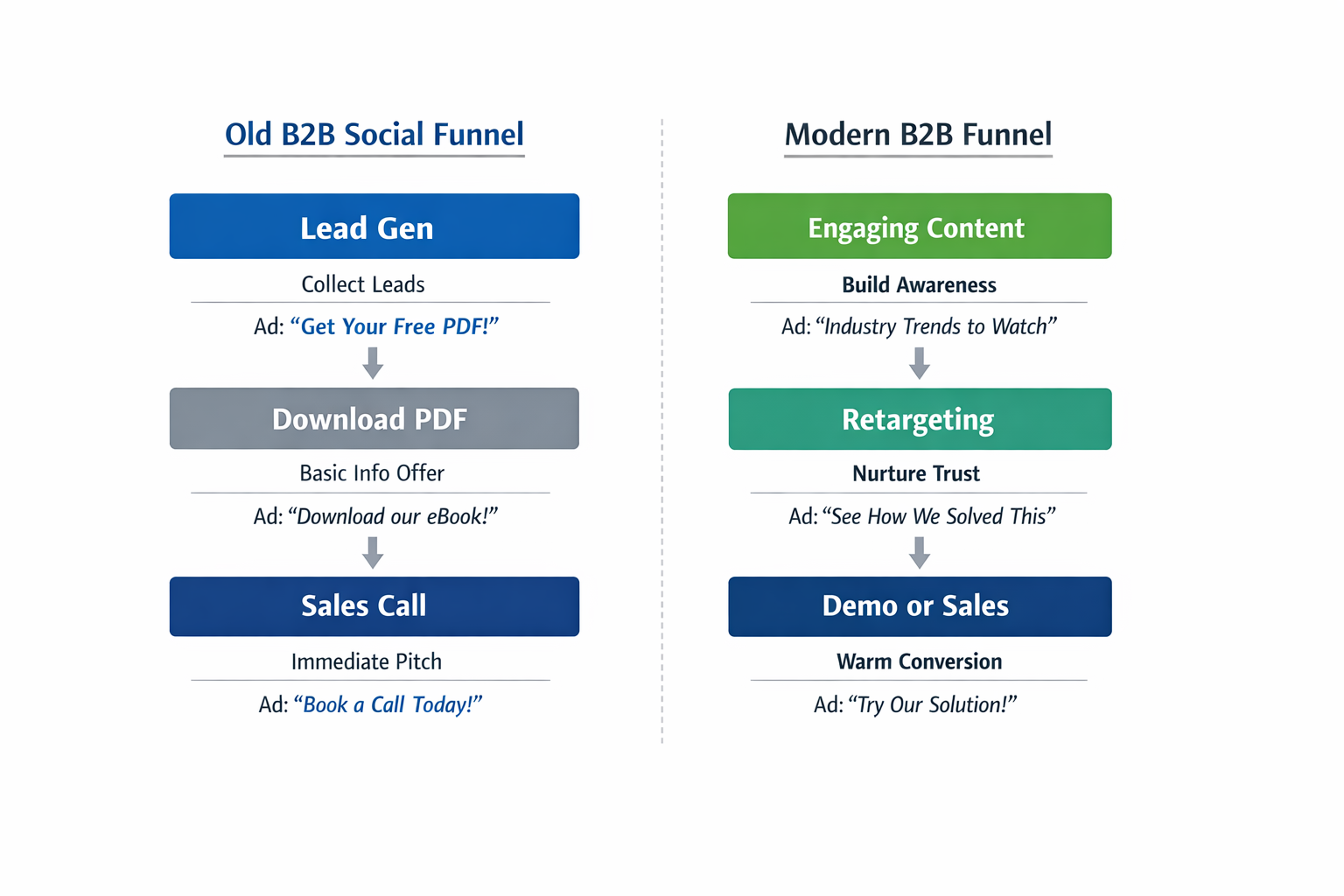
They're running ads that:
-
Introduce a problem their audience doesn’t fully realize they have;
-
Share value before asking for anything — no pitch, no pressure;
-
Build familiarity, so the brand is top-of-mind when the buyer is ready.
For example, instead of asking for a demo right away, a B2B company might promote:
-
A short video explaining a common industry challenge;
-
A carousel showing trends they’ve seen from customers;
-
A newsletter that shares campaign insights each week.
You’re not selling the product — you’re selling the thinking behind it.
To structure your campaigns around that funnel, see: Building a full-funnel Facebook strategy for B2B product demos.
How B2B targeting is changing on Meta platforms
Good targeting is the foundation of any successful ad campaign. But B2B advertisers can’t rely on the same tactics as before.
Interest targeting and job titles have become less accurate. And lookalike audiences have lost power due to privacy updates and reduced data signals.
So, how do smart B2B marketers find the right people today?
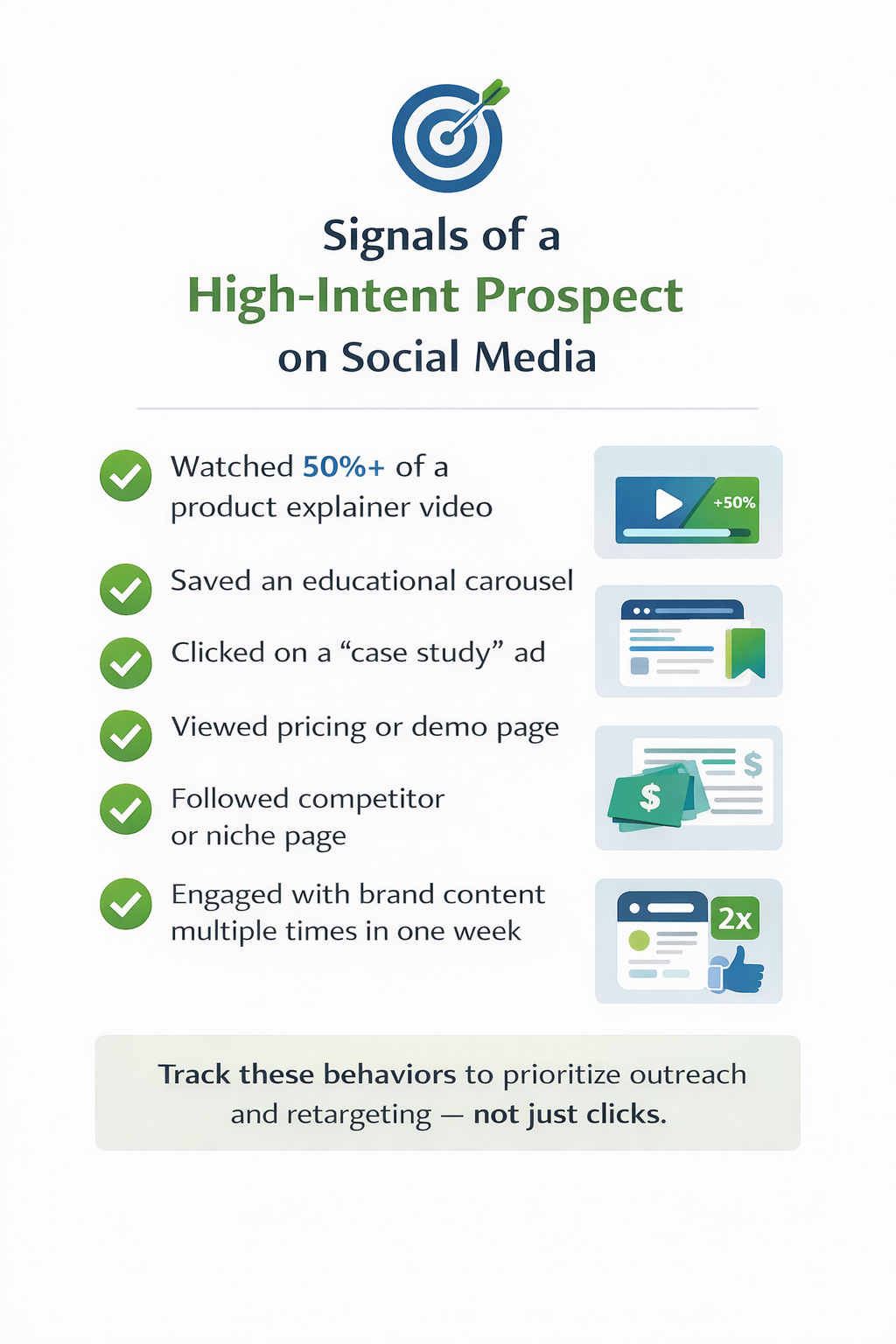
They focus on custom audiences and behavioral signals they can verify or influence:
-
Customer data: Use existing client segments to refine messaging;
-
Content engagement: Target viewers of high-intent videos or long reads;
-
Follower behavior: Build audiences based on people who follow relevant communities or brands.
For example, if you're marketing to e-commerce founders, it's more effective to engage people who actively follow e-commerce business content than to guess based on broad interests like “entrepreneurship.”
This approach reaches people based on what they care about — not just what they clicked once.
Explore more here: How to build your target audience from a Facebook Group.
B2B ad creative that actually performs
B2B ads don’t have to be boring. In fact, the more they look like traditional “ads,” the easier they are to ignore.
Think about how people use social platforms: they scroll fast, they pause for something interesting, and they avoid anything that looks like a hard sell.
So what kind of creative works for B2B right now?
-
Carousel ads that teach something: Each card gives one insight, one metric, or one framework;
-
Annotated screenshots: Show results, dashboards, or tools in action with simple highlights;
-
Story-style posts: Share behind-the-scenes experiments or lessons from failed campaigns.
Bonus tip:
Use high-performing content from email, blog, or LinkedIn. Adapt it to the feed format — short, visual, and honest.
Want examples of ads that blend in but still convert? The anatomy of a lead-gen ad that doesn’t look like a lead-gen ad.
Measurement: moving beyond cost per lead
If you're only tracking cost per lead (CPL), you’re missing the full picture. Paid social often works earlier in the journey — and the payoff takes time.
B2B cycles can span weeks or months. That means metrics from day one don’t reflect full value.
Smarter ways to track impact:
-
Log lead source in your CRM: Then review revenue outcomes over 30–90 days;
-
Watch for mid-funnel movement: Branded searches, email opens, time-on-site;
-
Blend data from multiple sources: Don’t rely on a single ad platform to judge performance.
Example:
Let’s say you spend $5,000 on social and get 100 leads at $50 each. Only 10 close. That’s $500 per deal.
But if each deal brings in $7,000 over a year, your ROI is still strong — it just didn’t show up in week one.
3 trends shaping the future of B2B social advertising
Social media evolves quickly. Here’s what forward-thinking marketers are leaning into now:
1. Paid + organic = more trust
Instead of cold ads, B2B brands are amplifying content already getting engagement. This builds trust and adds scale.
2. AI helps with testing — not strategy
AI tools can speed up ad variations. But real messaging still needs human context. Use automation to test faster, not to replace planning.
3. Targeting based on communities, not just keywords
More advertisers are moving beyond generic interests. They’re using behavior and group engagement to find people who think alike — not just look alike.
For a look at how targeting has changed, read: Why targeting accuracy on Facebook is not the same anymore.
What to do next
If you're running B2B ads on Facebook or Instagram, here’s what to focus on next:
-
Update your audience strategy: Rely on real behaviors, not just interests;
-
Refresh your creative: Use formats that teach, explain, or provoke curiosity;
-
Measure real outcomes: Look at revenue, retention, and brand lift — not just form fills.
Paid social isn't just about clicks anymore. It’s about shaping demand before it exists.
The brands that adapt early will get ahead — and stay there — while others catch up.