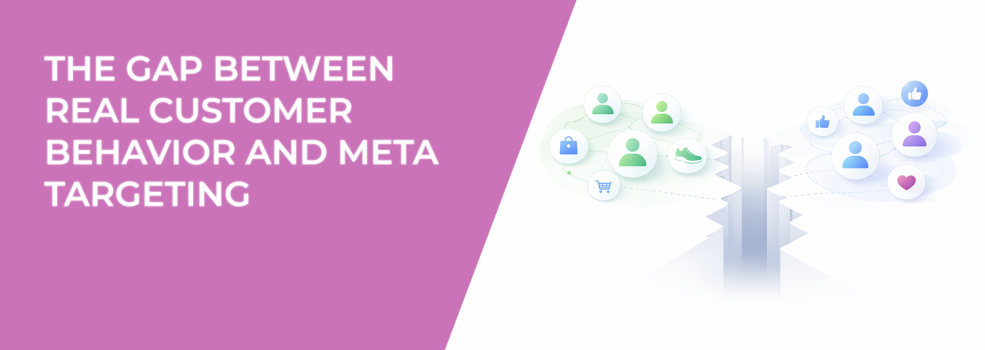
Most Meta campaigns don’t fail in an obvious way. They drift.
At the surface level, performance can look stable. Leads or purchases continue to come in, costs stay within range, and delivery does not raise concerns. At the same time, something starts to break further down the funnel, where conversion quality drops, repeat behavior weakens, or revenue becomes less predictable.
This usually comes from a structural issue. The system is optimizing toward behavior it can measure, while real customer decisions happen in ways it cannot fully observe.
Meta Optimizes Signals — Not Real Intent
Meta builds its delivery system around actions it can track. These include clicks, form submissions, add-to-cart events, and purchases.
Those actions are useful signals, but they are incomplete.
A conversion event captures a moment, not the full decision process behind it. If you rely on that moment alone, the system learns a simplified version of your customer.
You can see this clearly in campaigns where:
-
Conversion volume increases, but business results do not follow.
For example, purchases go up, but average order value drops or refund rates increase. -
Cost per result improves, while long-term value declines.
The system finds users who convert once, not users who continue buying. -
Campaigns scale without friction, yet performance becomes less consistent.
The audience expands into users who behave similarly on the surface but differ in real intent.
This is closely related to the problem described in Ad Metrics That Lie: When Good Numbers Hide Bad Performance, where strong front-end metrics mask weak business outcomes.
Meta is not making a mistake here. It is optimizing exactly what it is given. The limitation is in the signal itself.
Real Customer Behavior Is Messy and Delayed
Customers do not behave in clean, trackable sequences.
Even in fast-moving ecommerce environments, decisions often involve multiple steps that the platform cannot fully connect:
-
A user clicks an ad, leaves, and returns later through a different channel.
Meta often compresses this into a single conversion, losing the context of repeated exposure. -
Buyers compare products, read reviews, and revisit pages before purchasing.
The system only sees the final action, not the evaluation process. -
Some customers act immediately, while others take days or weeks.
Both groups may convert, but their behavior patterns are fundamentally different.
This is why attribution often feels incomplete, as explained in Why Facebook Ads Attribution Rarely Matches Reality.
Because Meta simplifies these behaviors into trackable events, it builds audiences around patterns that are easier to detect.
That leads to a predictable bias:
-
Fast, low-friction actions are overrepresented.
-
Slower, more deliberate decisions become less visible.
-
High-value customers are often underweighted in optimization.
How the Gap Shows Up in Campaign Performance
The mismatch does not appear as a clear failure. It shows up as patterns that seem manageable individually but become problematic over time.
1. Good Metrics, Weak Outcomes
Campaign dashboards may show strong performance:
-
Stable or improving cost per result,
-
Consistent conversion rates,
-
Healthy click-through rates.
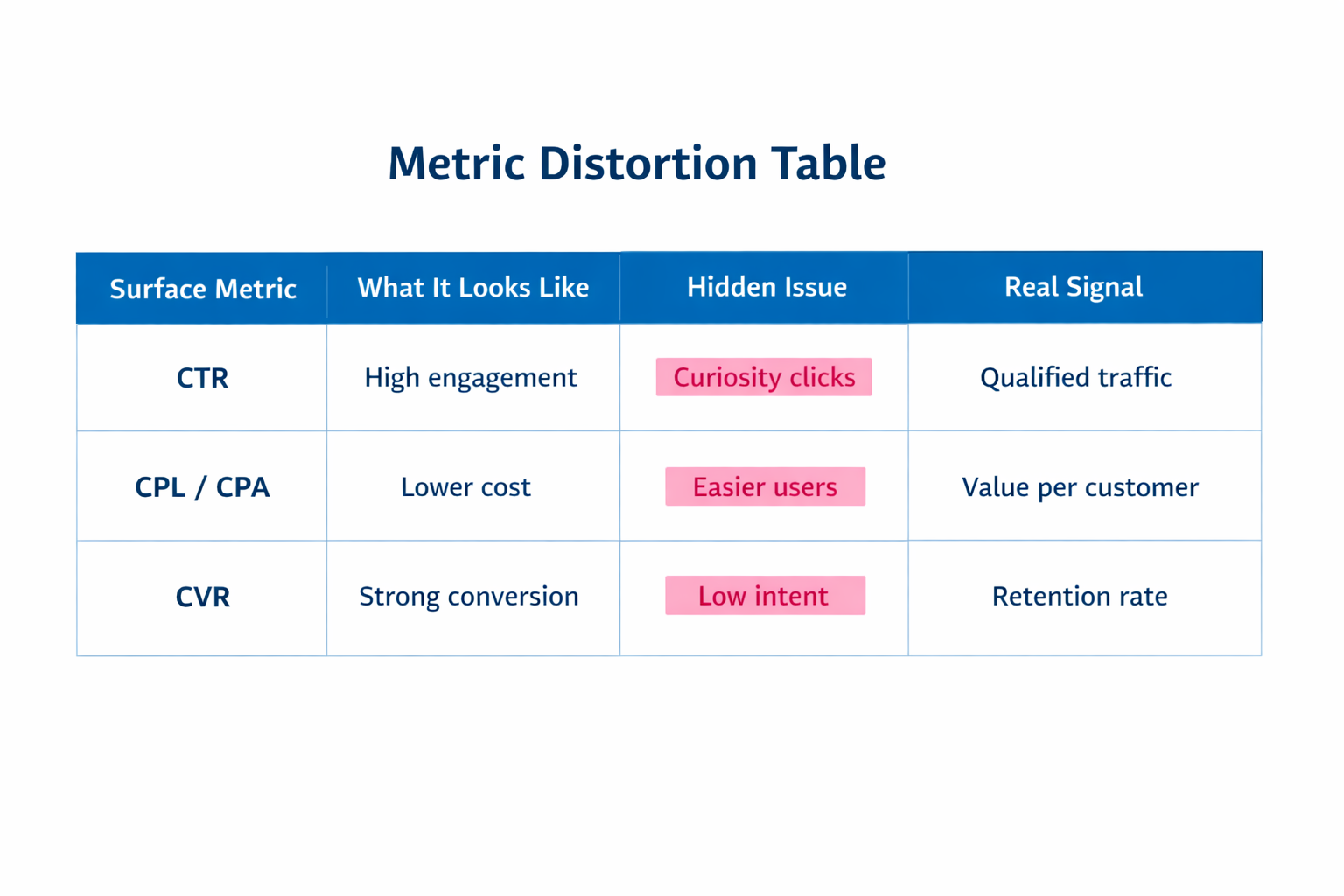
At the same time, deeper signals weaken:
-
Lower repeat purchases,
-
Reduced customer lifetime value,
-
Poor post-conversion engagement.
This disconnect is similar to what’s described in CTR vs Conversions: Why High CTR Doesn’t Always Mean More Sales, where surface engagement does not translate into real outcomes.
The system is optimizing for the action itself, not for what happens after it.
2. Scaling That Reduces Quality
When campaigns scale, Meta expands targeting to maintain delivery.
From the outside, everything looks healthy:
-
Reach increases,
-
CPM stays stable,
-
Conversion volume grows.
Underneath, audience composition shifts.
New users may behave similarly in terms of clicks or conversions, but differ in intent, purchasing power, or long-term value. That is where quality drops without clear warning signs.
3. Short-Term Improvements That Don’t Last
After launching a new campaign or making a major adjustment, performance often improves briefly.
Then it stabilizes at a lower level.
What happens behind the scenes:
-
The system explores broader segments.
-
Early results include mixed-intent users.
-
Optimization narrows toward users who convert quickly.
This cycle repeats because the underlying signal has not changed.
Why Low-Friction Conversions Distort Results
Reducing friction increases conversion volume, but it also changes who converts.
This is especially visible in:
-
Instant lead forms,
-
One-click purchase flows,
-
Minimal-input checkout experiences.
Typical patterns include:
-
Very fast conversions with little prior engagement.
-
Strong mobile performance with weaker post-conversion behavior.
-
High completion rates that do not translate into retention or revenue.
This issue is explored in more detail in Using Lead Forms vs. Landing Pages: What Works Better?, where ease of conversion often conflicts with quality.
When conversions become too easy, the system starts optimizing for speed, not intent.
Why Targeting Adjustments Don’t Fix the Problem
When performance declines, the instinct is to refine targeting.
You narrow audiences, adjust lookalikes, or exclude segments. These changes can help temporarily, but they do not address the core issue.
Meta prioritizes observed behavior over targeting settings.
Even within a well-defined audience, the system will shift toward users who are more likely to complete the tracked action, regardless of their long-term value.
As long as the signal remains unchanged, the outcome will follow the same pattern.
How to Reduce the Gap
Improving performance requires changing what the system learns from.
1. Redefine What Counts as a Conversion
Instead of optimizing for the easiest action, focus on actions that reflect real intent.
This can include:
-
Tracking deeper engagement, such as meaningful product interaction or time spent.
-
Adding steps that require a small level of commitment before conversion.
-
Separating low-value and high-value conversions into different signals.
This helps the system distinguish between casual and meaningful behavior.
2. Move Optimization Closer to Real Outcomes
The closer your signal is to actual business results, the more accurate the optimization becomes.
This can involve:
-
Tracking purchase value instead of just conversion count.
-
Feeding back repeat purchases or subscriptions.
-
Using post-conversion events instead of initial actions.
When the system learns from outcomes that matter, delivery starts to align with real performance.
3. Watch Quality Signals Alongside Cost
Cost metrics alone do not tell you whether a campaign is working.
More reliable indicators include:
-
Revenue per conversion,
-
Repeat purchase rate,
-
Drop-off across funnel stages.
If these decline while costs improve, the system is optimizing in the wrong direction.
4. Let Creative Shape Behavior
Creative does not just attract clicks. It defines who enters the system.
Broad messaging attracts broad behavior. Specific messaging filters for relevance.
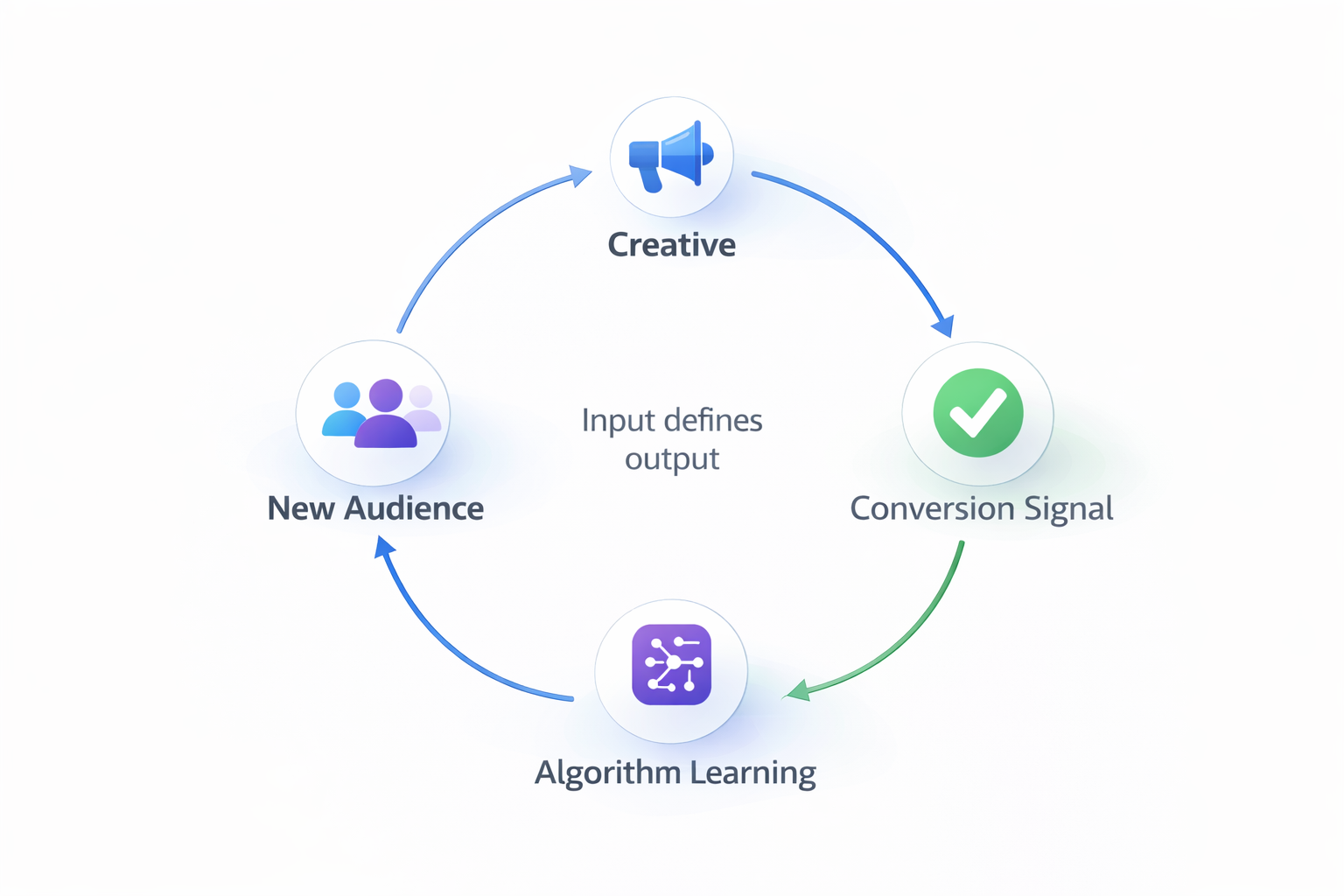
When your ads reflect real use cases, constraints, or problems, they naturally attract users who are more likely to convert in a meaningful way.
A More Useful Way to Think About It
Meta targeting is not broken. It operates on a simplified model of behavior.
It observes what it can measure and builds optimization around those signals. The gap appears when those signals are treated as a complete representation of customer intent.
A better approach is to treat conversions as inputs that need to be shaped.
When the signal improves:
-
Targeting becomes more accurate without constant adjustments,
-
Performance becomes more stable,
-
Campaign results align with actual business outcomes.
That shift is what closes the gap.