Lead magnets are often treated as creative side projects. In reality, they are conversion mechanisms. When they fail, it is rarely because of design. It is usually because the psychology, offer structure, and traffic intent are misaligned.
If you run Meta campaigns, this distinction matters. Facebook and Instagram users are not searching for solutions. They are scrolling. Your lead magnet must create intent before it captures it.
Why Most Lead Magnets Underperform on Meta
Meta traffic is interruption-based. Users are in a passive state. Your offer competes with entertainment, messages, and endless content.
Most magnets fail for predictable reasons:
-
The value is vague; “Free marketing guide” does not communicate a concrete outcome.
-
The asset feels heavy; long ebooks increase perceived effort.
-
The form creates friction; too many required fields reduce completion rates.
-
The offer mismatches awareness level; cold traffic sees advanced strategy content.
-
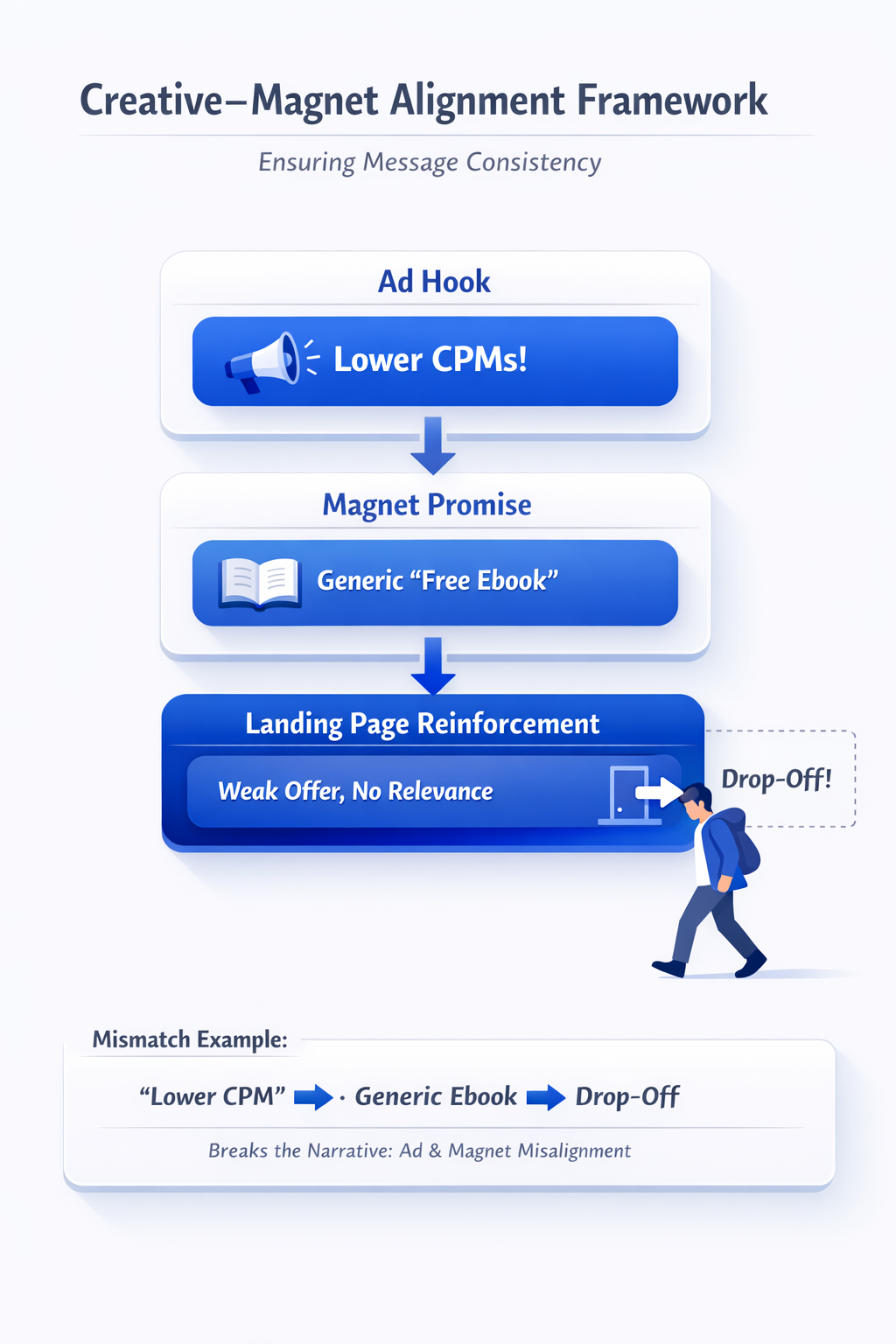
The ad and magnet feel disconnected; the click promise does not match the landing experience.
Many of these issues overlap with broader campaign failures. If your ads struggle to generate meaningful leads at all, review Why Most Facebook Lead Generation Campaigns Fail (and How to Fix Yours).
Conversion starts with clarity. Users must understand the benefit in seconds.
The Psychology Behind the Opt-In Decision
Every lead magnet is a trade. Users exchange contact data for expected value. That decision is emotional first, rational second.
Three factors drive the exchange:
-
Relevance; the magnet reflects a problem the user recognizes right now.
-
Specificity; the outcome is measurable or clearly defined.
-
Immediacy; the benefit feels accessible quickly.
A broad “Meta Ads Playbook” feels abstract. A “CPA Reduction Checklist for High CPM Campaigns” feels actionable.
If you want to understand how attention and motivation interact inside paid social, read The Psychology of Facebook Ads: How to Hook Your Target Audience in Seconds.
Effort Versus Reward
Users subconsciously calculate effort versus payoff. If the asset looks time-consuming, conversion drops.
To reduce perceived effort:
-
Use checklists instead of long PDFs.
-
Offer templates instead of theory-heavy guides.
-
Clarify how long it takes to use the asset.
Short, focused tools often outperform comprehensive resources. Cold audiences prefer quick wins.
Matching the Magnet to Traffic Temperature
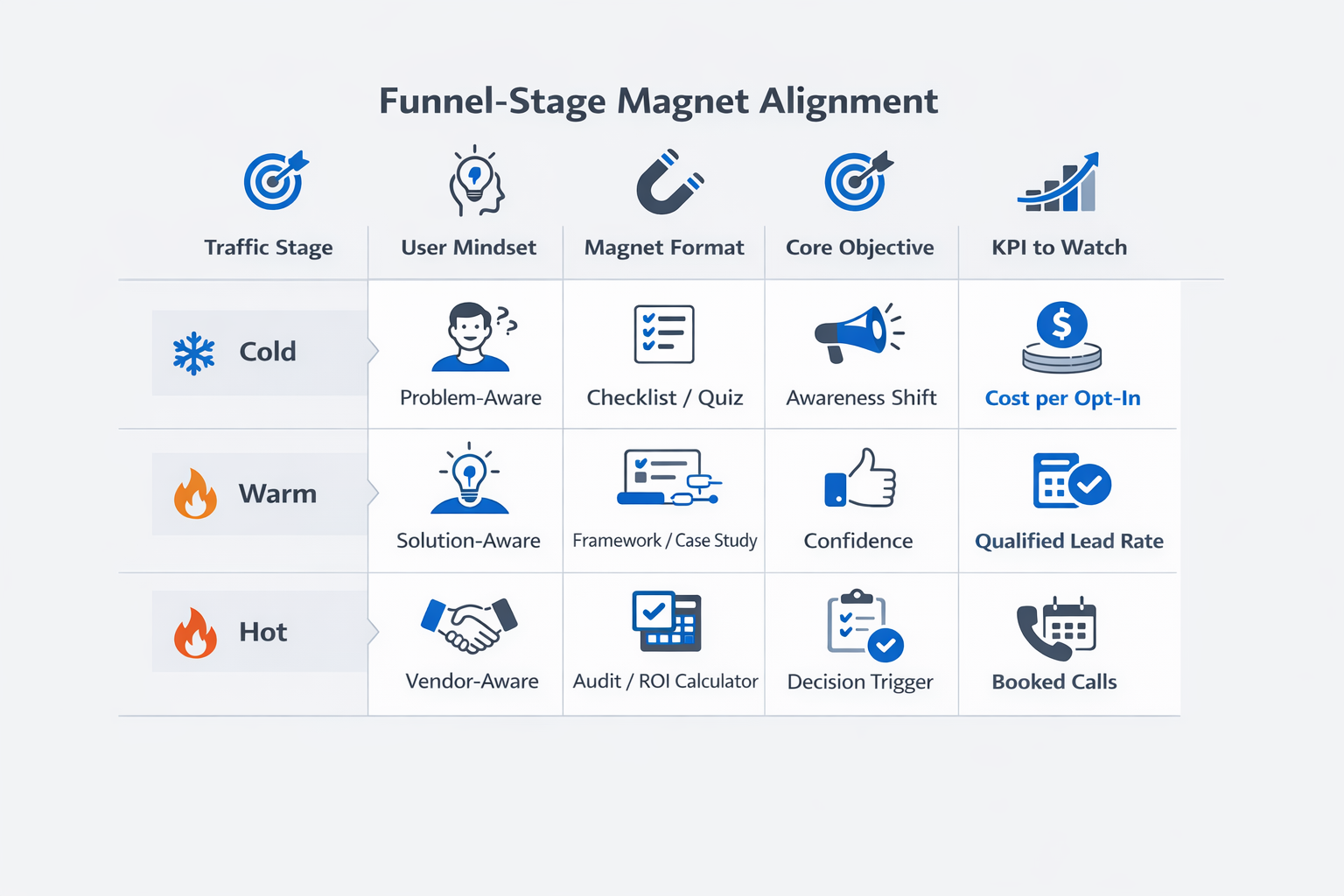
Not every lead magnet works at every stage. A strong asset for warm retargeting may fail with cold audiences.
Cold Prospecting Magnets
Cold users may not fully understand their problem. They need insight, not depth.
Formats that work well include:
-
Self-assessment quizzes; they personalize the experience and spark curiosity.
-
Performance checklists; they reveal gaps in current campaign structure.
-
Benchmarks; they show how results compare to industry standards.
These magnets create awareness. They move users from passive scrolling to self-evaluation.
For a structured approach to moving users through stages, see Facebook Lead Generation Funnel: From Cold Traffic to Paying Customers.
Warm Retargeting Magnets
Warm users already know your brand. They need structure and confidence.
High-performing options include:
-
Detailed case breakdowns; show budgets, structure, and decisions.
-
Implementation frameworks; outline step-by-step processes.
-
Account audit sheets; help users identify inefficiencies.
Warm magnets reduce uncertainty. They answer practical questions.
Signals That Reveal Real Magnet Quality
Opt-in rate alone is misleading. A high conversion rate can hide low-quality leads.
Track deeper signals:
-
Cost per qualified lead; measure whether leads fit your ideal customer profile.
-
Form completion rate; identify friction in multi-step flows.
-
Email engagement after download; check open and click rates.
-
Revenue per lead; compare magnets by downstream sales performance.
If you are unsure which metrics connect to real revenue, review Which Facebook Ad Metrics Predict Profitability Best?.
A magnet that converts slightly lower but generates higher revenue is stronger. Profit matters more than surface metrics.
Micro-Commitments Improve Conversion
Large asks create resistance. Smaller steps feel manageable.
Examples of micro-commitments:
-
Multi-step forms; one question appears before the email field.
-
Quiz result gates; users unlock personalized insights after entering details.
-
Interactive calculators; users input numbers before seeing full results.
Each action increases psychological investment. Drop-off decreases when progress feels natural.
Structuring the Offer Clearly
Clarity reduces hesitation. The user should instantly understand what they receive and why it matters.
An effective structure includes:
-
A clear problem statement; define the exact issue addressed.
-
A defined outcome; explain what changes after using the asset.
-
A specific format; checklist, calculator, template, or swipe file.
-
A time expectation; show how long it takes to use.
Avoid abstract language. Replace general claims with tangible deliverables.
Naming the Lead Magnet
The name shapes perception. Generic titles weaken impact.
Strong names often:
-
Reference a metric; “Cost Per Lead Audit Sheet.”
-
Define scope; “14-Day Creative Testing Plan.”
-
Signal audience; “B2B Retargeting Framework for SaaS.”
Precision filters the right users. It also sets expectations before the click.
Creative Framing Inside Meta Ads
The magnet itself does not drive clicks. The framing does.
Effective ad angles include:
-
Highlighting a costly mistake in campaign setup.
-
Showing a metric below benchmark performance.
-
Presenting a structural flaw in account architecture.
Visual proof helps. Blurred dashboards, checklist mockups, or annotated screenshots feel concrete. Generic stock imagery rarely performs well in performance campaigns.
Ad copy must connect directly to the asset. If the hook focuses on rising CPMs, the magnet must address that specific issue.
Choosing Between Lead Forms and Landing Pages
Meta native lead forms reduce friction. They auto-fill user data and load instantly. For simple offers, this often improves volume.
Landing pages provide depth. They allow longer explanations, testimonials, and structured persuasion.
Use native forms when:
-
The asset is short and clear.
-
The audience is warm.
-
Speed and low friction are priorities.
Use landing pages when:
-
The offer requires context.
-
You need to pre-qualify leads.
-
The asset connects to a higher-ticket service.
For a focused comparison, read Lead Forms vs Landing Pages: Which Converts?.
Aligning Lead Magnets With Monetization
A magnet must logically connect to your core offer. Otherwise, leads disengage.
Map the path:
-
The magnet addresses an immediate tactical problem.
-
The email sequence expands on related strategy.
-
The core offer solves the broader issue.
If you sell campaign audits, offer structured audit templates. If you sell software, provide implementation guides that naturally lead to product usage.
Consistency improves conversion from lead to customer.
Testing Lead Magnets Like a Performance Marketer
Treat each magnet as a hypothesis. You are testing demand for a specific problem-solution pair.
A disciplined approach includes:
-
Changing one variable at a time; headline, format, or hook.
-
Keeping audience segments separate.
-
Allowing enough budget for stable data.
-
Defining a success threshold before launching.
Avoid constant rotations. Learning requires stability.
Looking Beyond Surface Metrics
A magnet with a lower opt-in rate may drive more revenue. Evaluate the full funnel.
Analyze:
-
Sales call booking rate by magnet.
-
Revenue per lead.
-
Lead-to-customer conversion percentage.
Optimize for business outcomes. Vanity metrics distort decision-making.
Building a System, Not Isolated Assets
High-performing lead magnets are rarely random ideas. They are part of a structured system aligned with buyer stages.
Develop categories such as:
-
Awareness tools; identify hidden campaign issues.
-
Evaluation frameworks; compare current structure to best practices.
-
Implementation guides; provide clear execution steps.
When built with psychological clarity and aligned with traffic intent, lead magnets become predictable acquisition tools. That is the difference between occasional spikes and consistent lead generation.