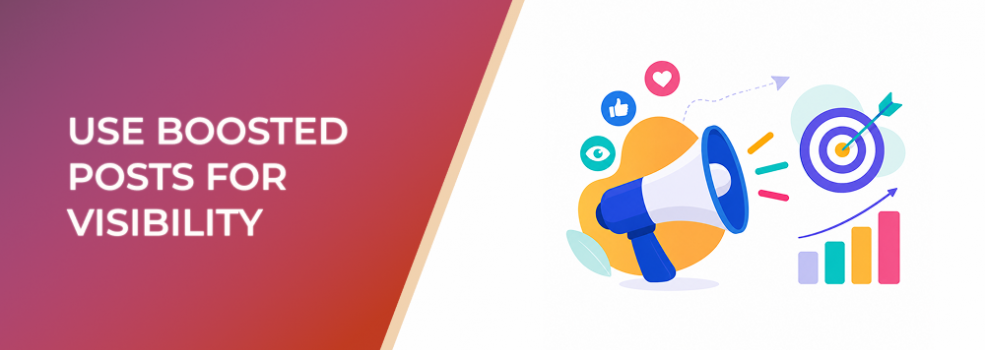
Boosted posts are useful when the goal is visibility.
They help get content in front of more people quickly. They can amplify a strong organic post, support a launch announcement, increase awareness, or test whether a message attracts attention.
The problem starts when marketers expect that visibility tool to behave like a conversion campaign.
LeadEnforce’s boosted-post article puts the distinction plainly: boosted posts are designed for distribution, while Meta ads are designed for optimization.
The Problem
The problem is confusing exposure with acquisition.
A boosted post can help more people see your content. That does not mean those people are ready to buy, book, subscribe, or request a demo.
Visibility is a funnel input. Conversion is a funnel outcome.
When marketers collapse those two stages into one boosted post, performance expectations become unrealistic.
Why This Problem Hurts Performance
This confusion leads to poor budget decisions.
A business may spend its full budget on boosted posts and then wonder why CPA is unstable.
An agency may report reach and engagement while the client asks about revenue.
A startup may boost announcement posts before building a conversion path.
A B2B team may create awareness but never follow up with lead capture or retargeting.
The result is wasted signal. The audience may have seen the brand, but the campaign did not give them a clear path to action.
Common Scenarios Where This Happens
A local gym boosts a community post and expects membership sales without a booking funnel.
An ecommerce brand boosts a product teaser and expects purchases without a product-focused CTA.
A SaaS company boosts an educational post and expects demo requests from users who were only introduced to the problem.
A creator boosts an Instagram-style visual and expects affiliate conversions without enough offer detail.
An agency uses boosted posts as the main paid strategy because they are fast, then struggles to prove ROAS.
Why the Problem Happens
This happens because boosted posts make paid media feel simple.
The advertiser sees a good organic post, adds budget, and watches visibility grow. That can be useful. But visibility does not automatically create the rest of the funnel.
Another cause is metric convenience. Reach, impressions, and engagement arrive quickly. Conversions require tracking, offer clarity, landing page quality, and audience qualification.
Finally, many marketers underestimate funnel stage. A cold audience may need familiarity before buying. A warm audience may need proof. A ready buyer may need a direct offer.
A boosted post cannot serve every stage equally well.
The Solution
The solution is to assign boosted posts a clear visibility role.
Use boosted posts to:
Increase awareness.
Amplify strong organic content.
Test message resonance.
Warm a relevant audience.
Support a launch, event, or local announcement.
Build social proof around content.
Do not use boosted posts as the primary system for predictable sales, high-quality leads, or scalable ROAS.
For conversion goals, build structured campaigns. Use the right objective, conversion-focused creative, relevant audiences, landing pages, tracking, and post-click measurement.
The best workflow is sequential: visibility first, conversion second.
A boosted post can introduce the message. A structured campaign can convert the audience.
How LeadEnforce Helps
LeadEnforce helps in two parts of this workflow.
First, it can make visibility more relevant. Broad visibility often wastes impressions on people unlikely to care. LeadEnforce helps advertisers build audiences from Facebook groups, Instagram profiles and followers, LinkedIn professional data, and custom social-profile sources, which can make awareness and engagement tests more focused.
Second, it can support the conversion campaign that follows. Once a visibility post identifies a useful message, advertisers can use more precise audience inputs for lead, sales, or retargeting campaigns.
For B2B teams, LinkedIn-derived professional audiences can support more relevant Meta delivery. For ecommerce teams, Instagram follower-based audiences can help reach users already connected to similar products or creators. For agencies, Facebook group-based audiences can help test niche communities instead of relying only on broad interests.
Risks and Considerations
Visibility still needs strategy.
A boosted post with weak creative will not become useful just because more people see it. A broad audience may create wasted impressions. A missing follow-up campaign can leave awareness unconverted.
LeadEnforce does not replace a conversion path. It supports audience relevance, but the advertiser still needs clear offers, strong creative, landing pages, tracking, and success metrics.
Also, avoid over-narrowing awareness campaigns. If the audience is too small, frequency may rise before learning becomes useful.
Prerequisites and Dependencies
Before boosting for visibility, define who should see the content and why.
You need a clear message, strong visual, relevant audience, simple CTA, and a plan for what happens after visibility.
If the next step is conversion, prepare the campaign structure before the visibility push ends. That includes landing pages, lead forms, sales follow-up, retargeting audiences, and conversion measurement.
If using LeadEnforce, choose source communities, profiles, or professional criteria that reflect actual buyer relevance.
Practical Recommendations
Use boosted posts when the goal is reach, awareness, social proof, or message testing.
Do not judge visibility boosts by immediate sales unless the post is explicitly built for a sales action.
Create a follow-up plan before spending.
Retarget engaged users with stronger offers where appropriate.
Move into structured campaigns when you need predictable CPA, qualified leads, purchases, or ROAS.
Use better audience inputs when visibility must reach people who are closer to the business context.
Final Takeaway
Boosted posts are effective when they are treated as visibility tools.
They become inefficient when marketers expect them to act like conversion campaigns. Use boosts to create attention and learning, then use structured campaigns to turn that attention into measurable business outcomes.
To build more relevant audiences for visibility tests and follow-up conversion campaigns, join the free 7-day LeadEnforce trial period.
Related LeadEnforce Articles
- Boosting Posts and Reels in Meta Business Suite: Performance Risks and Best Practices — Explains how to evaluate boosted content beyond engagement alone.
- Boosted Posts vs Meta Ads: What Actually Drives Better CPA and ROAS — Clarifies the difference between distribution and optimization.
- Why Awareness Campaigns Should Be Part of Your Facebook Ads Strategy — Useful for planning visibility as part of a larger funnel.
- Meta Platforms by Objective: Choose the Right Channel Mix Before Launch — Helps align platform mix with campaign goals.