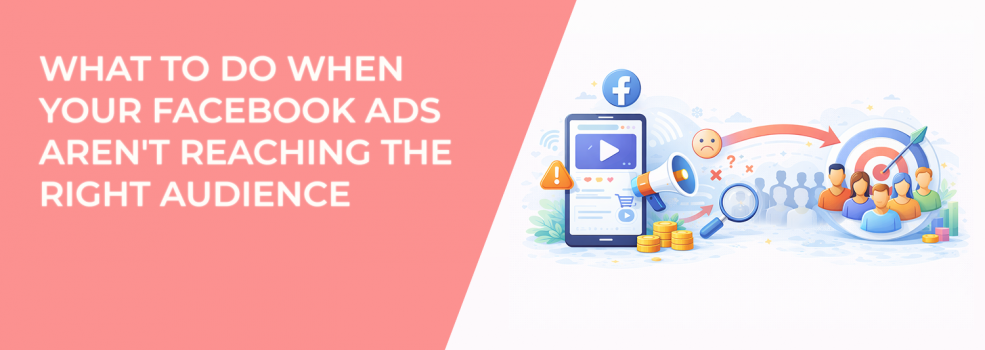
When your Facebook or Instagram ads aren't reaching the right people, the cost isn’t just in dollars. You’re also feeding the algorithm bad data, slowing learning, and making every future campaign harder to scale.
This guide goes beyond basic fixes. It’s written for advertisers who already understand the platform and are ready to diagnose deeper issues in audience performance, data structure, and creative alignment.
Start With the Right Objective (But Rethink How You Use It)
Choosing “Conversions” isn’t always enough. Facebook’s delivery system is tuned to optimize for available data. If you don’t have volume — or if your pixel isn't sending the right signals — your audience quality will suffer.
Here are smarter ways to guide Facebook’s learning:
-
Optimize for micro-conversions when volume is low;
Events like “Add to Cart” or “Initiate Checkout” allow for faster learning when purchases are too few. -
Use Value Optimization once purchase data is reliable;
If your pixel tracks actual revenue, switch from standard Conversions to “Value.” Facebook will prioritize high-LTV users. -
Avoid duplication resets;
Rebuilding similar campaigns or cloning them too often resets the learning phase. Instead, test new angles within the same campaign structure.
These aren’t tricks — they’re ways to increase algorithmic clarity. When your signals are clean, your reach becomes more accurate.
Move From Static Interests to Behavioral Signals
Targeting based on broad interests like “fitness,” “entrepreneurship,” or “home decor” is rarely efficient. These segments are too large, vague, and overused.
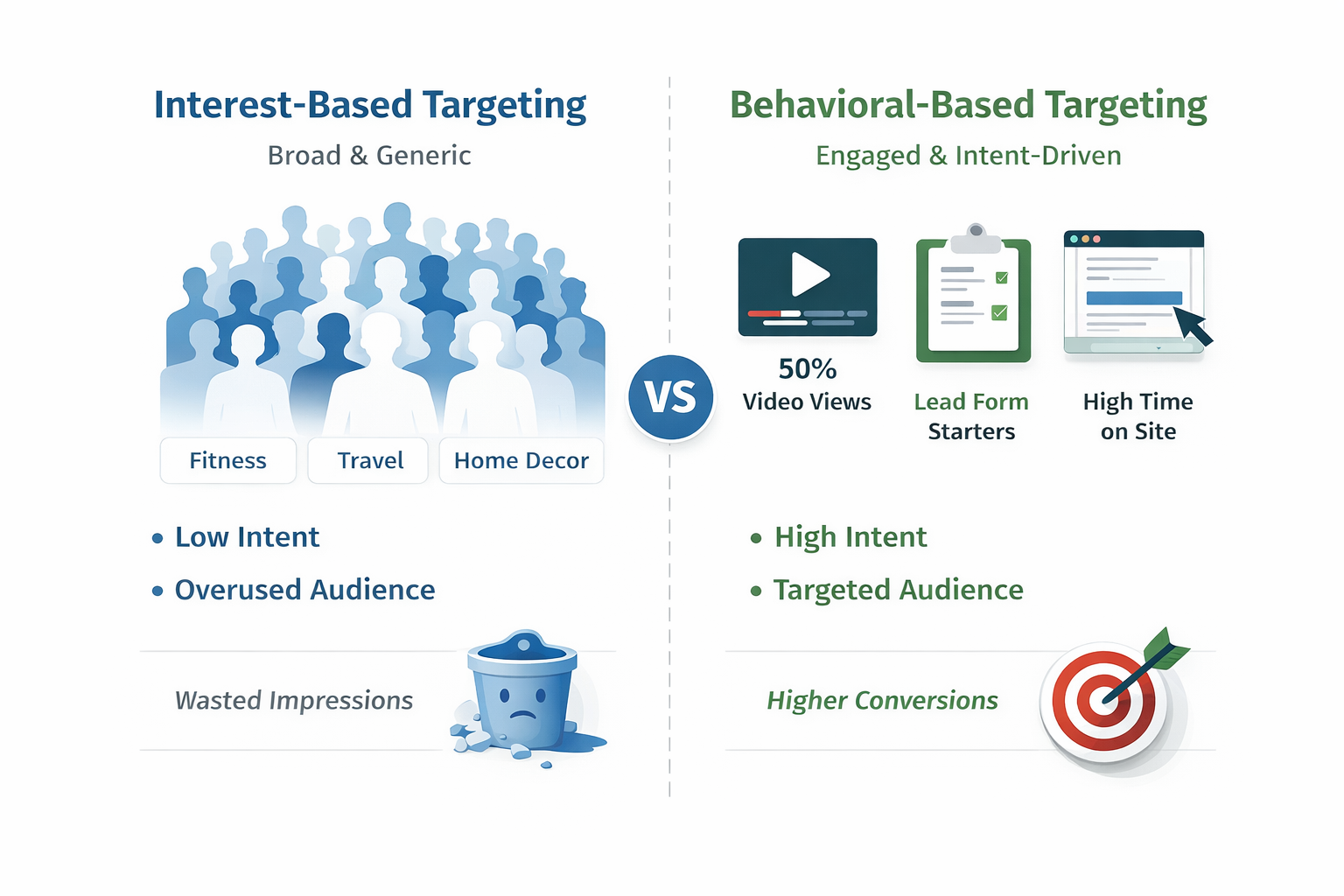
Instead, shift your audience strategy to behavior-based signals:
-
Video engagement by watch depth;
Retarget only those who watched 50% or more of your content. These users showed intent, not curiosity. -
Lead form opens (not just submissions);
Facebook allows you to retarget users who started a form but didn’t finish it. They’re warm and familiar. -
Custom audiences from high-time-on-site visitors;
With the Conversions API or GA4, you can build audiences based on scroll depth or session duration — not just URL visits.
This approach filters in people who are actually making decisions — not just browsing passively. Facebook rewards that relevance with better delivery and lower CPMs.
For a full breakdown on how to build smarter targeting foundations, check out Facebook Ad Targeting 101 — a clear guide to structuring targeting that actually works.
Improve the Quality of Your Source Data
Facebook’s targeting engine is only as good as the data you feed it. Poor seed audiences result in poor lookalike performance, wasted impressions, and unpredictable reach.
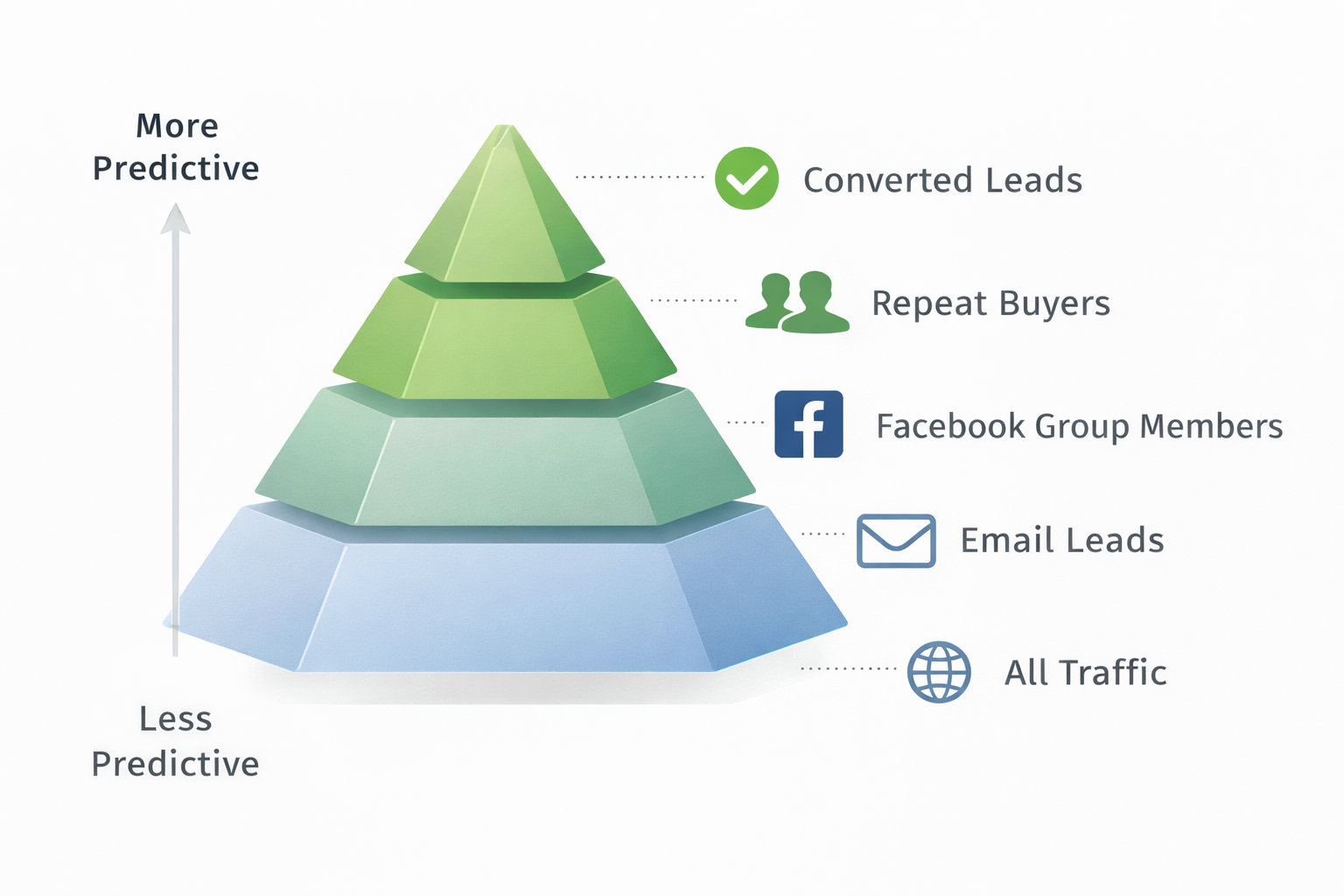
Here are advanced audience sources worth testing:
-
Segmented LTV-based customer uploads;
Divide your customer list into tiers based on total spend, then build separate lookalikes from each group. -
Qualified leads (not all leads);
Use only leads that became paying customers. This filters out low-quality form fillers and bots. -
Offline conversions with value weighting;
Sync in-store or sales-assisted conversions, and assign values based on actual close rates—not assumed ones.
These signals give Facebook a much stronger pattern to learn from. If you're using generalized data like “all website traffic” or “email list,” you’re asking the algorithm to guess.
Tip: Tools like LeadEnforce can help you create better seed audiences by targeting followers of specific Facebook groups or Instagram pages. This gives you direct access to interest-driven, active communities that are often overlooked by standard tools.
If you want a deeper explanation, this guide shows how to build a target audience from a Facebook group using real engagement signals.
Tier Your Retargeting Based on Behavior and Recency
Too many advertisers treat all website visitors the same. This leads to generic messaging and poor match between creative and intent.
A better approach is to segment your warm audience by both behavior and timing:
-
0–3 days: Cart abandoners or high-intent users;
Show urgency-driven creative, like countdowns, limited inventory, or free shipping. -
4–10 days: Product viewers or comparison shoppers;
Use testimonials, how-to videos, or “Why us?” content. -
11–30 days: Site visitors or content consumers;
Deliver broader educational content to rebuild intent and move them forward.
After each tier, analyze frequency, time decay, and ROAS separately. This lets you tune your spend to the stages that actually drive conversions.
Rebuild Campaign Structure for Smarter Learning
Facebook performs best with simplicity and volume. If you're running 8–10 ad sets per campaign, you're fragmenting your learning and making it harder for the system to find winners.
Use this approach instead:
-
Limit active ad sets per campaign to 3–5;
Each ad set should have distinct logic or audience type, not tiny variations. -
Group by behavioral logic rather than generic funnel terms;
Think “intent-based,” “interest-informed,” and “social-engaged,” instead of just “cold” or “warm.” -
Use dynamic creative testing inside each ad set;
This allows Facebook to auto-optimize combinations before you invest in standalone creative scaling.
With fewer moving parts and clearer signals, the algorithm can allocate impressions more efficiently. It’s the difference between micromanaging and engineering for scale.
Separate Targeting by Placement Intent
Every placement signals something about how a user consumes content. Yet many advertisers use the same creative and targeting logic across them all.
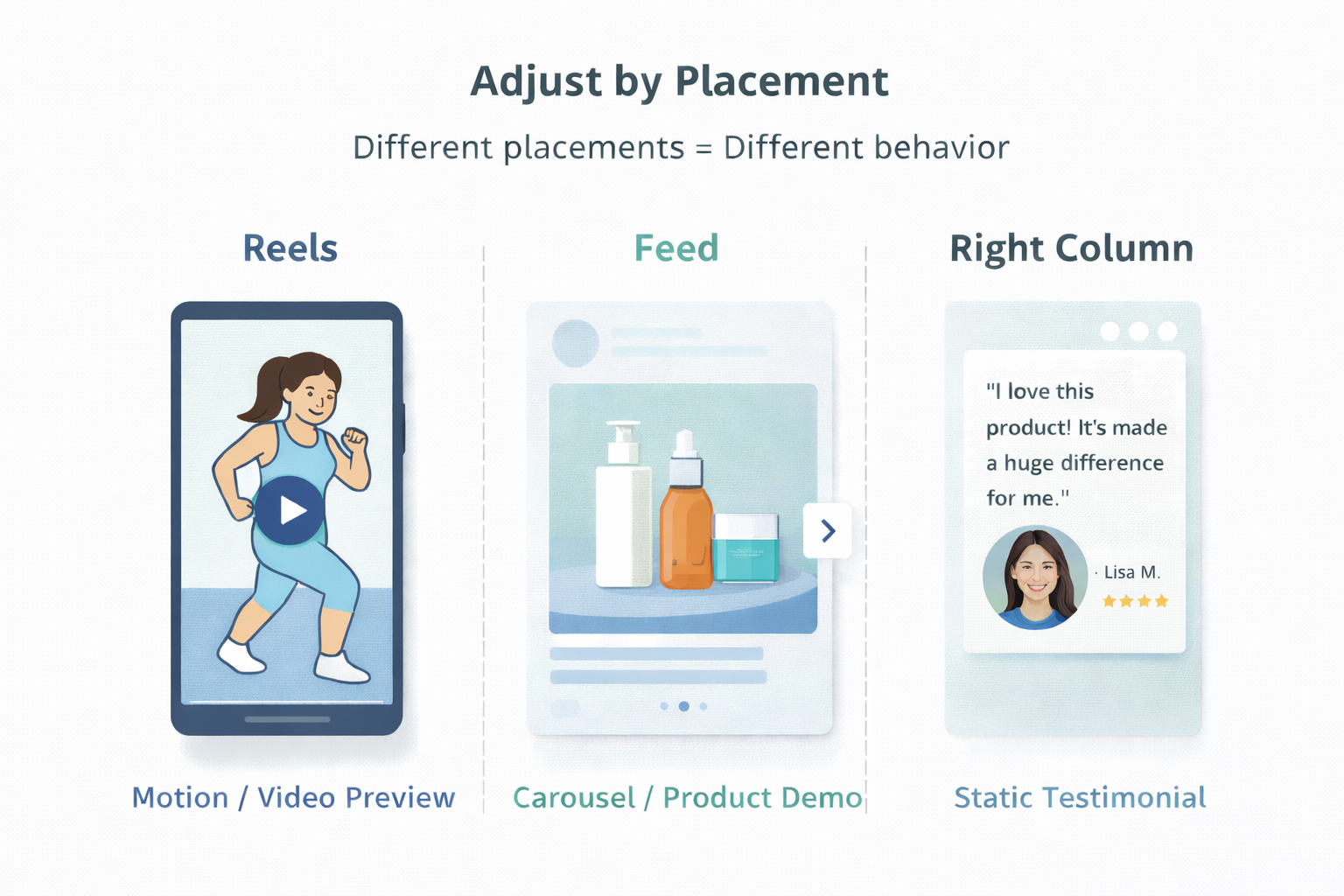
For more accurate delivery, adjust by platform behavior:
-
Reels and Stories: Fast-paced, high-exposure, low attention;
Use simple messaging, large visuals, and direct CTAs. -
Feeds (Facebook, Instagram): Scrolling, casual, longer reading time;
Use story-driven visuals, testimonials, or carousel breakdowns. -
Right column, in-article, or Messenger: Passive placements;
Ideal for retargeting with static creative or trust-building content.
Split testing these platforms doesn’t just show you what works — it helps Facebook assign delivery based on actual performance by context.
Use Creative to Qualify Audience Intent
Targeting isn't just about who sees your ad—it's about how your creative filters in the right people. If your visuals and copy appeal to everyone, you’ll attract no one specific.
Instead, use creative to qualify before the click:
-
Low-intent awareness: Use pattern interrupts and hook-based videos to filter in curiosity-driven viewers.
-
Solution-aware: Use creative that explains the offer, outlines comparisons, or breaks objections.
-
High-intent: Push reviews, value stacks, guarantees, and urgency mechanisms.
Bundle creative by stage, then measure performance by segment. Over time, you'll see clear patterns in what drives qualified actions and what just creates noise.
Final Thoughts: Targeting Isn't a Settings Panel — It's a System
If your Facebook ads aren’t hitting the right audience, the solution isn’t to test more interests or increase budget. You need to shift how you structure signals, how you segment users, and how you communicate value.
Let’s recap what works at an advanced level:
-
Focus on behavior and engagement, not static traits.
-
Feed the algorithm with clean, conversion-backed source data.
-
Segment warm audiences by intent, not time alone.
-
Use creative to pre-qualify users, not just attract attention.
-
Leverage tools like LeadEnforce to access deeper targeting—like Facebook group members or Instagram page followers that standard Meta tools can’t reach.
Once your targeting is built on a system, not assumptions, your ad performance improves across every stage — from reach to ROAS.