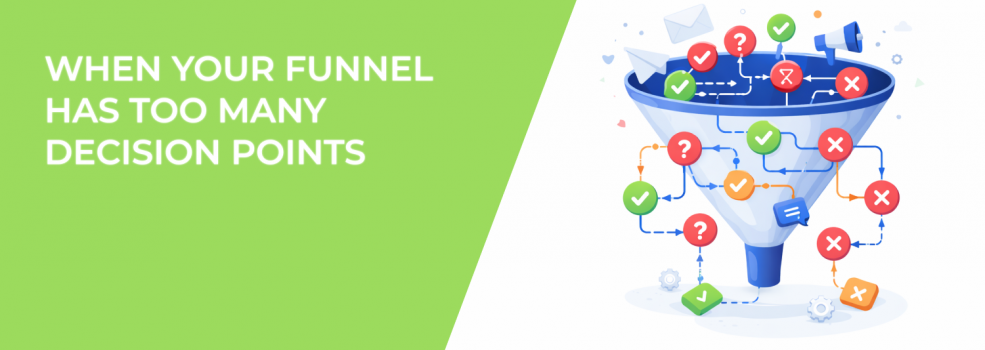
A funnel usually starts breaking long before the metrics make it obvious. One of the clearest patterns is this: CTR holds up, traffic keeps coming, but conversion rate moves around for no obvious reason.
That usually happens when the user has too many chances to stop, compare, switch direction, or delay action. In a Meta campaign, that is not just a UX problem. It is also a signal problem. The platform learns from repeated behavior, and a funnel with too many branches gives it inconsistent outcomes instead of a pattern it can trust.
If this issue shows up in your account, it often sits next to the same symptoms covered in Why Your Facebook Ads Aren’t Generating Leads and How to Fix It.
Why extra choices hurt performance
Most teams do not build a complicated funnel on purpose. It usually happens step by step. A new CTA gets added for “flexibility.” A second offer goes live because different segments may want different things. A landing page keeps its top navigation because someone does not want to remove it. None of these choices looks serious on its own.
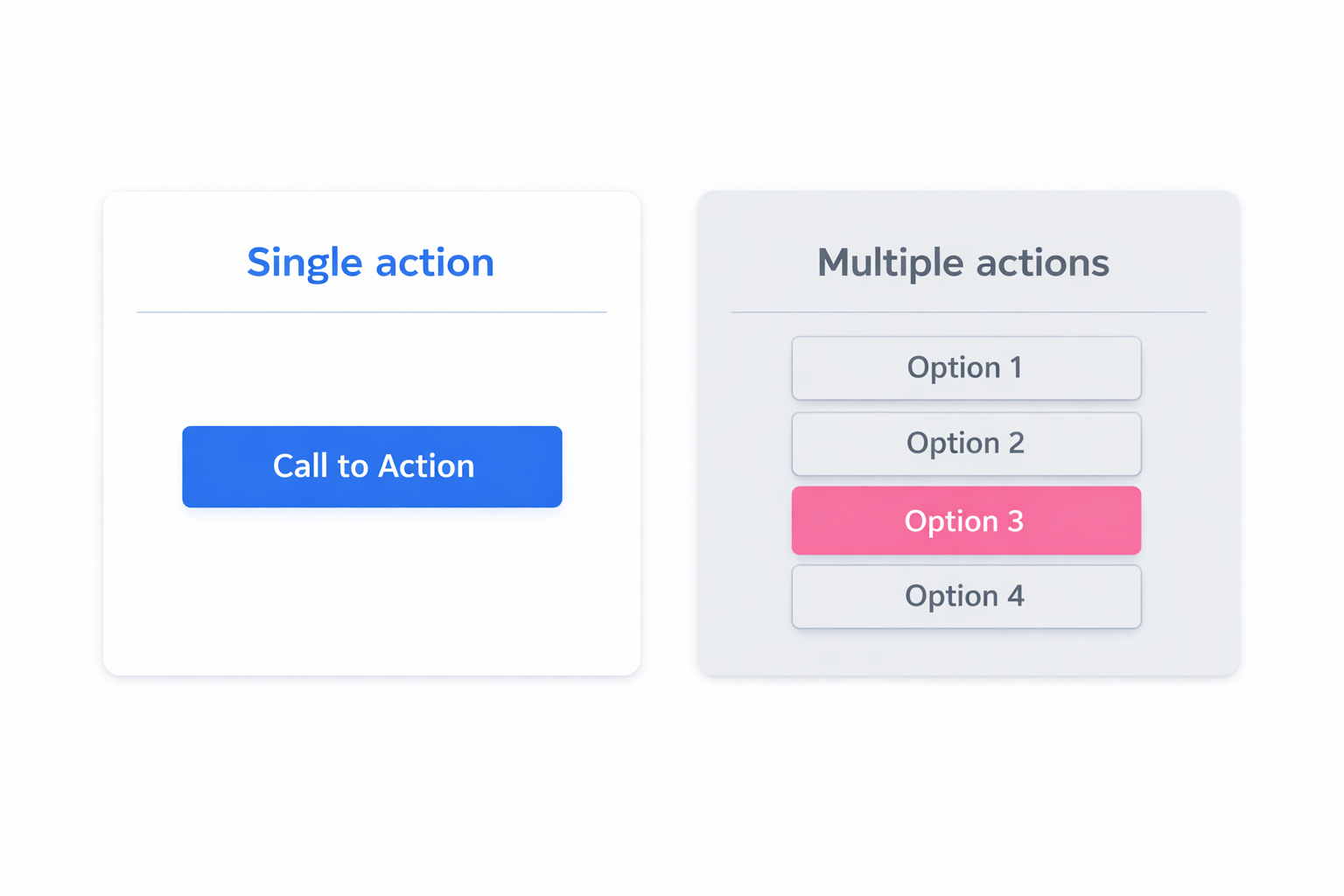
Together, they change how the funnel behaves.
A user clicks with one intent, lands on a page with three possible next actions, scans across multiple sections, then starts deciding what this page is really asking them to do.
That delay matters. Some people bounce. Some click into the wrong path. Some keep reading and never act. The result is a funnel that still attracts attention but converts unevenly.
That unevenness is what Meta reacts to. When post-click behavior becomes inconsistent, delivery gets less efficient. The system has a harder time identifying which users are likely to complete the action, so performance starts drifting instead of compounding.
Where the decision overload usually comes from
This problem rarely comes from one dramatic mistake. It is usually built out of smaller structural choices like these:
-
Several offers inside one campaign.
A demo, a webinar, and a downloadable guide do not attract exactly the same intent. Even if the audience overlaps, the expected next step changes, and so does the conversion pattern. -
Landing pages with competing actions.
When the page asks users to book a call, read a case study, watch a video, and browse the menu, the primary action stops feeling primary. -
Forms that feel longer than they are.
A multi-step form can work well, but only when the progression feels obvious. Once users start wondering how many steps are left or why a question is being asked, drop-off rises. -
Branching too early.
Asking people to classify themselves before they fully understand the offer often lowers completion rates. At that point, most users still need clarity, not customization.
If the weak point is the page itself, How To Create a High-Converting Landing Page is the closest supporting read.
What this looks like in Ads Manager
You can often spot this without opening the funnel.
A campaign with too many decision points often shows one of these patterns first:
-
CTR stays relatively stable, but CVR starts moving up and down from day to day.
-
Landing page views look healthy, but form starts or lead completions lag behind.
-
Similar creatives produce very different results because the post-click path does too much of the sorting.
-
Learning takes longer than expected, or performance destabilizes after small changes.
That combination matters. A weak ad usually depresses CTR first. A messy funnel often lets CTR look fine while conversion behavior gets noisy later.
This is one reason campaign structure matters more than most teams think. The same logic shows up in Facebook Ads Funnel Strategy: From Audience Identification to Conversion.
Why Meta struggles with this kind of funnel
Meta does not optimize around your intentions. It optimizes around observed behavior.
If one user clicks and books a demo immediately, another clicks and downloads a guide, and a third clicks and disappears after opening a pricing tab, the platform is not seeing one strong signal. It is seeing mixed post-click outcomes tied to the same entry point.
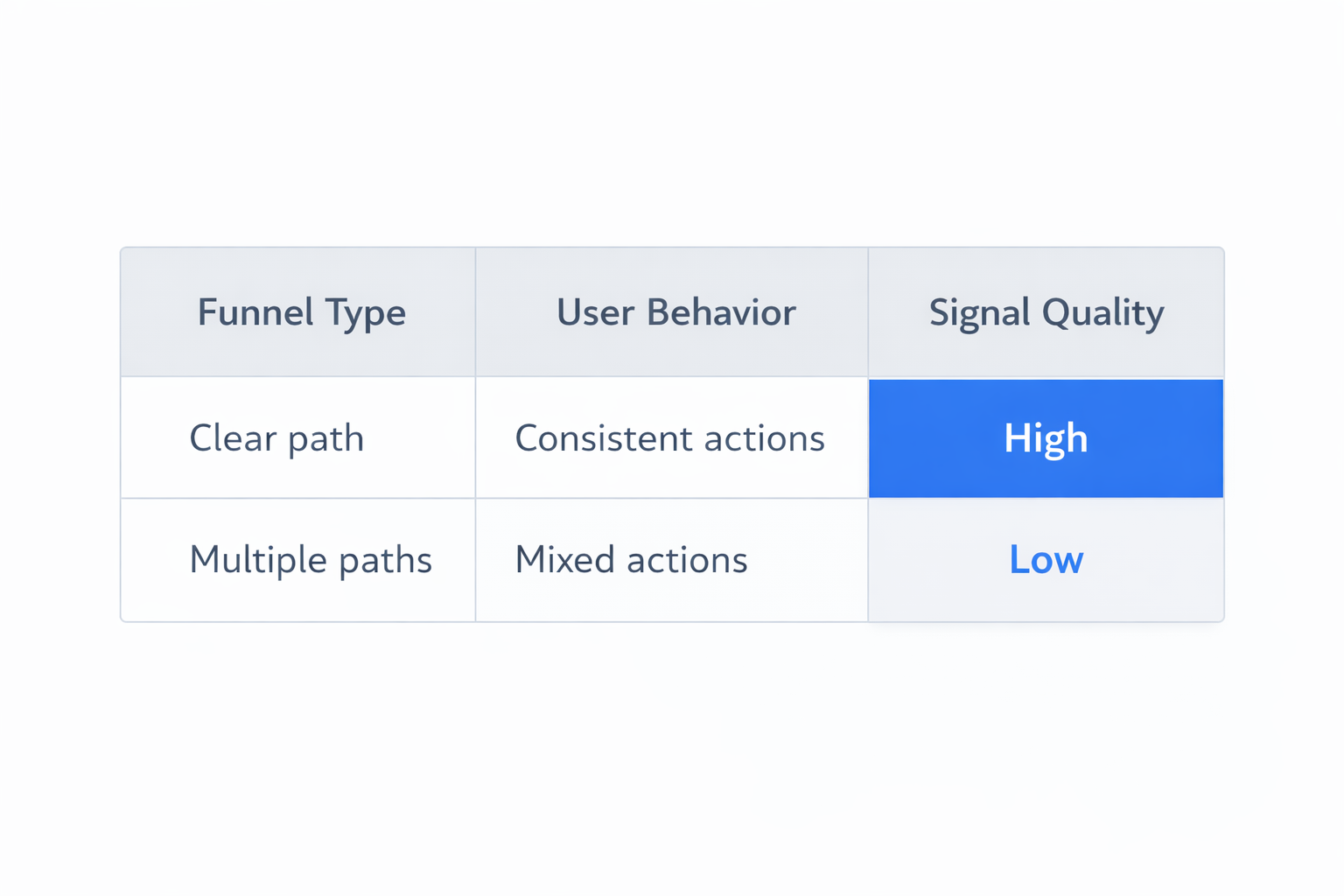
That usually leads to three practical problems:
-
bids become less confident, which can push CPM up;
-
budget allocation becomes less stable across the campaign;
-
scaling gets harder because the system never locks onto a clean conversion pattern.
This is why some funnels look “busy but healthy” for a while. They still generate activity, but they do not produce enough consistent behavior to scale efficiently.
How to simplify the funnel without making it rigid
The fix is usually not to remove every option. The fix is to control the timing of decisions.
Start by making the first step narrower. One ad should push one clear outcome. One page should lead to one main action. That does not mean other resources disappear. It means they stop competing at the exact moment the user is supposed to convert.
Then move secondary choices later. A user who has already submitted a form, booked a call, or joined a list can be segmented afterward. That is the better place for alternative paths, not the first landing page visit.
A good practical check is this: if someone can arrive from your ad and reasonably take three completely different routes, the funnel is doing too much sorting too early.
When you need a cleaner diagnostic framework after the click, Funnel Drop-Off Fixes: How to Improve Each Stage with Facebook Ad Data is a useful companion article.
The tradeoff most teams miss
More options feel safer because they seem more relevant to more people. In practice, they often lower clarity right when clarity matters most.
A narrower funnel can reduce wasted motion. It gives the user less to interpret and gives Meta less noise to process. You may lose some edge-case clicks, but you usually gain a stronger conversion pattern.
That tradeoff is worth it.
Practical takeaway
If your campaign gets traffic but never becomes stable, do not start by rewriting the ad. Count the decisions between the click and the conversion.
Then remove one.
In many accounts, that single change does more than another round of creative testing because it fixes the part of the system that is scrambling both user behavior and algorithmic learning.