For many businesses, paid ads are the first — and often only — lever pulled to grow. You launch campaigns, drive some traffic, maybe even get a few sales. Then things plateau. Or worse, decline.
The metrics look fine on the surface: a decent CTR, maybe a 2x ROAS. But the growth doesn’t last. Churn creeps in, CAC rises, and scaling feels like an expensive gamble.
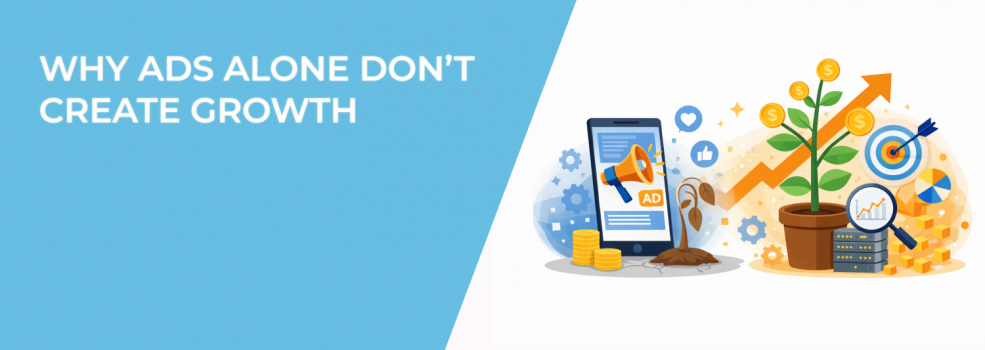
Here’s why: ads accelerate momentum — they don’t create it. If your offer isn’t resonating, your funnel isn’t built for conversion, or your data is noisy, ads won’t fix the issue. They’ll just spend more money amplifying what's broken.
Growth Comes From Systems, Not Just Ad Spend
Scalable acquisition requires more than a high-performing ad set. It depends on the system behind the ad — what happens after the click, how leads are nurtured, how offers are framed, and how data feeds the algorithm.
Funnel Mapping Isn’t Optional
Most struggling advertisers treat all traffic the same. But growth comes from campaigns that match buyer intent and funnel stage.
If you’re sending cold traffic straight to a bottom-of-funnel offer, you’re not just wasting spend — you’re likely training the algorithm to find the wrong users.
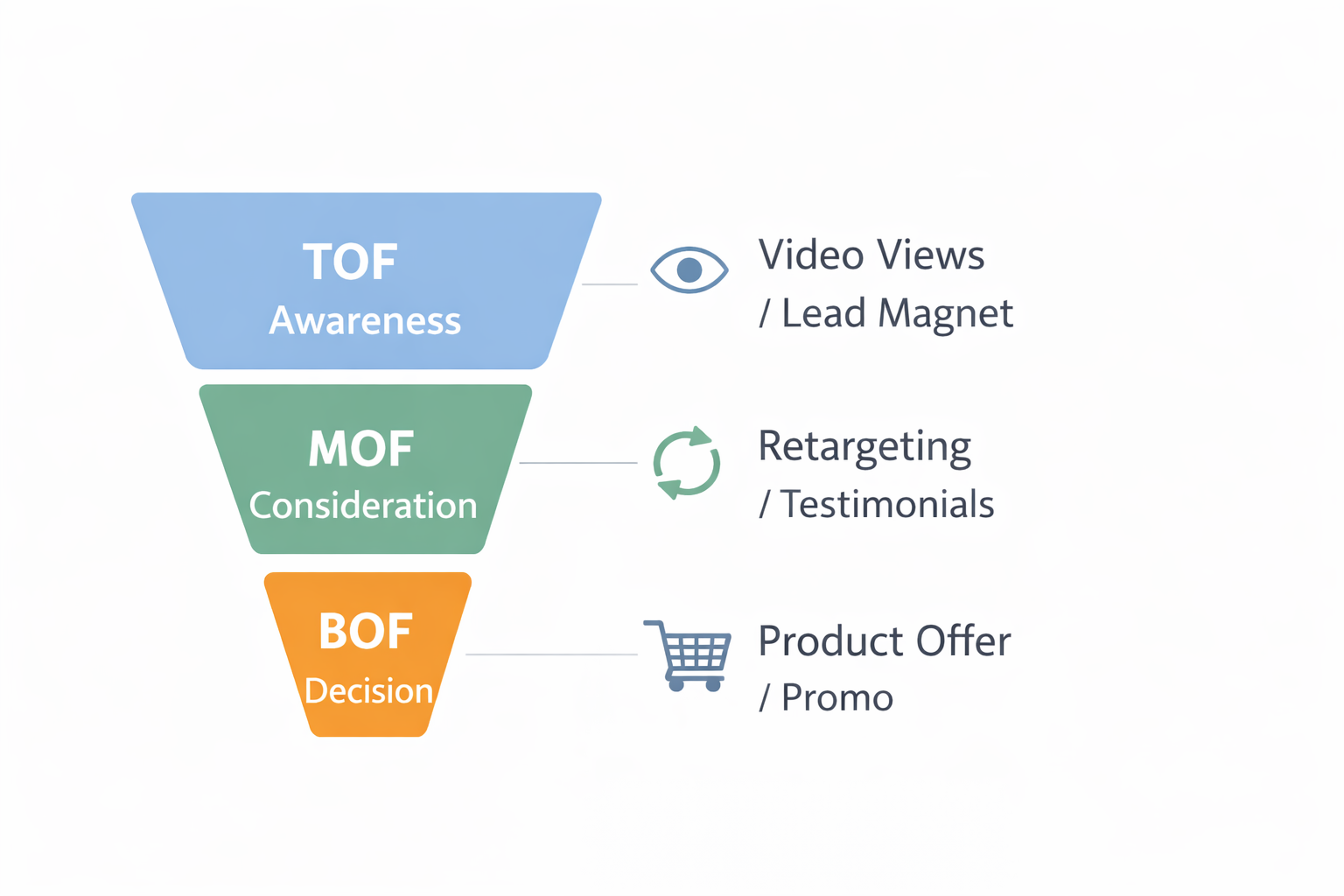
Smart media buyers segment their campaigns by purpose:
-
Top of Funnel: Build awareness and qualify interest with lead magnets, video views, or educational content.
-
Middle of Funnel: Strengthen trust using case studies, retargeting, testimonials, or problem-solution angles.
-
Bottom of Funnel: Push to conversion with urgency, scarcity, and simplified decision-making.
Build a structured full-funnel Facebook ad strategy.
Metrics That Actually Drive Growth
Too many teams chase vanity metrics — low CPC, high CTR, or even ROAS — without connecting them to business outcomes. But ROAS without context is misleading. A 5x ROAS might still lose money if it brings in low-LTV customers or masks a leaky funnel.
Instead, track:
-
CAC-to-LTV ratio: Is your cost per acquisition sustainable for your margins and retention model?
-
Time-to-conversion: How long do users typically take to convert — and are you tracking this across all touchpoints?
-
Retention lift from paid users: Are ad-acquired customers sticking around or churning fast?
Understand how to analyze performance beyond ROAS.
Your Offer Is the Real Lever — Not Your CPM
If your core offer isn’t converting, optimizing creative or bids won’t save it. No targeting trick will fix low offer-market fit.
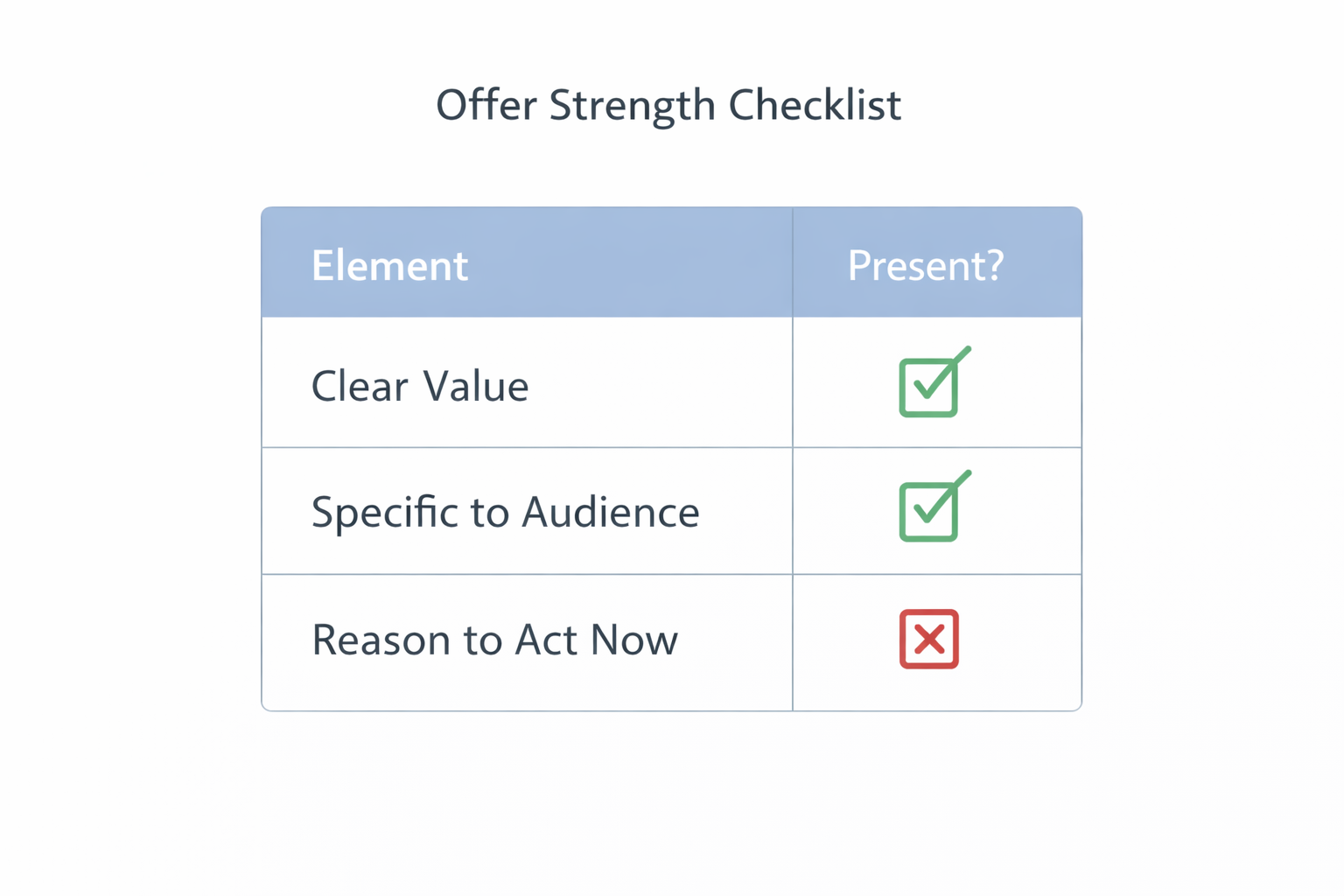
A clear offer may still underperform if urgency is missing — even one weak link limits conversions.
Strong offers do three things exceptionally well:
-
Frame clear value: The outcome must be immediately obvious. "Save time" is vague — “Automate your hiring in 3 clicks” is not.
-
Anchor to real pain or desire: Great offers solve expensive problems or unlock compelling gains.
-
Minimize risk: Free trials, guarantees, testimonials, or urgency reduce perceived friction.
If you're constantly tweaking your ads but ignoring the offer itself, you're optimizing the wrong variable.
Learn how to align your offer with the right objective.
Creative Without Context = Burnout
A good creative can grab attention — but growth-focused creatives also qualify the right users, set expectations, and guide conversion.
A highly clickable ad that misaligns with the offer or funnel stage can poison your retargeting pool, inflate CPMs, and tank conversion rates.
Here’s where most fail:
-
Mismatched messaging: Funny or clever ads that don’t reflect the landing page intent.
-
Overuse of low-intent hooks: Clickbait creatives drive engagement but lower downstream conversion quality.
-
Lack of creative mapping by funnel stage: Cold audiences need context; warm audiences need proof and urgency.
Why good-looking ads still fail.
No Growth Without Clean Signals
Meta’s ad platform relies on data feedback loops. The algorithm needs reliable conversion signals to optimize. But if you’re tracking too many meaningless events, or if your signals are weak (e.g., "PageView" as a goal), you're flying blind.
Here’s how to fix it:
-
Use the Conversions API: Server-side tracking helps preserve data in a privacy-first world.
-
Track only priority events: Pick events that reflect true value — not vanity (e.g., “Add to Cart” vs. “ViewContent”).
-
Reduce noise: Remove duplicate pixel events, outdated audiences, or unused custom conversions.
Set up Facebook Pixel properly.
Ads Aren’t the Growth Engine — They’re the Accelerator
Your paid traffic strategy should feed into systems that grow value over time. If every campaign is a one-shot attempt at revenue, you’re building a treadmill — not a business.
The best advertisers build feedback loops that amplify over time:
-
Email/SMS loops: Nurture leads and buyers with sequenced content that reactivates dormant interest.
-
Review/referral loops: High-NPS customers should be prompted to leave reviews, refer, or join ambassador programs.
-
Content loops: Evergreen and UGC content builds social proof and supports paid and organic simultaneously.
Explore how audience types work across funnel stages.
Final Takeaway: Ads Are a Mirror
Ads reveal the truth about your business — not just your marketing. If things break under ad pressure, the problem was already there.
When your systems are solid — offers are clear, data is clean, creative is mapped to funnel stage, and feedback loops are in place — ads become a predictable growth lever.
Without that? They're just noise with a price tag.